
 AWS
 Microsoft Azure
 Google Cloud


What is DoiT?
DoiT combines FinOps software, commitment optimization, cloud procurement, and technical support. Its Cloud Intelligence platform helps teams analyze spending, allocate costs, set budgets, and identify optimization opportunities.Its broader portfolio includes Flexsave, PerfectScale for Commitments, and PerfectScale for Kubernetes.
DoiT as the baseline: what are you replacing?
Before comparing DoiT alternatives, identify which products and services your team uses. DoiT combines several capabilities, and replacing one does not necessarily replace the others.| DoiT offering | What it provides |
|---|---|
| Cloud Intelligence | Cost reporting, allocation, budgets, forecasting, anomaly detection, and optimization insights. |
| Flexsave for Compute | Discounts for eligible AWS on-demand workloads using DoiT-owned Reserved Instances and Savings Plans. |
| PerfectScale for Commitments | Planning, recommendations, and approval-based or autonomous purchasing for supported customer-owned commitments. |
| PerfectScale for Kubernetes | Workload rightsizing, reliability-risk identification, and automated resource optimization. |
| Procurement and support | Cloud purchasing guidance and technical expertise, depending on the subscribed services and agreement. |
Procurement and support entitlements depend on your DoiT agreement and should be evaluated separately from software features.
Separately documented commitment insurance is early access and agreement-dependent. DoiT also supports standalone cloud connections, subject to plan requirements.
How we compared DoiT alternatives
We compared DoiT alternatives using official vendor websites and documentation, assessing replacement scope, cloud coverage, execution controls, commitment risk, pricing, and exit obligations.This is a documentation-based review, not a hands-on test. The order reflects buying use cases rather than measured performance.
Disclosure: We include our own platform, Usage.ai, in this comparison.
We assessed each alternative across six areas:
Replacement scope: Does it address cost visibility, commitment management, infrastructure optimization, procurement, or technical support?
Cloud coverage: Which providers and services does it support, and does that support mean reporting, recommendations, or execution?
Automation and control: What can it execute, which decisions require approval, and what permissions does it need?
Commitment risk: Who owns purchased commitments, and what protection applies if eligible usage declines?
Commercial model: What determines the fee, how are existing savings treated, and which capabilities cost extra?
Exit obligations: What happens to vendor charges, purchased commitments, and protection after cancellation?
DoiT alternatives comparison matrix
Use this matrix to identify relevant capabilities, then check the product-specific limits below. A green rating confirms documented support within a defined scope; it does not establish equal functionality or better results.🟢 Documented support
🟠 Limited, conditional, contract-specific, or publicly unclear
N/A = Outside the evaluated offering’s primary purpose
| Evaluation criterion | DoiT | CloudKeeper | Usage.ai | nOps | CloudZero | Vantage | CAST AI |
|---|---|---|---|---|---|---|---|
| Autonomous optimization execution | |||||||
| Per-purchase commitment approvals | N/A | ||||||
| AWS commitment purchasing or management | |||||||
| Azure commitment purchasing or management | 1 | 2 | |||||
| GCP commitment purchasing or management | 2 | ||||||
| Cost visibility and reporting | 3 | 4 | |||||
| Automated Kubernetes resource optimization | |||||||
| Financial protection for commitment underutilization | 5 | 6 | 7 | N/A | |||
| Cloud advisory and support services beyond product support | |||||||
| Savings-based commitment-management pricing | 8 | N/A | 9 |
DoiT Azure: PerfectScale for Commitments is listed for Q4 2026; general availability is not established.
Vantage: Autopilot purchasing supports AWS; multicloud reporting is separate.
Usage.ai: Free visibility below $200k monthly spend; managed optimization shown at $200k+.
CAST AI: Reporting covers Kubernetes clusters, namespaces, and workloads.
DoiT protection: Flexsave uses DoiT inventory; separate insurance is early access and agreement-dependent.
Our Cashback: Applies only to eligible Flex Commitments and is subject to our program terms; protection ends when the managed service ends.
nOps: Utilization protection provides credits, subject to terms.
DoiT fees: Savings-based pricing applies to specified AWS commitment purchases, separately from Cloud Intelligence.
Vantage fees: Autopilot charges 5% of realized savings, separately from subscription fees.
The 6 DoiT Alternatives
1. Usage.ai: for multi-cloud commitment management with Cashback Protection
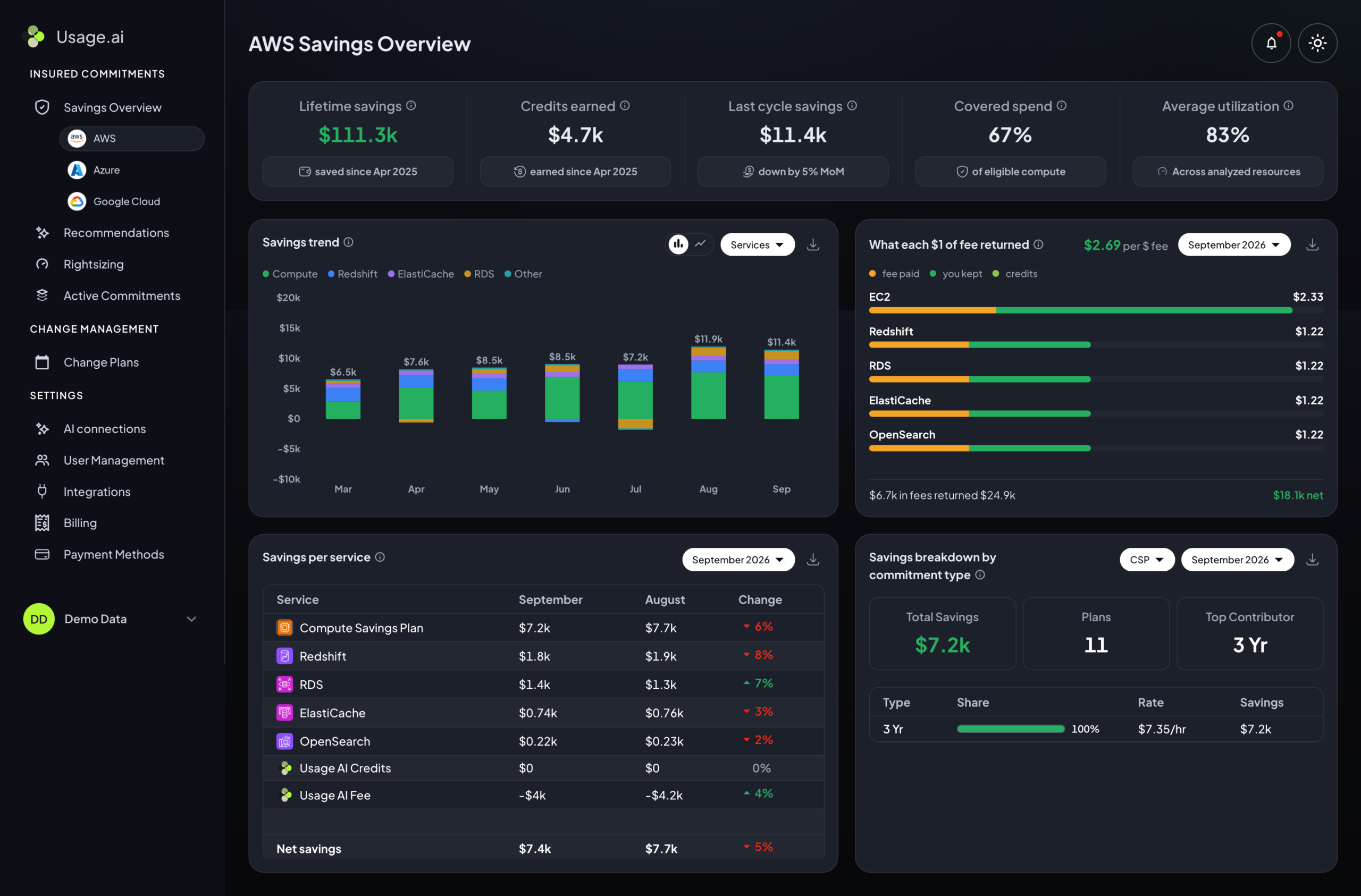
We manage cloud commitments through Autopilot, which executes eligible purchases automatically, or CoPilot, which retains an approval step. Our managed commitment offering operates at the billing and purchasing layer without resizing or stopping production workloads.
Why we make the shortlist
Multi-cloud commitment management: We optimize supported commitments across AWS, Azure, and Google Cloud. Eligibility varies by provider, service, and commitment type.
Eligible Cashback Protection: Our Flex Insured Commitments provide a financial remedy for qualifying underutilization, subject to program terms.
Visibility and recommendations: Our free offering includes cloud-spend visibility, rightsizing and savings recommendations, and MCP support for companies below $200,000 in monthly cloud spend.
Pricing basis Our pricing page lists managed optimization for companies spending $200,000 or more monthly on cloud. We charge a percentage of the savings we generate, with no upfront fee. The applicable rate is discussed with our team.
What to look at closely Validate supported commitments, projected savings after fees, and Cashback eligibility. Our published pricing terms require 30 consecutive days of underutilization to qualify. Protection applies while the managed service is active and ends when the service ends.
2. CloudKeeper: for managed cloud optimization and expert support
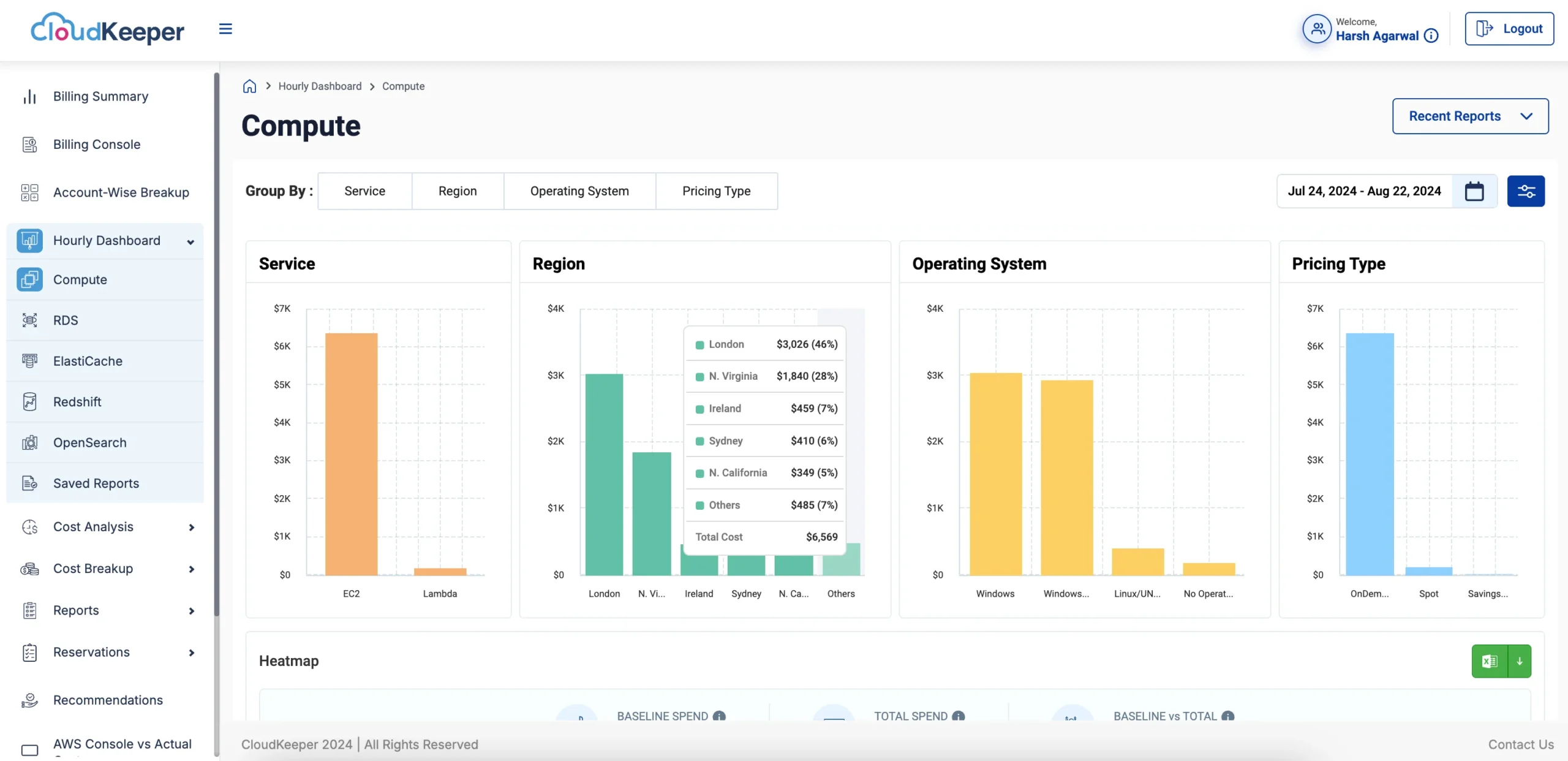
CloudKeeper combines optimization software with services covering architecture guidance, implementation, and ongoing support. Its official services page describes FinOps consulting, Well-Architected Reviews, migration assistance, and personalized cloud support.
Why it makes the shortlist
Managed commitments: CloudKeeper Commit documents continuous sizing, purchasing, exchanges, and rebalancing of supported AWS commitments.
Separate Azure offering: CloudKeeper also publishes an Azure commitment-management offering. Confirm the instruments and services available for your environment.
For its documented AWS Commit offering, CloudKeeper charges a share of delivered savings, with no platform subscription or billing transfer required. That description should not be applied automatically to its broader services or other purchasing arrangements.
What to look at closely
Confirm the support included in your proposal, implementation responsibilities, supported commitments, and any financial-protection terms. The AWS Commit FAQ states that guarantees, where offered, are defined in the customer agreement.
Assessment access and purchasing access are separate. Enabling managed optimization requires additional permissions, and removing access does not cancel existing AWS commitments.
If you are deciding how much expert assistance your team needs, our guide to AWS cost optimization consultants vs. software explains the trade-offs between advisory support and software-led optimization.
3. nOps: for commitment automation and broader FinOps visibility
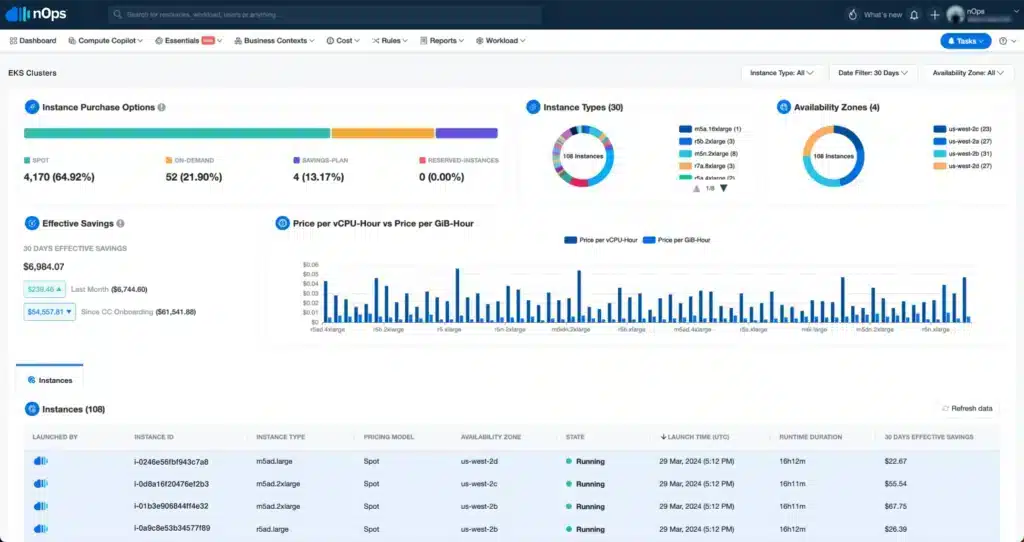
nOps offers Autonomous Rate Optimization across AWS, Azure, and Google Cloud. Its separate Cost Visibility & Allocation offering covers multicloud, Kubernetes, SaaS, and AI spending, with anomaly detection and savings recommendations.
Why it makes the shortlist
Automated commitment management: nOps analyzes usage and manages supported discount instruments across the three major clouds. Confirm eligible services and instruments for each provider.
Broader cost visibility: Reporting and allocation help teams investigate spending and assign ownership.
AWS resource optimization: Its Optimize offering documents container rightsizing, EKS visibility, resource scheduling, and storage optimization.
Published utilization protection: nOps states that it guarantees 100% utilization of nOps-managed commitments or credits the difference. Confirm the applicable scope and contractual terms.
The official nOps pricing page distinguishes two models: a percentage of realized savings for Autonomous Rate Optimization and a fixed fee based on cloud spend for Cost Visibility & Allocation.
Our nOps pricing guide provides additional questions for evaluating the fee base, included functionality, and total costs.
What to look at closely
Separate commitment automation from infrastructure-changing features when reviewing permissions and implementation requirements. Validate purchasing controls, treatment of existing commitments, credit eligibility, and cancellation obligations.
Also distinguish multicloud reporting from executable optimization: a documented AWS action does not establish equivalent functionality on Azure or Google Cloud.
4. CloudZero: for cost intelligence and unit economics
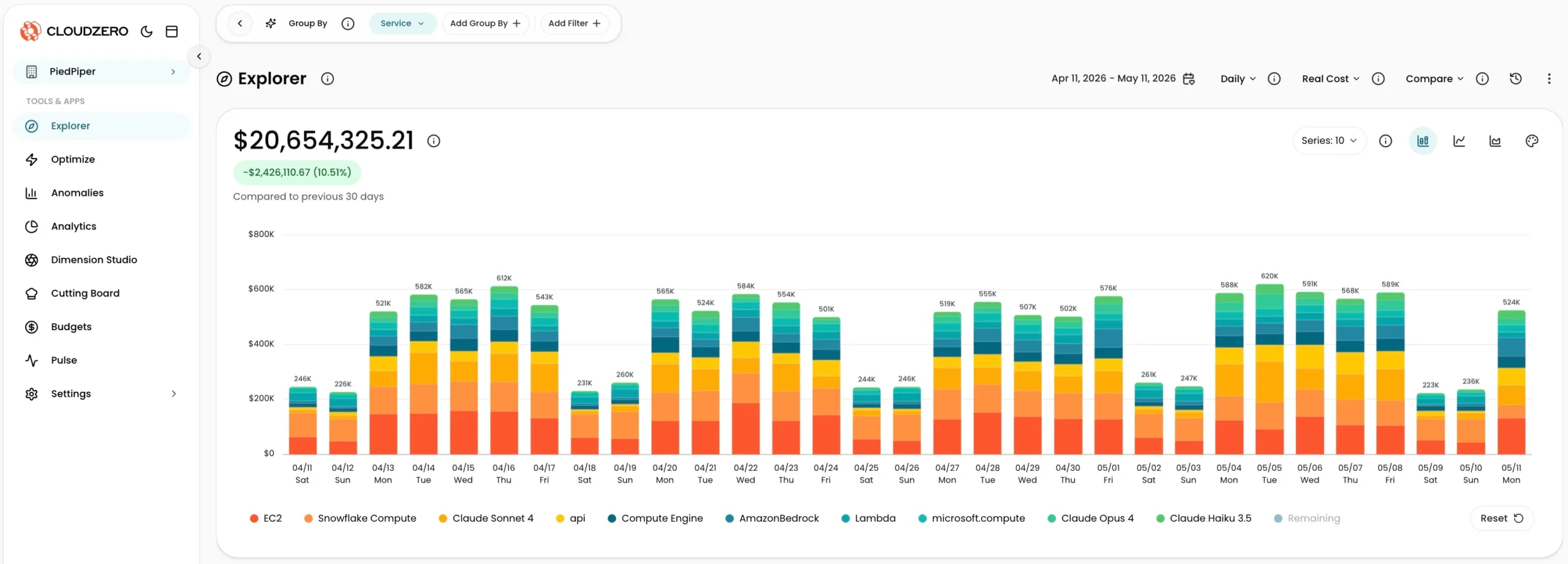
CloudZero brings cloud, SaaS, and AI spending into a shared view for finance and engineering. Its platform documentation describes cost exploration, business-level allocation, anomaly detection, and optimization recommendations.
Why it makes the shortlist
Business-level allocation: Dimensions organize spending by team, product, feature, environment, or customer.
Unit economics: Teams can calculate cost per customer, transaction, API call, or another business metric.
Broad cost visibility: Documented connections include AWS, Azure, Google Cloud, Oracle Cloud, and supported SaaS and AI platforms.
CloudZero’s pricing page describes a single subscription aligned with the scale and complexity of the customer’s environment. It lists included capabilities and requires a custom quote.
What to look at closely
Unit economics requires business context. CloudZero’s documentation explains that customers supply measurements, such as transactions or active users, through telemetry streams. Evaluate the work needed to provide and maintain those inputs.
Also confirm who executes recommended changes and purchases commitments. Reporting and recommendations alone do not establish a replacement for DoiT’s purchasing automation, procurement, or technical support.
Our Usage.ai vs. CloudZero comparison explores the distinction between cost intelligence and commitment execution.
5. Vantage: for cost visibility and AWS Savings Plan automation
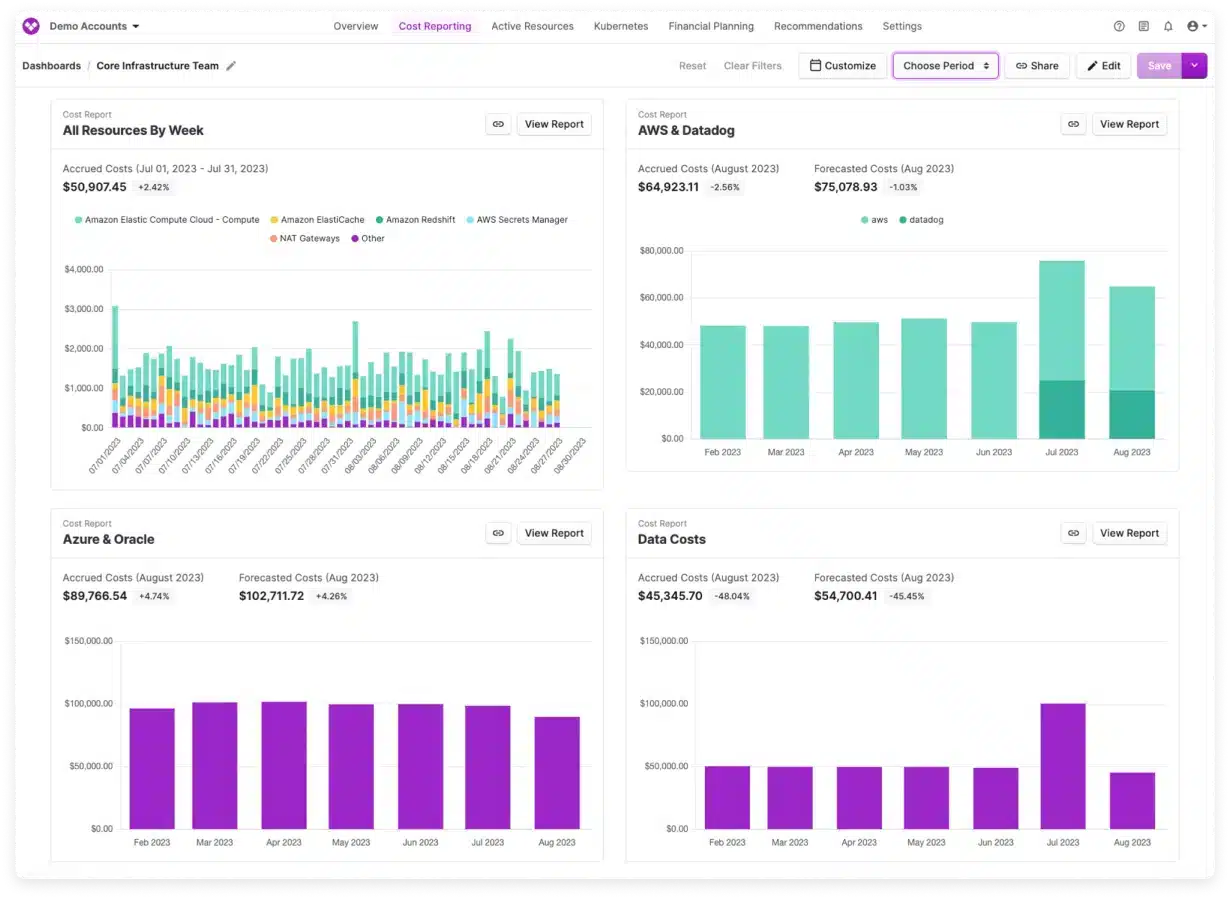
Vantage combines cloud, SaaS, and AI cost reporting with allocation, budgets, forecasting, and unit costs. Its Autopilot offering adds AWS Savings Plan purchasing, letting teams investigate spending and manage eligible commitments within the same platform.
Why it makes the shortlist
Broad cost visibility: Vantage’s platform and pricing page lists multicloud integrations, virtual tagging, forecasting, budgets, and Kubernetes cost reporting.
AWS purchasing automation: Vantage documents Compute and Database Savings Plan purchasing through Autopilot, with manual and automated options.
Existing commitment awareness: Autopilot considers existing Savings Plans and Reserved Instances when evaluating uncovered usage.
Vantage publishes free and paid platform tiers, with tracked-spend and user limits. Enterprise pricing requires a quote.
Autopilot charges 5% of realized savings, separately from the platform subscription. Compare both charges when estimating total cost.
What to look at closely
Autopilot currently supports AWS. Azure and Google Cloud reporting does not establish equivalent commitment-purchasing automation.
Also distinguish recommendations from purchases: the documentation lists recommendations for additional AWS reservation types, but these should not be assumed to have the same execution support as Savings Plans.
For a wider commitment-management shortlist, our nOps alternatives guide provides related options to investigate.
6. CAST AI: for automated Kubernetes optimization
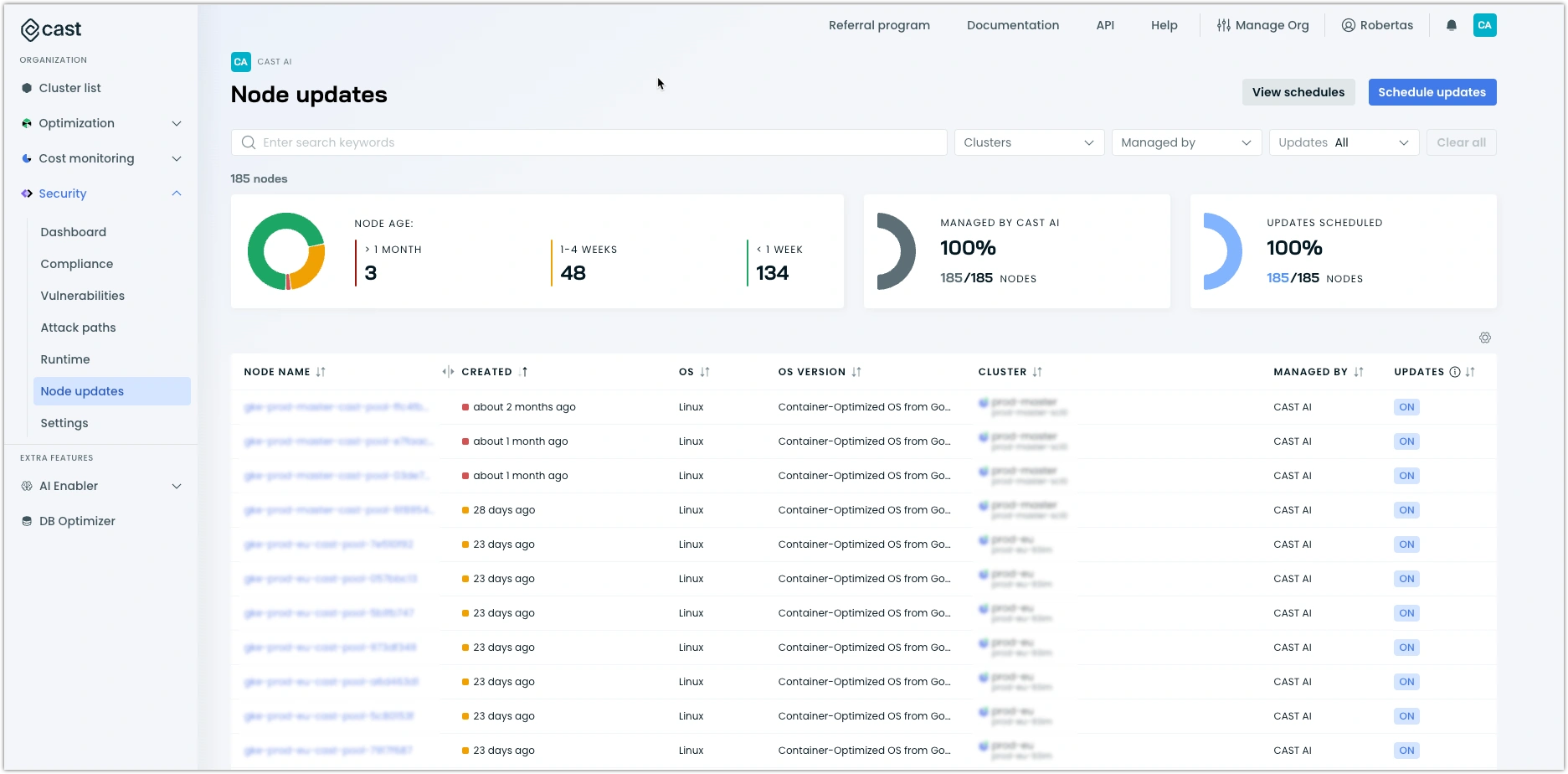
CAST AI automates Kubernetes infrastructure and workload optimization. Its main overlap with DoiT in this comparison is PerfectScale for Kubernetes, making it relevant when excess resource consumption is the problem you need to solve.
Why it makes the shortlist
Workload rightsizing: Adjusts container resources based on actual usage.
Infrastructure optimization: Documents autoscaling, bin packing, and Spot Instance automation.
Kubernetes cost visibility: Provides reporting at cluster, namespace, and workload levels.
Multiple deployment environments: Its official documentation lists EKS, GKE, AKS, and additional environments, with feature availability varying by deployment.
Customers can request a custom quote based on their environment and selected products. You can request the applicable billing metric, included capabilities, and commercial terms before estimating net savings.
What to look at closely
Assess installation requirements, execution permissions, automation policies, and compatibility with your existing autoscalers. Test representative workloads and measure reliability alongside resource savings.
Also evaluate how reduced consumption affects existing commitments. Using fewer resources and paying a lower rate are connected decisions, but savings from one should not be assumed to improve the other automatically.
Our Usage.ai vs. CAST AI comparison explains how commitment management and Kubernetes optimization address different parts of the cloud bill.
Which DoiT alternative should you choose?
Shortlist DoiT alternatives around the problem your team needs to solve. Then check which capabilities remain outside the proposed package.| Your main priority | Platforms to investigate | What to validate |
|---|---|---|
| Multi-cloud commitments with eligible Cashback Protection | Usage.ai | Supported commitments, net savings, approval controls, and protection terms |
| Optimization with cloud expertise | CloudKeeper | Included support, implementation responsibilities, and purchasing arrangements |
| Commitment automation alongside broader FinOps workflows | nOps | Product-specific coverage, combined fees, and execution permissions |
| Cost ownership and unit economics | CloudZero | Allocation requirements, business telemetry, and who implements recommendations |
| Broad cost reporting with AWS Savings Plan automation | Vantage | Subscription limits, Autopilot fees, and purchasing scope |
| Kubernetes resource efficiency | CAST AI | Workload compatibility, reliability controls, and effects on existing commitments |
Questions to ask before switching to a DoiT alternative
What does it replace? Confirm coverage for reporting, commitments, infrastructure optimization, procurement, and support.
What changes operationally? Check billing transfers, required permissions, approval controls, and implementation effort.
What happens to commitments? Verify ownership, existing-savings treatment, usage-drop protection, and obligations after cancellation.
What is the total cost? Compare vendor fees, support, internal effort, and projected savings after all costs.
Explore automated cloud commitments, flexible controls, and eligible cashback protection.
Frequently asked questions
What are the best DoiT alternatives?
DoiT alternatives worth evaluating include CloudKeeper, Usage.ai, nOps, CloudZero, Vantage, and CAST AI. Choose based on whether you need managed support, commitment automation, cost intelligence, or Kubernetes optimization. Each addresses a different part of DoiT’s offering.
How should I evaluate DoiT alternatives discussed on Reddit?
Use Reddit discussions to identify questions about support, pricing, and switching. Individual experiences may reflect older plans or specific agreements. Verify current capabilities and commercial terms against official documentation and your proposed contract.
Which DoiT alternatives automate cloud commitments?
Usage.ai and nOps document commitment automation across AWS, Azure, and Google Cloud. CloudKeeper offers commitment-management products, while Vantage Autopilot supports AWS Savings Plan purchasing. Confirm supported services, instruments, and approval controls for your environment.
Can I use DoiT without moving my cloud billing?
Yes. DoiT documents standalone connections for cloud accounts purchased elsewhere, subject to plan requirements. Using its software and purchasing cloud services through DoiT are separate arrangements.
Can a FinOps platform replace DoiT’s technical support?
Only if the proposed package includes the support your team needs. Cost reporting or commitment automation alone does not establish equivalent engineering assistance. Compare support scope, escalation access, response commitments, and implementation responsibilities separately.
If you notice any material information that is incorrect, outdated, or no longer applicable, please contact us at [email protected]. We’ll review it and update the article where appropriate.