
 AWS
 Microsoft Azure
 Google Cloud


What does Ternary do?
Ternary is a technology investment intelligence platform for Finance and FinOps teams. It consolidates cloud, AI, SaaS, and on-premises spending into a unified technology ledger, helping organizations understand who is spending, where costs belong, and how technology consumption connects to business outcomes.Its capabilities include mapping costs to business units and accounting structures, attributing AI consumption to users and teams, and tracking prepaid AI credits against contract periods.
Why consider a Ternary alternative?
Consider an alternative when your requirements differ from what your current Ternary setup delivers. The best Ternary alternatives should address a specific need, such as:Different cost allocation workflows: Distributing shared costs or measuring spending by customer, product, or team.
Financial planning requirements: Supporting your budgeting, forecasting, and accountability processes.
Required integrations: Connecting the providers, services, and business systems your organization uses.
Optimization execution: Moving from identifying opportunities to approving or automating specific actions.
Commercial fit: Finding a suitable balance of platform fees, implementation work, and ongoing team effort.
For a broader look at platforms addressing different optimization needs, explore our Zesty alternatives guide.
How we evaluated the best Ternary alternatives
We selected these six platforms to cover different buying needs: cost allocation, financial planning, hybrid IT management, and commitment automation. We reviewed each platform’s official documentation to answer six practical questions:Does it cover your spending? Check support for the clouds, services, and other technology costs you manage.
Can it explain where the money goes? Look at cost allocation, shared expenses, unit economics, budgets, and forecasts.
What can it actually do? Distinguish tools that recommend changes from those that execute actions, with approval or automatically.
Can your team control its actions? Review permissions, approval options, and audit trails.
How much work will your team need to do? Consider setup, integrations, ongoing maintenance, and acting on findings.
Is the value worth the cost? Compare fees, included features, and additional expenses against the improvements you need.
Best Ternary alternatives at a glance
| Platform | Best for | Key capabilities | Pricing | What to check |
|---|---|---|---|---|
| CloudZero | Cost allocation and unit economics | Business cost dimensions, spend analysis, budgets, and forecasting | Custom subscription | Data needed to map costs to customers and products |
| Finout | Consolidated spending and shared-cost allocation | MegaBill, Virtual Tags, shared costs, and financial plans | Fixed contract fee tied to a committed spend tier | Integration limits and add-ons |
| IBM Cloudability | Enterprise cloud financial accountability | Multi-cloud visibility, allocation, forecasting, and optimization | Request a quote | Edition and additional product requirements |
| Flexera One | Hybrid IT financial management | Cloud cost management alongside IT asset and SaaS management | Contact sales for pricing | Modules needed for your full scope |
| Vantage | Multi-provider reporting and team budgets | Cost reports, virtual tags, budgets, and AWS Savings Plans automation | Free tier; paid plans from $30/month | Tracked-spend limits and automation charges |
| Usage.ai | Automated cloud commitment management | Copilot or Autopilot purchasing, coverage tracking, and eligible Cashback protection | Free recommendations tier; managed optimization charges a share of savings | Service eligibility, protection terms, and spending thresholds |
1. CloudZero
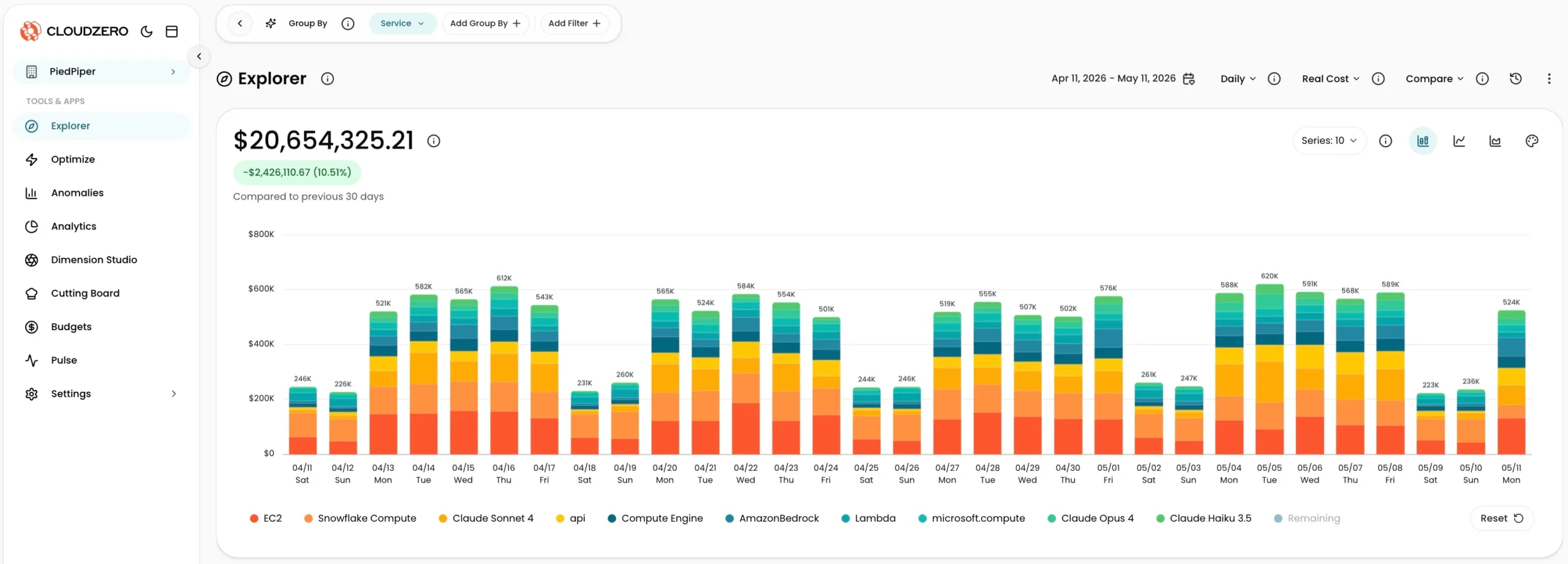
CloudZero connects cloud, AI, and SaaS spending to teams, products, and customers, helping organizations understand their cost to serve.
How it compares to Ternary: Both platforms connect technology costs to business context. CloudZero is worth evaluating when your priority is organizing spending through custom business dimensions and tracking metrics such as cost per customer or transaction.
However, test whether its allocation workflows improve on your current Ternary setup.
Pros
- ✅ Build allocation rules visually through Dimension Studio or manage them as code with CostFormation.
- ✅ Distribute shared costs across teams, products, or customers.
- ✅ Combine cost analysis with budgets, forecasts, anomaly detection, and optimization recommendations.
- ❌ Your team must define and maintain allocation rules that reflect the business.
- ❌ Meaningful unit costs require relevant business usage data.
- ❌ Optimization recommendations alone do not establish automated purchasing or remediation capabilities.
Bottom line: Shortlist CloudZero when business allocation and unit economics drive your decision. Validate your accounting and reporting requirements separately.
For a wider comparison, see our CloudZero alternatives guide.
2. Finout
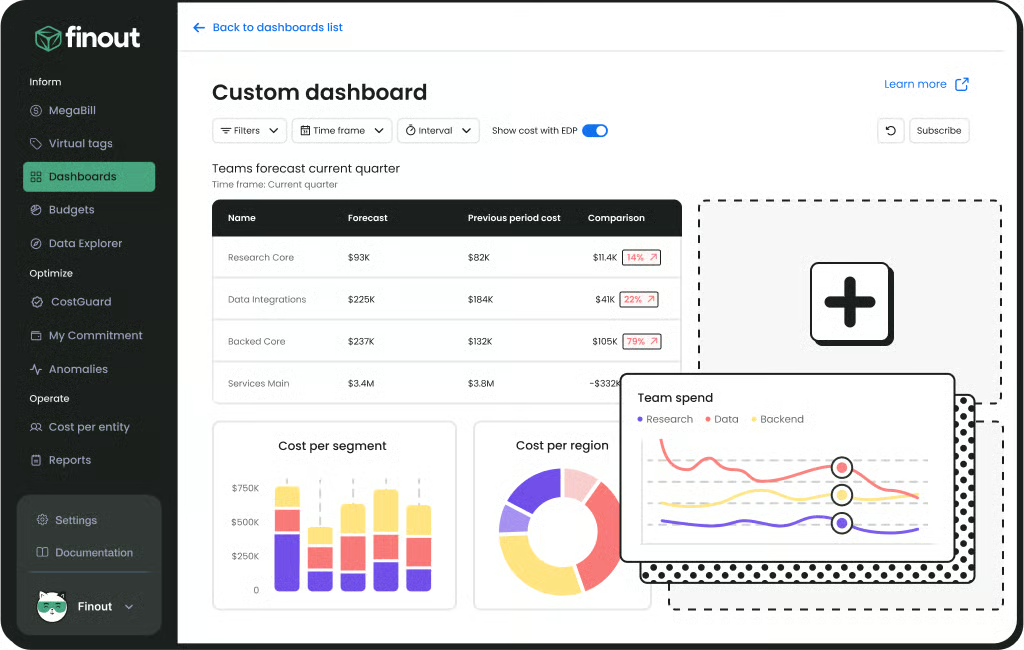
Finout brings cloud, AI, Kubernetes, and other supported technology costs into MegaBill, a centralized view for analyzing spending and assigning ownership.
How it compares to Ternary: Both platforms consolidate technology spending and connect it to business context. Finout is worth evaluating when your priority is grouping costs through Virtual Tags and distributing shared expenses across teams, products, or customers.
Test those rules against your current Ternary workflows.
Pros
- ✅ Combine spending from multiple providers and services in one view.
- ✅ Use Virtual Tags to standardize allocation without relying solely on provider tags.
- ✅ Support showback, financial planning, and anomaly detection alongside cost analysis.
- ❌ Your team must define and maintain business allocation rules.
- ❌ Pricing depends on your environment; Finout does not publish a standard entry price.
- ❌ Kubernetes and other requirements can affect packaging and cost.
Bottom line: Shortlist Finout if fragmented billing and shared-cost allocation create the most work for your team. Validate accounting integrations and executable optimization actions separately.
3. IBM Cloudability
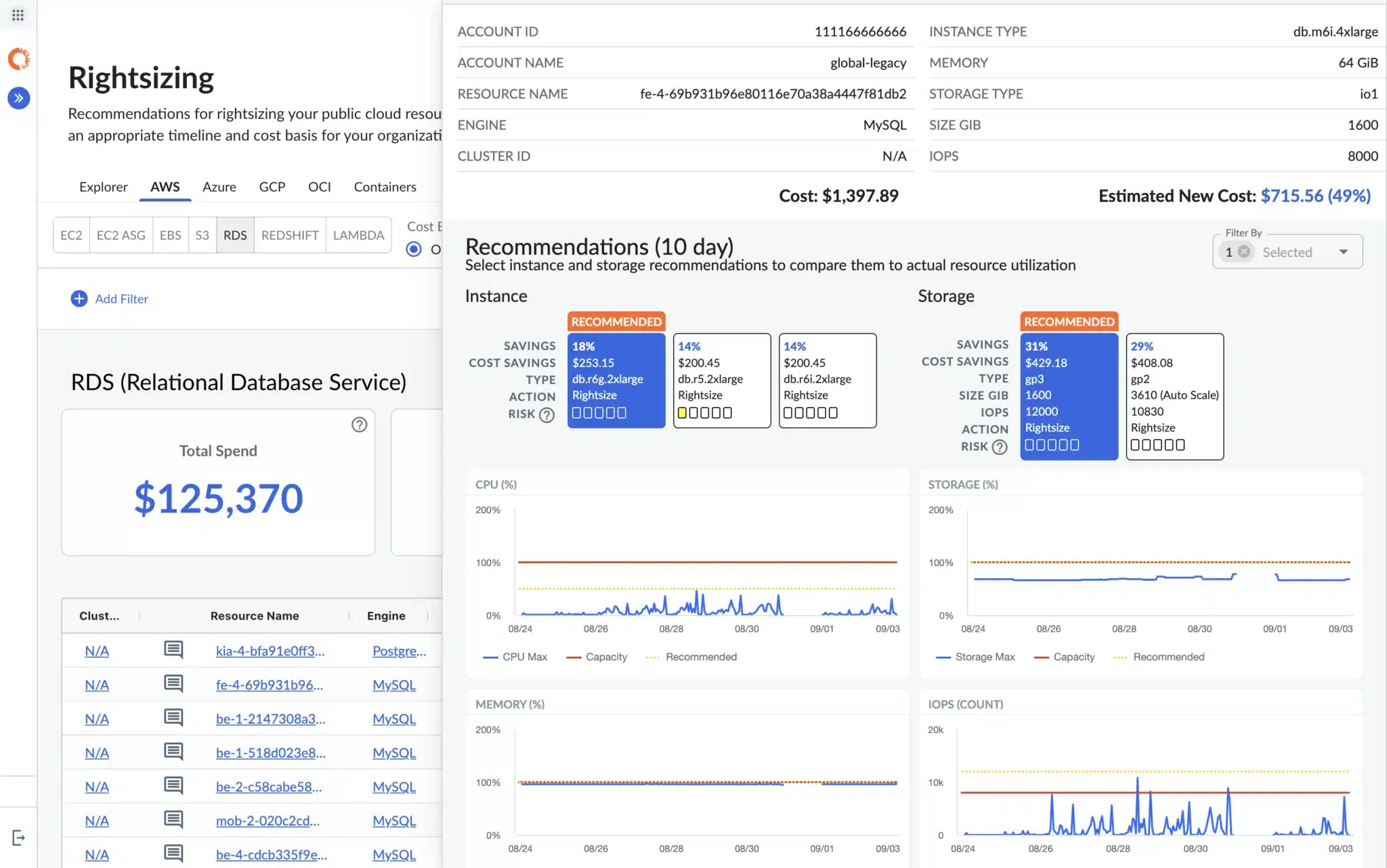
IBM Cloudability helps teams understand multi-cloud spending, allocate costs, forecast expenses, and identify optimization opportunities.
How it compares to Ternary: Ternary emphasizes a Finance-owned technology ledger. Cloudability is worth evaluating when your main requirement is cloud financial management, particularly allocation, unit economics, and forecasting.
Test whether the edition you choose supports the workflows you currently run in Ternary.
Pros
- ✅ Combines multi-cloud visibility with rightsizing capabilities.
- ✅ Adds cost allocation, unit economics, and forecasting in Standard.
- ✅ Includes IBM Turbonomic capabilities for advanced optimization in Premium.
- ❌ Features vary by edition; Essentials does not include the full planning and allocation scope.
- ❌ Your team must configure cloud access and business mappings.
- ❌ Broad optimization coverage does not establish automated purchasing for every commitment type.
Bottom line: Include Cloudability among the best Ternary alternatives when enterprise cloud planning and accountability are your priorities. Confirm broader technology-ledger requirements separately.
Explore our IBM Cloudability alternatives guide for more options by use case.
4. Flexera One
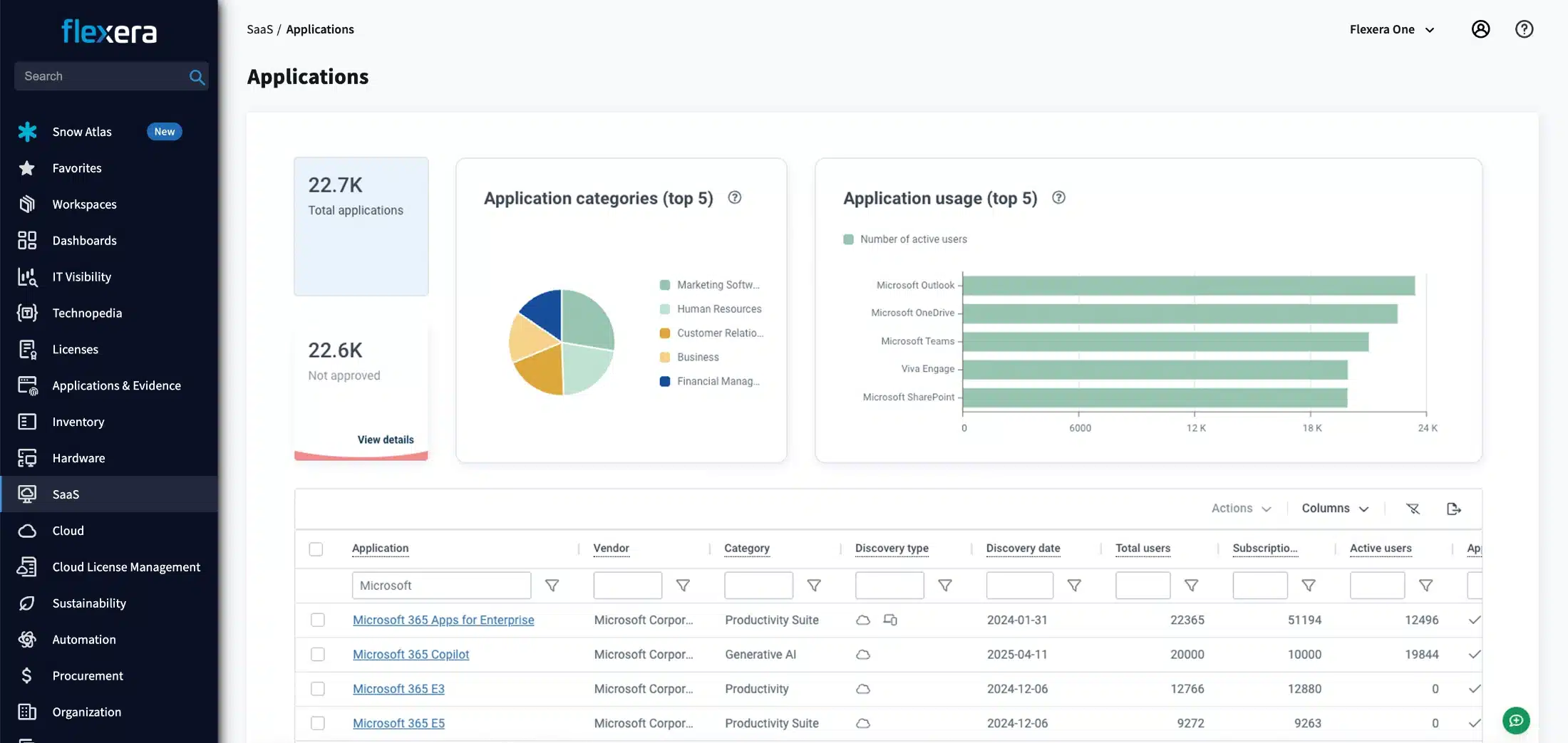
Flexera One combines FinOps, IT asset management, and SaaS management capabilities to help enterprises understand and optimize technology spending.
How it compares to Ternary: Both address spending beyond public cloud. Flexera deserves consideration when your evaluation also includes software assets, licensing, and workload optimization.
Confirm which Flexera products you need to reproduce your Ternary reporting and financial workflows.
Pros
- ✅ Connects cloud financial management with broader IT asset and SaaS management.
- ✅ Supports cost allocation, forecasting, budgets, and anomaly management.
- ✅ Offers optimization recommendations and policy-based actions.
- ❌The wider portfolio includes distinct products; confirm what your purchase covers.
- ❌Automation requires appropriate permissions and configured policies.
- ❌Your team must coordinate financial, asset, and engineering data to benefit from the broader scope.
Bottom line: Shortlist Flexera when replacing Ternary is part of a broader hybrid IT management decision. A narrower platform may suit teams focused on one FinOps workflow.
See our Flexera alternatives guide to compare broader platforms with specialist options.
5. Vantage
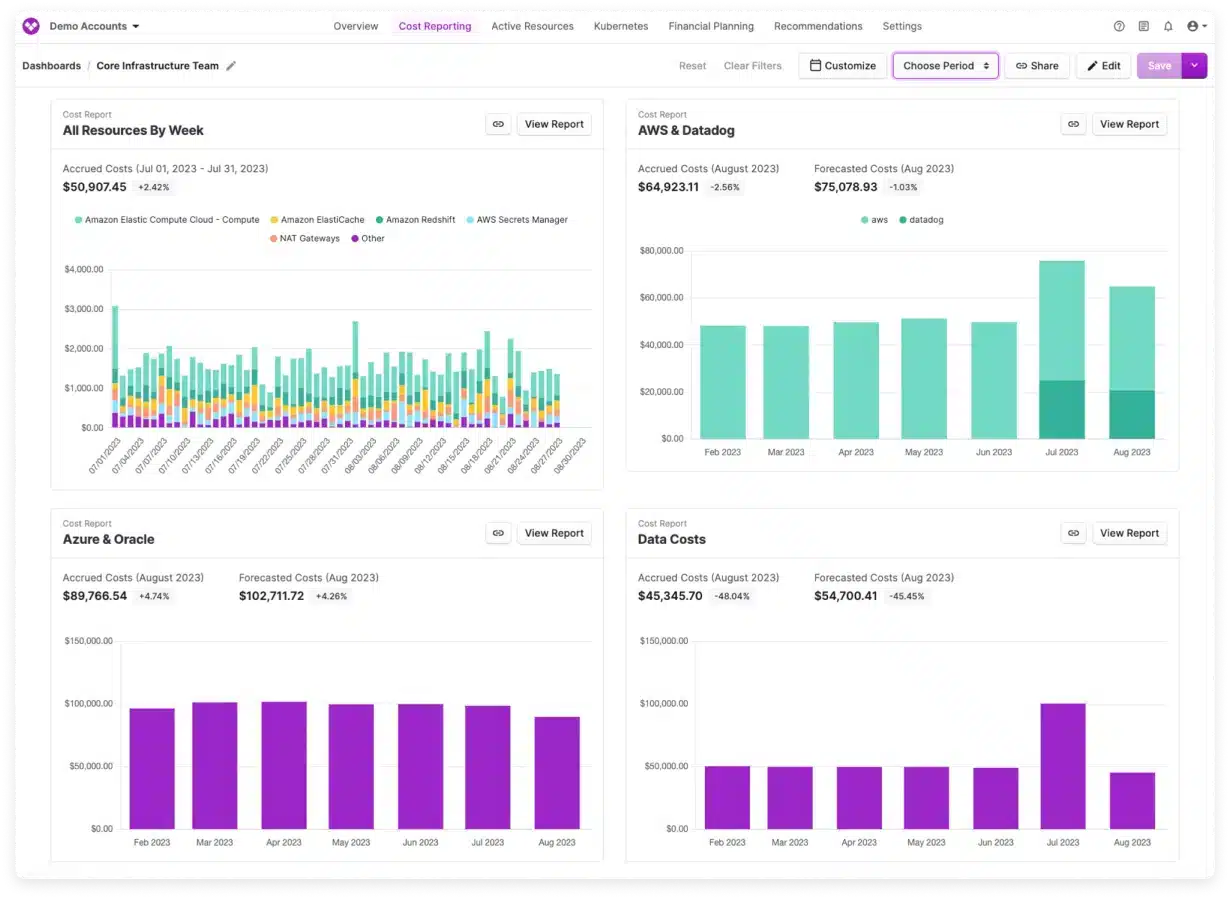
Vantage brings cloud, AI, SaaS, and infrastructure costs into one platform for reporting, allocation, budgeting, and optimization.
How it compares to Ternary: Vantage is worth evaluating when your priority is organizing provider costs into team-level reports and budgets. Its virtual tags and shared-cost allocation support business ownership.
Test your accounting requirements separately, and distinguish its broad reporting coverage from its AWS Savings Plans purchasing automation.
Pros
- ✅ Consolidates costs across multiple cloud and technology providers.
- ✅ Uses virtual tags and allocation rules to distribute shared expenses.
- ✅ Publishes entry-level prices and offers AWS Savings Plans automation.
- ❌ Self-service plans limit tracked spending, users, and data retention.
- ❌ Multi-provider reporting does not imply commitment purchasing across every provider.
- ❌ Your team still needs to configure ownership and shared-cost rules.
Bottom line: Consider Vantage when reporting, allocation, and budgets are your main requirements. Compare your full spending scope against plan limits before using its entry price to estimate costs.
6. Usage.ai
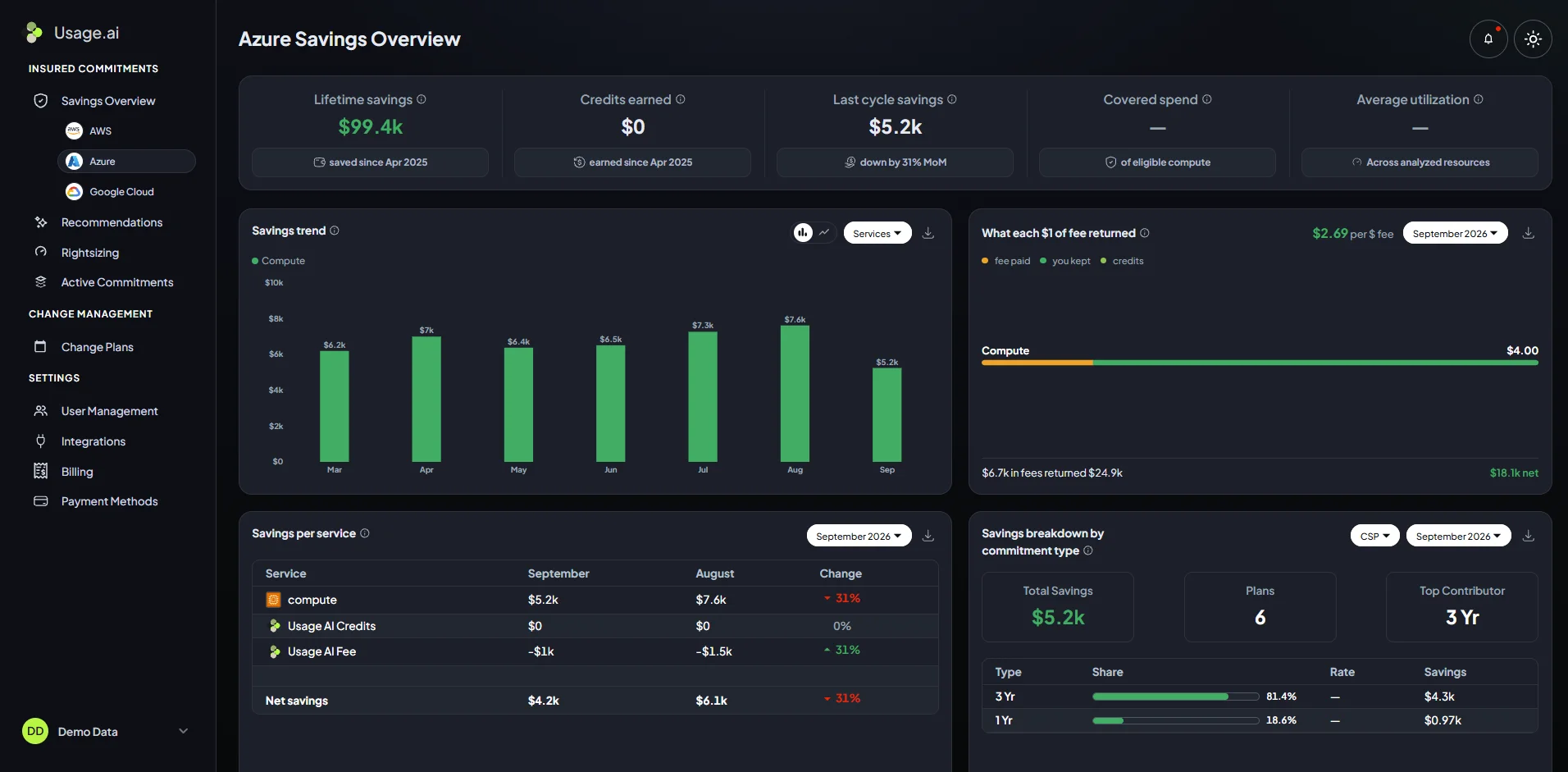
We manage eligible cloud commitments across AWS, Azure, and Google Cloud, helping teams identify savings opportunities, control purchases, and adjust future buying as usage changes.
How we compare to Ternary: Choose us when your priority is turning commitment opportunities into realized savings. We manage eligible purchases through Copilot or Autopilot and provide Cashback for qualifying unused Flex Insured commitment value.
If Ternary already meets your reporting needs, we can address commitment execution and eligible downside protection alongside it.
Pros
- ✅ Review purchases in Copilot or let Autopilot execute within your approved controls.
- ✅ Keep commitments in your own cloud accounts.
- ✅ Receive Cashback for qualifying unused value on eligible Flex Insured Commitments.
- ❌ Commitment automation does not resize or modify production resources.
- ❌ Existing commitments remain subject to our terms; adjusting future purchases does not cancel them.
- ❌ Cashback requires eligibility, including 30 consecutive days of underutilization, and protection ends when the managed service ends.
Bottom line: Consider us when you need ongoing commitment execution and eligible downside protection. Retain or separately evaluate the broader financial reporting capabilities your team requires.
Read how we calculate savings, fees, and Cashback to understand the economics.
Should you replace Ternary or add another platform?
The best Ternary alternatives should solve a clear operational problem and deliver enough value to justify the transition or additional cost.Think about the last time your cloud bill surprised you. Was finding the cause difficult, or did your team understand it but struggle to act? Better reporting can help explain the bill; a specialist may help complete the work.
If Ternary already gives you answers you trust, replacing it could mean rebuilding useful reports while leaving the real problem unresolved.
Questions to ask before buying
Once you know whether you need a replacement or an additional tool, use these questions to test your shortlist:Can you explain this charge? Bring a shared expense your team struggles to allocate and ask for a demonstration.
Who acts after an alert? Clarify what the platform executes and what your team still handles.
Who handles setup, and what will it cost? Confirm who connects billing and historical data, rebuilds business mappings, and grants action permissions. Include that work in the quote.
What can we export, and what obligations remain? Ask for a sample export of the data and reports you need. Check renewal dates, cancellation notice, and any commitments or fees that continue after departure.
What happens if we leave? Confirm what data you can export and which financial obligations continue.
What do you actually gain by switching?
Suppose a new platform delivers $12,000 in monthly savings. That sounds impressive, but your current setup already saves $8,000.Here’s what switching adds:
| Calculation | Amount |
|---|---|
| Additional savings beyond your current setup | $4,000/month |
| Minus additional platform fees | −$1,500/month |
| Minus additional team effort | −$500/month |
| Extra value you keep | $2,000/month |
A $144,000 annual savings headline becomes a $14,000 first-year reason to switch. Compare the improvement, not just the headline.
What should your next FinOps platform actually improve?
Before starting a trial, finish this sentence:The best Ternary alternatives should make a measurable difference to work your team already needs to complete. Ask vendors to demonstrate that improvement with your data.
Final verdict: Which Ternary alternative should you choose?
The best Ternary alternatives depend on the job you need done. Shortlist CloudZero or Finout for business cost allocation, IBM Cloudability for enterprise cloud planning, Flexera One for hybrid IT requirements, and Vantage for multi-provider reporting and budgets.Consider Usage.ai when you want to turn commitment opportunities into savings through controlled purchasing and eligible Cashback protection. If Ternary already gives you reporting you trust, we can help address commitment management alongside it.
Book a 15-minute demo to see how our purchasing controls and Cashback protection could fit your cloud environment. No cloud connection is needed for the demo.
Manage eligible commitments across AWS, Azure, and Google Cloud with purchasing controls and Cashback protection. Terms apply.
Frequently asked questions
What are the best Ternary alternatives for FinOps teams?
CloudZero, Finout, IBM Cloudability, Flexera One, Vantage, and Usage.ai address different requirements. Choose around the workflow you need to improve, from allocation and planning to automated commitment management.
Which Ternary alternatives offer free plans?
Vantage offers a free Starter plan with tracked-spending limits. We offer free dashboards and recommendations for companies below $200,000 in monthly cloud spending. Our managed commitment service is a separate offering.
Can Usage.ai replace Ternary?
We can address commitment-management requirements through controlled purchasing and eligible Cashback protection. Teams relying on Ternary’s broader technology ledger and accounting workflows should evaluate those requirements separately.
Does multi-cloud reporting include automated commitment purchasing?
No. A platform may report costs across several clouds while automating purchases for only specific providers or commitment types. Ask vendors to demonstrate the exact actions supported for your workloads.
Will switching platforms cancel existing cloud commitments?
Switching tools does not itself cancel provider commitments. Review their remaining terms, the departing vendor’s obligations, and any protection that ends with its service before moving.