 AWS
 Microsoft Azure
 Google Cloud


Disclosure: Usage.ai publishes this comparison and is one of the vendors evaluated. Product and pricing sources checked October 20, 2026. Best-fit recommendations are editorial judgments.
ProsperOps alternatives compared
| Platform | Best fit | Purchasing scope | Pricing model | Main trade-off |
|---|---|---|---|---|
| ProsperOps ADM | Autonomous commitments | AWS, Azure, Google Cloud | Savings Share | Check inherited savings and exit fees |
| Usage.ai | Commitments with eligible Cashback | AWS, Azure, Google Cloud | Share of generated savings; no platform fee | Confirm eligibility and payout timing |
| Archera | Buyer-selected plans and optional guarantees | AWS, Azure, Google Cloud | Native tools free; guarantee premium extra | Premium varies by term and service |
| nOps | Commitments within wider FinOps | AWS, Azure, Google Cloud | Savings share; visibility priced separately | Compare module scope and protection |
| Zesty | Commitments plus infrastructure capabilities | AWS and Azure | Usage/savings-based quote | Confirm coverage for each module |
| Vantage | AWS Savings Plans alongside reporting | AWS Autopilot | 5% of realized savings; platform extra | Reporting coverage exceeds purchasing scope |
| CAST AI | Kubernetes resource and node efficiency | Imports existing commitments across three clouds | Custom quote | Importing differs from new purchasing |
How we compared the platforms
We reviewed product documentation and pricing for execution, service coverage, approval controls, fees and financial protection. We have not benchmarked these vendors on a common workload. Confirm the offered terms for your accounts, services and instruments.
Dashboard images show interfaces, sometimes with demo or historical data. G2 screenshots capture individual experiences; review dates and collection labels remain visible. Their ratings and savings figures are not comparable performance tests.
ProsperOps as the baseline
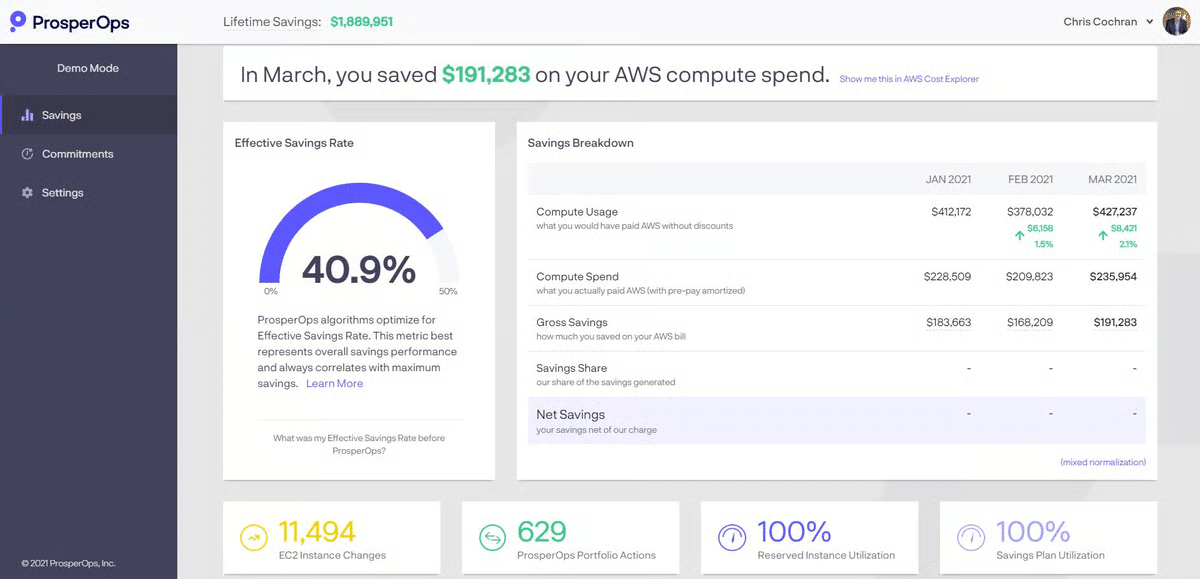
ProsperOps Autonomous Discount Management (ADM) purchases and adjusts commitment portfolios across AWS, Azure and Google Cloud. Its controls include purchasing guardrails, savings reporting and Intelligent Showback.
The AWS product page lists services including EC2, RDS, Lambda, Fargate, Redshift and DynamoDB. It also names Azure VMs, App Service and SQL Database, and Google Cloud Compute Engine, GKE, Cloud Run and Cloud SQL. Confirm the exact instruments and regions in your quote.
Savings Share treatment varies across inherited, base, flex and smart savings categories. The termination documentation describes unrealized charges on Flex/Smart layer instruments for the remaining term, capped at 12 months. Request your own written exit calculation. [1]
Keep ProsperOps if its coverage, controls and net result meet your requirements. Compare alternatives using the same existing commitments. Our Usage.ai vs ProsperOps guide examines the two commitment products more closely.
What users say
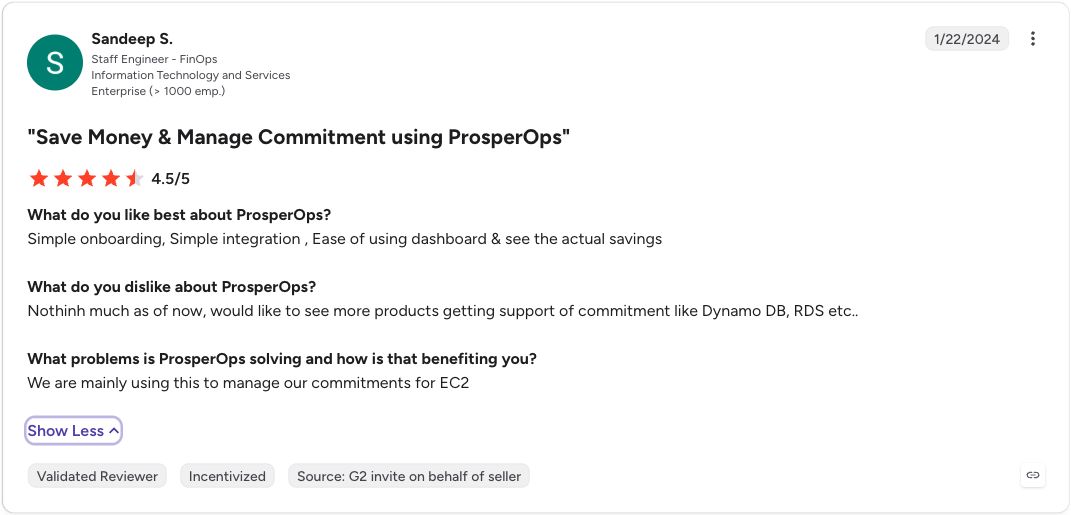
The reviewer liked onboarding and savings visibility. Their January 2024 request for RDS and DynamoDB support is historical: the product documentation checked for this comparison now lists both services.
The 6 best ProsperOps alternatives
1. Usage.ai
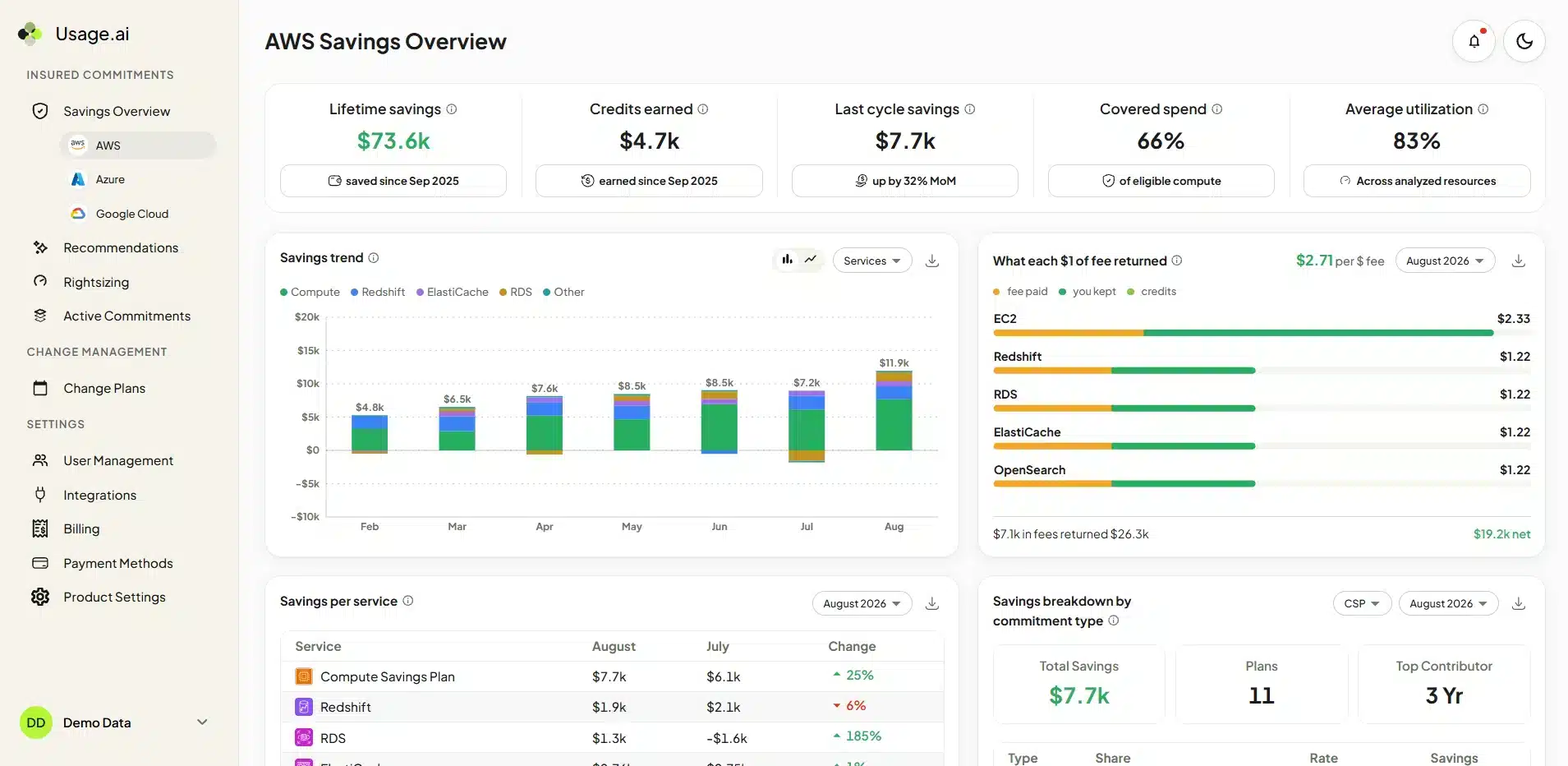
Usage.ai suits teams that want managed commitments with either automatic purchases through Autopilot or individual approvals through CoPilot. It operates at the billing layer without agents or changes to production applications.
Coverage and purchasing
AWS coverage includes eligible EC2, RDS, ElastiCache and Lambda usage through Savings Plans/RIs. Azure supports Reservations and Savings Plans, with VMs, SQL Database and Cosmos DB listed. Google Cloud supports resource- and spend-based CUDs, including Compute Engine, Cloud SQL and BigQuery. Confirm eligibility for the recommendations in your account.
Pricing and trade-offs
Pricing is a share of generated savings, with no platform fee. Flex program documentation defines losses against the on-demand cost of the same usage. Cashback is calculated monthly and paid 90 days after accrual. Verify the covered commitments and your plan’s remedy; existing customer-purchased commitments do not automatically become protected. If resource waste is your main problem, evaluate a workload optimizer too. [2]
What users say
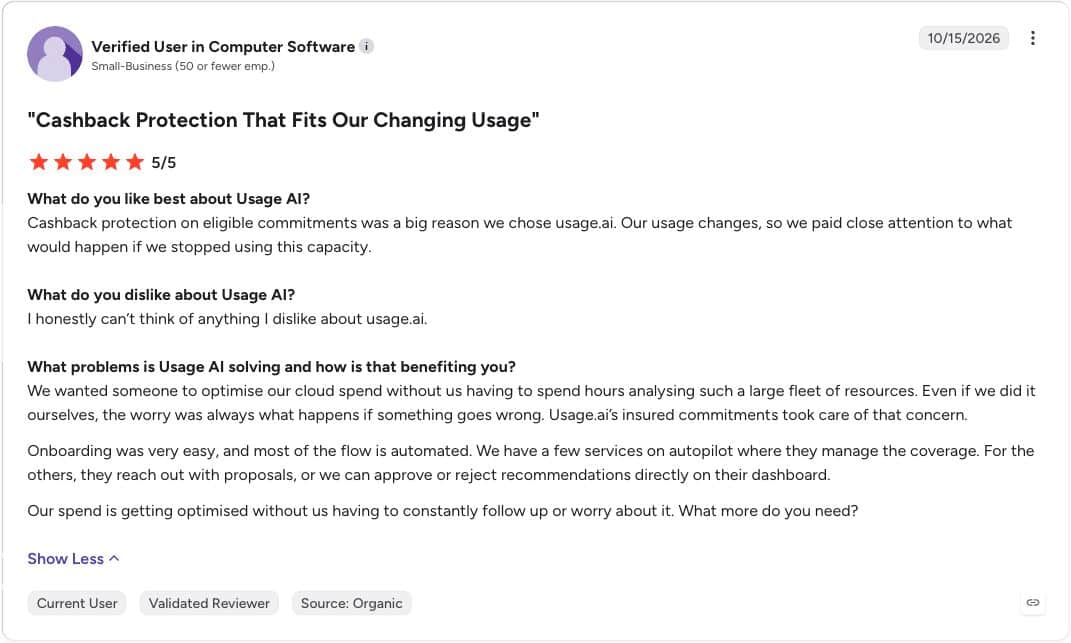
The reviewer valued underutilization protection and the choice between automatic purchases and approvals, and reported no specific dislike. This is one user’s experience, with no standardized savings measurement.
2. Archera
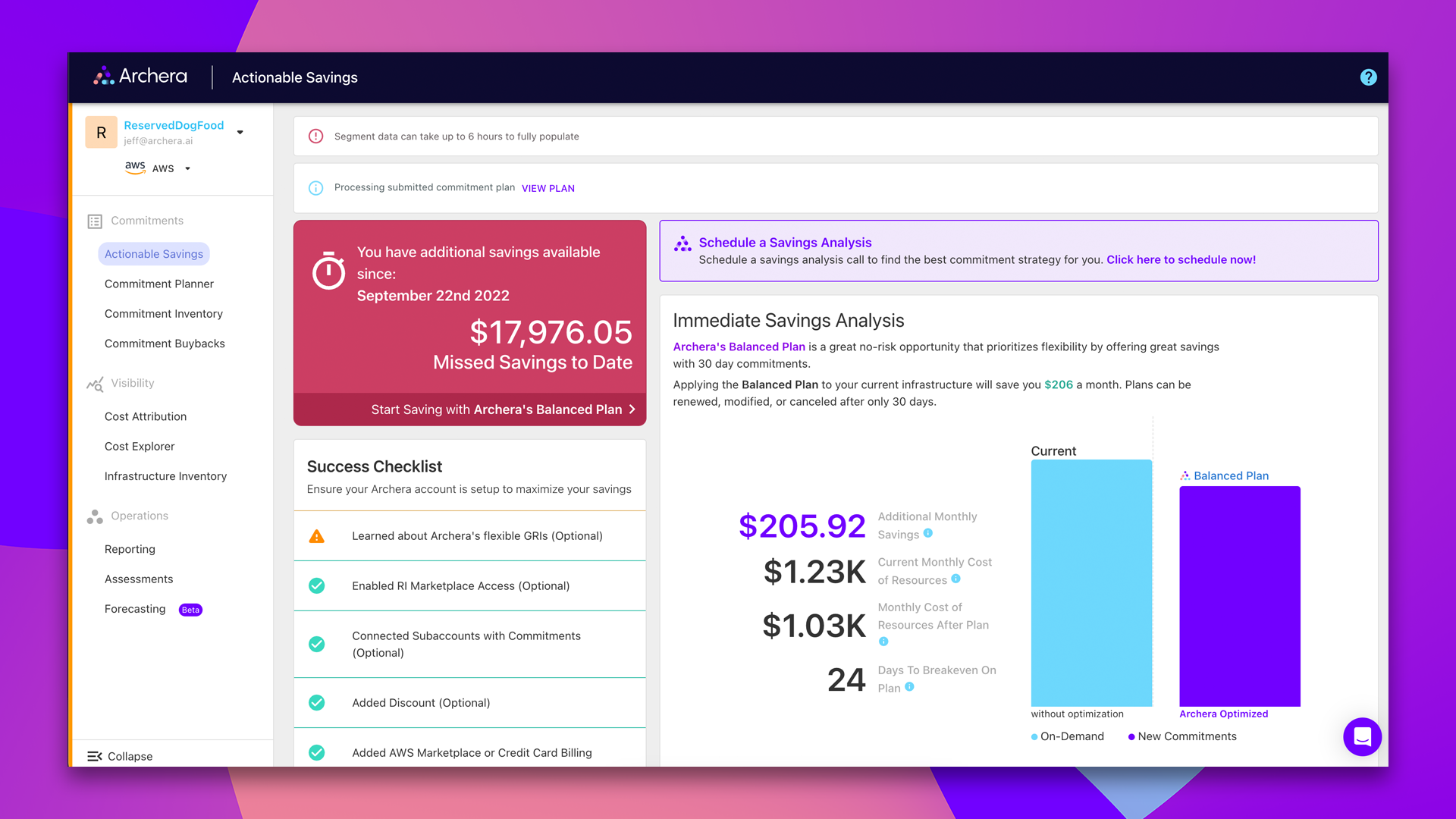
Archera fits teams that want to choose commitment plans and selectively pay for protection or shorter terms. Customers select purchases, with policies available for exchanges and renewals.
Coverage and purchasing
Its native tools support planning and purchasing across AWS, Azure and Google Cloud. Optional Guaranteed Savings Plans and Guaranteed RIs cover AWS/Azure; Guaranteed CUDs cover Google Cloud. Advertised terms start at 30 days, depending on the instrument. Ask for the service-level catalog.
Pricing and trade-offs
Native commitment tools have no software charge. Guaranteed Commitments add a savings-linked premium that varies by service and term. The Rebate Guarantee addresses eligible underutilization; the Release Guarantee provides eligible exits. Compare the premium, payout timing and release conditions. Native cloud commitments retain provider terms. This approach suits buyers who want to select plans; include that decision-making effort in your evaluation. [3]
What users say
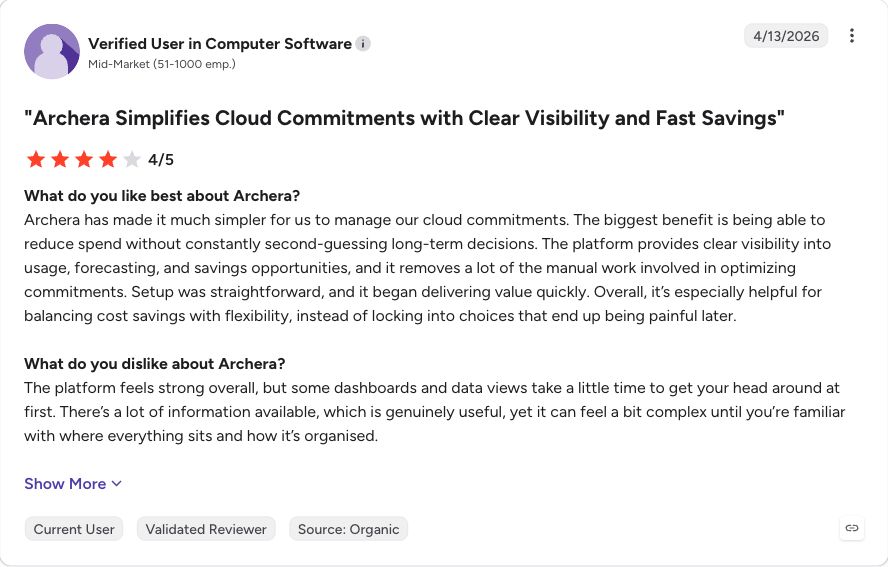
The reviewer liked forecasting and reduced manual work, but found some dashboards difficult to learn. The retained screenshot is an excerpt, so it does not show the whole review.
3. nOps
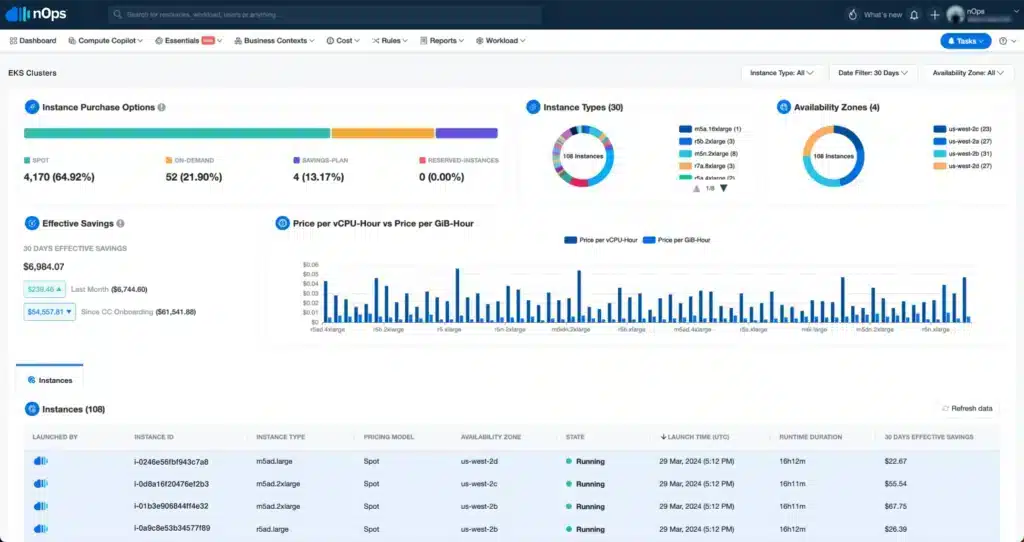
nOps combines commitment automation with cost visibility, allocation and selected infrastructure actions. It is worth evaluating when your team wants several of those capabilities from one provider.
Coverage and purchasing
Documented execution includes AWS Savings Plans/RIs for compute and non-compute services; Azure Savings Plan for Compute and Reservations, including VMs and SQL services; and Google Cloud resource- and spend-based CUDs. Listed Google Cloud services include Compute Engine, Cloud SQL and BigQuery. EKS, storage and scheduling modules have separate scopes.
Pricing and trade-offs
Autonomous Rate Optimization charges a share of savings. Cost Visibility and Allocation has a fixed fee based on spend. Optimize documentation describes a credit remedy for qualifying commitments nOps purchases and manages under its utilization guarantee. Confirm the applicable cloud, exclusions and redemption terms. Request a module-by-module quote so a broad bundle does not obscure the cost of the capability you need. [4]
What users say
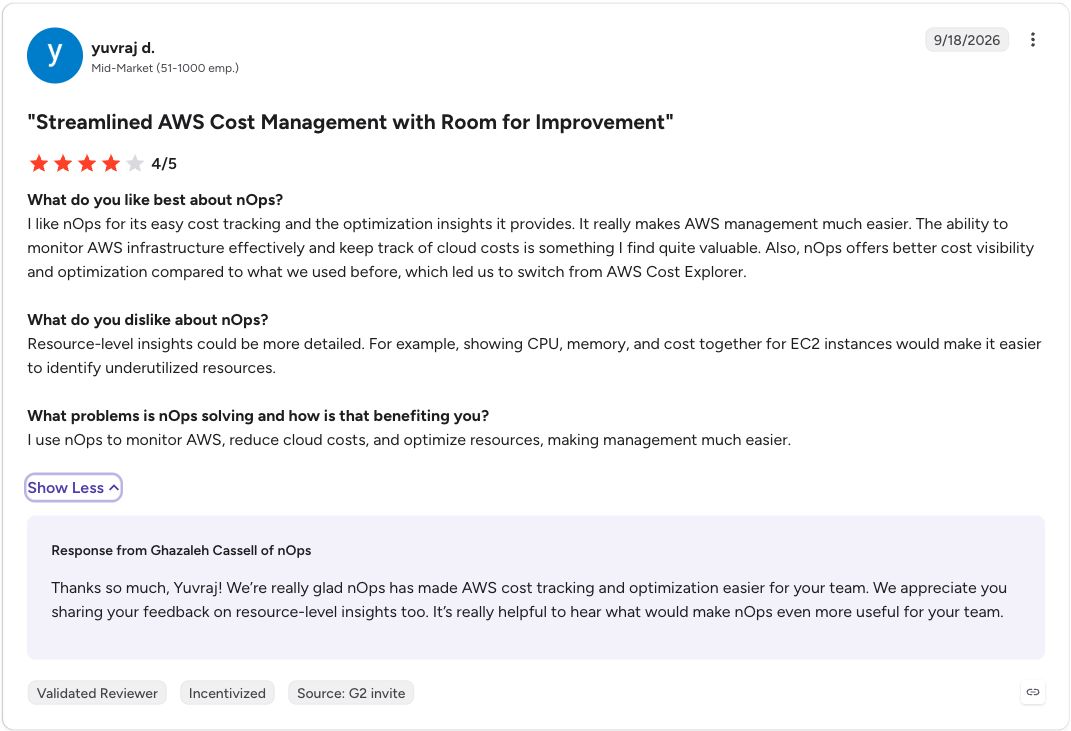
The reviewer valued AWS cost tracking and optimization insights, but wanted CPU, memory and cost information combined more clearly at resource level.
4. Zesty
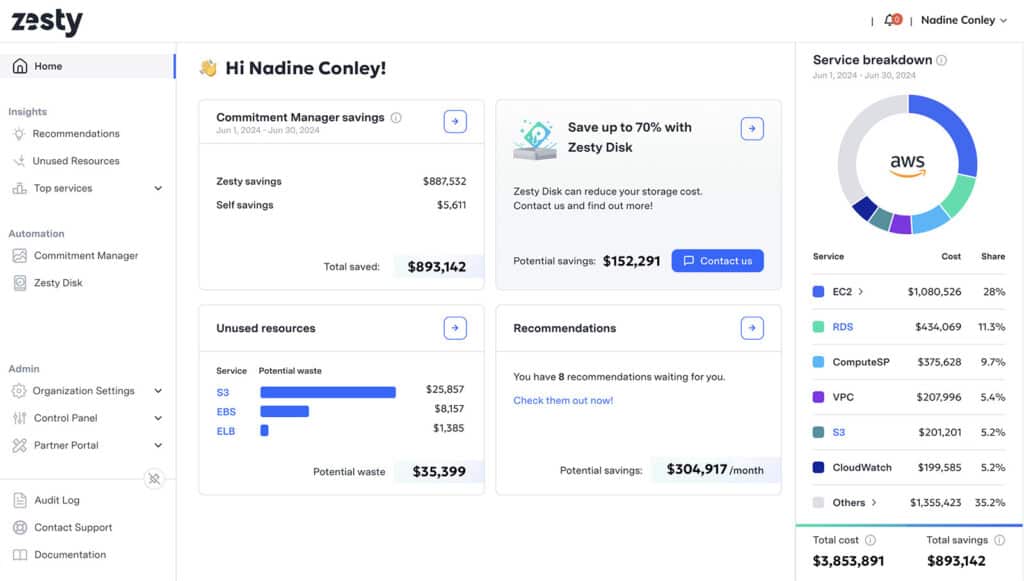
Zesty fits teams evaluating both commitment rates and infrastructure consumption. Its wider platform includes Kubernetes and storage capabilities, which should be scoped separately from Commitment Manager.
Coverage and purchasing
The AWS product documents Compute and Database Savings Plans and Convertible RIs, with EC2, RDS/Aurora, ElastiCache and OpenSearch among listed services. Azure onboarding distinguishes read-only analysis from active Savings Plan and reservation purchasing. Purchases begin after the customer enables Commitment Manager. Google Cloud purchasing is not established by these reviewed sources.
Pricing and trade-offs
Zesty describes pricing based on usage and realized savings; request a quote for the selected modules. Check approval controls and how it separates rate savings from resource changes. If protection matters, obtain the contractual remedy and eligibility: portfolio adjustments alone do not establish a reimbursement guarantee. Demonstrate the required cloud and service workflow before shortlisting it. [5]
What users say
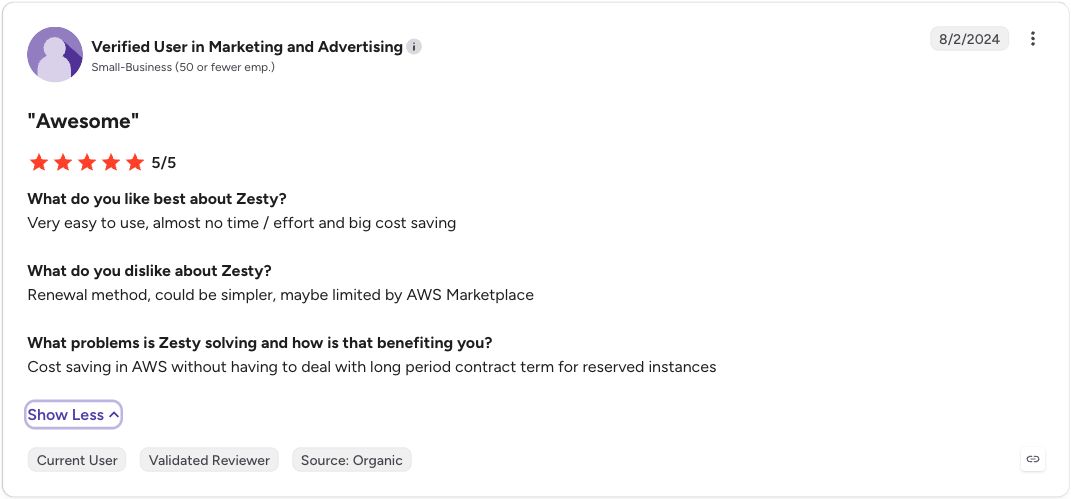
The reviewer described low-effort AWS savings and wanted a simpler renewal process. That comment dates to August 2024; check the current renewal workflow during evaluation.
5. Vantage
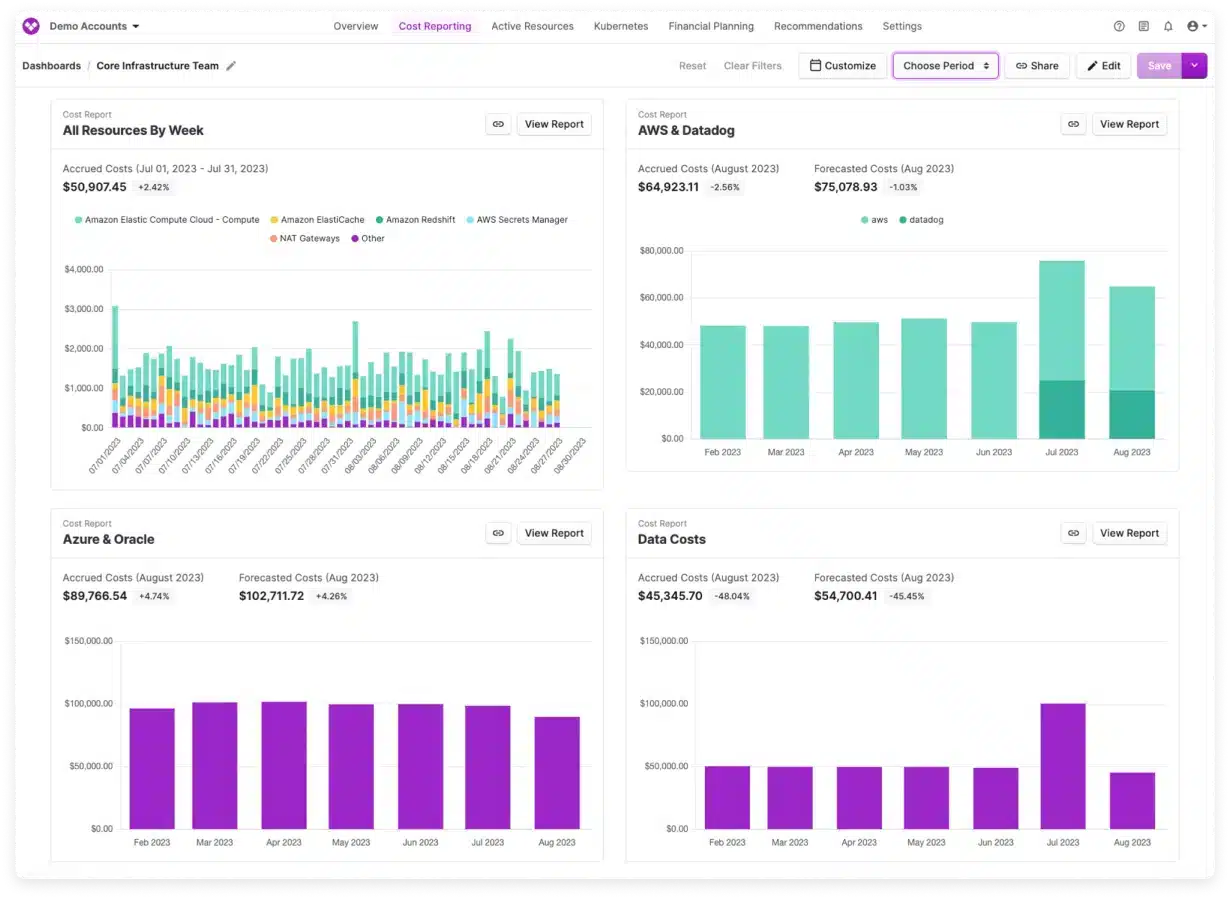
Vantage fits AWS-focused teams that want Savings Plan purchases within a reporting platform. Autopilot targets uncovered on-demand spend while accounting for existing Savings Plans and RIs.
Coverage and purchasing
Compute Savings Plans cover eligible EC2, Fargate and Lambda usage, with automatic or approval-based purchasing. Documentation also describes Database Savings Plans. RI recommendations for RDS, ElastiCache, Redshift and OpenSearch use a separate manual workflow. Confirm the database workflow in your account. Autopilot’s reviewed purchasing scope is AWS; reporting supports additional providers.
Pricing and trade-offs
Autopilot’s published fee is 5% of realized savings, with the reporting platform priced separately. Include both costs unless reporting is already part of your budget. Ask what remains payable when automation is disabled and how falling usage affects commitments. Three-cloud reporting does not make Autopilot a three-cloud purchasing replacement. [6]
What users say
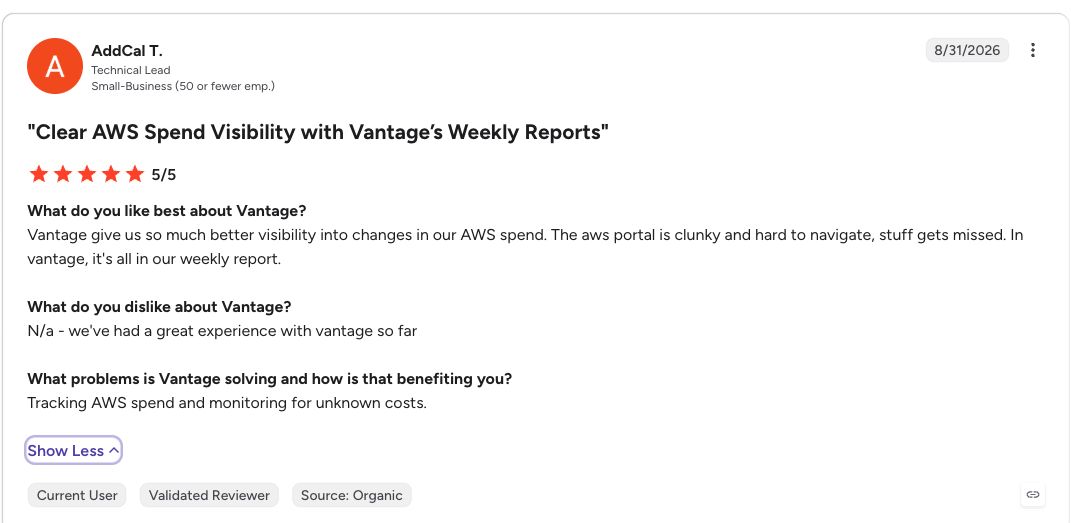
The reviewer liked weekly AWS spend reports and tracking unexpected costs, and reported no specific dislike. Their review concerns reporting rather than measured Autopilot performance.
6. CAST AI
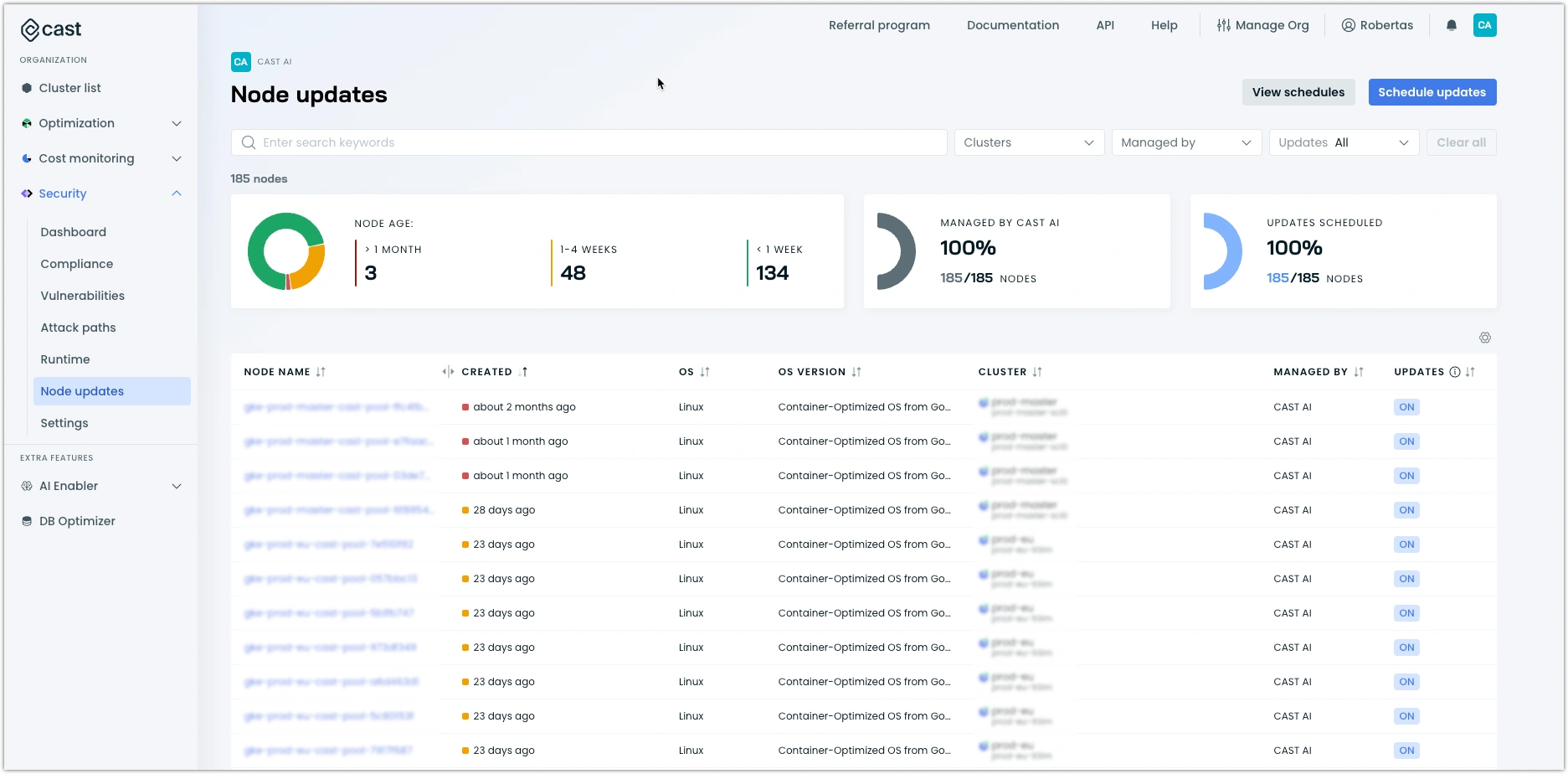
CAST AI fits organizations whose main opportunity is excess Kubernetes resource consumption or poor cluster utilization. Workload and node automation require a different operational evaluation from billing-layer commitment purchases.
Coverage and purchasing
Its documentation describes CPU/memory optimization, scaling and workload placement. The Commitments feature imports existing AWS/Azure RIs and Savings Plans, plus Google Cloud resource-based and compute flexible CUDs. Autoscaling can use that discounted capacity and track utilization. The import workflow does not establish new commitment purchasing; ask for a separate demonstration if that is required.
Pricing and trade-offs
Pricing requires a custom quote based on the environment. Compare the Kubernetes spend addressed, cluster permissions, policies, configuration effort and rollback procedures. If you also use a commitment manager, assign ownership of each action so resource changes and purchasing assumptions stay coordinated. [7]
What users say
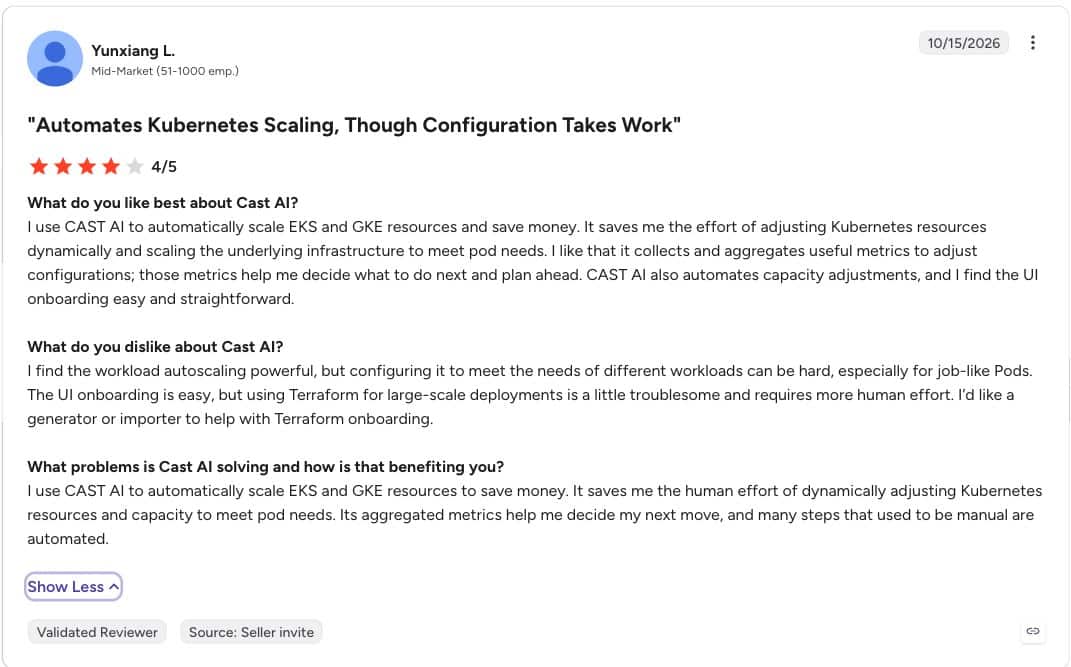
The reviewer valued EKS/GKE scaling but found some workload tuning and larger Terraform deployments difficult. Include deployment and configuration effort in your assessment.
Customer example: Ozone
Usage.ai’s Ozone case study, updated July 21, 2026, reports a 55% reduction in on-demand compute spend. It describes manual AWS optimization work, a read-only savings test on a sample account, then wider adoption. [8]
The published case omits the measurement period, dollar baseline, existing-discount adjustment and fee-adjusted reconciliation. It describes the offering used in that case, rather than outcomes for every current product. Treat it as vendor-published customer evidence, not an audited comparison with ProsperOps. For your assessment, request the same starting bill, usage changes, fees and net result.
Other buying paths
AWS-only teams can also evaluate CloudFix RightSpend for EC2 discount management. CloudZero’s unit economics and Finout’s allocation/reporting address spend accountability; verify their current execution modules if purchasing is essential.
AWS Cost Explorer provides Savings Plan recommendations and purchasing tools. Native tools can fit a team prepared to own buying decisions and ongoing review. Include that internal work and the remaining commitment risk when comparing a managed service.
Worked example: net savings and cash flow
Hypothetical example. All amounts, fees and outcomes below are invented US-dollar figures for one month. A and B represent no vendor. Both assume identical usage with a $100,000 on-demand baseline.
| Monthly calculation | Fictional A | Fictional B |
|---|---|---|
| Gross discount on utilized usage | $30,000 | $35,000 |
| Unused commitment cost | $2,000 | $8,000 |
| Cloud charges: baseline minus discount plus unused cost | $72,000 | $73,000 |
| Assumed savings-share fee | 20% = $6,000 | 10% = $3,500 |
| Assumed platform charge | $0 | $1,000 |
| Total paid before reimbursement | $78,000 | $77,500 |
| Net savings before reimbursement | $22,000 / 22% | $22,500 / 22.5% |
B initially saves $500 more. If A later reimburses its full $2,000 unused cost while B provides no reimbursement, A’s net benefit becomes $24,000. Its initial cash requirement remains $78,000. That reimbursement is also fictional.
For an actual switch, compare the cost of staying with the alternative using your existing commitments and private discounts. Add implementation and exit costs over the same period. This illustration excludes those items, taxes and upfront purchases, and is not an annual forecast.
How to switch from ProsperOps
- Export commitments and billing history. Record owners, services, regions, expiry dates, payment terms and utilization.
- Request a written exit-cost estimate, including notice requirements, continuing vendor fees and remaining provider payments. Check the documented Flex/Smart unrealized charges against your signed agreement. [1]
- Give finalists the same inventory and forecast. Compare normal usage with a usage-drop scenario, showing fees, eligible protection and payout timing.
- Assign one purchasing owner per account, service and instrument scope. Confirm old buying automation is disabled before enabling its replacement. Supported read-only analysis can overlap.
- Approve the new permissions, budgets, term limits and purchase controls. Confirm how existing commitments are recognized and which commitments qualify for protection.
- Reconcile cloud-native purchase records and the next complete billing cycle. Track final invoices and outstanding reimbursements before removing superseded access.
Leaving the software vendor does not cancel cloud commitments. Set the handover date around contractual notice and account requirements; no universal migration duration is established here.
Product and pricing sources
Documents checked October 20, 2026. Coverage and contract terms can change; confirm the offer for your environment.
- ProsperOps: AWS ADM product page and its multicloud service list; “How does ProsperOps bill?”; “What are unrealized fees referenced in the contract?”
- Usage.ai: pricing; AWS, Azure and Google Cloud product pages; Flex program, eligibility and Cashback documentation.
- Archera: “Cloud Commitment Management,” “Insured Cloud Commitments” and pricing.
- nOps: Commitment Management, Azure/Google Cloud rate optimization, Optimize and pricing.
- Zesty: AWS Commitment Optimization, Azure Commitment Manager onboarding and pricing.
- Vantage: Autopilot product page/documentation and platform pricing.
- CAST AI: Workload Optimization, “Commitments” documentation and pricing requests.
- Usage.ai: Ozone case study (updated July 21, 2026).
- G2 summaries describe the retained screenshots, with dates and collection labels preserved. Additional references: CloudFix RightSpend, CloudZero Unit Economics, Finout, and AWS Savings Plans in Cost Explorer.
Evaluate Usage.ai against your actual commitment needs
If eligible commitment underutilization is your main concern, evaluate Usage.ai's Cashback protection against your usage and the alternatives' remedies. Request a model showing gross savings, fees, remaining commitment exposure, and net savings. Start with the Usage.ai savings calculator.
Frequently asked questions
Which ProsperOps alternatives support AWS, Azure, and Google Cloud commitments?
Usage.ai and nOps document automated management across all three. Archera supports native and Guaranteed Commitments with customer-selected plans. Confirm service and instrument eligibility; cloud support alone does not establish identical purchasing or protection.
Is Usage.ai a direct ProsperOps alternative?
Yes, for the commitment-management buying need. Compare purchasing controls, service coverage, fee baselines, eligible Cashback, payout timing and cancellation obligations against ProsperOps ADM.
Which alternative fits Kubernetes optimization?
CAST AI focuses on Kubernetes workload and node optimization. Zesty also has Kubernetes capabilities. Scope resource changes and cluster permissions separately from commitment purchases.
Are there free options for managing commitments?
Archera’s native planning/management tools are free; optional guarantees carry a premium. AWS Cost Explorer provides native tools. Cloud commitments remain payable, and applicable service or API charges should be checked.
What happens to commitments when I leave a vendor?
Provider payment obligations and vendor fees are separate. Check commitment ownership, remaining term and any continuing charges. ProsperOps documents unrealized Flex/Smart Savings Share charges for the remaining term, capped at 12 months; your agreement determines the amount.
How does Archera differ from Usage.ai?
Archera emphasizes customer-selected plans and optional guarantees. Usage.ai has automatic or approval-based purchasing with eligible Cashback. Compare the same instruments, fees, protection conditions and reimbursement timing.
How should I compare savings percentages?
Use identical usage, existing commitments and private discounts. Request gross savings, vendor fees, unused commitment costs and net savings separately. Distinguish cash received from pending or restricted credits.
Can I evaluate another vendor while ProsperOps is still connected?
Supported read-only analysis can overlap. Coordinate purchasing permissions so one owner controls each scope, and agree the handover before enabling replacement automation.
Are the savings figures in the worked example actual vendor results?
No. Every figure and fee in fictional A and B is hypothetical. The separate Ozone report is customer evidence with the stated limitations.