
 AWS
 Microsoft Azure
 Google Cloud


What is CloudBolt?
CloudBolt provides cloud management and automation software for organizations operating across public, private, and hybrid infrastructure.Its Cloud Management Platform (CMP) supports self-service provisioning, governance, approval workflows, and infrastructure lifecycle operations.
CloudBolt CMP Free includes the full CMP for up to 100 managed resources. CloudBolt states that it has no time limit or credit-card requirement. Organizations exceeding the resource limit need paid licensing.
Why consider CloudBolt alternatives?
Different cloud challenges require different solutions.A platform engineering team may need better provisioning and governance. A FinOps team might prioritize financial reporting, while another organization could focus on commitment savings or resource optimization.
The key question is whether you need to replace CloudBolt’s management workflows or solve a specific problem that your current tools do not adequately address.
For example, if your infrastructure is already running efficiently but you’re still paying On-Demand rates for predictable cloud usage, improving commitment management may provide more value than changing your entire cloud management platform.
CloudBolt alternatives at a glance
The six platforms address different cloud management and optimization needs. Here’s how they compare.| Platform | Best for | What makes it valuable | Pricing |
|---|---|---|---|
| Usage.ai | Cloud commitment savings | Automated eligible purchases, approval controls, and qualifying Cashback Protection | Share of realized savings; no upfront platform fee |
| HPE Morpheus Software | Hybrid-cloud management | Infrastructure provisioning, governance, and orchestration | Edition-based licensing |
| Flexera One FinOps | Enterprise FinOps | Cost allocation, reporting, and commitment optimization | Product-dependent |
| CloudHealth | Cost governance | Multicloud reporting, allocation, and policies | Custom quote |
| IBM Turbonomic | Resource efficiency | Application-aware optimization and automated actions | Custom quote |
| Harness | Engineering-led optimization | AutoStopping, cost visibility, and commitment workflows | Module-dependent |
How we evaluated these alternatives
We evaluated these six alternatives based on their features, cloud coverage, automation capabilities, pricing, implementation effort, and financial-risk management.We also considered how each platform compares with CloudBolt’s infrastructure management capabilities and whether it offers additional value through cost visibility, resource optimization, or commitment savings.
Our goal is to help readers identify the right platform for their requirements, while clearly showing where specialized solutions like Usage.ai can help improve cloud commitment savings.
The 6 CloudBolt alternatives in 2026
1. Usage.ai: Best for cloud commitment savings with Cashback Protection
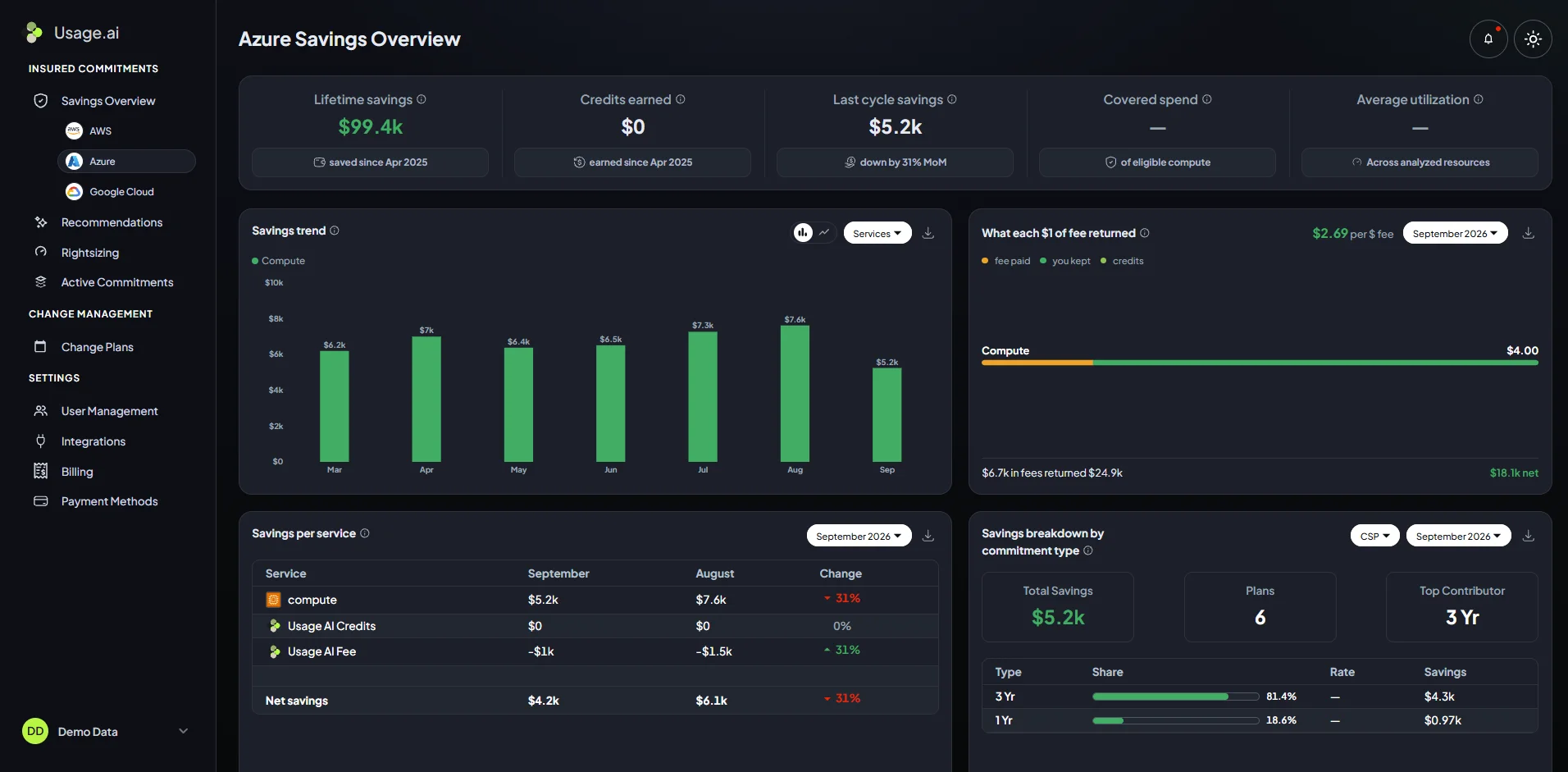
At Usage.ai, we help businesses optimize eligible AWS, Azure, and Google Cloud commitments through automated purchasing, flexible controls, and Cashback Protection for qualifying Flex Insured Commitments.
Key features
Commitment optimization: We analyze eligible usage and existing coverage to identify additional savings opportunities.
Flexible purchasing: Our Autopilot automates supported purchases, while CoPilot lets teams approve recommendations before execution.
Cashback Protection: Qualifying Flex Insured Commitments receive protection against eligible underutilization losses under applicable terms.
Savings reporting: Track commitment coverage, realized savings, fees, and applicable Cashback.
Automated commitment purchasing with approval-based controls.
Cashback Protection for qualifying Flex Insured Commitments.
Read-only Savings Test to identify potential savings opportunities.
Focuses on cloud commitment management rather than direct infrastructure optimization; Cashback Protection applies only to eligible Flex Commitments.
Managed optimization is positioned for businesses spending $200,000+ monthly on cloud services. We charge an agreed share of realized savings, with no upfront platform fee. Existing commitments are treated separately, and the applicable fee base depends on the customer agreement. Our pricing guide explains how savings, fees, and Cashback are calculated.
Looking to improve cloud savings without changing your infrastructure? See how Usage.ai works to explore automated commitment purchasing, approval controls, and Cashback Protection for qualifying Flex Insured Commitments.
2. HPE Morpheus Software: Best for hybrid-cloud infrastructure management
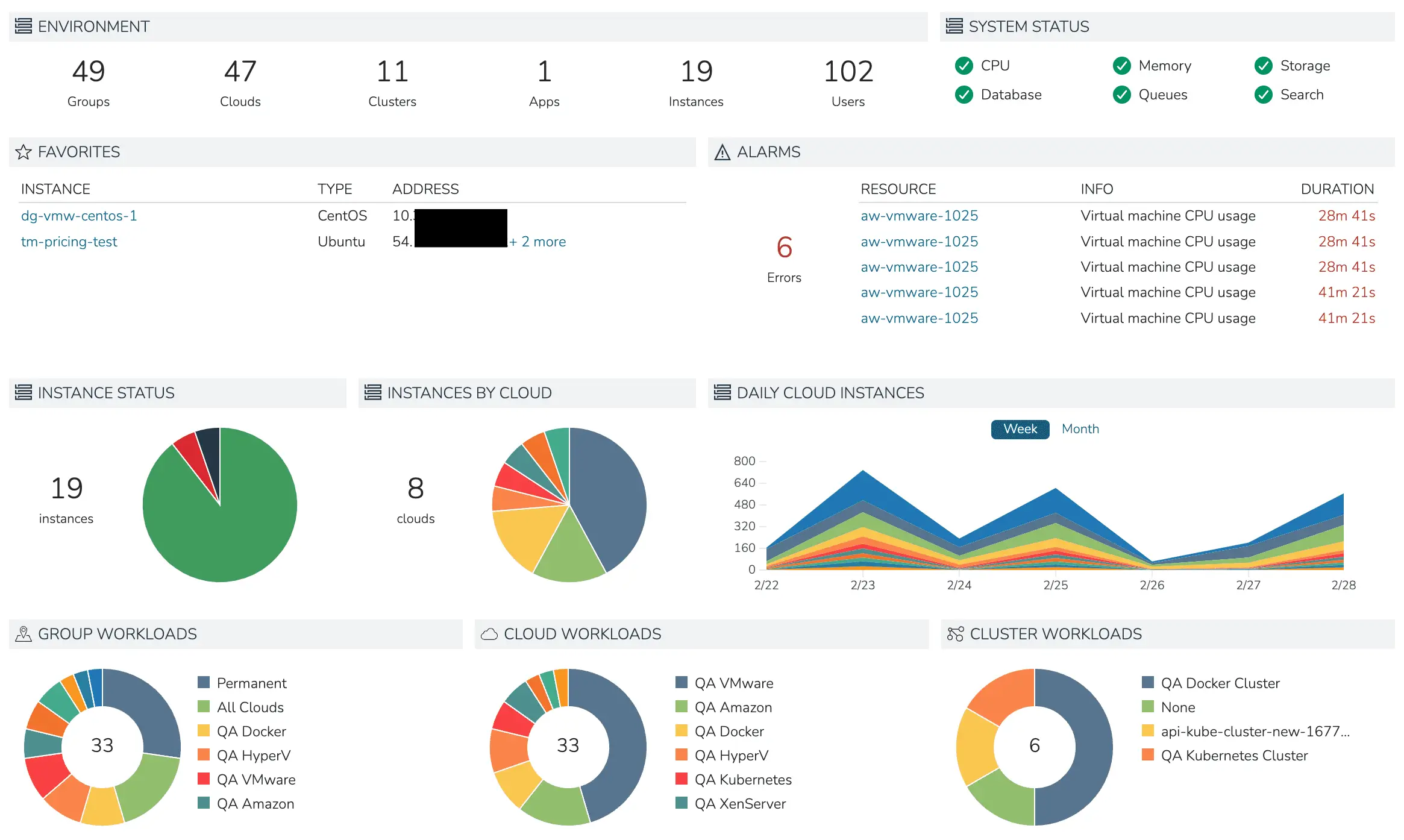
HPE Morpheus Software supports infrastructure management across compatible private and public-cloud environments.
Key features
Self-service provisioning: Standardized catalogs and deployment workflows.
Hybrid-cloud management: Operations across supported public and private infrastructure.
Governance: Policies, permissions, and lifecycle controls.
Supports centralized infrastructure provisioning and management.
Offers governance and automation across hybrid environments.
Capabilities vary by edition.
Migration requires assessment of existing integrations and operational workflows.
HPE uses edition-specific licensing. Current Enterprise documentation describes socket-based licensing and a public-cloud workload conversion ratio. Confirm the applicable SKU, licensing metric, and total price with HPE.
3. Flexera One FinOps: Best for enterprise financial management
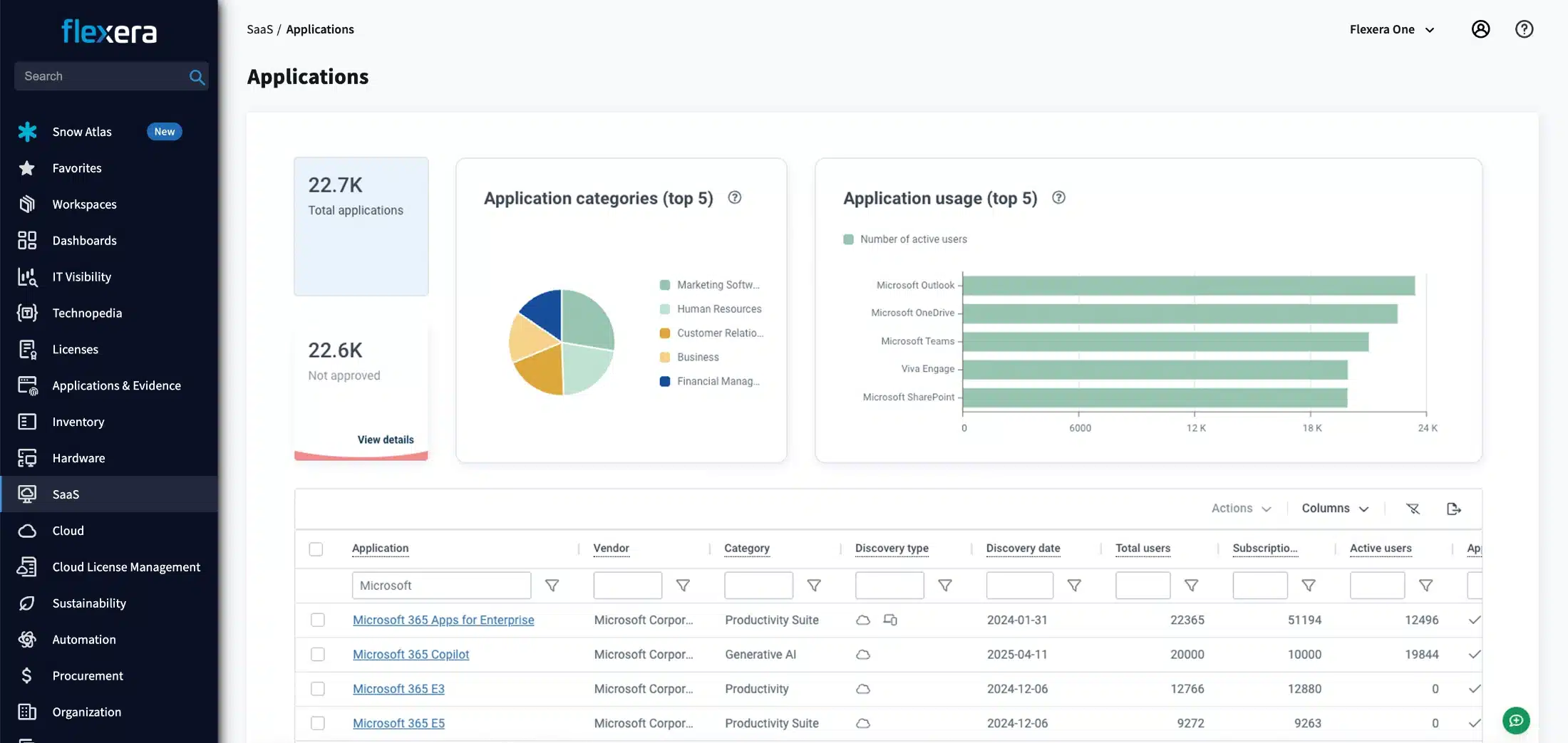
Flexera One FinOps combines financial visibility, cost allocation, forecasting, and optimization.
Key features
Cost visibility: Reporting, allocation, and forecasting.
Optimization: Workload and rate optimization.
Commitment management: Automated management of supported commitment portfolios.
Combines financial reporting with optimization capabilities.
Provides commitment management within a wider FinOps portfolio.
Required capabilities may involve different modules or products.
Fees, purchasing controls, and financial-risk terms require agreement-specific verification.
Pricing depends on the selected products. Commitment optimization offers outcomes-based commercial arrangements, while other capabilities may be charged separately.
For a closer comparison of commitment execution, pricing, and financial protection, read our Usage.ai vs Flexera comparison.
4. CloudHealth: Best for multicloud cost governance
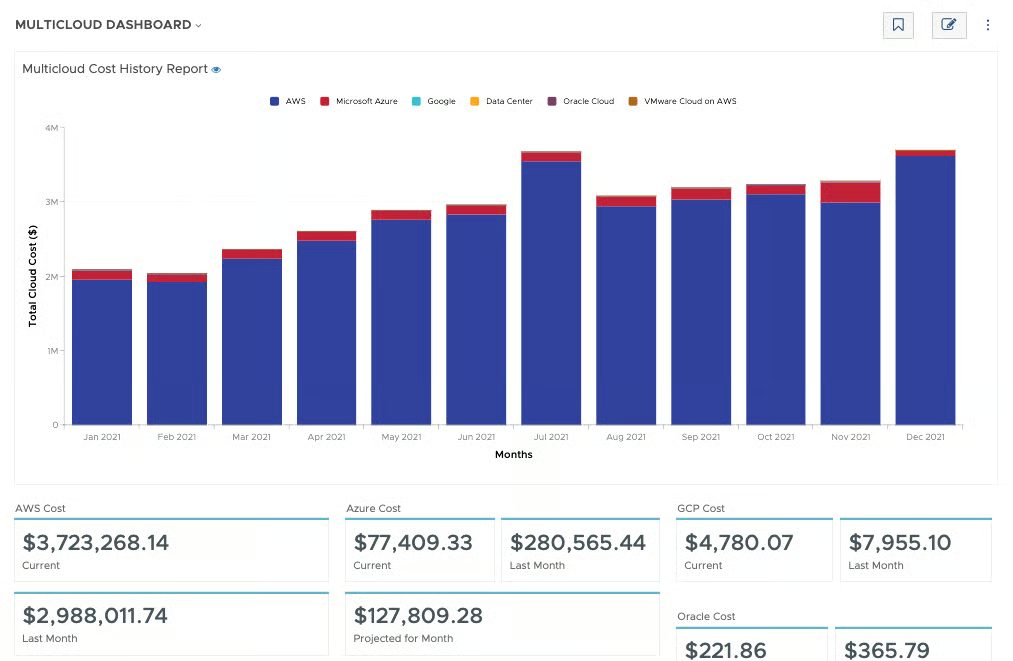
CloudHealth by Broadcom helps enterprises allocate multicloud costs by team or business unit, track budgets, identify spending anomalies, and enforce cost governance policies.
Key features
Cost reporting: Multicloud spending visibility and analysis.
Allocation: Assign expenses to teams and business units.
Governance: Policies and optimization insights.
Supports financial reporting across multiple cloud environments.
Helps organizations allocate costs and improve accountability.
Supported optimization actions vary by workflow.
Purchasing automation and included capabilities require verification.
CloudHealth uses custom commercial pricing. Request a quote for your required features and support.
Our Usage.ai vs CloudHealth comparison explains the differences between financial governance and specialized commitment management.
5. IBM Turbonomic: Best for application resource optimization
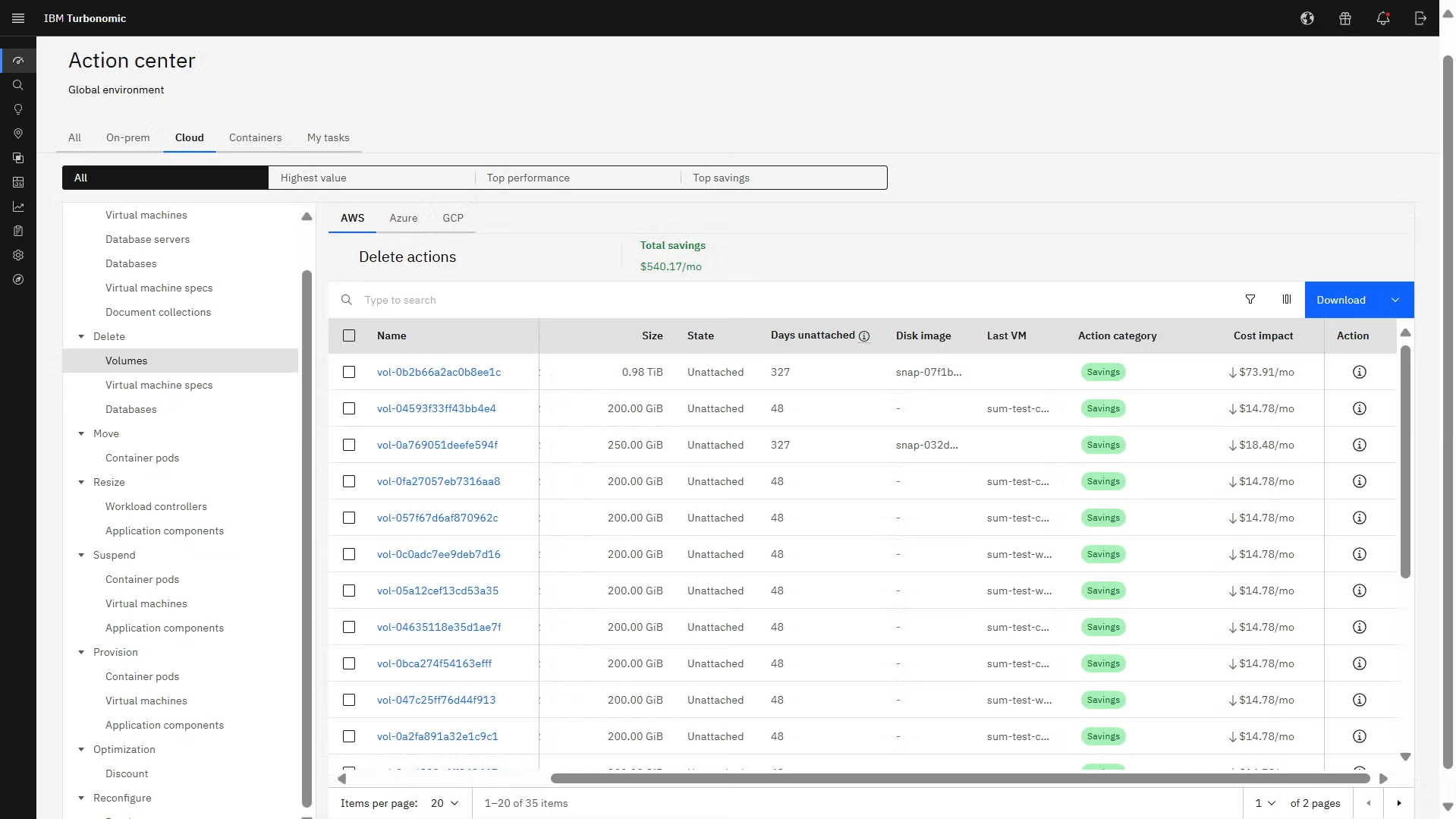
IBM Turbonomic analyzes application demand and supports resource optimization across compatible hybrid-cloud environment.
Key features
Application-aware optimization: Resource decisions based on workload demand.
Automation: Policy-controlled optimization actions.
Hybrid infrastructure: Support for virtual machines, Kubernetes, and cloud resources.
Connects resource optimization with application performance.
Supports automated actions across compatible infrastructure.
Automated changes require performance safeguards.
Rightsizing may affect existing commitment utilization.
IBM offers tailored quotes and a 30-day evaluation.
6. Harness: Best for engineering-led cloud cost optimization
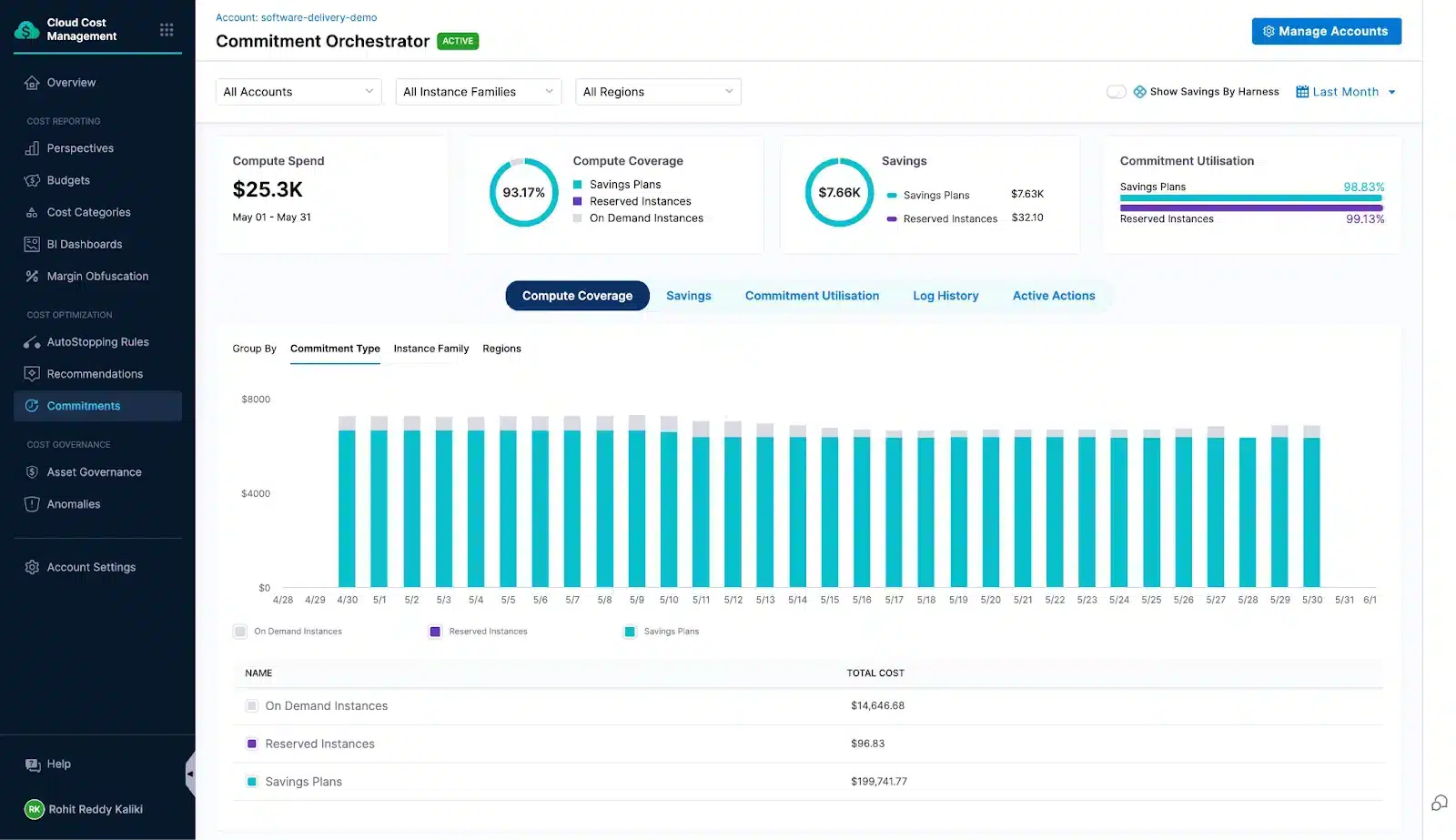
Harness Cost Management Agent combines financial reporting with workload automation, Kubernetes optimization, and supported commitment-management workflows.
Key features
AutoStopping: Stops eligible idle resources and restarts them when needed.
Kubernetes optimization: Supports workload and cluster efficiency.
Commitment Orchestrator: Supports automated commitment recommendations and management workflows.
Cost governance: Reporting, allocation, and financial controls.
Connects cost visibility with infrastructure optimization.
Offers resource and commitment-management capabilities.
Automated actions require suitable permissions and safeguards.
Module combinations and commercial terms require evaluation.
Harness uses module-specific commercial arrangements. Request a quote covering required capabilities, tracked-spend calculations, and contractual terms.
Our Usage.ai vs Harness comparison explores infrastructure optimization, commitment automation, and financial protection.
How to choose the right CloudBolt alternative
Your decision depends on which CloudBolt functions must remain and which cloud management challenges you want to solve.| Your situation | Recommended evaluation |
|---|---|
| Replace core CMP workflows | Evaluate HPE Morpheus Software for provisioning, governance, and orchestration |
| Improve cloud commitment savings | Evaluate Usage.ai for automated eligible purchases, purchasing controls, and conditional Cashback Protection |
| Strengthen financial visibility | Compare Flexera One FinOps and CloudHealth |
| Optimize infrastructure resources | Evaluate IBM Turbonomic and Harness for supported optimization workflows |
What should you check before switching cloud management tools?
Before replacing CloudBolt, review your existing provisioning workflows, cloud integrations, automation permissions, and migration requirements.If your organization also uses cloud commitments, check existing Reserved Instances, Savings Plans, and Committed Use Discounts. Review their utilization, expiration dates, remaining payment obligations, and purchasing controls.
Remember, switching management platforms does not automatically cancel cloud-provider commitments. Compare the total cost of switching, including vendor fees, implementation effort, and potential financial exposure.
Final verdict: Which CloudBolt alternative should you choose?
The right CloudBolt alternative depends on your priorities. Whether you need infrastructure management, cost visibility, or commitment optimization, evaluate each platform based on its automation capabilities, implementation effort, pricing, and measurable savings.If CloudBolt already meets your operational needs, switching may not deliver enough additional value. However, if reducing cloud commitment costs is your priority, we can help you identify savings opportunities, automate eligible purchases, and manage financial exposure through flexible purchasing controls and Cashback Protection for qualifying Flex Commitments.
The next step is to understand what your current cloud commitments are costing you and where better purchasing decisions could make a difference.
Automate AWS, Azure, and GCP commitments with flexible controls and eligible cashback protection.
Frequently asked questions
What is the best CloudBolt alternative for reducing cloud costs?
The best option depends on the source of your costs. IBM Turbonomic and Harness focus on infrastructure efficiency, while Flexera One FinOps and CloudHealth provide broader financial management capabilities.
If you're looking to reduce costs through eligible AWS, Azure, and Google Cloud commitments, we offer automated purchasing, savings tracking, and conditional Cashback Protection.
How is Usage.ai different from CloudBolt?
CloudBolt focuses on infrastructure provisioning, management, and governance. We specialize in reducing eligible cloud spending through commitment optimization.
Our platform analyzes usage, manages supported commitment purchases, and provides Cashback Protection for qualifying Flex Commitments. We can address commitment savings without requiring changes to your production workloads.
Can Usage.ai reduce cloud costs without changing infrastructure?
Yes, for eligible commitment opportunities. We optimize the rates paid for qualifying cloud usage through supported commitment purchases rather than directly resizing, stopping, or modifying running resources.
We also provide a read-only Savings Test to help evaluate potential savings before enabling purchasing workflows.
What happens if cloud usage decreases after purchasing commitments?
Lower usage can leave existing cloud commitments underutilized, creating financial exposure.
For qualifying Flex Insured Commitments, we provide Cashback Protection when the commitment costs more than equivalent On-Demand usage, subject to eligibility requirements and applicable program terms.
Is CloudBolt free?
Yes. CloudBolt CMP Free includes the full product for up to 100 managed resources, without a time limit or credit-card requirement. Organizations managing more resources need paid licensing.
If you notice material information that is incorrect or outdated, please contact us at [email protected]. We’ll review it and update the article where appropriate.