 AWS
 Microsoft Azure
 Google Cloud


Best cloud cost management tools for MSPs compared
The right cloud cost management software for MSPs depends on what your business needs to manage: customer billing, multi-tenant reporting, cloud cost allocation, financial governance, or commitment savings.Start with your most important workflow. Then compare cloud coverage, customer-level permissions, billing features, purchasing controls, and total cost. The potential fits below are starting points for evaluation.
| Software | Potential fit | Key capabilities | Pricing basis |
|---|---|---|---|
| Usage.ai | MSPs offering automated cloud commitment optimization | Eligible AWS, Azure, and GCP commitments; CoPilot, Autopilot, conditional Cashback; MSP partner program | Savings-based customer pricing; recurring partner commissions under the partner agreement |
| IBM Cloudability MSP | Complex customer finance | Price books, rerating, cost allocation, margin reports | MSP-specific quote |
| CloudHealth Partner Platform | Reseller billing | Customer bills, billing rules, governance, reporting | Negotiated partner agreement |
| CloudCheckr | AWS/Azure billing and multicloud governance | Branded reporting, invoices, cost and security insights | Vendor quote |
| ManageEngine CloudSpend | Accessible MSP reporting | Customer workspaces, budgets, allocation, alerts | Free tier; MSP-supporting Starter from $62/month billed annually |
| Vantage for MSPs | Multi-client cost reporting and rerating | Rerating, currency management, AWS Savings Plans Autopilot; MSP invoicing announced in private preview (verify current access) | Standard plans from $30/month; MSP terms may differ |
| EverythingCloud | Managed FinOps delivery | Multi-tenant reporting, recommendations, delivery support | Founding MSP Program: $500/month minimum; program-specific pricing |
How we compared: We evaluated seven tools across six criteria: customer billing, tenant separation, cloud coverage, financial reporting, automation boundaries, and commercial terms. We distinguished published subscription prices, negotiated partner agreements, program-specific rates, and preview features. “Best for” describes a potential fit based on vendor documentation, not an independently tested ranking.
1. Usage.ai:
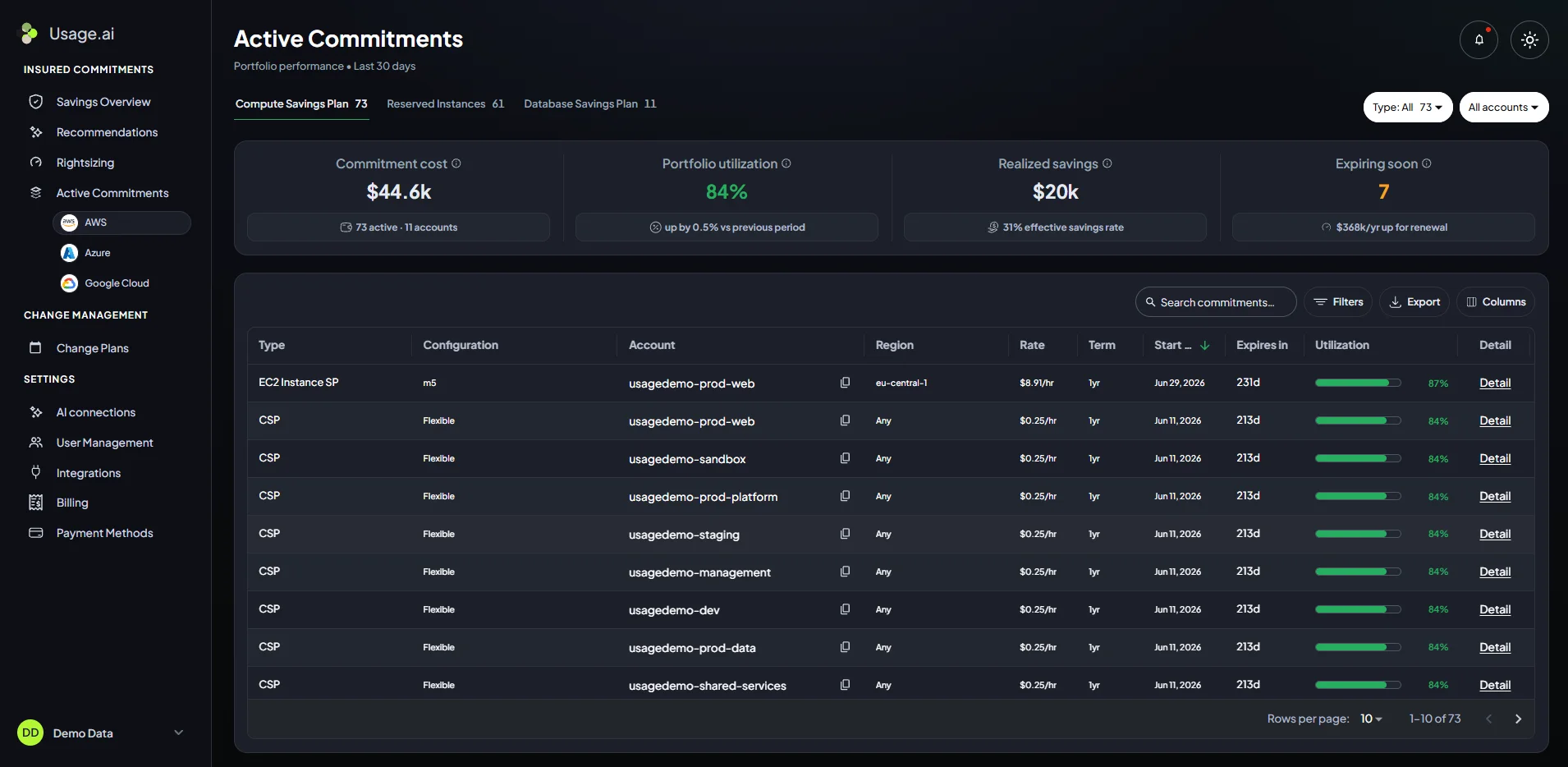
At Usage.ai, we help MSPs deliver commitment optimization across eligible AWS, Azure, and GCP services. Through our cloud cost optimization partner program, MSPs can introduce customers, continue providing their existing services, and earn recurring revenue while we assess savings and manage eligible commitments.
Key features
Automated commitment optimization through CoPilot approvals or authorized Autopilot purchasing.
Flex Insured Commitments with conditional Cashback protection for qualifying underutilization losses.
MSP partner program offering recurring commissions while we handle eligible commitment management.
Pros & cons
- ✅ Automated commitment management: Help clients optimize eligible cloud commitments without modifying their workloads.
- ✅ Recurring partner revenue: Earn commissions on Usage.ai revenue generated by referred customers.
- ✅ Flexible purchasing controls: Customers can approve recommendations through CoPilot or authorize Autopilot purchases.
- ❌Specialized focus: MSPs may retain separate tools for customer invoicing and broader financial reporting.
Could your MSP customers unlock more savings from eligible cloud commitments? Explore our cloud commitment optimization platform and discuss your savings goals with our team. No cloud account connection is needed for an initial conversation; a personalized savings assessment begins with read-only billing access.
2. IBM Cloudability MSP
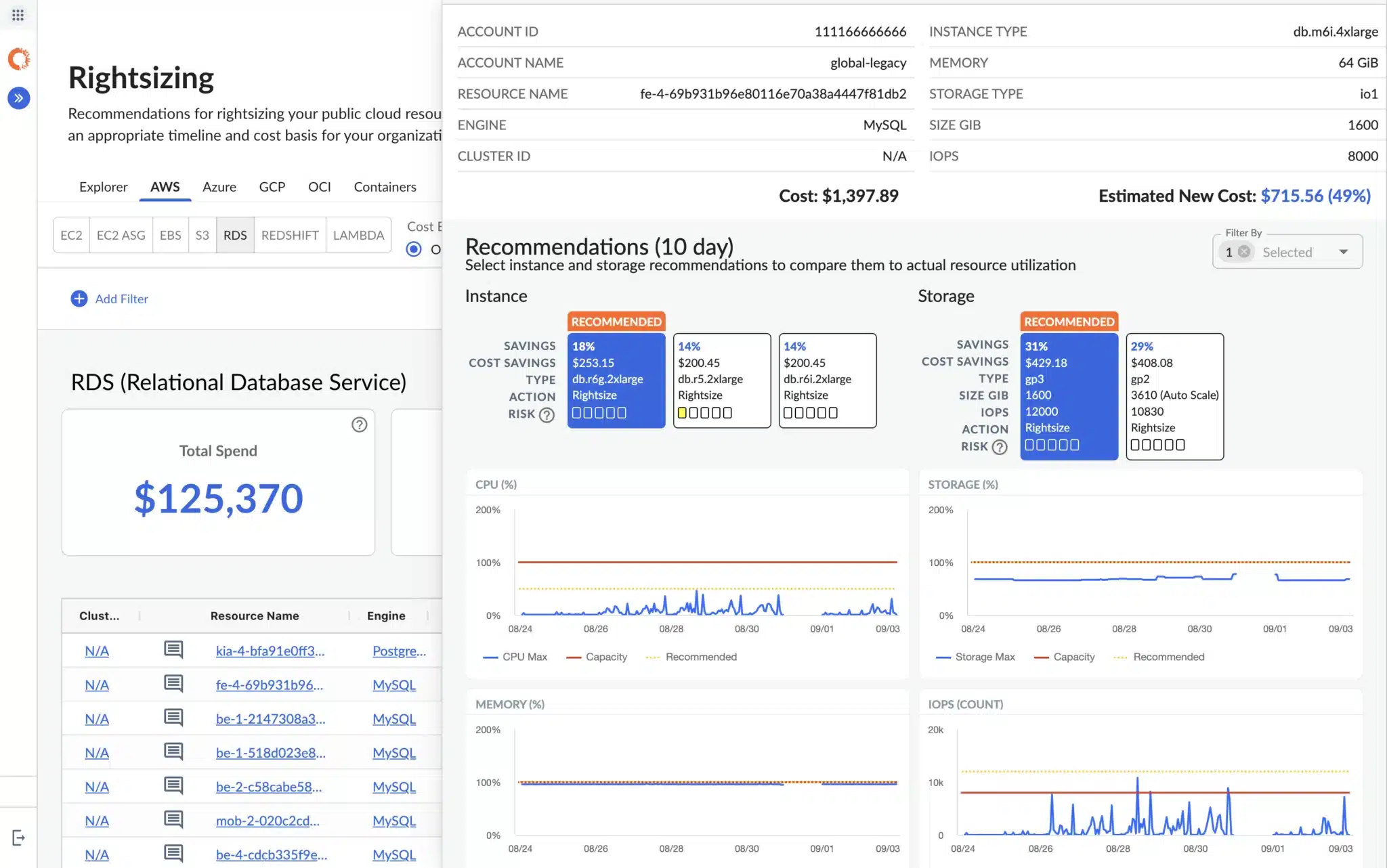
IBM Cloudability MSP helps turn cloud-provider charges into customer-specific financial reports.
Key features
Customer-specific price books, rerating, and invoice support.
Segmented customer environments with budgets and reporting.
Multicloud cost allocation, forecasting, anomaly detection, and margin analysis.
Pros & cons
- ✅ Customer pricing: Price books support different contractual rates.
- ✅ Margin visibility: Reporting helps MSPs assess customer profitability.
- ❌Setup: Customer hierarchies and pricing rules require configuration.
- ❌ Automation scope: Confirm any licensed commitment-purchasing capabilities.
3. CloudHealth Partner Platform
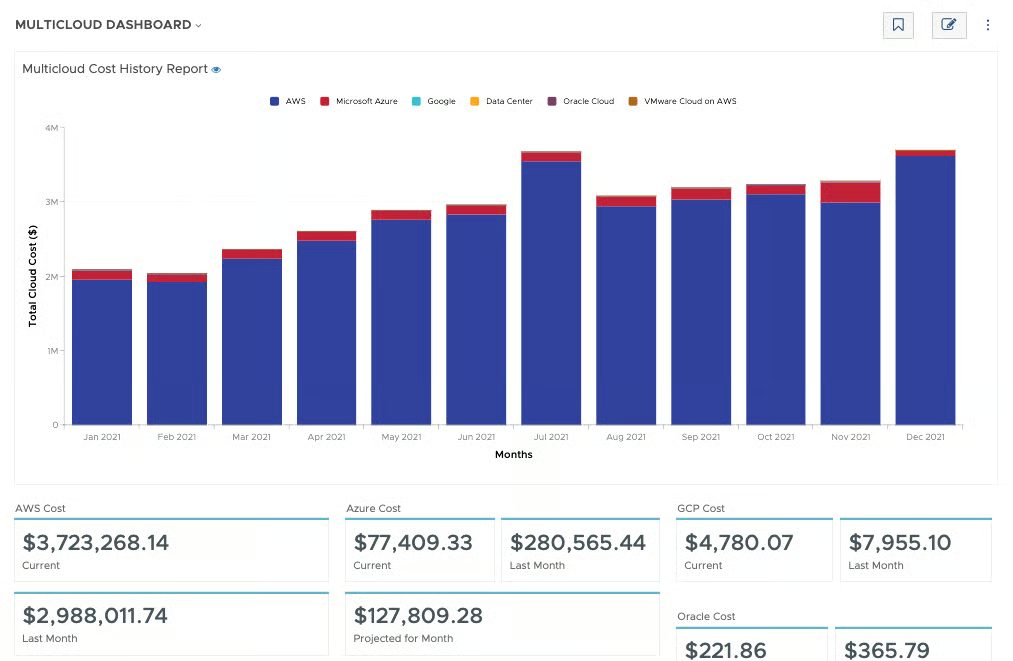
CloudHealth Partner Platform combines partner billing workflows, customer cost reporting, and policy-based oversight across supported environments.
Key features
Customer billing rules, price books, and partner-generated bills.
Cost allocation, budgets, and segmented financial reporting.
Governance policies and cloud optimization recommendations.
Pros & cons
- ✅ Reseller workflows: Customer pricing and bills support recurring service delivery.
- ✅ Governance: Financial reporting works alongside policies.
- ❌Reconciliation: Complex rules require careful invoice checks.
- ❌Execution: Confirm supported purchasing actions in the contracted edition.
4. CloudCheckr
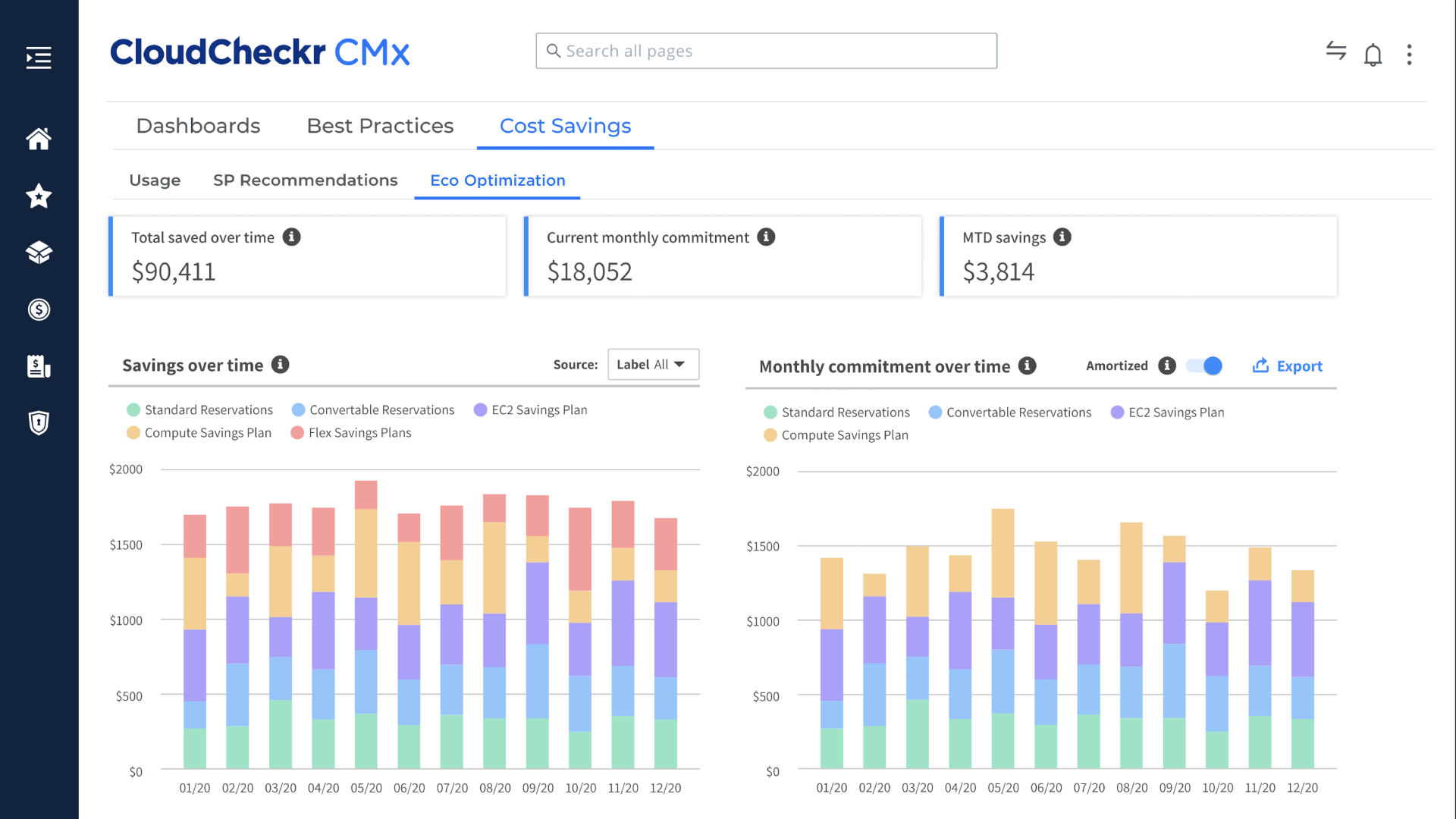
CloudCheckr supports cost management across AWS, Azure, and Google Cloud environments. Confirm GCP billing workflows for your edition rather than assuming identical MSP features on every provider.
Key features
Customer invoices, branded financial reporting, and cost allocation.
Rightsizing insights and cloud commitment recommendations.
Security, governance, and compliance configuration assessments.
Pros & cons
- ✅ Customer reporting: Branded outputs can support managed services.
- ✅ Broader oversight: Financial and configuration findings appear together.
- ❌GCP workflows: Confirm the required Google Cloud billing features.
- ❌ Execution rights: Verify remediation and purchasing entitlements.
5. ManageEngine CloudSpend
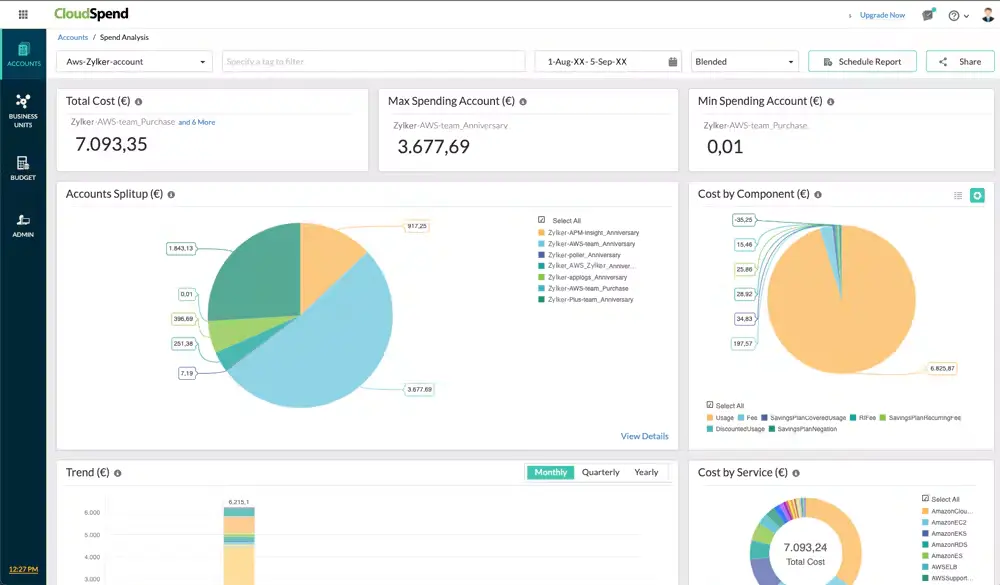
CloudSpend provides cost visibility, budgeting, and anomaly analysis with MSP-supporting customer workspaces.
Key features
Separate customer workspaces and cloud spending reports.
Cost allocation, budgets, forecasting, and anomaly alerts.
Rightsizing and other cost optimization recommendations.
Pros & cons
- ✅ Customer visibility: Workspaces help separate customer costs.
- ✅ Published tiers: MSPs can estimate starting subscription costs.
- ❌Capacity: Growing portfolios may exceed plan allowances.
- ❌Execution: Recommendations are not proof of automated commitment purchasing.
6. Vantage for MSPs
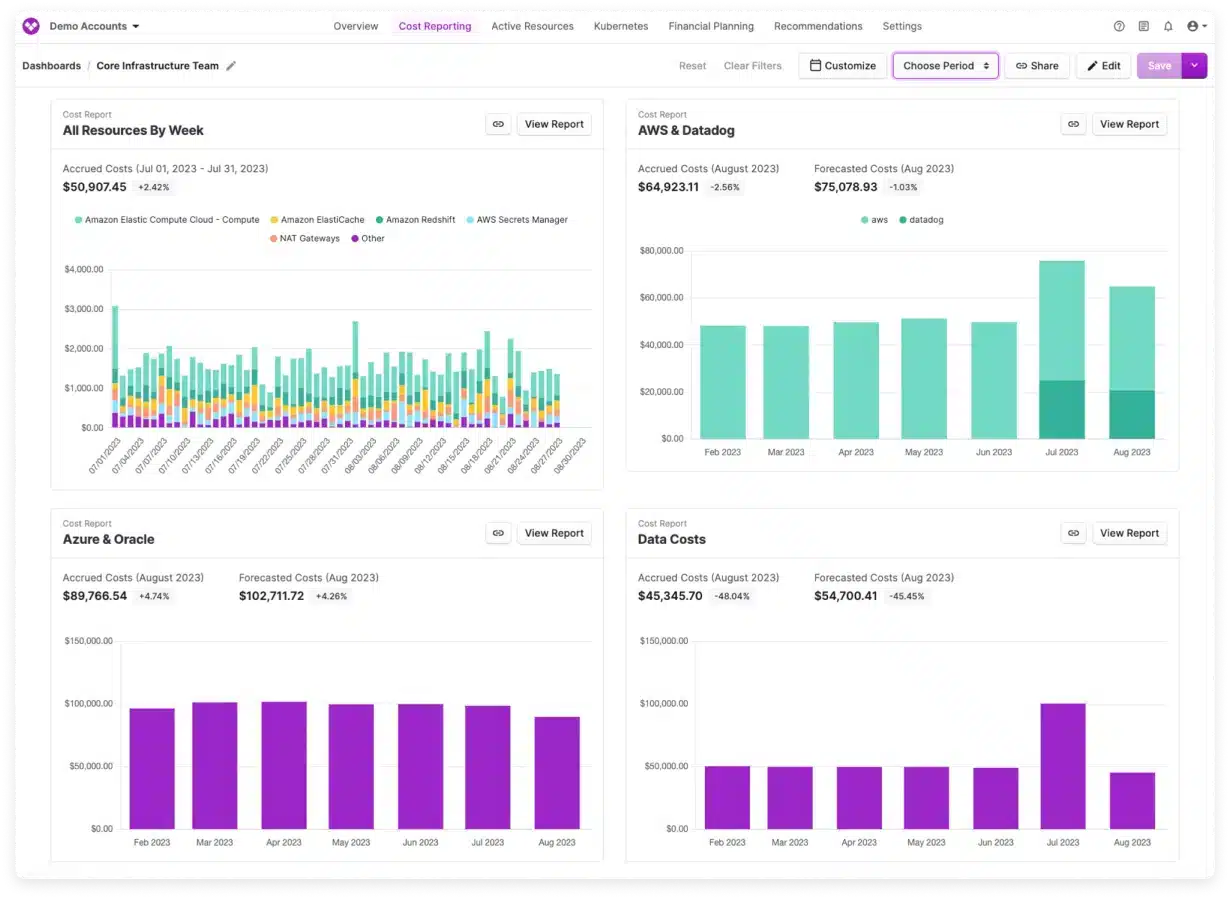
Vantage combines cost reporting with managed-account pricing rules. Its AWS Savings Plans Autopilot supports a different workflow from customer billing.
Key features
Customer rerating workflows, including supported AWS public-price adjustments.
Automatic or approval-based AWS Savings Plans purchases through Autopilot.
MSP invoicing was announced in private preview; confirm current availability and access with Vantage.
Pros & cons
- ✅ Pricing controls: Rerating supports managed-account commercial rules.
- ✅ AWS automation: Autopilot offers purchases with optional approval.
- ❌Invoicing availability: Confirm access and current release status.
- ❌Cloud-specific execution: Multicloud reporting does not imply equivalent purchasing everywhere.
7. EverythingCloud
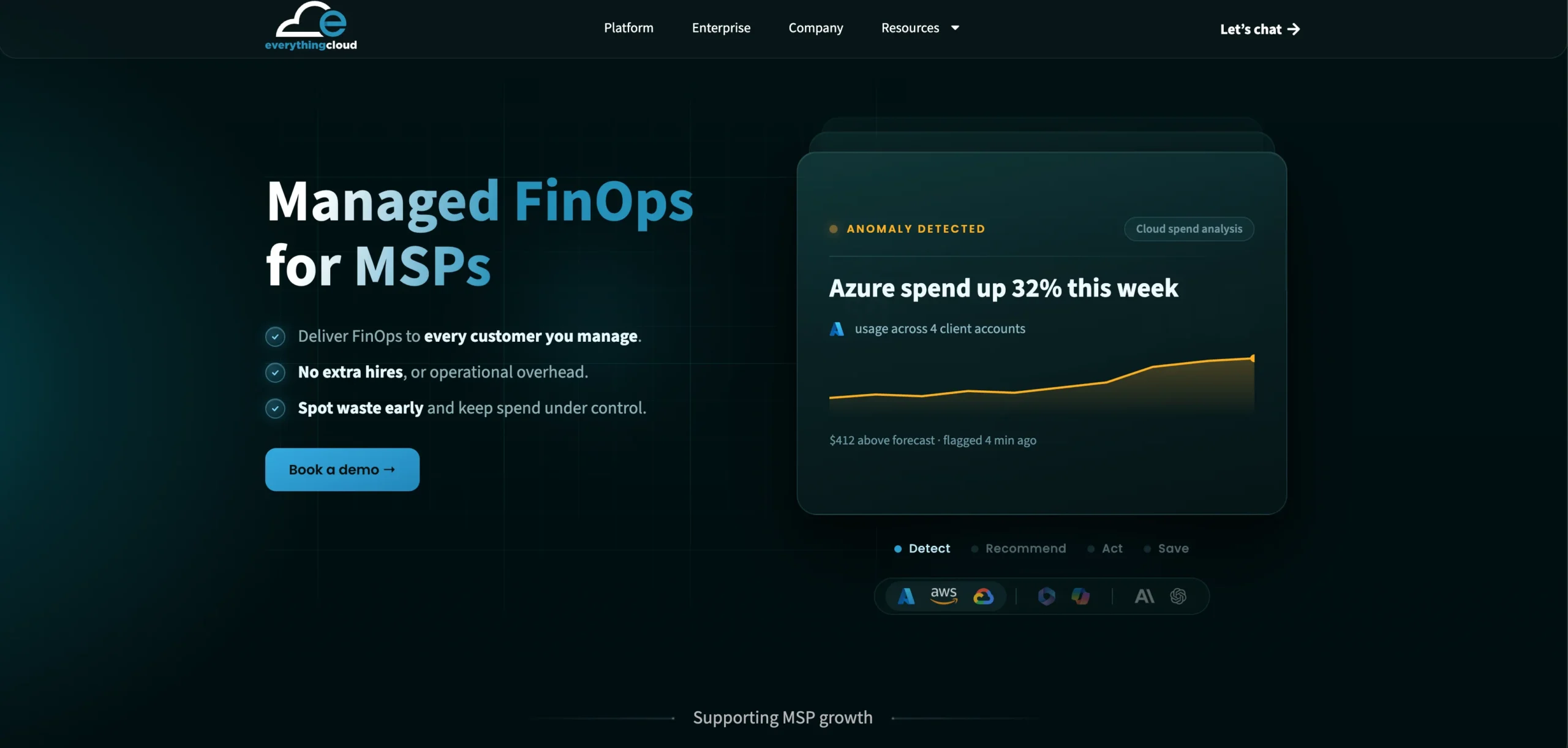
EverythingCloud combines a multi-tenant cloud-cost platform with FinOps expertise, customer reporting, and onboarding assistance. Its partner program describes AWS, Azure, and GCP support.
Key features
Multi-tenant cloud spending visibility and customer reporting.
Prioritized optimization findings and progress tracking.
Managed FinOps onboarding, delivery assistance, and service packaging support.
Pros & cons
- ✅ Delivery support: Combines tooling with specialist help.
- ✅ Partner model: MSPs retain customer relationships and service positioning.
- ❌ Service scope: Confirm the clouds and support included in the agreement.
- ❌Action ownership: Clarify who approves and implements each change.
Automation boundaries at a glance
An alert, recommendation, approval, and executed purchase are different capabilities:Usage.ai: Eligible commitment analysis, CoPilot approvals, and authorized Autopilot purchases.
IBM Cloudability MSP: Financial and optimization analysis; verify purchased automation modules.
CloudHealth: Reporting and governance; verify the edition's commitment execution rights.
CloudCheckr: Financial and security findings; confirm remediation and purchasing scope.
ManageEngine CloudSpend: Reporting, budgets, alerts, and recommendations; do not assume commitment purchases.
Vantage: Automatic or approval-based AWS Savings Plans purchases; MSP invoicing access requires confirmation.
EverythingCloud: Recommendations and managed delivery; agree on approval and implementation ownership.
Which platform fits your MSP?
| MSP need | Start with | Verify |
|---|---|---|
| Affordable customer reporting | ManageEngine; Vantage | Tracked spend, access, invoicing |
| Complex reseller financial operations | IBM Cloudability MSP; CloudHealth | Rerating, credits, margins |
| Managed FinOps service delivery | EverythingCloud; CloudCheckr | Delivery roles, governance, action rights |
| Additional commitment savings | Usage.ai alongside existing billing tools | Eligibility, fees, purchasing controls |
What should MSPs test before buying?
Use one representative billing month across a hypothetical 20-customer portfolio. Ask the vendor to isolate customer access, reproduce invoices, reconcile credits and shared charges, and investigate an anomaly. For commitments, identify which provider products are supported and who approves, purchases, and remains financially liable.
Final verdict
Choose a cloud cost management tool based on your MSP’s priorities. Usage.ai supports automated commitment optimization and recurring partner revenue opportunities, IBM Cloudability MSP and CloudHealth handle customer billing, CloudCheckr offers cost and governance insights, ManageEngine and Vantage support cost management, and EverythingCloud helps deliver managed FinOps services.Next step: Shortlist two or three tools, compare their features, pricing, and MSP capabilities, and evaluate potential savings and operational benefits before making a decision.
If improving eligible cloud commitment savings is your priority, evaluate your existing coverage and potential net savings before adding another platform.
Estimate net cloud savings with a read-only test. Manage commitments via CoPilot or Autopilot with eligible cashback protection.
Frequently asked questions
What is the best cloud cost management tool for MSPs?
It depends on the workflow. IBM Cloudability MSP and CloudHealth suit complex financial operations; ManageEngine and Vantage support customer cost management; EverythingCloud supports managed FinOps. We focus on eligible commitment optimization.
Can MSPs use native cloud cost tools instead?
Yes. Native tools provide provider-specific cost data and discount recommendations. Dedicated MSP platforms add customer-specific rates, permissions, branded reporting, and service workflows.
Is MSP cloud billing the same as cost optimization?
No. Billing generates customer charges under contract rules. Optimization reduces waste or improves eligible commitment rates. Verify each separately.
Can MSPs automate commitment purchases?
Some platforms support authorized purchases; others only recommend actions. Confirm provider and product scope, permissions, approval paths, and remaining financial obligations.
Can MSPs use Usage.ai with their existing cloud billing platform?
Yes. MSPs can continue using their existing billing and reporting tools while adding Usage.ai to manage eligible cloud commitments. This allows providers to retain customer invoicing workflows while offering additional commitment optimization services.
If you notice any material information that is incorrect, outdated, or no longer applicable, please contact us at [email protected]. We’ll review it and update the article where appropriate.