.png)
 AWS
AWS Microsoft Azure
 Google Cloud

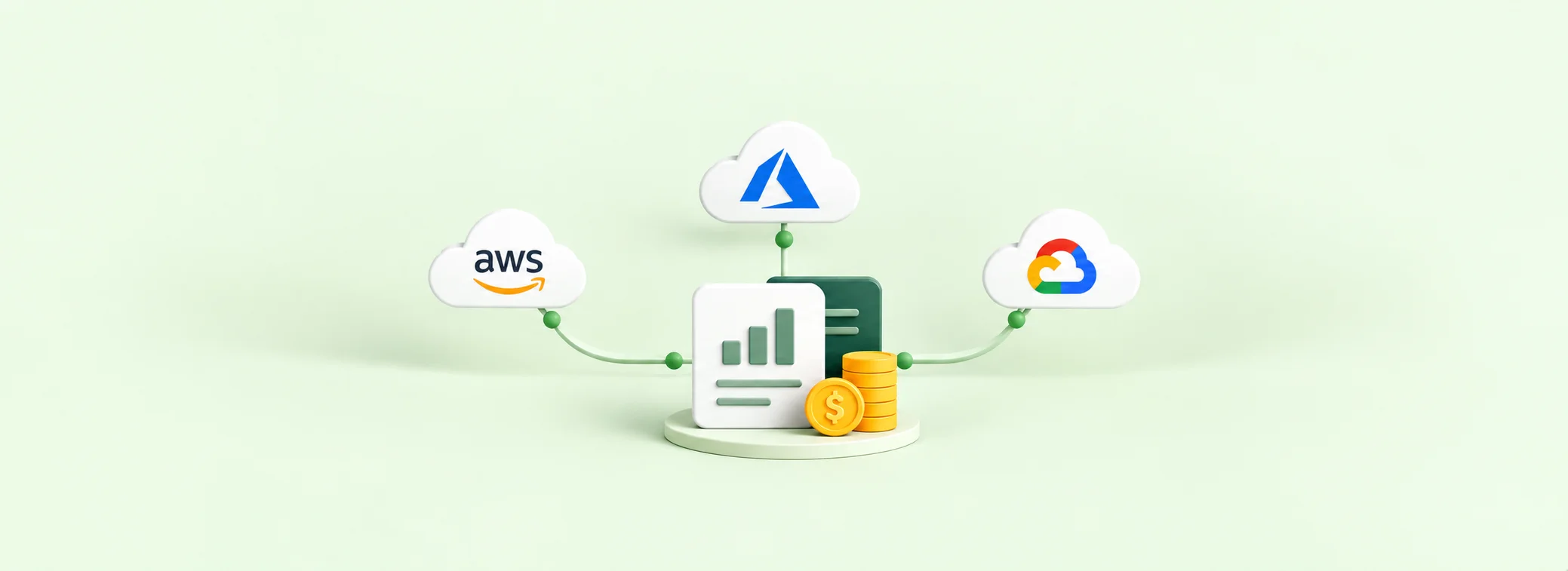
The question is whether consolidating the workflow would change the financial result or reduce enough work to justify another platform. The answer depends on the services you use and the actions a platform can actually perform.
Short Answer
Use separate tools when your team can consistently validate forecasts, approve purchases, monitor commitments, and reconcile results across its clouds. Those tools may be provider-native, third-party, or a mix.Consider one platform when it supports the services driving your opportunity and measurably improves purchase timing or provides protection against underused commitments that justifies its fees. A shared interface does not let unused commitment value on one cloud cover usage on another.
What Does One Platform Actually Consolidate?
A shared platform can collect billing data, present recommendations, route approvals, execute supported purchases, and report results in one workflow. The extent of that consolidation varies by product and cloud.The underlying discounts still belong to their respective providers. AWS applies its commitments to qualifying AWS usage. Azure applies savings plans and reservations within their benefit scopes. Google Cloud applies CUDs under product, region, project, and billing-account rules.
Google’s CUD sharing guidance describes sharing within a Cloud Billing account; it does not create a discount pool with AWS or Azure.
That makes “one platform” an operating choice. It can change where people review and act, while each cloud remains the authority for its purchases and bill.
Which Commitment Actions Should You Verify on Each Cloud?
A platform can show spend from a cloud service without being able to purchase its commitment. Start with the products behind your actual usage, then ask which actions the platform can perform for each one.The selected examples below are a service-level buying check, not a complete list of cloud commitments or a claim that every platform supports every row.
| Cloud and service | Native commitment to check | Action to verify in one platform |
|---|---|---|
| AWS: EC2, Fargate, Lambda | Compute Savings Plans cover qualifying usage across these services. | Can it recommend and purchase the specific plan, with the approval or automation controls you require? |
| AWS: RDS, ElastiCache, OpenSearch | Database Savings Plans cover qualifying usage. | Does it execute this plan for the service, or only show recommendations and existing coverage? |
| AWS: Redshift provisioned clusters | Reserved nodes are a separate commitment product. | Can it purchase reserved nodes, or will an AWS owner or specialist retain that task? |
| Azure: eligible VMs, App Service, Dedicated Host | A savings plan for compute can cover eligible compute costs. | Can it purchase the plan within the intended benefit scope, or only recommend an amount? |
| Azure: VMs | VM Reservations have their own purchase and management rules. | Does it purchase reservations, or only track ones already held? |
| Google Cloud: Compute Engine | Eligible usage may receive resource-based or Compute flexible CUDs. | Which CUD product can it recommend and purchase, and at what account, project, and region scope? |
| Google Cloud: GKE | Compute flexible CUDs cover eligible GKE usage; resource-based CUDs may apply to Standard nodes. The older GKE Autopilot service-specific CUD is no longer available for new purchases. | Does the tool support the currently purchasable product for your GKE usage, rather than only reporting an existing commitment? |
| Google Cloud: Cloud SQL | Cloud SQL CUDs cover qualifying instance vCPU and memory usage in the committed region. | Can it purchase the Cloud SQL commitment, or only identify and report a savings opportunity? |
For each service that matters to your bill, ask to see the recommendation, approval control, provider purchase record, and subsequent savings report. If a tool stops at recommendations or reporting, someone still owns the purchase.
One Platform vs Separate Tools: Who Does the Work?
With separate tools, each cloud owner can use the interface and specialist that best fits that provider. A central FinOps lead still needs a common inventory, review schedule, approval record, and financial view. Three good recommendations do little if no one knows about a planned migration or has authority to buy.A shared platform can reduce those handoffs where it supports the full action. It may analyze usage repeatedly, bring recommendations to one queue, and execute an approved purchase or act within configured automation controls. Engineering must still disclose workload changes; Finance must still set buying limits and check the result.
The practical comparison is the work left between recommendation and verified savings:
| Decision step | Separate tools | Shared platform |
|---|---|---|
| Validate demand | Cloud owners review history and engineering plans | Platform supplies analysis; owners still provide future plans |
| Approve | Each tool follows its local process | Supported actions may enter one approval workflow |
| Purchase | Authorized staff or cloud-specific tools execute | Platform executes only supported, permitted actions |
| Review | Team combines provider reports | Platform reports managed results; team checks provider bills |
Compare Permissions, Reporting, and Fees
Permissions: Read access for an assessment is a different decision from authority to spend. A managed workflow may need separate AWS IAM, Azure identity and role, and Google Cloud billing-data and purchase access.Review which accounts and services each grant covers, who can change automation settings, and how purchasing is paused.
Reporting: Ask Finance to trace a recommendation to an approval, provider purchase, provider charge, realized saving, and any platform fee.
Keep existing customer-owned commitments in the opening inventory so their established savings are not credited to a new tool.
A combined dashboard is useful only if the team can reconcile its figures with each provider’s final billing data.
Fees: Add the cost of any separate third-party tools, the shared platform’s fee, setup, and material staff work.
Compare value retained, not the largest advertised discount. If a provider offers cashback or another remedy, check the covered purchases, calculation, exclusions, timing, and what happens if the service ends.
These are buying requirements, not just exit questions. Our platform exit guide explains the fuller data and access handover.
A Worked Multi-Cloud Cost Comparison
Suppose a company uses a mix of native and cloud-specific tools today. It compares both approaches for the same candidate workloads over a modeled month.Both proposals start with the same existing commitments, expected usage, customer prices, and engineering plans. The figures below are illustrative assumptions, not cloud price quotes or predicted Usage.ai results.
| Provider | Eligible On-Demand equivalent | Provider cost: separate tools | Provider cost: shared platform | Difference |
|---|---|---|---|---|
| AWS | $40,000 | $32,000 | $31,000 | $1,000 |
| Azure | $30,000 | $25,000 | $24,500 | $500 |
| Google Cloud | $20,000 | $17,000 | $16,500 | $500 |
| Total | $90,000 | $74,000 | $72,000 | $2,000 |
Assume no separate-tool fees here. The modeled result has two steps:
If its quoted monthly fee is $650 and implementation costs allocated to this period are $150, that leaves $1,200 in modeled financial benefit.
If estimated internal work costs $400 with separate tools and $250 with the platform, the additional $150 raises that benefit to $1,350 only if the work or cost actually falls.
Now test a second month: Google Cloud usage falls while AWS usage grows. AWS growth cannot use an idle Google CUD. Keep any Google underutilization in its own provider result. Run both options on the same revised usage, checking other qualifying Google usage.
Include a platform-funded rebate only if the particular commitment qualifies under the signed terms, and account for the rebate’s settlement timing. This downside case may change the decision even when the first month looks favorable.
When Should You Use One Platform, Separate Tools, or Both?
Keep separate tools when each cloud has a reliable owner, approvals are timely, existing automation works, and Finance can reconcile the portfolio without substantial extra effort. A shared interface alone is a weak reason to replace that process.Use one platform when supported services account for a meaningful opportunity and one workflow demonstrably improves purchase timing, control, monitoring, or retained value.
Require evidence by cloud and product rather than a general multi-cloud label.
Use both when a shared platform handles supported commitments but a provider-native or specialist tool remains responsible for others. Assign one purchasing owner for each commitment product and account or service. Check shared inventory and uncovered usage before either tool buys.
Two independent automations buying against the same usage can leave you with overlapping commitments and unclear savings attribution.
How We Support Multi-Cloud Commitments at Usage.ai
Our fit depends on the commitment actions we can handle for the services on your bill. We analyze usage at the billing layer across supported AWS, Azure, and Google Cloud services, then present recommendations.You can approve purchases for those services or enable Autopilot where available; with purchase permissions in place, we call the provider’s API to execute them. Our dashboard keeps the commitments we manage separate from those you bought directly.
With eligible Flex Insured Commitments, teams can access 30–50% savings on covered workloads through one- or three-year cloud commitments with none of the commitment risk.
If an eligible Flex Insured Commitment becomes more expensive than equivalent On-Demand usage, we provide cashback protection to cover the qualifying difference, subject to current program eligibility and terms. Cashback does not cancel the provider commitment, and commitments you purchased independently are not automatically protected.
We charge an agreed percentage of realized savings from the commitments we optimize, billed monthly in arrears after provider billing data is finalized. Our reporting shows savings, our fee, and any cashback accrued, so you can compare the result with your current tools.
Final Verdict: Choose the Model That Improves Net Value
Choose the workflow that your team can operate reliably and that leaves more value after purchases, fees, and remaining work are reconciled. Before consolidating, verify supported actions on the services you actually use and test what happens when demand falls in one cloud.Compare your tools, services, approvals, and potential value across clouds.
Frequently asked questions
Can one platform use unused Google Cloud commitments to cover AWS usage?
No. It may report both portfolios together, but each provider applies its own discounts to qualifying usage under its own rules.
Does a shared platform replace provider-native commitment tools?
It can take over supported analysis or purchase tasks. Provider billing, commitment terms, and native records still matter, and unsupported services need a named owner.
Are our existing commitments protected when we adopt Usage.ai?
No. Existing customer-owned commitments remain separate. Protection depends on a new commitment meeting the Flex Commitment Program’s purchase and eligibility requirements.