 AWS
AWS Microsoft Azure
 Google Cloud

Fixing it requires a continuous operating model that connects cost data to accountable action and revisits decisions as technology and business needs change.
Short answer
Cloud cost management is the continuous practice of understanding, allocating, governing, and optimizing technology spend while keeping engineering, finance, and business teams aligned.The current FinOps Foundation definition emphasizes technology business value, timely data-driven decisions, and shared financial accountability. Cloud cost management is an operating discipline, not a recurring cost-cutting project.
What cloud cost management includes
| Layer | Main question | Typical activities |
|---|---|---|
| Visibility | Where is the spend coming from? | Allocation, tagging, dashboards |
| Optimization | What should change? | Rightsizing, waste removal, architecture and pricing |
| Management | Does the decision still work? | Governance, ownership, forecasting, commitment monitoring |
Why cloud cost management breaks down
Usage changes faster than assumptions
Traffic shifts, services are refactored, autoscaling reacts, and products launch or retire. A baseline or pricing decision built on historical usage can become less suitable after workload shape changes.Forecasts should therefore be revisited rather than treated as permanent answers. Our guide to cloud cost forecasting in dynamic environments explains where historical assumptions usually break.
Execution remains people-dependent
Many tools can surface idle resources, anomalies, or rightsizing opportunities. The harder step is turning a recommendation into a completed, verified action.Illustrative example: A dashboard flags an oversized workload. The FinOps owner assigns it to the service team, engineering validates performance needs, the workload is resized, and the next cost period confirms whether unit cost fell without hurting service objectives.
That verification turns an optimization recommendation into cloud cost management. This cloud cost analysis guide explains the measurement layer behind those decisions.
Ownership is fragmented
Application teams influence demand, platform teams define infrastructure defaults, finance tracks budgets, and procurement may own commercial agreements.When decision rights are unclear, everyone can see the problem without anyone owning the next action. A cloud cost governance framework helps connect technical ownership, financial guardrails, and review responsibilities.
Why commitments need extra care
Commitment-based discounts depend on future eligible usage, so they require more caution than reversible cleanup.AWS Savings Plans exchange a consistent hourly usage commitment for lower eligible rates over one-year or three-year terms. AWS has a narrow return exception: qualifying Savings Plans with an hourly commitment of $100 or less can be returned within seven days when purchased in the same calendar month, subject to quotas and other restrictions. AWS Savings Plans return rules
Azure savings plan purchases cannot be canceled or refunded. Google Cloud CUD structures vary by service and can be resource-based or spend-based. Verify the exact product terms before purchase.
Before committing, check the commitment unit, eligible services, scope, term, payment model, stable eligible usage, utilization risk, return or cancellation rules, and the events that should trigger reassessment.
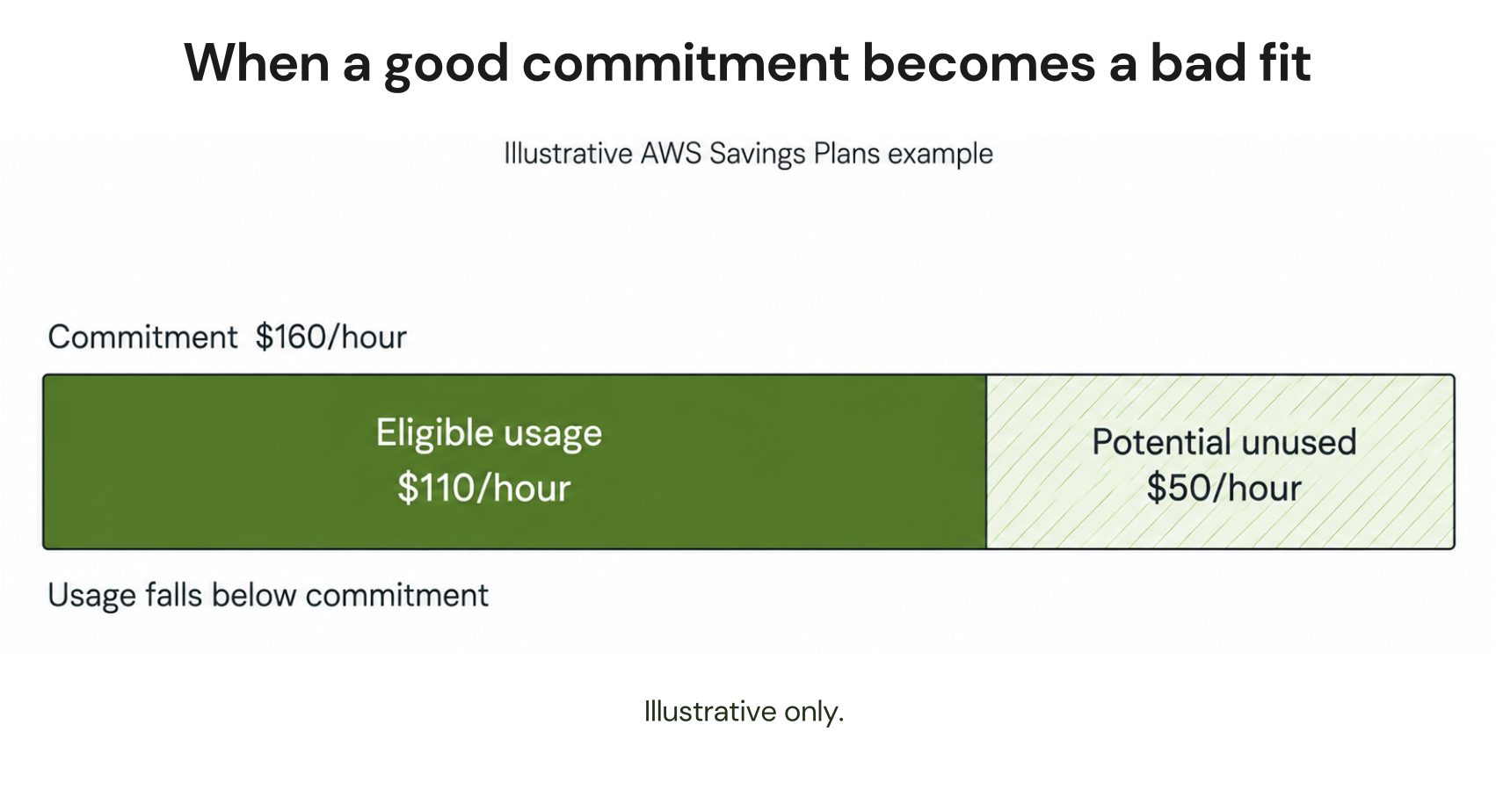
Illustrative commitment calculation
Assume an AWS team has an illustrative Savings Plans commitment of $160 per hour. After a migration, only $110 per hour of eligible Savings Plans-rate usage is available to consume it.Simplified month. The example uses 730 hours to estimate potential monthly unused commitment.
Which failure mode is yours?
Answer these five questions before choosing a solution:Visibility: Is material spend still difficult to connect to an owner or workload?
Execution: Do recommendations regularly remain open because engineering has higher-priority work?
Ownership: Do finance, FinOps, and engineering disagree on who should act?
Cadence: Do usage changes happen faster than cost decisions are reviewed?
Commitments: Are purchases based mainly on short historical averages without a downside scenario?
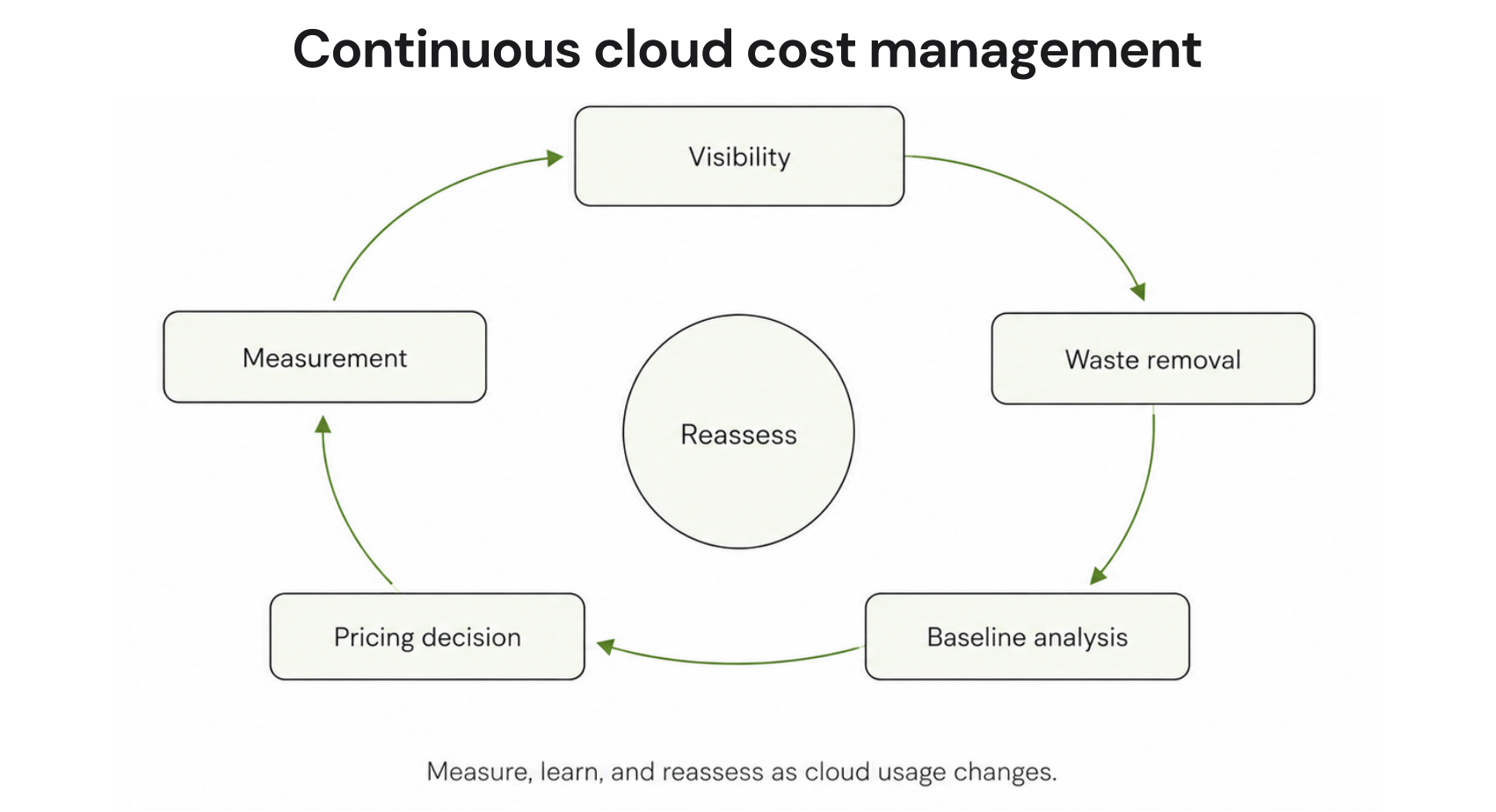
Build a continuous operating model
Establish reliable visibility. Allocate material spend to accountable products, services, and teams.
Remove reversible waste. Delete validated idle resources and address clear overprovisioning.
Separate stable and variable demand. Identify the workload floor that persists through normal change.
Choose pricing deliberately. Compare On-Demand pricing with commitments, including scope, term, eligibility, flexibility, and downside.
Measure realized outcomes. Reassess after material workload or business changes.
Minimum FinOps scorecard
| Metric | What it tells you |
|---|---|
| Allocation coverage | How much spend has a usable owner or business context |
| Recommendation implementation rate | Whether identified actions get completed |
| Commitment utilization | How effectively commitments are consumed |
| Effective savings vs. On-Demand | Whether pricing choices create financial value |
| Forecast variance | How far actual spend differs from expected spend |
Cloud cost management checklist
Before commitments- Allocate material spend to accountable owners.
- Validate idle and oversized resources.
- Separate stable baseline usage from variable demand.
- Verify scope, eligibility, term, payment model, and provider restrictions.
- Model a downside scenario.
- Track utilization and effective savings.
- Reassess after migrations or major product changes.
- Review shared outcome metrics across engineering and finance.
- Monitor forecast variance
Where Usage.ai fits
Commitment management is one specialized layer of this operating model, not a replacement for the rest of FinOps.We built Flex Insured Commitments for exactly that lever. With Flex Insured Commitments, teams can get the 30–50% savings of cloud commitments across AWS, Azure, and GCP with none of the commitment risk: there’s no multi-year lock-in, and we purchase and manage commitments on your behalf once you approve a recommendation.
Cashback protection returns the difference in real money, not credits, whenever a commitment costs more than the equivalent on-demand usage.
Our fee is a percentage of realized savings, billed monthly in arrears, if we don’t save you anything, you pay nothing. Setup happens at the billing layer with no infrastructure changes required.
See where stable cloud usage may be suitable for a more actively managed commitment strategy.
Frequently asked questions
Which cloud cost management failure should we fix first?
Start with the earliest recurring failure. If spend is not reliably allocated, fix visibility first. If data is trustworthy but recommendations remain untouched, focus on execution and ownership.
Who should own cloud cost decisions?
Ownership should be shared but explicit. Engineering owns technical resource decisions, finance provides planning context, and FinOps connects cost, usage, and business value. Each material action should still have one accountable owner.
When should commitment terms be reviewed?
Review provider terms before every material purchase and when the provider changes the product. Reassess the workload assumption after migrations, major product changes, or demand shifts.
How do we verify savings after a commitment purchase?
Track utilization and compare actual cost with an appropriate On-Demand baseline while accounting for workload changes. Monitor coverage and forecast variance as supporting signals.
Should commitments come before rightsizing?
Usually no. Validate idle resources and clear overprovisioning first. Then identify the stable remaining baseline and evaluate which portion is suitable for commitment pricing.