

Best Cloud Cost Optimization Tools in Singapore (2026)

Updated May 22, 2026
24 min read
Best Cloud Cost Optimization Tools in Singapore (2026)
On this page

Singapore is the cloud capital of Southeast Asia. AWS has invested over $12 billion in Singapore infrastructure between 2024 and 2028, Google Cloud committed $2 billion to Singapore in 2023, and Microsoft Azure runs one of its most strategically important APAC regions from Singapore. AWS ap-southeast-1 holds over 30% of Southeast Asia’s public cloud market (Kaopiz, 2026), and enterprises including DBS Bank, OCBC, UOB, Standard Chartered, Grab Holdings, and Sea Limited run significant portions of their regional cloud infrastructure from Singapore.

The result is a cloud cost optimization challenge that is structurally unique. ap-southeast-1 pricing runs 20-30% above us-east-1 for equivalent compute and database instance types. PDPA data residency obligations and MAS TRM guidelines for financial institutions push regulated workloads toward Singapore-region infrastructure, eliminating cheaper-region migration as a cost optimization strategy. And Singapore’s role as the regional hub means data transfer costs to and from Indonesia, Malaysia, Thailand, and other Southeast Asian markets add a third cost layer that organizations serving multi-country user bases must specifically address.

This guide ranks the ten most effective cloud cost optimization tools for Singapore in 2026, with specific analysis of PDPA compliance architecture, MAS TRM third-party risk implications, ap-southeast-1 and Azure Southeast Asia regional coverage, and the automation depth that determines whether a platform produces a savings report or actual savings.

What is Cloud Cost Optimization?

Cloud cost optimization is the process of systematically reducing cloud infrastructure spend across Amazon Web Services (AWS), Microsoft Azure, and Google Cloud Platform (GCP) while maintaining or improving application performance.

For Singapore businesses, this process operates within a specific regulatory and commercial context. The Personal Data Protection Act (PDPA) governs how personal data of Singapore residents may be collected, used, and transferred, creating data architecture preferences toward Singapore-region infrastructure.

The Monetary Authority of Singapore’s Technology Risk Management (TRM) guidelines impose third-party oversight obligations on cloud tools and services used by financial institutions. And the ap-southeast-1 regional pricing premium means that commitment optimization, the process of moving stable baseline workloads from on-demand pricing onto Reserved Instances, Savings Plans, and Committed Use Discounts, delivers higher absolute dollar savings per instance than equivalent commitments in lower-cost US regions.

Why Singapore Businesses Face Unique Cloud Cost Challenges

Singapore’s cloud market is the most mature in Southeast Asia, but its specific combination of regulatory requirements, regional pricing premiums, and hub-and-spoke infrastructure architecture creates cost dynamics that are distinct from both US and European enterprise cloud markets.

  • ap-southeast-1 regional pricing premium: AWS on-demand pricing in ap-southeast-1 (Singapore) runs 20-30% above equivalent us-east-1 rates. A t3.medium EC2 instance costs approximately $0.046/hour in Singapore versus $0.0416/hour in us-east-1. For RDS, a db.r8g.xlarge MySQL Multi-AZ runs approximately $0.638/hour in ap-southeast-1 versus approximately $0.480/hour in us-east-1. The absolute dollar saving from commitment purchasing in Singapore is therefore proportionally higher per instance than in lower-cost US regions, making commitment optimization the highest-leverage cost action available to Singapore-based teams.
  • PDPA data residency preferences: Singapore’s Personal Data Protection Act requires organizations to protect personal data and obtain consent for cross-border data transfers. While PDPA does not mandate data residency in the same prescriptive way as some European frameworks, its practical effect for regulated Singapore enterprises is to push workloads handling personal data of Singapore residents toward ap-southeast-1, Azure Southeast Asia, or GCP asia-southeast1. Region-arbitrage migration to cheaper US regions is rarely available as a cost strategy for these workloads.
  • MAS TRM third-party risk for financial institutions: The Monetary Authority of Singapore’s Technology Risk Management (TRM) guidelines (MAS FSM-N05, updated May 2024, replacing MAS 644) require financial institutions to maintain documented risk assessments of third-party service providers with access to their technology systems. Cloud cost tools accessing production infrastructure require more extensive MAS TRM supplier documentation than billing-layer-only tools, which access only cost and usage metadata.
  • Cross-border data transfer costs: Singapore enterprises serving multi-country Southeast Asian user bases face cross-border data transfer costs that add to the regional pricing premium. Egress from ap-southeast-1 to internet destinations runs approximately $0.09/GB for the first 10TB/month, which for organizations serving high-traffic users across Indonesia (270M population), Vietnam (97M), Malaysia (33M), and Thailand (71M) compounds rapidly. These transfer costs are not reducible through commitment purchasing and require architectural optimization through CloudFront edge caching, regional S3 transfer acceleration, and VPC endpoint deployment.
  • AWS Malaysia region arbitrage opportunity: The AWS ap-southeast-5 Malaysia region, launched August 2024, offers EC2 pricing approximately 13% below ap-southeast-1 for the same instance types. Singapore enterprises serving primarily Malaysian users, or those whose PDPA and MAS obligations do not require Singapore data residency, have a cost-reduction option through workload migration to ap-southeast-5. This is the only region-arbitrage option available to Singapore-based organizations without crossing PDPA or MAS constraints.
  • Multi-cloud complexity: Singapore enterprises typically run AWS ap-southeast-1 as their primary cloud, with Azure Southeast Asia (Singapore data center) for Microsoft-integrated workloads and GCP asia-southeast1 for data analytics and AI/ML. Managing commitment strategy across all three clouds simultaneously requires either dedicated FinOps headcount or autonomous tooling. Most Singapore organizations at $500K-$2M/year cloud spend have neither.
  • IDC cloud waste benchmark: IDC (2025) estimates Asia-Pacific enterprises waste an average of 30% of cloud spend. Singapore enterprises, combining the ap-southeast-1 pricing premium with below-average commitment coverage relative to US and UK markets, tend toward the higher end of this range.

Pricing comparison table with four columns: Instance type, AWS ap-southeast-1 on-demand hourly rate in USD, AWS us-east-1 on-demand hourly rate in USD, and annual SGD cost for 20 instances at 1.35 USD/SGD. Rows: m7i.2xlarge ($0.4032 vs $0.3648), r7i.2xlarge ($0.5040 vs $0.4536), c7i.2xlarge ($0.3440 vs $0.3026), t3.large ($0.1040 vs $0.0832), db.r8g.xlarge Multi-AZ ($0.638 vs $0.480). Bottom row shows 1-year No Upfront Compute Savings Plan covers EC2 at 37% discount, reducing the ap-southeast-1 m7i.2xlarge rate from $0.4032 to approximately $0.2540/hr. Annotation notes the additional 13% saving available if eligible workloads are migrated to AWS ap-southeast-5 Malaysia.

What to Look for in a Cloud Cost Tool for Singapore Businesses

Five criteria separate cloud cost tools built for the Singapore market from those that create compliance exposure or underdeliver on savings.

  1. Billing-layer-only access (PDPA and MAS TRM requirement): Any cloud cost tool accessing running EC2 instances, Azure VMs, application databases, or workload configuration in a Singapore enterprise environment creates a PDPA personal data handling obligation and may trigger MAS TRM third-party risk documentation requirements for financial institutions. The correct access model is billing-layer-only: read-only access to AWS Cost and Usage Report (CUR), Azure Cost Management APIs, and GCP Billing Export. None of these sources contain personal data as defined under PDPA. Billing-layer access eliminates PDPA data handling obligations for the tool vendor relationship and produces a smaller MAS TRM supplier risk footprint for regulated Singapore financial institutions.
  2. Tri-cloud coverage (AWS, Azure, GCP): Singapore enterprises at SGD 700K+/year cloud spend typically operate across AWS and at least one other cloud. Azure holds strong positions in Singapore’s banking sector, financial services, and enterprise IT through existing Microsoft licensing relationships. GCP is prominent in Singapore’s fintech, e-commerce (Sea Limited, Lazada), and AI/ML ecosystem. A tool covering AWS alone leaves Azure Southeast Asia Reservations and GCP asia-southeast1 Committed Use Discounts entirely unoptimized.
  3. Autonomous commitment purchasing with 24-hour refresh: AWS Cost Explorer refreshes Savings Plan recommendations on a 72-hour cycle. At SGD 13,500-20,000/day in uncovered compute spend on a SGD 5M/year cloud bill, a 72-hour lag versus a 24-hour refresh cycle represents SGD 40,500-60,000 in preventable on-demand charges per recommendation cycle. The difference between a recommendation-only tool and an autonomous purchasing platform for a SGD 2M/year cloud bill is typically SGD 200K-400K in additional annual savings.
  4. Real cashback and credits guarantee on underutilized commitments: Singapore enterprise procurement teams, particularly those in financial services under MAS oversight, require financial guarantees with clear contractual terms. Verify that any guarantee is in real money (transferable) rather than vendor credits locked to AWS spending or the tool vendor’s platform. Credits are not equivalent to cash for Singapore enterprise budget reconciliation purposes.
  5. PDPA and MAS TRM documentation: Singapore enterprise legal and compliance teams require PDPA-compliant data handling documentation and, for MAS-regulated financial institutions, TRM-compatible third-party risk assessment support. Billing-layer-only tools provide simpler documentation because no personal data is processed. Tools with infrastructure access require more extensive PDPA and MAS TRM documentation, including potential outsourcing agreements under MAS Notice 655 guidelines.


Also read: AWS Savings Plans vs Reserved Instances: A Practical Guide to Buying Commitments

Best Cloud Cost Optimization Tools in Singapore (2026)

The ten tools below are ranked by actual savings delivered for Singapore enterprises operating across AWS ap-southeast-1, Azure Southeast Asia, and GCP asia-southeast1, within the constraints of PDPA, MAS TRM, and the ap-southeast-1 regional pricing premium. Ranking weights: automation depth (40%), PDPA/MAS TRM compliance architecture (25%), savings guarantee quality (20%), and multi-cloud coverage (15%).

#1 Usage.ai

The only tri-cloud platform with insured commitments, a cashback and credits guarantee, and billing-layer-only access that satisfies PDPA and simplifies MAS TRM third-party documentation

Usage.ai dashboard for a Singapore enterprise displaying total monthly cloud spend of SGD 590,000 broken down across AWS ap-southeast-1 (62%), Azure Southeast Asia (25%), and GCP asia-southeast1 (13%). Commitment coverage shows 46% highlighted in amber. A recommendation panel lists four Flex Savings Plan, Flex DB Savings Plan, and Azure Savings Plan purchases totaling SGD 98,000/month projected savings. A green guarantee badge confirms cashback and credits on any underutilized commitment. Bottom bar shows 24-hour refresh cycle active and SGD 1.2M projected annual savings.

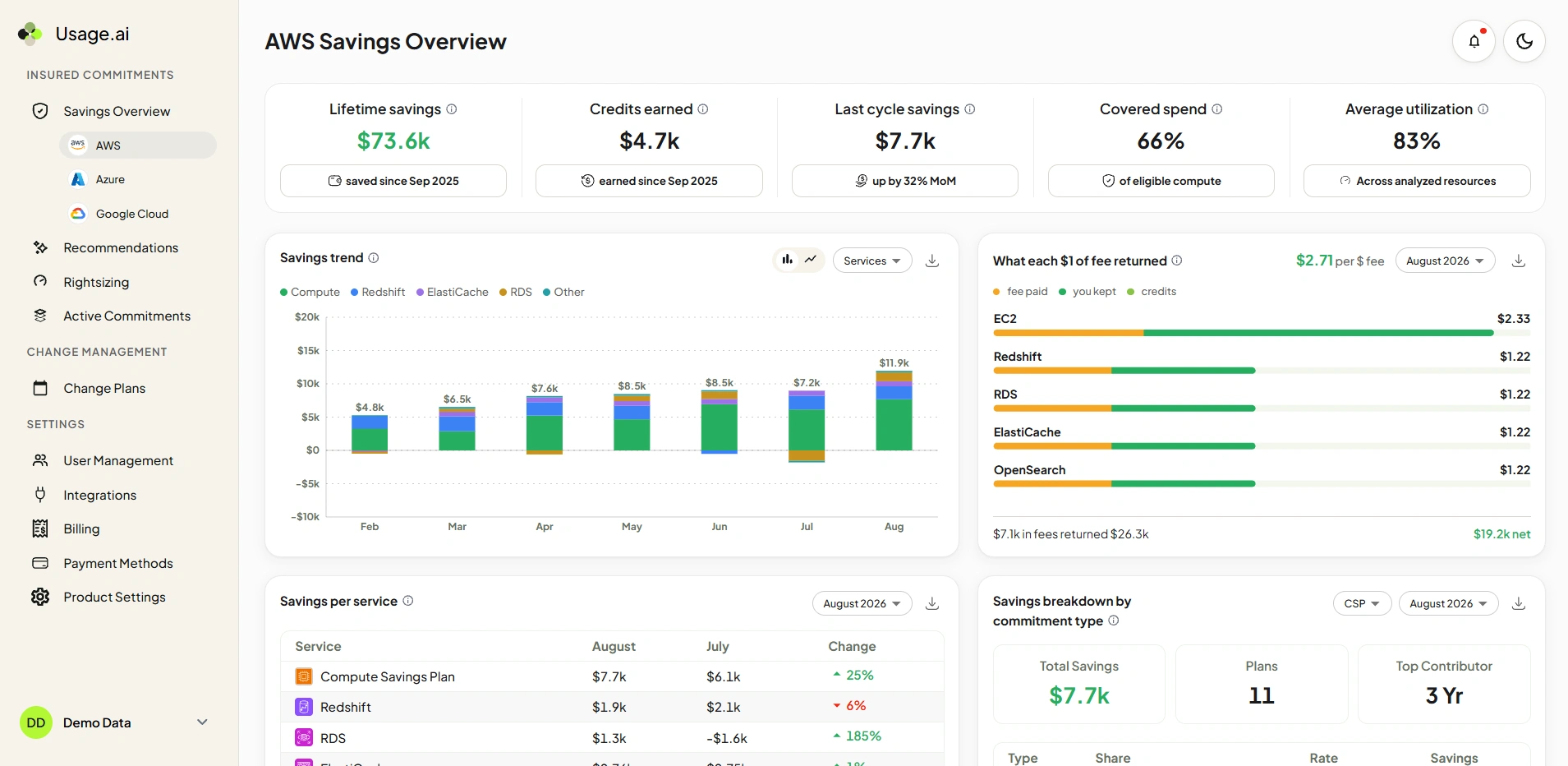
Usage.ai is the strongest cloud cost optimization platform available to Singapore enterprises in 2026. It autonomously purchases AWS Savings Plans, Flex DB Savings Plans for RDS and ElastiCache, Azure Savings Plans and Reservations, and GCP Committed Use Discounts on a 24-hour refresh cycle, with a cashback and credits guarantee on any underutilized commitment. The platform connects exclusively to AWS Cost and Usage Report (CUR) APIs, Azure Cost Management APIs, and GCP Billing Export, none of which contain personal data under PDPA, making it PDPA-compliant by design and producing the smallest possible MAS TRM supplier risk footprint for Singapore financial institutions.

For Singapore enterprises, the billing-layer-only architecture resolves the compliance objection that frequently delays third-party tool deployments in MAS-regulated environments. No infrastructure access is required, no PDPA data handling agreement for personal data is needed, and the MAS TRM third-party risk documentation for a billing-layer-only tool is substantially simpler than for tools requiring production system credentials. Usage.ai has recovered over $91M in cloud savings for customers including Motive, EVgo (NASDAQ: EVGO), Blank Street Coffee, Secureframe, CoinDesk, and Zumba. Setup takes 30 minutes. You pay nothing until savings appear.

Best for: Singapore enterprises spending SGD 700K+ annually on AWS, GCP, or Azure who need PDPA-compliant, MAS TRM-compatible autonomous optimization with a financial guarantee and billing-layer-only security posture

Calculate your ap-southeast-1 savings with Usage.ai


#2 ProsperOps (now part of Flexera)

Established autonomous AWS commitment engine, AWS-only scope and credit-based guarantee following January 2026 Flexera acquisition

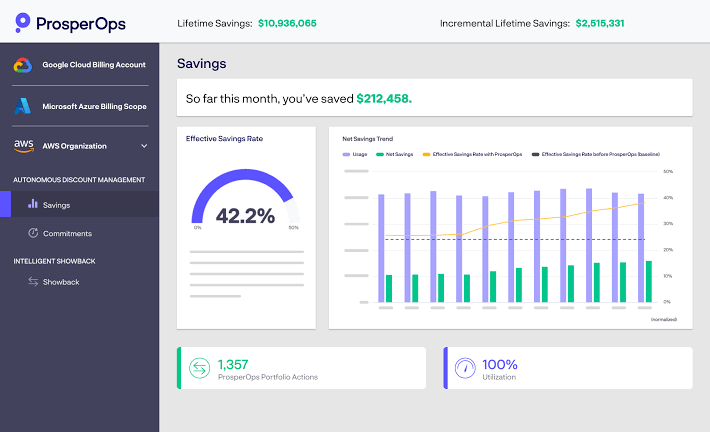
ProsperOps built a well-regarded autonomous AWS Savings Plan purchasing engine before its acquisition by Flexera in January 2026. The platform purchases commitments in small incremental tranches matched to usage patterns, organically limiting overcommitment risk without requiring a separate guarantee mechanism.

For Singapore enterprises with AWS-only workloads in ap-southeast-1, it is a capable autonomous option with a track record of driving high Savings Plan coverage on stable EC2 and Lambda workloads.

The limitations are significant for Singapore’s multi-cloud market. ProsperOps covers AWS only, leaving Azure Southeast Asia and GCP asia-southeast1 commitment spend entirely unoptimized. Its underutilization protection is AWS credits rather than transferable cash. Since the Flexera acquisition, integration is ongoing and enterprise buyers should verify the current product roadmap and pricing directly with the vendor before committing to a multi-year contract.

Best for: AWS-only Singapore enterprises spending SGD 700K+/year on EC2, Fargate, and Lambda who want autonomous commitment purchasing and are comfortable with credit-based underutilization protection


#3 Zesty

Dynamic real-time AWS commitment adjustment for variable workloads, AWS-only with no Singapore compliance documentation advantage

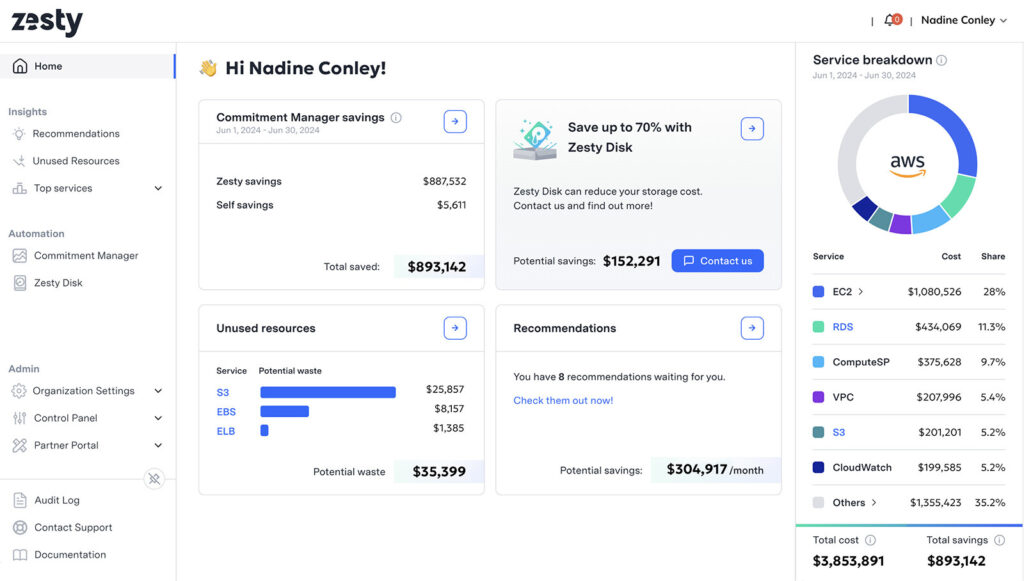
Zesty’s real-time commitment adjustment approach, which dynamically trades Reserved Instance positions on the AWS Marketplace rather than holding static Savings Plans, suits Singapore enterprises with highly variable compute demand. Singapore’s tech sector, including fintech platforms, regional e-commerce operators, and gaming companies, frequently experiences demand spikes tied to regional events, shopping festivals (Harbolnas, 9.9, 11.11), and product launches that create workload variability where dynamic adjustment outperforms static forecasting.

Zesty covers EC2 and RDS commitment management, EBS right-sizing, and Kubernetes optimization on AWS. Coverage is AWS-only. Singapore legal teams should verify Zesty’s data access model against PDPA obligations and MAS TRM requirements, particularly for any features accessing infrastructure-level metrics beyond billing data. For Singapore enterprises with material Azure or GCP workloads, AWS-only scope leaves those clouds unoptimized.

Best for: AWS-heavy Singapore enterprises in fintech, e-commerce, and gaming with highly variable demand patterns where real-time commitment adjustment outperforms static Savings Plan forecasting


#4 Harness Cloud Cost Management

Engineering-workflow cost attribution across AWS, Azure, and GCP, recommendation-only on commitments

Harness Cloud Cost Management connects cloud spend attribution to CI/CD deployment activity across AWS ap-southeast-1, Azure Southeast Asia, and GCP asia-southeast1, giving Singapore engineering teams cost visibility at the service, team, and deployment level. For Singapore technology companies where engineering cost accountability is a management priority alongside performance and reliability, Harness surfaces cost impacts in the same workflows where architecture decisions are made rather than in monthly finance reports.

The limitation for Singapore FinOps teams focused on bill reduction is that Harness does not autonomously purchase commitments. Every Savings Plan, Reserved Instance, and Azure Reservation recommendation requires manual execution. For a Singapore enterprise spending SGD 3M/year on cloud, the 30-90 day manual review cycle costs SGD 90,000-270,000 per cycle in preventable on-demand spend. Harness pairs well with Usage.ai: Harness for deployment-level cost attribution, Usage.ai for autonomous commitment purchasing.

Best for: Engineering-led Singapore technology companies that need cost-per-deployment or cost-per-feature visibility, particularly regional SaaS platforms and fintech companies building unit economics accountability into product development


#5 CloudHealth by Broadcom

Multi-cloud governance and policy enforcement for large enterprises, manual commitment execution required throughout

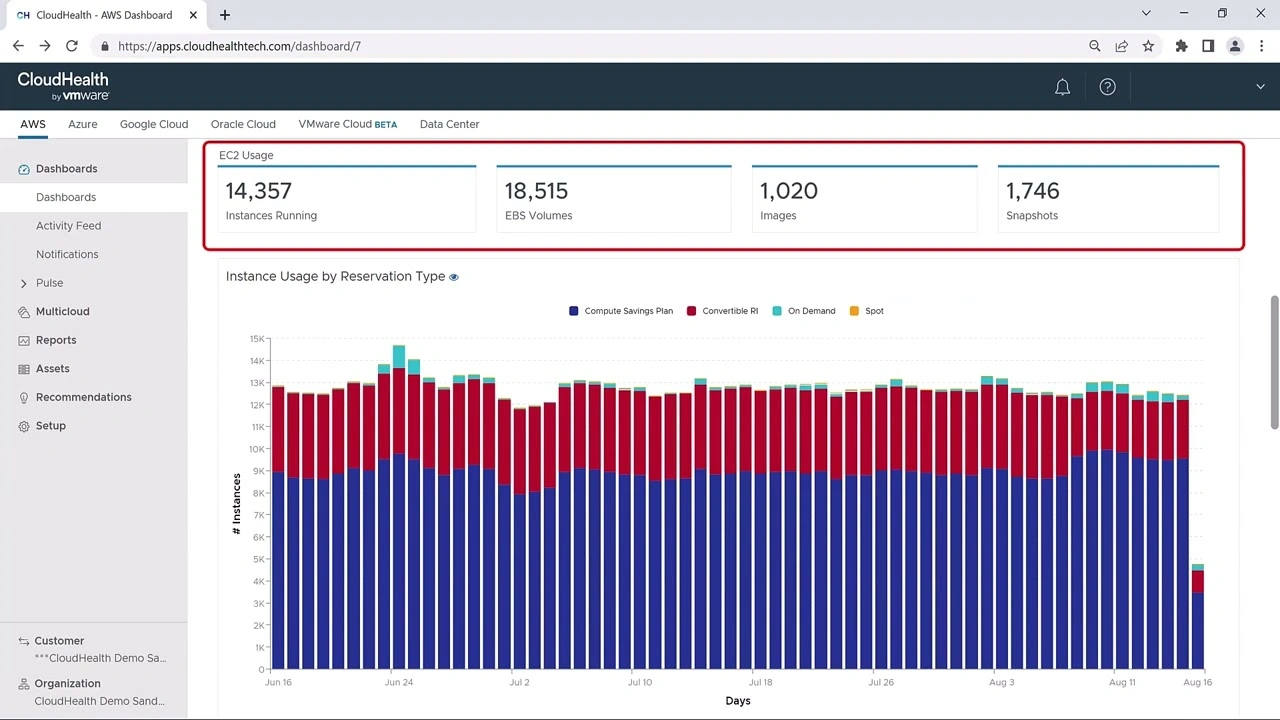
CloudHealth has an established presence among large Singapore enterprises in financial services, telecommunications, and manufacturing that use it for multi-cloud policy enforcement, showback and chargeback reporting, and compliance tagging across AWS, Azure, and GCP. For Singapore organizations with complex multi-entity structures, regional subsidiary cost allocation requirements, and entrenched CloudHealth governance workflows, the platform provides governance capabilities that are recognized by Singapore enterprise procurement teams.

Following the Broadcom acquisition, some customers have reported slower product development and higher licensing costs. CloudHealth’s commitment optimization capabilities produce recommendations but require manual execution throughout. For Singapore financial institutions, the manual execution model adds approval cycle overhead that autonomous platforms eliminate. Singapore enterprises evaluating CloudHealth in 2026 should compare the platform’s governance capabilities against its commitment automation gap and verify current pricing and roadmap directly with the vendor.

Best for: Large Singapore enterprises (SGD 10M+ cloud spend) already using CloudHealth for multi-cloud governance and policy management with separate commitment purchasing workflows


#6 AWS Cost Explorer

Free native AWS visibility for ap-southeast-1 workloads, 72-hour recommendation lag and manual execution only

AWS Cost Explorer is the baseline for any Singapore enterprise running workloads in ap-southeast-1. It provides Cost and Usage Reports, Savings Plan and Reserved Instance recommendations, rightsizing suggestions from AWS Compute Optimizer, and anomaly detection. For Singapore enterprises in the early stages of FinOps maturity or those spending below SGD 700K/year on AWS, native tools are the correct starting point. AWS Compute Optimizer covers all major instance types available in ap-southeast-1 including the R8g and M8g Graviton4 instances now available in Singapore since January 2026.

The structural limitations are consistent regardless of region. Cost Explorer refreshes Savings Plan recommendations every 72+ hours. All commitment purchases require manual execution. Coverage is AWS-only, with no visibility into Azure Southeast Asia or GCP asia-southeast1. There is no financial guarantee on commitment purchases, and overcommitment risk falls entirely on the customer. For Singapore enterprises spending over SGD 700K/year on AWS with material Azure or GCP workloads alongside, native tools alone reliably underdeliver relative to the optimization opportunity.

Best for: Singapore enterprises spending under SGD 700K/year on AWS ap-southeast-1 who need free baseline cost visibility and have team capacity for manual commitment purchasing


#7 Azure Cost Management + Billing

Free native Azure visibility for Southeast Asia workloads, no cross-cloud support and no automated purchasing

Azure holds a strong position in Singapore’s banking and financial services sector. DBS Bank, OCBC, and Standard Chartered all run material Azure workloads alongside AWS in Singapore. Microsoft’s existing EA licensing relationships, Active Directory deployments, and Azure Southeast Asia (Singapore data center) compliance documentation for MAS-regulated institutions make Azure Cost Management the natural baseline tool for Azure workloads in Singapore. It provides cost allocation by subscription, resource group, and tag, along with Azure Savings Plan and Reservation recommendations.

The limitations are structural: manual execution for all purchases, no AWS or GCP coverage, and no financial guarantee on overcommitment. For Singapore financial institutions running Azure alongside AWS, Azure Cost Management and AWS Cost Explorer together still produce two separately manually-optimized clouds with no unified commitment strategy. A tri-cloud autonomous platform covers both with a single 30-minute onboarding flow and cashback and credits protection across all commitment positions.

Best for: Azure-primary Singapore organizations spending under SGD 700K/year on Azure Southeast Asia who need free native visibility and have established Microsoft compliance documentation for MAS TRM requirements


#8 Flexera One

Enterprise technology spend management combining SAM, ITAM, and cloud governance, expensive and complex for pure cloud cost optimization

Flexera One addresses a specific requirement that pure-cloud tools do not: the combination of software asset management (SAM), IT asset management (ITAM), and cloud cost management for large Singapore enterprises managing Microsoft EA licensing alongside AWS and Azure cloud spend. For Singapore organizations with significant on-premises software estates, Oracle or SAP licensing obligations, and ITAM governance requirements, Flexera One provides a breadth of coverage that no pure-cloud tool matches.

As a cloud cost optimization tool specifically, Flexera One carries enterprise-level contract pricing and typically requires 3-6 month implementation timelines for Singapore deployments. Commitment purchasing across ap-southeast-1 and Azure Southeast Asia requires manual execution. The 2026 integration of ProsperOps adds autonomous AWS commitment management, but Azure Southeast Asia and GCP asia-southeast1 commitment automation remain less mature. Singapore enterprises evaluating Flexera One purely for cloud cost optimization without ITAM requirements will find Usage.ai delivers substantially better savings outcomes faster.

Best for: Large Singapore enterprises (SGD 10M+ technology spend) with complex Microsoft EA and Oracle licensing alongside cloud spend where integrated SAM, ITAM, and cloud governance in a single platform justifies the contract investment


#9 CloudZero

Best-in-class unit economics and cost attribution per customer or feature, no autonomous commitment purchasing

CloudZero is the strongest tool in this ranking for Singapore SaaS companies and product-led enterprises that need cloud cost attributed to specific customers, features, or engineering teams at granularity that generic dashboards cannot produce. Singapore’s regional SaaS ecosystem, including HR platforms, fintech applications, and B2B software companies serving Southeast Asian markets from Singapore infrastructure, increasingly needs cost-per-customer as a board-level metric for unit economics and investor reporting.

The consistent limitation is autonomous commitment execution: CloudZero surfaces Savings Plan and Reserved Instance recommendations but does not purchase them. All commitment optimization across ap-southeast-1, Azure Southeast Asia, and GCP asia-southeast1 remains manual. For Singapore organizations where reducing the total cloud bill is the primary objective, CloudZero is a complement to Usage.ai rather than a replacement. Pair CloudZero for unit economics visibility with Usage.ai for autonomous commitment purchasing.

Best for: Singapore SaaS companies and product-led enterprises serving Southeast Asian markets that need cost-per-customer or cost-per-feature visibility to inform product pricing and unit economics reporting


#10 Apptio Cloudability (IBM)

Deep FinOps analytics and executive reporting for large enterprises, manual execution and enterprise-level pricing

Apptio Cloudability is the incumbent FinOps analytics platform at several large Singapore enterprises, particularly those in financial services and telecommunications already using Apptio’s IT financial management suite or IBM’s broader software portfolio. Its strengths are executive reporting depth, chargeback and showback modeling for complex Singapore holding company structures with regional subsidiaries, and finance governance reporting that satisfies the audit and board reporting requirements of Singapore-listed companies.

The limitation for Singapore FinOps teams focused on savings rather than reporting is that Cloudability does not autonomously purchase commitments across ap-southeast-1, Azure Southeast Asia, or GCP asia-southeast1. Every savings opportunity requires human review and execution, with enterprise-level pricing that is difficult to justify when the platform does not autonomously reduce the bill. Singapore organizations comparing Cloudability and Usage.ai on savings delivered per dollar of platform spend will consistently find the autonomous platform wins on that metric.

Best for: Finance-led FinOps programs at large Singapore enterprises where executive reporting, board-level governance, and chargeback to regional subsidiaries are the primary requirements rather than autonomous commitment purchasing


Also read: 10 Best Cloud Cost Tools 2026: Ranked by Real Savings

PDPA, MAS TRM, and Cloud Cost Tools: What Singapore Teams Must Know

Two regulatory frameworks shape cloud cost tool selection in Singapore in 2026: the Personal Data Protection Act (PDPA), enforced by the Personal Data Protection Commission (PDPC), and the MAS Technology Risk Management (TRM) guidelines for financial institutions.

PDPA and the billing-layer-only access requirement

Singapore’s Personal Data Protection Act requires organizations to protect personal data and imposes obligations on organizations that collect, use, or disclose personal data on behalf of others. Any cloud cost tool that accesses running EC2 instances, application databases, or workload configuration in a Singapore enterprise environment creates a PDPA data intermediary obligation if those workloads process personal data of Singapore residents. This obligation requires contractual data protection provisions and appropriate technical safeguards.

Usage.ai’s billing-layer-only model sidesteps this obligation entirely. By connecting exclusively to AWS Cost and Usage Report APIs, Azure Cost Management APIs, and GCP Billing Export, the platform processes only cost and usage metadata: instance types, hours, and charges. None of these contain personal data as defined under PDPA. No PDPA data intermediary obligation arises. Singapore legal teams consistently approve billing-layer-only tool deployments faster than infrastructure-accessing tools, which typically require 4-8 weeks of legal review under PDPA frameworks.

MAS TRM and third-party cloud tool oversight

MAS FSM-N05 (Technology Risk Management, updated May 2024, replacing MAS 644) requires Singapore financial institutions to maintain documented risk assessments of third-party service providers with access to their technology systems. The materiality of the assessment scales with the risk level of the access: a billing-layer-only tool accessing only cost metadata carries a substantially lower MAS TRM risk profile than a tool requiring production infrastructure credentials.

For MAS-regulated Singapore financial institutions, Usage.ai’s billing-layer-only architecture produces a minimal MAS TRM supplier footprint: no access to production systems, no personal data processing, no customer data exposure. The third-party risk documentation for a billing-layer-only tool is proportionally simple and typically clears MAS TRM review faster than tools with infrastructure access, which may require formal outsourcing agreements under MAS Notice 655 guidelines depending on the classification of the arrangement.

Actionable tip: Before deploying any cloud cost tool in a Singapore enterprise environment, require the vendor to confirm in writing: (1) access model is billing-layer-only, (2) no personal data under PDPA is processed, (3) no PDPA data intermediary agreement covering personal data is required, and (4) for MAS-regulated institutions, that TRM third-party risk documentation support is available. Any tool requiring infrastructure-level IAM credentials, agent installation, or production system access should be assessed through your MAS TRM supplier risk framework before deployment.

How to Reduce Your Cloud Bill in Singapore: Quick Wins

The following five steps are sequenced by time-to-impact for Singapore enterprises running workloads in ap-southeast-1, Azure Southeast Asia, and GCP asia-southeast1. Each can be implemented without changing application code or causing infrastructure downtime.

  1. Enable AWS Compute Optimizer for all ap-southeast-1 accounts (Day 1, 15 minutes): Enable Compute Optimizer organization-wide. Select Enhanced Infrastructure Metrics for 14-day lookback. Review EC2 and RDS rightsizing recommendations within 24 hours. For Singapore enterprises running R8g or M8g Graviton4 instances now available in ap-southeast-1 since January 2026, Compute Optimizer identifies migration opportunities from older R7g and M7g instances that deliver 29% better price-performance at the same on-demand rate.
  2. Deploy VPC Endpoints for S3 and DynamoDB in ap-southeast-1 (Day 1-2, 30 minutes): Create Gateway Endpoints for S3 and DynamoDB via CloudFormation or the VPC console. Eliminate NAT Gateway processing charges ($0.045/USD per GB) on all AWS service traffic. For a Singapore enterprise processing 10TB/month of S3 traffic through a NAT Gateway in ap-southeast-1, this configuration change saves approximately USD 4,500/month with zero application changes. At 1.35 USD-SGD, that is approximately SGD 6,075/month recovered from a single VPC configuration change.
  3. Audit and release unattached Elastic IPs and orphaned EBS volumes (Day 1-3, 20 minutes): Run aws ec2 describe-addresses –region ap-southeast-1 to list all Elastic IPs. Release any EIP not associated with a running instance. AWS charges $0.005/hour for all public IPv4 addresses since February 2024, including idle ones. Run aws ec2 describe-volumes –filters Name=status,Values=available –region ap-southeast-1 to list unattached EBS volumes. Most Singapore enterprise accounts accumulate 15-40 orphaned EIPs and significant unattached storage from previous deployments.
  4. Schedule non-production environments for off-hours shutdown (Day 3-7, 3-4 hours): Tag all development and staging instances with Environment=dev or Environment=staging. Deploy AWS Instance Scheduler with Singapore Time (SGT, UTC+8) configuration. Singapore observes 11 public holidays per year. Configure holiday calendars for all Singapore public holidays. Scheduling weekday shutdown from 20:00 to 09:00 SGT and full weekend shutdown reduces non-production instance hours from 720/month to approximately 220/month, a 70% reduction.
  5. Connect Usage.ai for autonomous tri-cloud commitment purchasing (Day 1, 30 minutes): Connect AWS CUR for ap-southeast-1, Azure Cost Management API for Southeast Asia subscriptions, and GCP Billing Export for asia-southeast1 to Usage.ai via read-only billing credentials. Review the initial savings analysis. Approve first Flex Savings Plan, Flex DB Savings Plan, and Azure Savings Plan and Reservation purchases. The cashback and credits guarantee activates on every position purchased. Full 30-50% optimization across all three Singapore-region clouds achieved within 60 days.


Also read: How to Save on RDS Reserved Instances in Singapore (ap-southeast-1)

Frequently Asked Questions

1. What is the best cloud cost optimization tool for Singapore businesses?

Usage.ai is the top-ranked tool for Singapore enterprises because it is the only platform that autonomously purchases commitments across AWS ap-southeast-1, Azure Southeast Asia, and GCP asia-southeast1 on a 24-hour refresh cycle, with a cashback and credits guarantee and billing-layer-only access that satisfies PDPA and simplifies MAS TRM third-party risk documentation by design. It delivers 30-50% savings within 60 days. For AWS-only organizations spending below SGD 700K/year, AWS Cost Explorer provides a free baseline. ProsperOps is the strongest AWS-only autonomous alternative, but its AWS-only scope, credit-based guarantee, and lack of Singapore-specific compliance documentation limit its fit for regulated Singapore financial institutions running material Azure workloads.


2. How much can a Singapore enterprise realistically reduce its cloud bill?

IDC (2025) estimates Asia-Pacific enterprises waste an average of 30% of cloud spend. Singapore enterprises, combining the ap-southeast-1 regional pricing premium with below-average commitment coverage relative to US markets, typically sit at the higher end of this range. Usage.ai customers achieve 30-50% savings within 60 days across AWS, GCP, and Azure after full optimization. For a Singapore enterprise spending SGD 2M/year on cloud, that represents SGD 600,000-1,000,000 in annual savings. The ap-southeast-1 pricing premium means the absolute SGD saving per committed instance is proportionally higher than in lower-cost US regions, making commitment optimization particularly high-leverage for Singapore-based teams.


3. Does deploying a cloud cost tool in Singapore require a PDPA compliance assessment?

It depends on the tool’s data access model. Any cloud cost tool accessing running infrastructure, application data, or workload configuration in a Singapore enterprise environment creates a PDPA data intermediary obligation if those workloads process personal data of Singapore residents. This obligation requires contractual data protection provisions under the PDPA. Tools operating on a billing-layer-only model, accessing only AWS Cost and Usage Report, Azure Cost Management APIs, and GCP Billing Export, do not process personal data as defined under PDPA. Usage.ai is billing-layer-only. It requires no infrastructure access, installs no agents, and never processes personal data. Singapore legal teams consistently approve Usage.ai deployments faster than tools with broader infrastructure access.


4. How quickly does Usage.ai deliver savings on Singapore cloud accounts?

First savings appear on the first billing cycle after onboarding, typically within 30 days, across AWS ap-southeast-1, Azure Southeast Asia, and GCP asia-southeast1. Full optimization, meaning 30-50% savings across all eligible workloads on all three clouds, is achieved within 60 days. This is significantly faster than the 6-9 month timeline typical of manual FinOps programs at Singapore enterprises, which must cycle through commitment analysis, legal review (including PDPA and MAS TRM supplier assessment for regulated institutions), procurement approval, and manual execution for each commitment cohort. Usage.ai’s billing-layer-only architecture reduces the legal review phase to near-zero, accelerating the path to first savings.


Disclaimer: Competitor and third-party information in this article reflects publicly available data and Usage.ai’s analysis as of the date of publication. Product capabilities, pricing, and company ownership in the cloud cost optimization market change frequently. Readers should verify current competitor details directly with each vendor before making purchasing decisions. Usage.ai makes no warranties regarding the accuracy or completeness of third-party information contained herein.


Ready to reduce your Singapore cloud bill by 30-50%?

Usage.ai’s autonomous optimization handles AWS Savings Plans in ap-southeast-1, Azure Savings Plans and Reservations in Southeast Asia, and GCP Committed Use Discounts in asia-southeast1 automatically, with zero lock-in, a full cashback and credits guarantee, and billing-layer-only access that keeps your Singapore enterprise PDPA-compliant and MAS TRM-compatible from day one. No agents. No infrastructure access. Setup takes 30 minutes. You pay nothing until Usage.ai saves you money.

Book a free 15-minute savings assessment for your Singapore cloud environment at usage.ai.

Cut cloud cost with automation
Latest from our blogs