The United States is the world’s largest enterprise cloud market. AWS holds 47% of enterprise cloud spending priority in 2026, followed by Azure at 32% (Flexera, 2026). US enterprises run workloads across us-east-1 (Northern Virginia), us-west-2 (Oregon), us-east-2 (Ohio), and us-west-1 (California) as their primary regions, with Azure East US and West US and GCP us-central1 and us-east4 rounding out the typical enterprise multi-cloud footprint.
At this scale, cloud cost optimization is not an IT efficiency exercise. It is a P&L line item that CFOs and boards now scrutinize alongside headcount and real estate.
The data on waste is consistent across multiple 2026 sources. Flexera finds 32% waste. CloudZero’s survey of 475 senior leaders finds organizations run at 35% average waste. Harness (2025) measured 28% average waste among its customer base.
The range is 27-35%, but the direction is the same: cloud waste has not declined despite FinOps adoption growing to cover 85% of enterprises. The reason is structural. Visibility into waste has improved. Execution to eliminate it has not. Only 28% of organizations have mature, automated optimization that closes the gap between identifying a savings opportunity and acting on it.
This guide ranks the ten most effective cloud cost optimization tools for US enterprises in 2026, with specific attention to commitment automation depth, savings guarantee structure, multi-cloud coverage across AWS, Azure, and GCP, and the time-to-savings that determines whether a tool delivers a quarterly P&L impact or a 12-month roadmap.
What is Cloud Cost Optimization?
Cloud cost optimization is the ongoing process of reducing cloud infrastructure spend across AWS, Azure, and GCP while maintaining application performance. It covers three distinct categories of savings: eliminating waste (idle and unattached resources), right-sizing overprovisioned capacity, and shifting stable workloads from on-demand pricing onto committed rates through Savings Plans, Reserved Instances, and Committed Use Discounts.
For US enterprises, the highest-leverage optimization lever is commitment purchasing. A Compute Savings Plan covering 70% of stable EC2 baseline in us-east-1 at a 1-year No Upfront rate delivers up to 66% savings on covered compute. At $1M/year in eligible on-demand EC2 spend, that represents $660,000 in annual savings from a single purchase. The challenge is not knowing this. Every AWS account has access to Savings Plan recommendations in Cost Explorer for free. The challenge is executing commitments at scale, across all three clouds, on a refresh cycle fast enough to cover workloads as they stabilize rather than months after the fact.
Why US Enterprises Struggle with Cloud Cost Optimization
The US cloud market has the most mature FinOps discipline in the world and the highest absolute cloud waste in dollar terms. These two facts coexist because FinOps maturity and optimization execution are different problems.
- The execution gap is the core problem: Flexera 2026 finds 85% of US organizations have adopted some form of FinOps practice. Only 28% have mature, automated optimization. The 57% in the middle have cost monitoring and manual optimization processes. Manual processes operate on 30-90 day review cycles. AWS Cost Explorer refreshes Savings Plan recommendations every 72+ hours. At $10,000-15,000/day in uncovered compute spend on a $5M/year cloud bill, a 30-day manual review cycle means $300,000-450,000 in preventable on-demand charges per cycle on workloads that were stable the entire time.
- Multi-cloud complexity multiplies the problem: 87% of US enterprises now operate across at least two cloud providers (Flexera, 2026). Each cloud has its own commitment vehicle: AWS Savings Plans and Reserved Instances, Azure Savings Plans and Reservations, GCP Committed Use Discounts. Managing commitment strategy across all three clouds simultaneously, refreshing analysis daily, and maintaining appropriate coverage without overcommitment requires either a dedicated team or autonomous tooling. Most mid-market organizations have neither.
- AI workload spend is unpredictable and growing fast: GPU idle time now averages 77% across measured workloads (Harness, 2025), making AI compute the fastest-growing waste category. FinOps Foundation’s 2026 State of FinOps report identifies AI cost management as a top emerging priority for teams at every spending level. Traditional commitment strategies designed for stable EC2 workloads do not apply directly to bursty AI inference or training jobs, requiring separate optimization approaches for the AI compute layer.
- Commitment underutilization is a persistent drag: Fewer than half of US organizations use any given discount program across AWS, Azure, or GCP (Flexera, 2026). For those that do purchase commitments, undercommitment (purchasing at 50-60% of eligible baseline out of overcommitment fear) leaves 10-20% of available commitment savings uncaptured. For a $3M/year cloud bill, that uncaptured opportunity is $180,000-360,000/year in preventable on-demand spend.
- FinOps maturity gap at mid-market scale: The FinOps Foundation 2026 State of FinOps report notes that mid-market organizations (500-5,000 employees) have the worst of both worlds: enough cloud spend to make waste expensive, but not yet enough organizational maturity for systematic optimization. CNCF’s 2024 FinOps survey found mid-market organizations were least likely to have a dedicated FinOps practice and most likely to report cloud costs as only partially visible. This segment represents the largest addressable market for cloud cost optimization tools in the US.

What to Look for in a Cloud Cost Tool for US Enterprises
The US market has more cloud cost tools than any other geography. Five criteria separate platforms that deliver quarterly P&L impact from those that produce better dashboards without reducing the bill.
- Autonomous commitment purchasing with 24-hour refresh: The market differentiator in 2026 is not recommendation quality. It is autonomous execution. Tools that identify Savings Plan opportunities but require human review and purchase deliver savings 3-4 months after the opportunity appears. Tools that purchase autonomously on a 24-hour cycle deliver savings as workloads stabilize. For a $3M/year cloud bill, the compounding difference over 12 months is $200,000-400,000 in additional savings captured.
- Tri-cloud coverage (AWS, Azure, GCP): US enterprises at $500K+/year cloud spend typically run at least two clouds. A tool covering AWS alone leaves Azure Savings Plans, Reservations, and GCP Committed Use Discounts unoptimized. With 87% of US enterprises running multi-cloud, single-cloud tools address at most 47-60% of eligible commitment spend.
- Financial guarantee on underutilized commitments: Commitment purchasing carries overcommitment risk. Platforms offering cashback or credits on underutilized commitments allow US enterprises to purchase at 75-85% coverage rates without the financial exposure that forces conservative programs to cap at 50-60%. Verify whether the guarantee is cash (spendable anywhere) or credits (locked to cloud or vendor ecosystem).
- Time to full optimization: The industry standard for manual FinOps programs is 6-9 months to full coverage. Autonomous platforms with 24-hour refresh cycles and insured commitments reach full optimization in 60 days. For a $5M/year cloud bill, the difference between 60 days and 6 months is $350,000-700,000 in savings that arrive before or after Q2 closes.
- Billing-layer-only access for security and compliance: Enterprise security teams and SOC 2 compliance programs increasingly require third-party tool access to be limited to the minimum necessary. Billing-layer-only tools (connecting via AWS CUR, Azure Cost Management APIs, and GCP Billing Export) do not require IAM permissions on running workloads, do not install agents, and do not create cloud security posture exposure. This access model also satisfies data handling requirements for US enterprises in healthcare (HIPAA), financial services, and government sectors.
Also read: AWS Savings Plans vs Reserved Instances: A Practical Guide to Buying Commitments
Best Cloud Cost Optimization Tools in the USA (2026)
The ten tools below are ranked by actual savings delivered for US enterprises operating across AWS, Azure, and GCP. Ranking weights: automation depth (40%), savings guarantee quality (25%), multi-cloud coverage (20%), and time to full optimization (15%).
#1 Usage.ai
Tri-cloud autonomous commitment purchasing with insured commitments, a cashback and credits guarantee, and billing-layer-only access

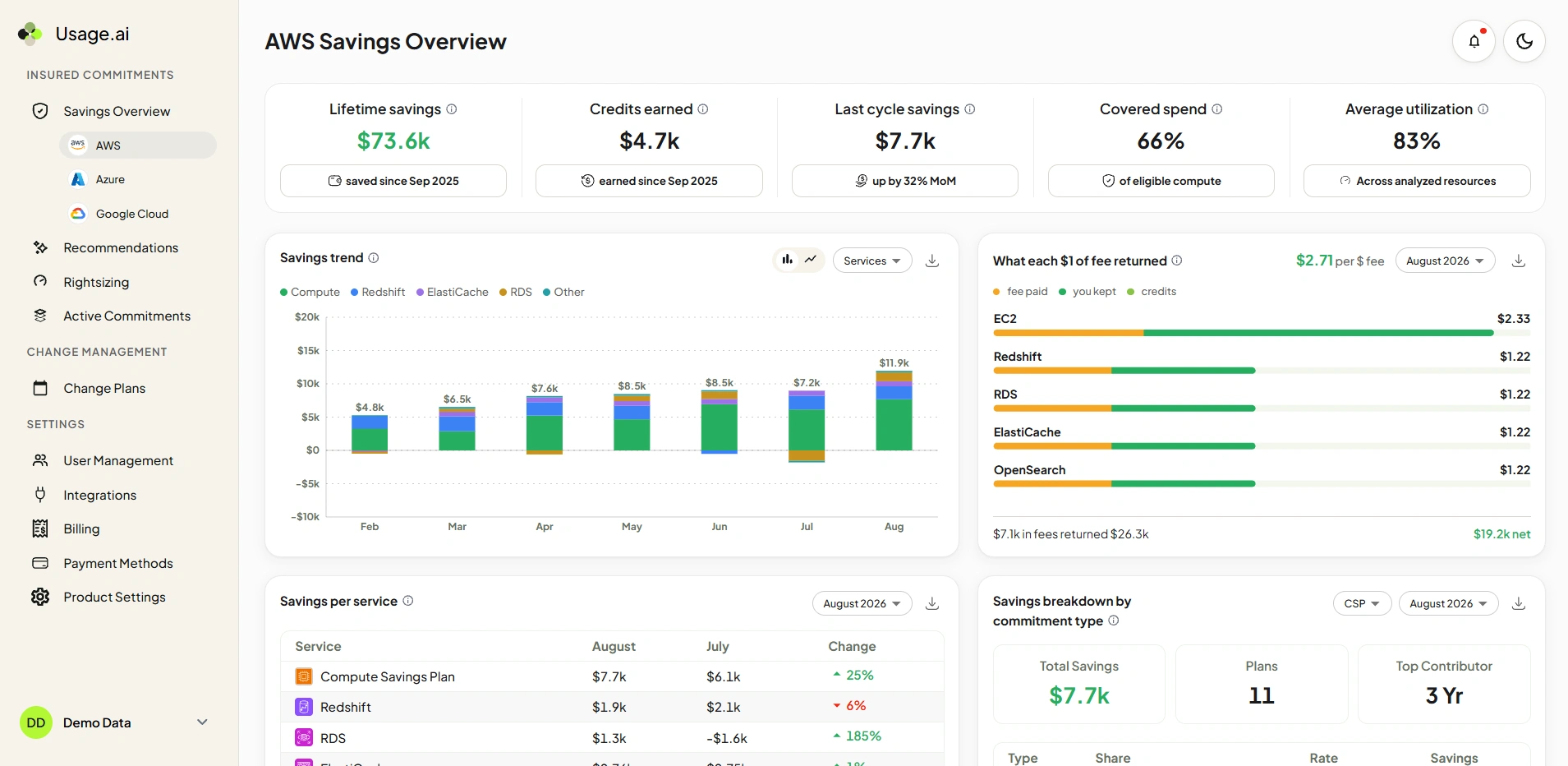
Usage.ai is the top-ranked cloud cost optimization tool for US enterprises in 2026. The platform autonomously purchases AWS Savings Plans, Azure Savings Plans and Reservations, and GCP Committed Use Discounts on a 24-hour refresh cycle, with a cashback and credits guarantee on any underutilized commitment and billing-layer-only access that satisfies enterprise security and compliance requirements without infrastructure-level credentials. It has recovered over $91M in cloud savings for customers including Motive, EVgo (NASDAQ: EVGO), Blank Street Coffee, Secureframe, CoinDesk, and Zumba.
Three factors separate Usage.ai from every other tool in this ranking. First, the 24-hour commitment refresh cycle catches coverage gaps three days earlier per cycle than AWS Cost Explorer’s 72-hour baseline, worth $18,000-36,000 in prevented waste per cycle at mid-enterprise scale. Second, the cashback and credits guarantee removes the overcommitment risk that forces manual programs to purchase conservatively at 50-60% of eligible baseline, allowing Usage.ai customers to reach 75-85% coverage safely. Third, Setup takes 30 minutes, costs nothing until savings appear, and the platform never requires access beyond AWS CUR, Azure Cost Management APIs, and GCP Billing Export.
Best for: US enterprises spending $500K+ annually on AWS, GCP, or Azure who need autonomous tri-cloud commitment optimization with a financial guarantee and billing-layer-only security posture
Calculate your AWS, GCP, and Azure savings with Usage.ai
#2 ProsperOps (now part of Flexera)
Established autonomous AWS commitment engine, now AWS-only within a broader Flexera platform following January 2026 acquisition
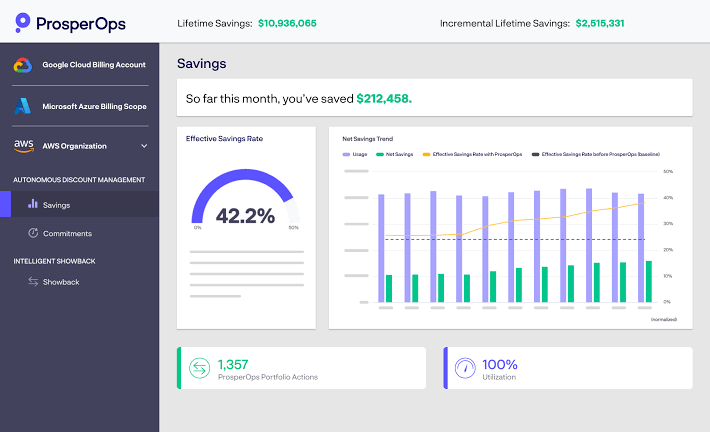
ProsperOps built one of the strongest AWS-only autonomous Savings Plan engines in the market, purchasing commitments in small incremental tranches to match usage patterns and limit overcommitment risk without requiring a separate guarantee mechanism. Before its acquisition by Flexera in January 2026, it was the most direct autonomous alternative to Usage.ai for AWS-only workloads. Its underutilization protection comes in the form of AWS credits rather than transferable cash, which limits flexibility if spending patterns shift significantly.
Since the Flexera acquisition, integration is ongoing and enterprise buyers should verify the current product roadmap and pricing directly with the vendor. For US enterprises with material Azure or GCP workloads alongside AWS, ProsperOps’ AWS-only scope leaves multi-cloud commitment spend unoptimized. For AWS-only organizations where the credit-based underutilization protection is acceptable, it remains a capable autonomous option.
Best for: AWS-only US enterprises spending $500K+/year on EC2, Fargate, and Lambda who want autonomous commitment purchasing and are comfortable with credit-based underutilization protection
#3 nOps
AWS-native FinOps platform with automated Spot instance management and Kubernetes cost optimization, strong for AWS-heavy engineering teams
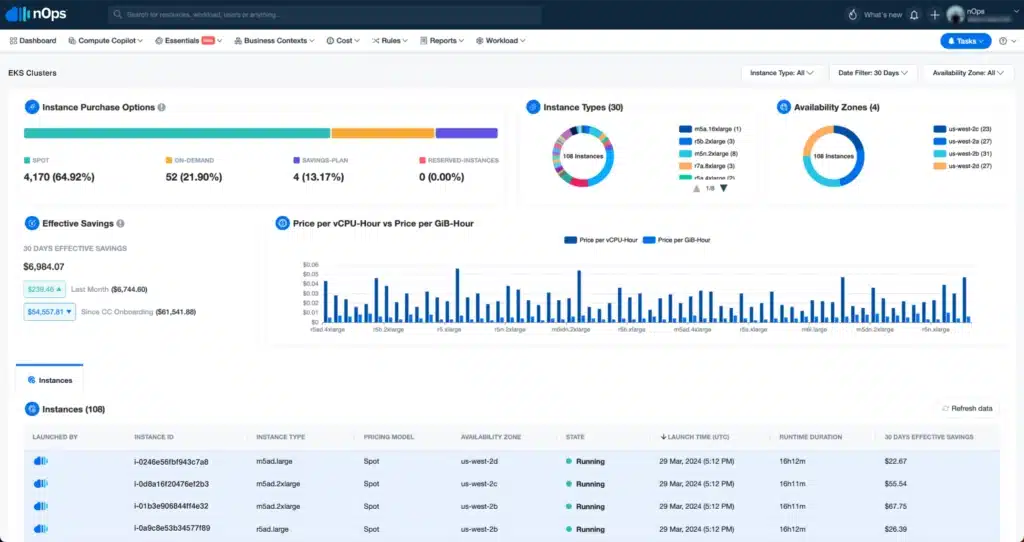
nOps is a FinOps Foundation-certified cloud cost optimization platform focused on AWS. Its differentiation in the US market is depth within the AWS ecosystem: ShareSave for automated Reserved Instance and Savings Plan management, Spot Optimizer for automated Spot instance management with interruption handling, and Compute Copilot for Kubernetes node optimization on EKS. For US engineering organizations running heavy containerized workloads on AWS, nOps provides AWS-native automation depth that broader multi-cloud platforms do not always match.
The limitations are AWS scope and multi-cloud coverage. nOps does not manage Azure Savings Plans and Reservations or GCP Committed Use Discounts. For the 87% of US enterprises running multi-cloud, AWS-only coverage leaves a significant portion of commitment spend unmanaged. nOps also lacks the cashback and credits guarantee that Usage.ai provides, meaning overcommitment risk management falls back on conservative purchasing rather than financial protection.
Best for: AWS-heavy US engineering organizations running significant Kubernetes workloads on EKS who want AWS-native FinOps automation and Spot instance management depth
#4 Zesty
Dynamic real-time commitment adjustment and resource autoscaling for AWS, innovative approach for variable workloads
Zesty takes a structurally different approach to commitment management than static Savings Plan platforms. Rather than forecasting and purchasing fixed commitments, Zesty dynamically adjusts Reserved Instance positions on the AWS Marketplace in real-time as workload demand changes. For US enterprises with highly variable compute demand, particularly in media, gaming, retail, and AI inference where traffic patterns are unpredictable, the reactive model can outperform static forecasting by avoiding overcommitment on workloads that contract after peak periods.
Zesty covers EC2 and RDS commitment management, EBS volume right-sizing, and Kubernetes pod optimization. Coverage is AWS-only, leaving Azure and GCP commitment spend unmanaged. The dynamic commitment adjustment model trades simplicity (a static Savings Plan portfolio) for flexibility, which suits organizations whose workloads change faster than monthly commitment review cycles can track. For organizations with stable baseline workloads, static Savings Plans combined with Usage.ai’s 24-hour refresh typically deliver higher coverage at lower complexity.
Best for: AWS-heavy US enterprises in media, gaming, AI inference, and retail with highly variable compute demand where real-time commitment adjustment outperforms static Savings Plan forecasting
#5 Harness Cloud Cost Management
Engineering-workflow cost attribution across AWS, Azure, and GCP, recommendation-only on commitments
Harness Cloud Cost Management connects cloud spend attribution to CI/CD deployment activity across AWS, Azure, and GCP, making it the strongest tool in this ranking for US engineering-led organizations that need cost accountability at the deployment or feature level. When a new service deployment in us-east-1 causes a $40,000/month cost increase, Harness surfaces that connection in the same dashboard where engineers track deployment health, making cost a first-class engineering metric rather than a lagging finance report.
The gap for US FinOps teams focused on reducing the total bill is that Harness does not autonomously execute commitment purchases. Every Savings Plan and Reserved Instance recommendation requires human review and execution. For a $3M/year multi-cloud bill, the 30-90 day cycle between identifying and executing commitment purchases costs $90,000-270,000 per cycle in preventable on-demand spend. Harness pairs well with Usage.ai: Harness for engineering-level cost attribution, Usage.ai for autonomous commitment purchasing.
Best for: Engineering-led US organizations building cost accountability into CI/CD workflows, particularly SaaS companies and platform engineering teams who need cost-per-deployment or cost-per-feature visibility
#6 CloudHealth by Broadcom
Multi-cloud governance and policy enforcement for large US enterprises, manual commitment execution throughout
CloudHealth retains a large installed base among US enterprises in financial services, healthcare, and retail that use it for multi-cloud policy enforcement, showback and chargeback reporting, and compliance tagging across AWS, Azure, and GCP. Pinterest, Deloitte, and other large US enterprises have used CloudHealth as their multi-cloud governance layer, and for organizations with deeply embedded CloudHealth workflows, the switching cost and disruption of replacement must be weighed against the platform’s limitations.
The core limitation is manual execution: every Savings Plan and Reserved Instance purchase requires human approval and action. Following the Broadcom acquisition, some customers have reported slower product development and higher licensing costs. For US enterprises evaluating CloudHealth in 2026, the autonomous platforms on this list deliver materially better commitment savings outcomes. CloudHealth remains the governance layer, not the savings engine, and requires a separate commitment purchasing process to maximize savings.
Best for: Large US enterprises (10M+ cloud spend) already using CloudHealth for multi-cloud governance and policy management where the governance workflow is deeply embedded and a separate commitment purchasing approach is in place
#7 CloudZero
Best-in-class unit economics and cost attribution per customer or feature, no autonomous commitment purchasing
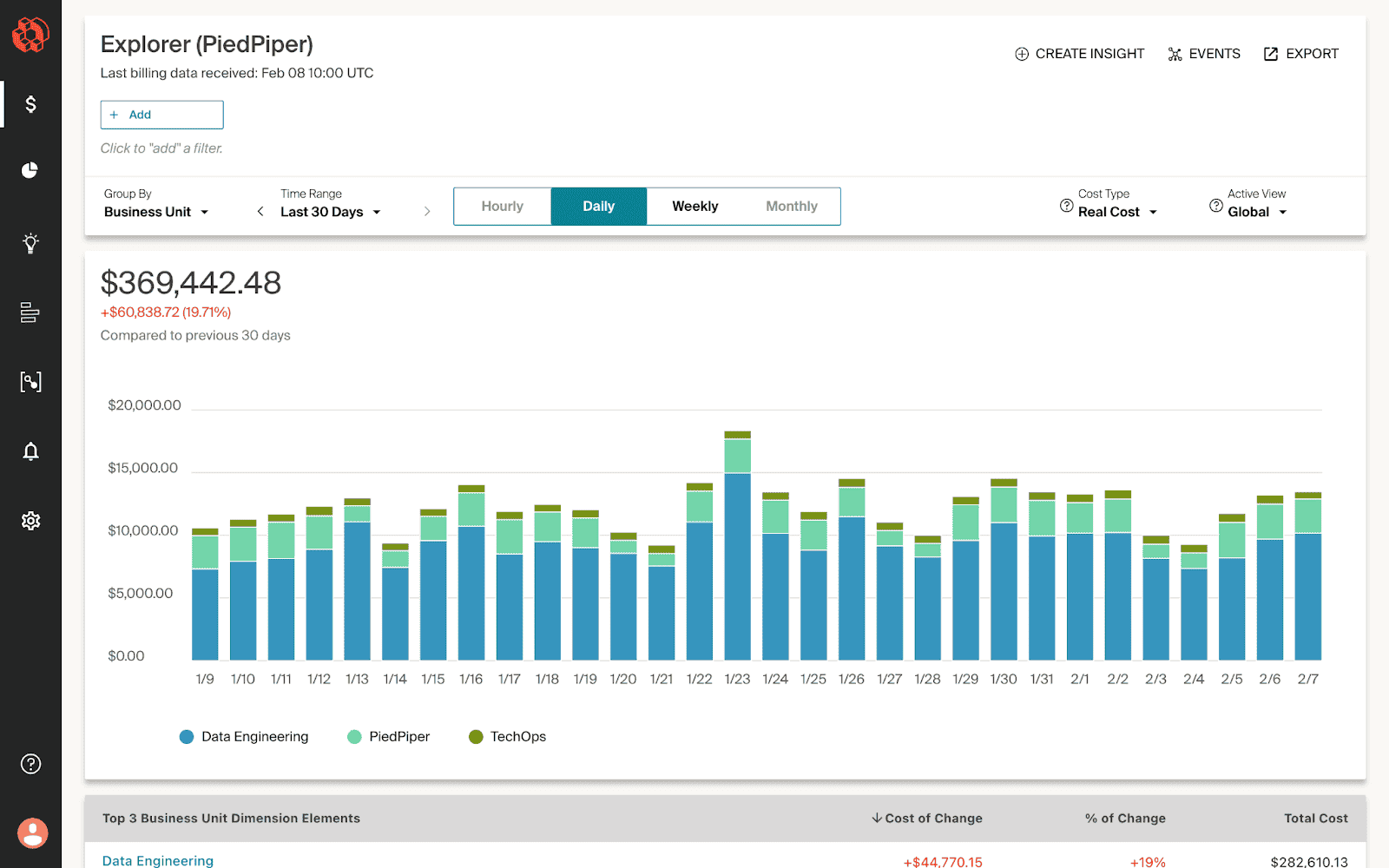
CloudZero is the strongest tool in this ranking for a specific and growing use case: connecting cloud spend to product economics at the feature, customer cohort, or engineering team level. US SaaS companies, digital-native retailers, and growth-stage startups where cost-per-customer or cost-per-transaction is a board-level metric get attribution depth from CloudZero that generic dashboards cannot produce. The platform covers AWS, Azure, and GCP with cost allocation granularity down to individual API calls and database queries.
The consistent gap is autonomous commitment execution. CloudZero surfaces Savings Plan and Reserved Instance recommendations but does not purchase them. All commitment optimization across us-east-1, us-west-2, and multi-cloud environments remains manual. For US enterprises where the primary goal is reducing the total cloud bill rather than improving cost attribution, CloudZero is a complement to Usage.ai rather than a replacement. Pair CloudZero for unit economics visibility with Usage.ai for autonomous commitment purchasing.
Best for: US SaaS companies, fintech platforms, and digital-native enterprises that need cost-per-customer or cost-per-feature visibility to inform product pricing, investor reporting, and engineering investment decisions
#8 AWS Cost Explorer + AWS Compute Optimizer
Free native AWS visibility and rightsizing recommendations, 72-hour recommendation lag and manual execution only
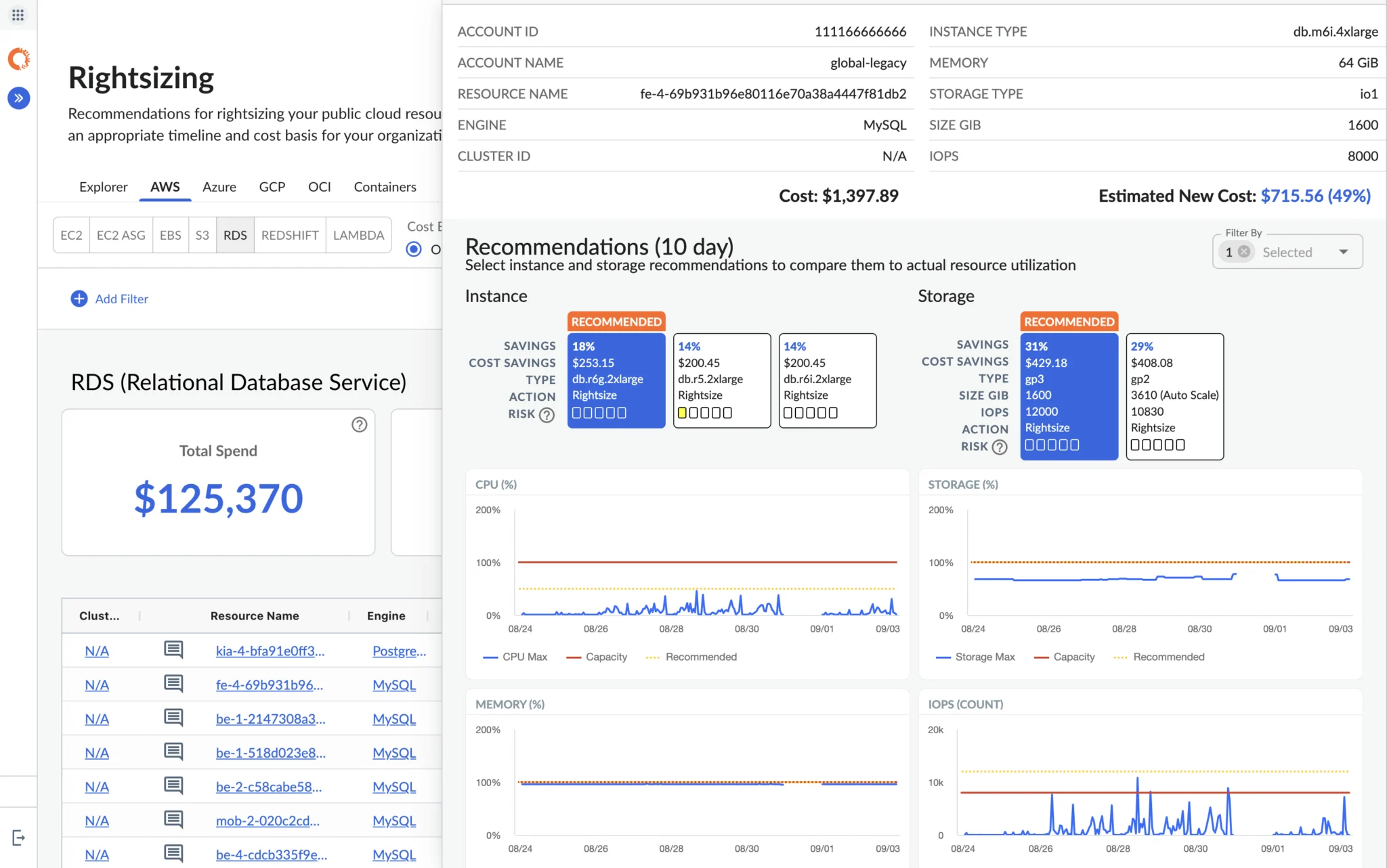
AWS Cost Explorer and AWS Compute Optimizer are the mandatory baseline for any US enterprise running workloads on AWS. Cost Explorer provides cost visualization, Savings Plan and Reserved Instance recommendations, anomaly detection through AWS Cost Anomaly Detection, and cost allocation tagging. Compute Optimizer analyzes CPU, memory, network, and storage utilization to recommend right-sized instance types for EC2, RDS, ECS, Lambda, and EBS. Together they are free, deeply integrated into the AWS console, and cover every major savings category for AWS-only teams.
The structural limitations are consistent and well-documented. Cost Explorer refreshes Savings Plan recommendations on a 72-hour cycle, creating a three-day lag that costs $18,000-36,000 per cycle at mid-enterprise US spend levels. All commitment purchases require manual execution. There is no Azure or GCP coverage, no automated purchasing, and no financial guarantee on commitment overcommitment. For US enterprises crossing $500K/year on AWS, manual optimization against 72-hour-old recommendations reliably leaves 15-25% of available commitment savings uncaptured.
Best for: US enterprises spending under $500K/year on AWS-only workloads who need free baseline cost visibility and rightsizing recommendations before evaluating third-party automation platforms
#9 Flexera One
Enterprise technology spend management combining SAM, ITAM, and cloud governance, complex and expensive for pure cloud cost optimization
Flexera One is the broadest technology spend management platform in this ranking, combining software asset management, IT asset management, and cloud cost management in a single platform. For large US enterprises managing Microsoft EA licensing alongside AWS, Azure, and GCP cloud spend, with ITAM obligations under software audit programs from Microsoft, Oracle, or SAP, Flexera One provides capabilities that no pure-cloud tool matches. Its 2026 integration of ProsperOps adds AWS autonomous commitment management, though Azure and GCP commitment automation remain less mature.
For cloud cost optimization specifically, Flexera One carries enterprise-level pricing and typically requires 3-6 month implementation timelines. US organizations evaluating Flexera One purely for cloud commitment optimization, without ITAM requirements to justify the platform cost, will find that Usage.ai delivers substantially better savings outcomes faster and at a fraction of the implementation effort. Flexera One’s value is the breadth of the platform; its limitation is that breadth comes at the expense of commitment automation depth and speed.
Best for: Large US enterprises (10M+ technology spend) with complex Microsoft, Oracle, or SAP software licensing alongside cloud spend where integrated SAM, ITAM, and cloud governance in a single platform justifies the contract investment
#10 Apptio Cloudability (IBM)
Deep FinOps analytics and executive reporting, manual execution and enterprise-level pricing
Apptio Cloudability is the incumbent FinOps analytics platform at many large US enterprises, particularly in financial services and technology sectors already using Apptio’s IT financial management suite or IBM’s software portfolio. Its strengths are executive reporting depth, chargeback and showback modeling for complex US organizational structures with multiple cost centers and business units, and ERP integration with SAP and Oracle that routes cloud spend directly into existing financial systems.
The limitation for US FinOps teams focused on reducing the total cloud bill is that Cloudability does not autonomously purchase commitments across us-east-1, us-west-2, Azure East US, or GCP us-central1. Every savings opportunity requires human review and execution, with enterprise-level pricing that is difficult to justify when the platform does not autonomously reduce the bill. For US organizations comparing Cloudability and Usage.ai on savings delivered per dollar of platform spend, the autonomous platform consistently delivers superior results.
Best for: Finance-led FinOps programs at large US enterprises where executive reporting, audit-quality documentation, and ERP integration with SAP or Oracle are the primary requirements rather than autonomous commitment purchasing
Also read: 10 Best Cloud Cost Tools 2026: Ranked by Real Savings
How to Reduce Your Cloud Bill in the USA: Quick Wins
The following five steps are sequenced by time-to-impact. Each can be implemented without changing application code or causing infrastructure downtime.
- Enable AWS Compute Optimizer and Azure Advisor across all accounts (Day 1, 20 minutes): Enable Compute Optimizer organization-wide in us-east-1, us-west-2, and any other primary regions. Select Enhanced Infrastructure Metrics for 14-day lookback on EC2 and RDS. Enable AWS Cost Anomaly Detection with a daily threshold set to 10-15% above your normal daily spend. In Azure, enable Azure Advisor for all subscriptions to capture VM, SQL Database, and App Service rightsizing recommendations. These free native tools are the mandatory baseline before any third-party platform evaluation.
- Deploy VPC Endpoints for S3 and DynamoDB in primary AWS regions (Day 1-2, 30 minutes): Create Gateway Endpoints for S3 and DynamoDB in us-east-1 and us-west-2 via CloudFormation or the VPC console. Eliminates NAT Gateway processing charges ($0.045/GB) on all S3 and DynamoDB traffic. For US enterprises processing 50TB/month of S3 traffic through a NAT Gateway in us-east-1, this configuration change saves approximately $27,000/month with zero application changes. The savings scale directly with S3 and DynamoDB traffic volume.
- Schedule non-production environments for off-hours shutdown (Day 3-7, 3-4 hours): Tag all development and staging instances with Environment=dev or Environment=staging. Deploy AWS Instance Scheduler with Eastern Time or Pacific Time configuration depending on team location. Scheduling weekday shutdown from 19:00 to 08:00 and full weekend shutdown reduces non-production instance hours from 720/month to approximately 220/month, a 70% reduction. For a US enterprise running 100 non-production m7i.xlarge instances at $0.2016/hour, scheduling saves approximately $107,000/year.
- Audit and release orphaned Elastic IPs and unattached EBS volumes (Day 1-3, 30 minutes): Run aws ec2 describe-addresses for each primary region to identify Elastic IPs not associated with running instances. As of February 2024, AWS charges $0.005/hour for all public IPv4 addresses including idle ones. Separately, run aws ec2 describe-volumes –filters Name=status,Values=available to list unattached EBS volumes in each region. US enterprise accounts commonly accumulate 40-100 orphaned EIPs and dozens of unattached volumes from previous deployments, adding $5,000-15,000/year in avoidable charges.
- Connect Usage.ai for autonomous tri-cloud commitment purchasing (Day 1, 30 minutes): Connect AWS CUR for all primary US regions, Azure Cost Management API for East US and West US subscriptions, and GCP Billing Export for us-central1 and us-east4 to Usage.ai via read-only billing credentials. Review the initial savings analysis showing on-demand spend eligible for Savings Plans, Reserved Instances, Azure Savings Plans and Reservations, and GCP Committed Use Discounts. Approve first commitment purchases. The cashback and credits guarantee activates on every position purchased. Full 30-50% optimization across all three clouds achieved within 60 days.
Ready to reduce your cloud bill by 30-50%?
Usage.ai’s autonomous optimization handles AWS Savings Plans, Azure Savings Plans and Reservations, and GCP Committed Use Discounts automatically, with zero lock-in, a full cashback and credits guarantee on any underutilized commitment, and billing-layer-only access that keeps your enterprise security posture intact from day one. Setup takes 30 minutes. You pay nothing until Usage.ai saves you money.
Book a free 15-minute savings assessment at usage.ai
Frequently Asked Questions
1. What is the best cloud cost optimization tool for US enterprises?
Usage.ai leads the ranking for US enterprises because it is the only platform that autonomously purchases commitments across AWS, Azure, and GCP simultaneously on a 24-hour refresh cycle, with a cashback and credits guarantee on any underutilized commitment and billing-layer-only access that satisfies enterprise security requirements. It delivers 30-50% savings within 60 days. For AWS-only organizations, nOps is the strongest AWS-native option with Spot and Kubernetes optimization depth, and ProsperOps offers established autonomous Savings Plan purchasing though enterprise buyers should verify the current roadmap following the Flexera acquisition. For unit economics and cost attribution, CloudZero is the category leader but requires separate commitment purchasing.
2. How much cloud spend do US enterprises waste, and what causes it?
Flexera’s 2026 State of the Cloud report finds cloud waste holds at 32% across US enterprises, with only 28% achieving mature, automated optimization. CloudZero’s 2025 survey of 475 senior leaders found organizations run at 35% average waste even as FinOps adoption has grown to 85% of enterprises. The structural cause is the gap between visibility and execution: most organizations can identify waste but rely on manual commitment purchasing processes that operate on 30-90 day cycles. At this cadence, stable workloads accumulate on-demand pricing for months before commitments are purchased. Autonomous platforms with 24-hour refresh cycles close this gap. For a $3M/year cloud bill at 32% waste, that represents approximately $960,000 in preventable annual spend.
3. Do cloud cost tools require access to my running infrastructure?
They should not. The correct access model for cloud cost optimization is billing-layer-only: read-only access to AWS Cost and Usage Report (CUR), Azure Cost Management APIs, and GCP Billing Export. None of these sources contain application data, personal information, or infrastructure configuration. Billing-layer-only tools do not require IAM permissions on running EC2 instances, do not install agents, and do not create cloud security posture exposure. For US enterprises with SOC 2, HIPAA, or FedRAMP compliance requirements, billing-layer-only access is the access model to require from any cloud cost tool vendor. Usage.ai operates exclusively on billing-layer data and never requires infrastructure-level credentials.
4. How quickly does Usage.ai deliver savings on US cloud accounts?
First savings appear on the first billing cycle after onboarding, typically within 30 days, across AWS us-east-1, us-west-2, Azure East US and West US, and GCP us-central1. Full optimization, meaning 30-50% savings across all eligible workloads on all three clouds, is achieved within 60 days. This is 3-4x faster than the 6-9 month industry standard for manual FinOps programs, which must cycle through analysis, procurement approval, and manual execution for each commitment cohort. The 60-day timeline reflects the 24-hour autonomous purchasing cycle and the cashback and credits guarantee that allows aggressive coverage without overcommitment risk.
Disclaimer: Competitor and third-party information in this article reflects publicly available data and Usage.ai’s analysis as of the date of publication. Product capabilities, pricing, and company ownership in the cloud cost optimization market change frequently. Readers should verify current competitor details directly with each vendor before making purchasing decisions. Usage.ai makes no warranties regarding the accuracy or completeness of third-party information contained herein.