
 AWS
 Microsoft Azure
 Google Cloud


This blog compares six platforms by the workflows they can replace, their cloud coverage and automation, and their implementation and pricing trade-offs. It also shows how to test the financial outputs and actions your business relies on before switching.
Which CloudCheckr Capabilities Do You Need?
Start with the outputs your team relies on today. An enterprise may need department-level budgets and forecasts. An MSP, managing cloud for other businesses, may also need customer-specific rates, isolated access, invoices, and branded reports.CloudCheckr combines cost reporting, Cost Allocator shared-cost splits, commitment recommendations, billing, and security/compliance checks. It supports approved EC2 rightsizing and configured automation.
AWS MSPs can also access automated commitment management through the Eco Optimization integration, enabled through their account team. Configuration checks do not certify your organization’s compliance.
Consider alternatives when you need different business attribution, action coverage, operating effort, or commercial terms. CloudCheckr covers AWS and Azure environments. Assess required GCP workflows separately when comparing alternatives.
CloudCheckr is part of Flexera, making Flexera One FinOps and Cloud Cost Optimization same-vendor options to discuss. This does not establish automatic migration, identical entitlements, or a like-for-like replacement. List what must survive before deciding whether to replace the whole setup or one function.
How We Compared Platforms
We publish this comparison and include our platform. Product information was checked on November 3, 2026; we have not tested these vendors on a common workload.We selected these six platforms to cover distinct financial-management, MSP, engineering, and commitment-management needs; the list is not exhaustive. We assessed allocation, planning, customer billing, action coverage, permissions, implementation, and pricing.
Reporting, recommendations, and execution are treated separately. Order is editorial, not a performance ranking; missing public evidence is not proof that a capability is absent.
CloudCheckr Alternatives Compared
Use this table to filter the shortlist. Replacement scope depends on the functions your organization actually uses.| Platform / main fit | Reporting clouds | Financial workflows | Commitment approach | Pricing basis |
|---|---|---|---|---|
| Usage.ai - managed commitments; focused alternative or complement | AWS, Azure, GCP | We track savings, coverage, fees, and Cashback | We purchase supported commitments | Share of realized savings |
| CloudHealth - multi-cloud financial management and MSP operations | AWS, Azure, GCP, OCI | Perspectives; budgets; AWS Partner-Generated Billing | AWS RI recommendations and purchasing | Managed-spend contract tiers |
| IBM Cloudability - enterprise allocation and financial planning | AWS, Azure, GCP, OCI, IBM Cloud | Business Mapping; budgets and forecasts; Cloudability MSP billing | AWS automation through Savings Automation | Spend-tier contracts |
| CoreStack FinOps+ - financial governance and partner billing through relevant modules | AWS, Azure, GCP, OCI | Allocation and planning; BillOps pricing and margins | RI/Savings Plan recommendations and tracking | Spend-linked module licensing |
| CloudZero - business allocation and unit economics | AWS, Azure, GCP, OCI; other cost sources | Dimensions; unit economics | Analysis; automated management through ProsperOps integration | Quoted subscription |
| Harness - engineering optimization and supported actions | AWS, Azure, GCP | Allocation; budgets | AWS EC2 RI/Savings Plan execution | Percentage of module-specific tracked spend |
Six Best CloudCheckr Alternatives
1. Usage.ai
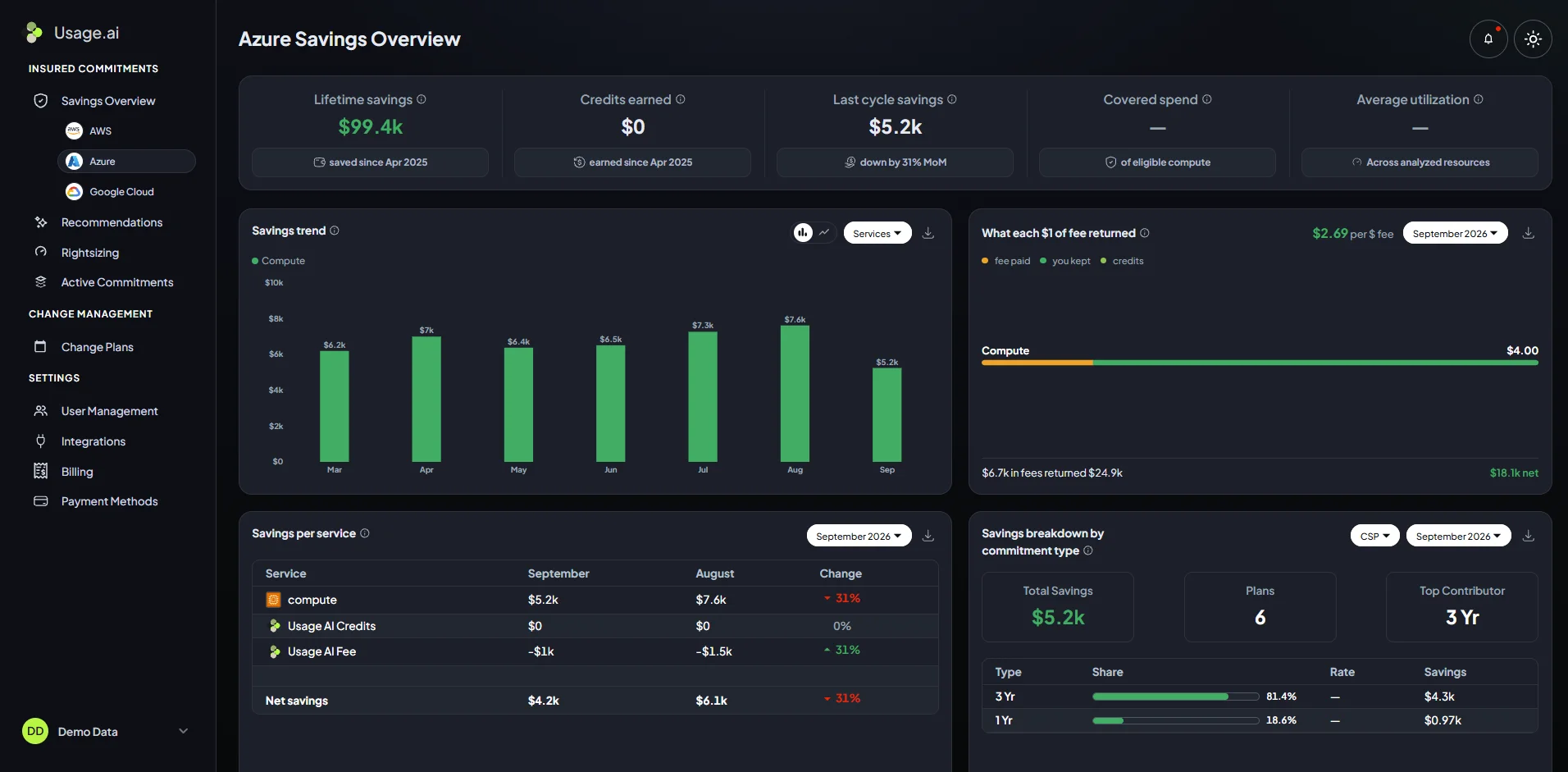
Why consider it: We assess usage and existing coverage through a read-only Savings Test before recommending supported commitments. Purchasing requires additional permissions: CoPilot lets your team approve purchases, while Autopilot executes within approved controls. We adjust future buying as sustained demand changes.
Trade-offs and implementation: We manage commitments without modifying workloads. Commitments remain yours in your cloud account; retain other tools for customer invoicing, security checks, and requirements outside this scope.
Cashback helps offset qualifying losses when an eligible Flex Insured Commitment costs more than equivalent On-Demand usage, subject to your program terms. It is assessed monthly, with settlement scheduled 90 days after the accrual month ends. Protection does not cancel the underlying cloud-provider commitment.
Pricing: Our managed-optimization offer is positioned for $200,000+ in monthly cloud spend; below that, we offer a free dashboard and recommendations. We charge an agreed percentage of realized savings, excluding savings from existing commitments. Our pricing guide explains fees and Cashback calculations.
2. CloudHealth
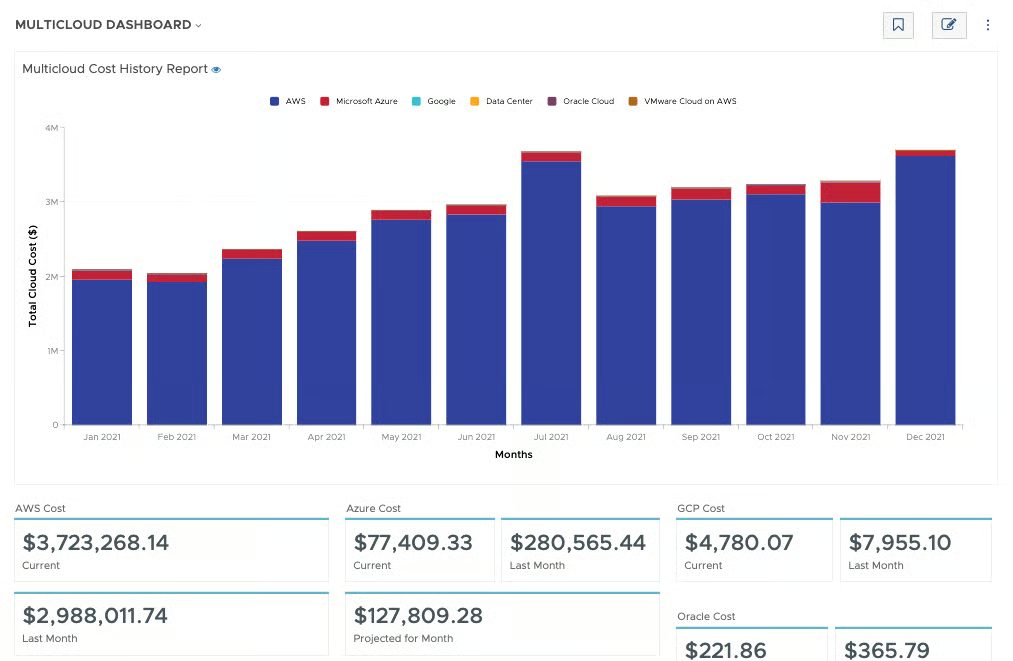
Why consider it: CloudHealth combines Perspectives-based cost reporting, optimization recommendations, and policy governance. Its Partner Platform separates customer environments; AWS Partner-Generated Billing and custom price books support customer-specific billing. It connects AWS, Azure, GCP, and OCI accounts.
Trade-offs and implementation: Configure and reconcile customer hierarchies, billing rules, and policies; AWS and Azure billing workflows differ. Confirm supported actions, permissions, approvals, and any required branded reports or security checks. Preserve access controls governing who sees provider costs versus customer charges.
Pricing: AWS Marketplace publishes managed-spend contract tiers. Direct and partner proposals can differ; account for spend growth, overages, support, and billing scope when comparing totals.
3. IBM Cloudability
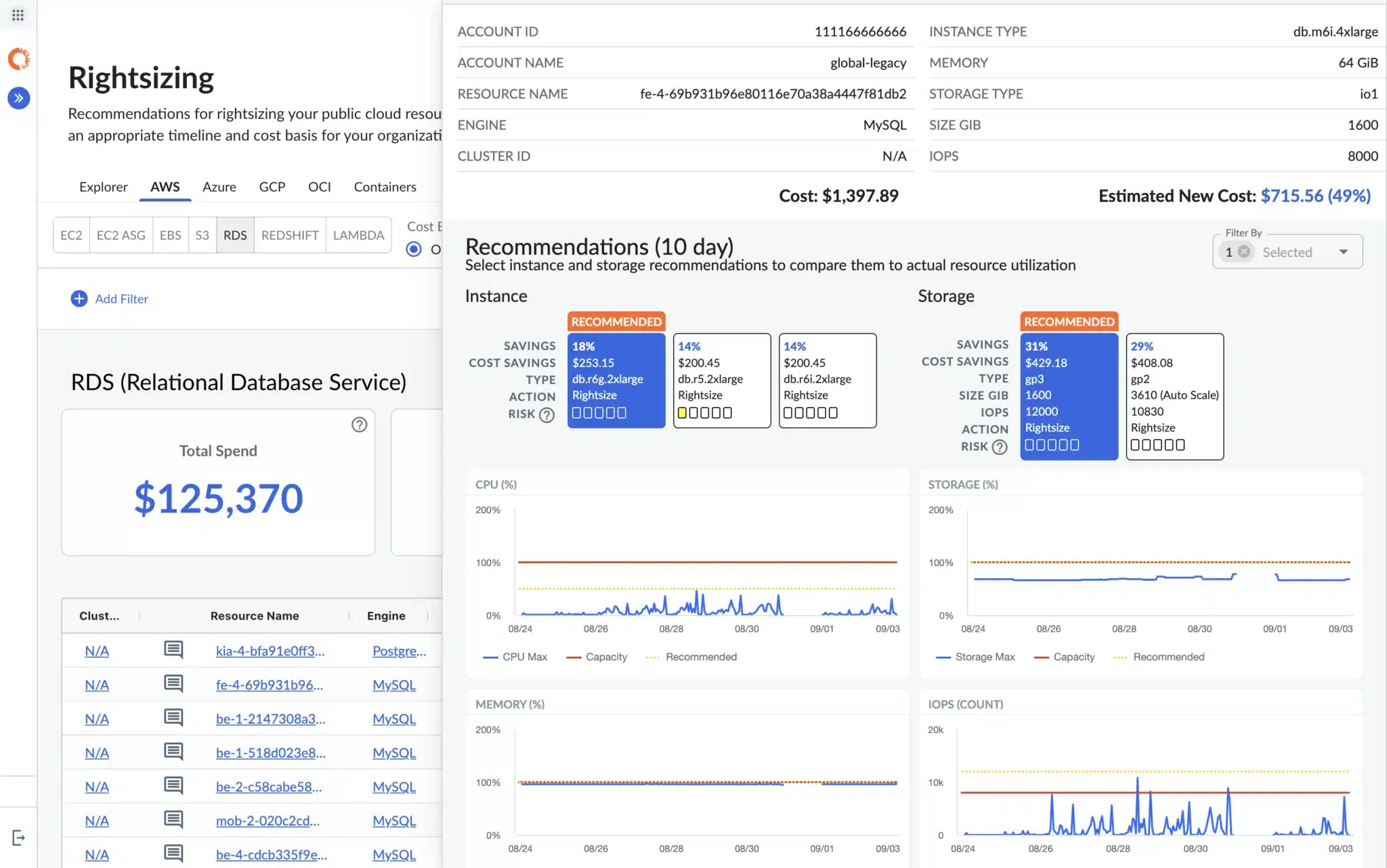
Why consider it: Business Mapping connects AWS, Azure, and GCP spending to business ownership, alongside shared-cost allocation, budgets, forecasts, and unit economics. Cloudability MSP adds customer markups, discounts, invoicing, and margin reporting.
Trade-offs and implementation: Plan for mapping, cost reconciliation, and ownership of plans and recommendations. Confirm which Savings Automation and MSP functions the quoted package includes; assess security-posture replacement separately. Our Cloudability review examines capabilities and implementation effort.
Pricing: Spend-tier contracts provide reference points; edition, overages, associated offerings, and services affect the total. Our Cloudability pricing guide explains how billable spend affects the purchase.
4. CoreStack FinOps+
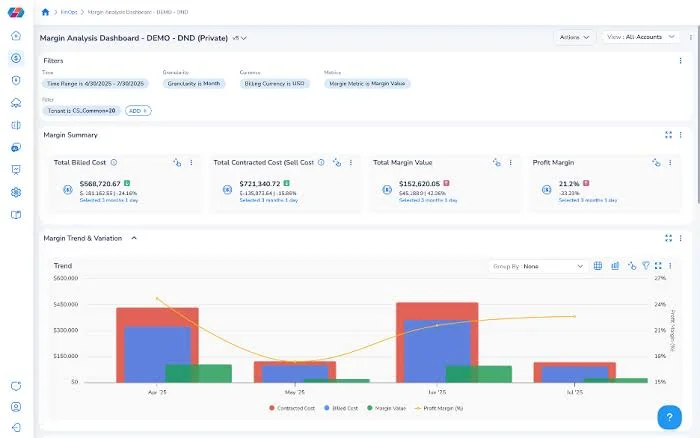
Why consider it: FinOps+ combines cost visibility, allocation, planning, and optimization. BillOps adds distributor–partner–customer hierarchies, pricing rules, charge allocation, and margins across AWS, Azure, GCP, and OCI. Contracted Cost reflects configured pricing rules; role-based controls restrict access to margin information.
Trade-offs and implementation: Package scope determines which FinOps+, BillOps, and security capabilities are included. Define rule ownership, customer hierarchy, and remediation permissions. Demonstrate required invoice outputs and accounting handoffs; customer-facing cost data alone does not establish either.
Pricing: Marketplace offers include spend-linked licensing. Request a quote covering required modules, clouds, services, billing implementation, and ongoing administration.
5. CloudZero
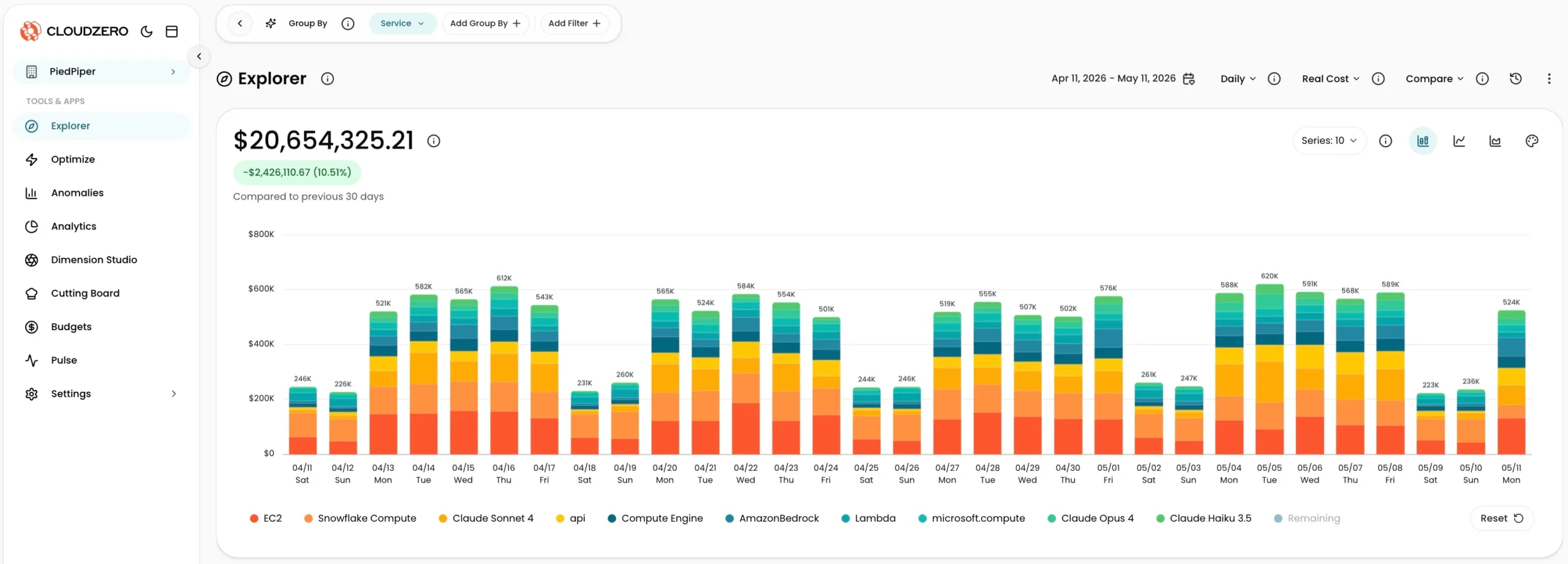
Why consider it: CloudZero maps AWS, Azure, GCP, and other costs to business Dimensions. CostFormation supports allocation rules as code; Unit Economics helps distinguish spending growth driven by business growth from declining efficiency.
Trade-offs and implementation: Allocation rules need an owner. Unit costs require matching business measurements supplied through an API or CSV upload. CloudZero provides commitment analysis, with automated commitment management through its ProsperOps integration. Our CloudZero review examines operating requirements and fit.
Pricing: Request an environment-specific subscription quote. Include data collection, allocation maintenance, and any separately contracted execution service in total costs.
6. Harness
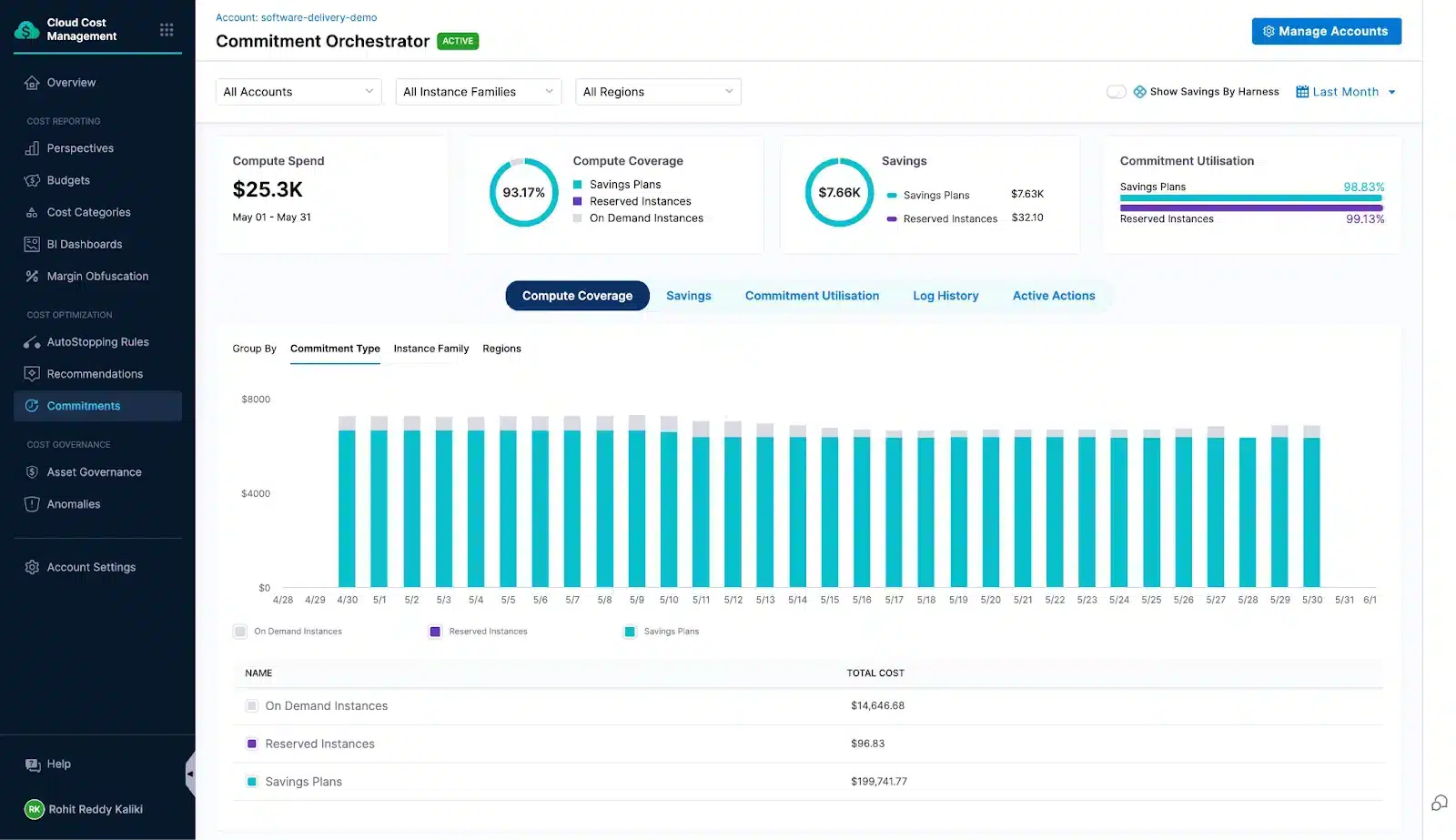
Why consider it: Harness combines AWS, Azure, and GCP cost visibility with AutoStopping for supported idle nonproduction workloads, Cloud Asset Governance for policy actions, and Commitment Orchestrator for commitment management. AWS actions include EC2 RI/Savings Plan execution and EKS optimization; confirm support for other clouds and instruments.
Trade-offs and implementation: Execution requires permissions beyond billing access. Assess connectors, any required cluster components, approvals, disruption handling, and reversal responsibilities. Avoid double-counting consumption and commitment savings. Internal chargeback does not establish customer rebilling.
Pricing: Cost-module fees are percentages of tracked spend, with different spend bases by module. Request a quote specifying the modules, enabled actions, measured spend, and associated services. Include retained billing tools and engineering administration in the business case.
How to Evaluate CloudCheckr Alternatives
Once two or three candidates remain, replace the generic demo with a small exercise. The following fictional monthly figures represent no vendor or customer. They test outputs, not production savings.Reconcile Allocated Costs
Assume $6,000 of direct costs for A, $4,000 for B, and $2,000 shared. Choose a 60/40 shared-cost split. Before running the exercise, agree on currency, billing period, discounts, credits, and commitment-cost treatment.| Monthly component | A | B | Total |
|---|---|---|---|
| Direct costs | $6,000 | $4,000 | $10,000 |
| Allocated shared costs | $1,200 | $800 | $2,000 |
| Expected allocated costs | $7,200 | $4,800 | $12,000 |
Preserve Customer Pricing When Required
For an MSP, extend the same example: apply a 10% markup to A’s allocated cost and add a fixed $500 service charge to B.Expected customer charges are $7,920 for A and $5,300 for B, totaling $13,220, before taxes or other adjustments. These are chosen pricing rules, not cloud-provider charges or savings. Inspect the customer-facing output and accounting handoff, not only the dashboard.
Demonstrate Actions and Controls
Choose one required action: a rightsizing change, scheduled stop, or commitment purchase. Ask the vendor to show its permissions, approval, execution record, pause controls, and measurement. Start with analysis or a nonproduction test where appropriate.Record each requirement as demonstrated, additional module needed, retained elsewhere, unsupported, or not yet established. Add the owner, cost, and remaining evidence needed. A specialist need not pass every check if another system deliberately covers that requirement.
Final Verdict
Choose an alternative that covers your required workflows and justifies its full cost, including fees, migration, retained tools, and ongoing work. A specialist can fit when other systems cover the remaining reporting, billing, and governance requirements. Keep CloudCheckr if it already meets your needs and switching offers little benefit.If commitment management is your main priority, assess the savings opportunity alongside the reporting and billing functions you need to retain.
Review usage, commitments, savings, and fees with a read-only Savings Test. Purchases require separate approval.
Frequently asked questions
Can Historical Data and Rules Migrate?
Treat data export and configuration portability separately. Obtain historical costs, allocation definitions, customer pricing, and report specifications before cancellation. A CSV export does not establish that another product can import the rules. Agree on historical access, ownership, and validation of rebuilt reports.
Why Do Monthly Cost Totals Differ?
Platforms may use different account scopes, refresh times, currencies, or cost definitions. Compare actual versus amortized costs, credits, taxes, and commitment treatment for the same period. Reconcile those inputs before interpreting a difference as an error or a saving.
What Happens to Existing Commitments?
Changing software does not itself cancel the underlying cloud commitment. Establish ownership, remaining charges, management responsibility, and any vendor exit fees before switching. Financial protection can depend on continuing service and program terms; it should not be treated as cancellation of the provider obligation.
Can Native Tools Replace CloudCheckr?
Native tools may cover single-cloud cost visibility, budgets, commitment recommendations, and some allocation needs. Consider a third-party platform when native tools cannot meet your reporting, customer-billing, access-control, or managed-commitment requirements. Compare API, storage, and administration costs; Cost Explorer API and hourly-data charges illustrate why native reporting is not always free.
How Should MSPs Test Customer Isolation?
Use representative customer accounts and restricted roles during the trial. Test dashboards, exports, reports, and billing outputs not just navigation. Customers should see only their authorized information; provider costs, other customers' data, and confidential margins should follow the intended access policy.