
 AWS
 Microsoft Azure
 Google Cloud


8 Best AWS Cost Optimization Hub Alternatives Compared
| Tool | Best for | Pricing |
|---|---|---|
| Usage.ai | Automated commitments and eligible Cashback protection | Share of realized savings |
| nOps | Commitment automation and cost visibility | Savings share; separate visibility fee |
| ProsperOps | Autonomous discount management | Savings-based |
| CAST AI | EKS and Kubernetes optimization | Free monitoring; paid automation |
| CloudZero | AWS cost allocation and unit economics | Custom quote |
| Vantage | AWS cost reporting and budgets | Free; paid from $30/month |
| Harness | Idle resources and engineering automation | Custom quote |
| Zesty | Kubernetes efficiency and commitments | Product-dependent quote |
Pricing varies by product, plan, and contract. Confirm current rates and supported AWS services before purchasing.
What Is AWS Cost Optimization Hub?
AWS Cost Optimization Hub is a free AWS feature that consolidates cost optimization recommendations across accounts and Regions.
It identifies opportunities involving EC2 rightsizing, idle resources, Savings Plans, Reserved Instances, databases, and other supported services.
It also accounts for existing AWS discounts and reduces overlapping savings estimates.
Its main limitation: It primarily helps teams identify and prioritize opportunities. Teams still need to implement resource changes and manage commitment purchases through the appropriate AWS workflows.
Third-party tools become useful when organizations need continuous automation, advanced financial reporting, or specialized infrastructure optimization.
1. Usage.ai
Best for Automated AWS Commitment Savings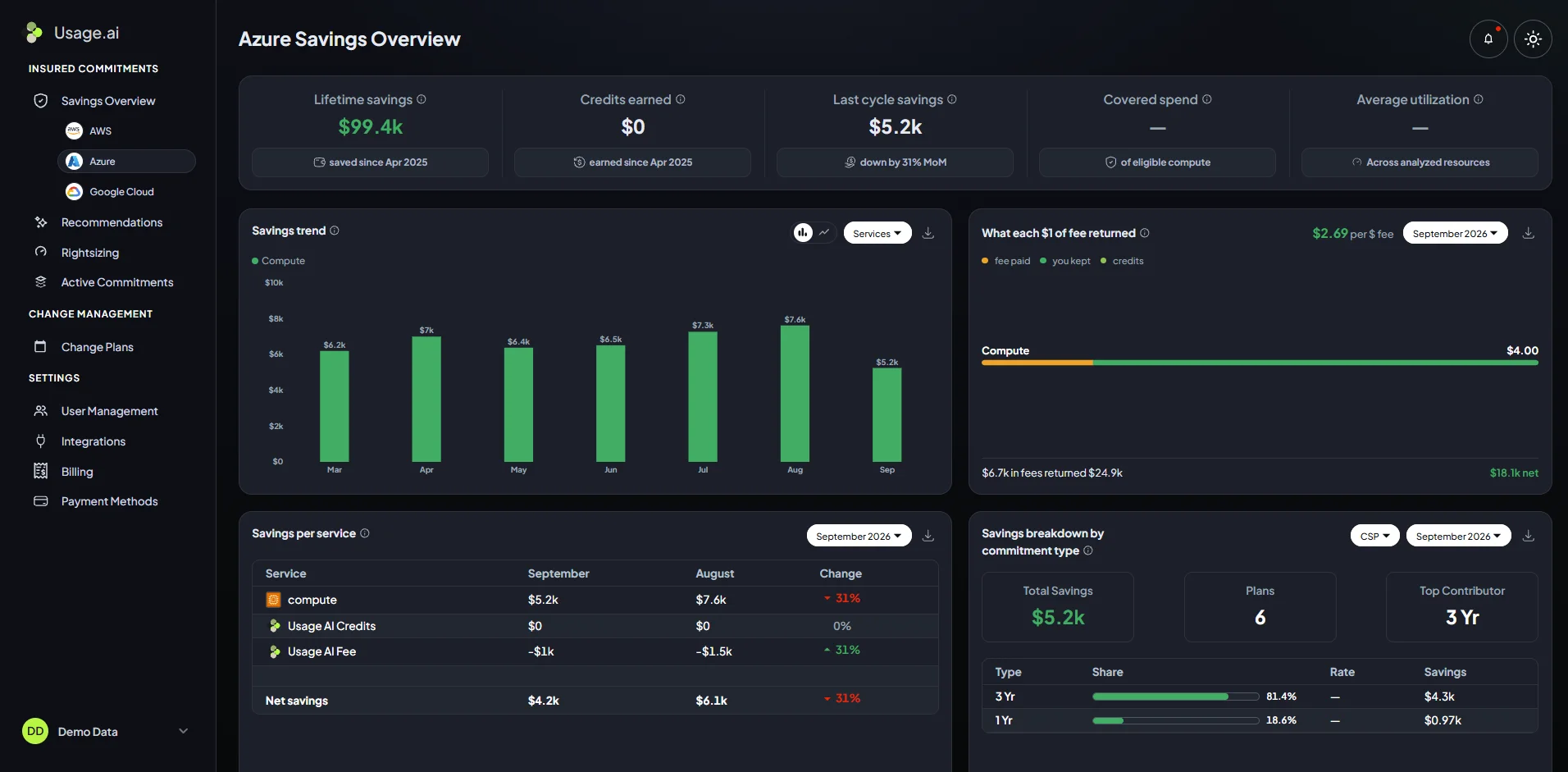
It also provides AWS infrastructure rightsizing recommendations and supports eligible commitment optimization across Azure and Google Cloud.
Key features
Autopilot: Automates eligible commitment purchases within configured controls.
CoPilot: Supports approval-based commitment management.
Flex Insured Commitments: Provides Cashback protection for qualifying underutilization.
AWS rightsizing recommendations: Identifies potential infrastructure savings.
- ✅ Automated commitment management.
- ✅ No upfront platform fee.
- ✅ Read-only initial Savings Test.
- ❌ Does not automatically implement EC2 rightsizing changes.
- ❌ Cashback protection depends on eligibility and agreement terms.
Best for: AWS businesses wanting continuous commitment optimization with purchasing controls.
Learn more about Usage.ai pricing and how Usage.ai works.
2. nOps
Best for AWS Cost Visibility and Commitment Automation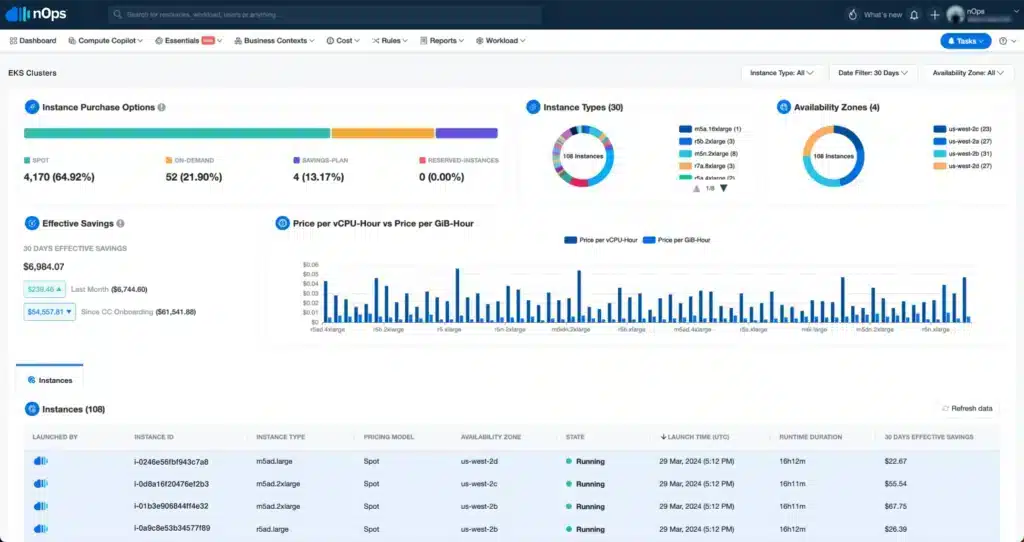
Key features
Rate optimization: Automates supported commitment decisions.
Cost allocation: Tracks spending across accounts and teams.
Anomaly detection: Investigates unexpected costs.
- ✅ Combines reporting and optimization.
- ✅ Supports AWS and other major clouds.
- ✅ Offers a cost visibility trial.
- ❌ Visibility and optimization have separate pricing models.
- ❌ Setup and permissions depend on selected features.
Best for: FinOps teams wanting reporting and commitment automation in one platform.
3. ProsperOps
Best for Autonomous AWS Discount Management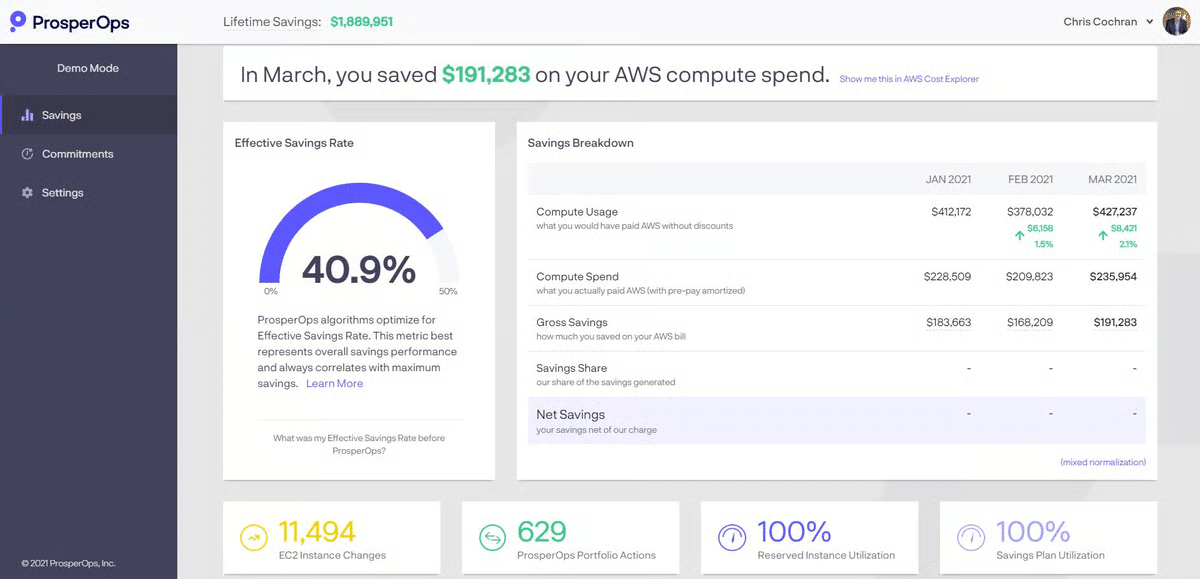
It is part of Flexera following Flexera’s 2026 acquisition.
Key features
Autonomous discount management: Adjusts supported commitment portfolios.
Savings monitoring: Tracks discount performance.
Multicloud commitments: Supports eligible commitments across major cloud providers.
- ✅ Specialized commitment automation.
- ✅ Reduces manual discount management.
- ✅ Savings-based commercial model.
- ❌ Not a comprehensive cost allocation platform.
- ❌ Resource scheduling is a separate product.
Best for: Businesses focused on autonomous Savings Plans and Reserved Instance management.
Read our ProsperOps alternatives comparison.
4. CAST AI
Best for Amazon EKS Cost Optimization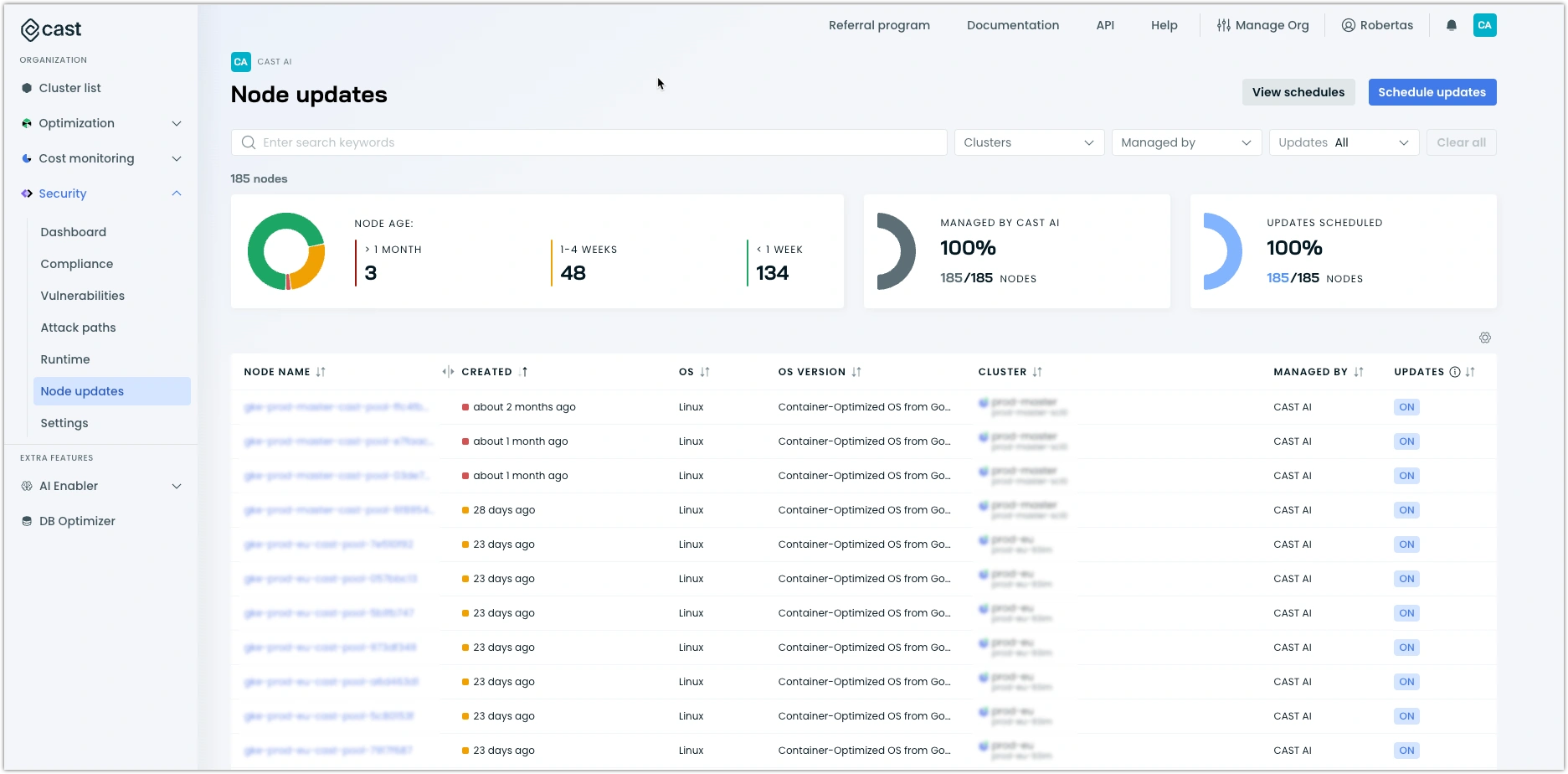
Unlike AWS Cost Optimization Hub’s recommendations, CAST AI can automate supported cluster capacity changes.
Key features
Node optimization: Selects more efficient instance capacity.
Autoscaling: Adjusts Kubernetes infrastructure to demand.
Spot orchestration: Uses eligible Spot capacity with availability controls.
- ✅ Automated Kubernetes optimization.
- ✅ Supports EKS, AKS, and GKE.
- ✅ Free monitoring option.
- ❌ Primarily focused on Kubernetes.
- ❌ Automation requires cluster access and disruption controls.
Best for: Teams with significant Amazon EKS spending.
5. CloudZero
Best for AWS Cost Allocation and Unit Economics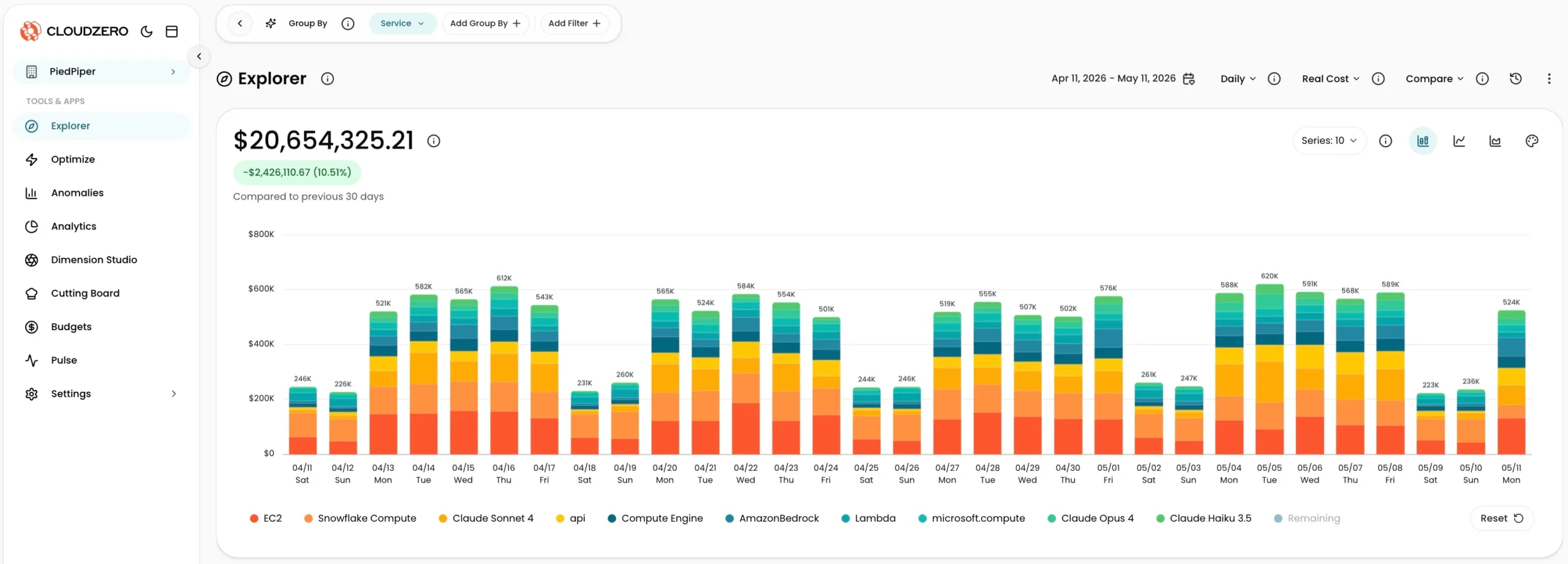
Key features
Cost allocation: Assigns spending to teams and products.
Unit economics: Tracks cost per customer or transaction.
Cost intelligence: Investigates spending trends.
- ✅ Strong business-level cost reporting.
- ✅ Useful for SaaS companies.
- ✅ Supports multiple cloud providers.
- ❌ Requires business data for detailed unit economics.
- ❌ Does not replace dedicated commitment execution tools.
Best for: SaaS businesses needing AWS cost allocation and profitability insights.
6. Vantage
Best for AWS Cost Reporting and Budgets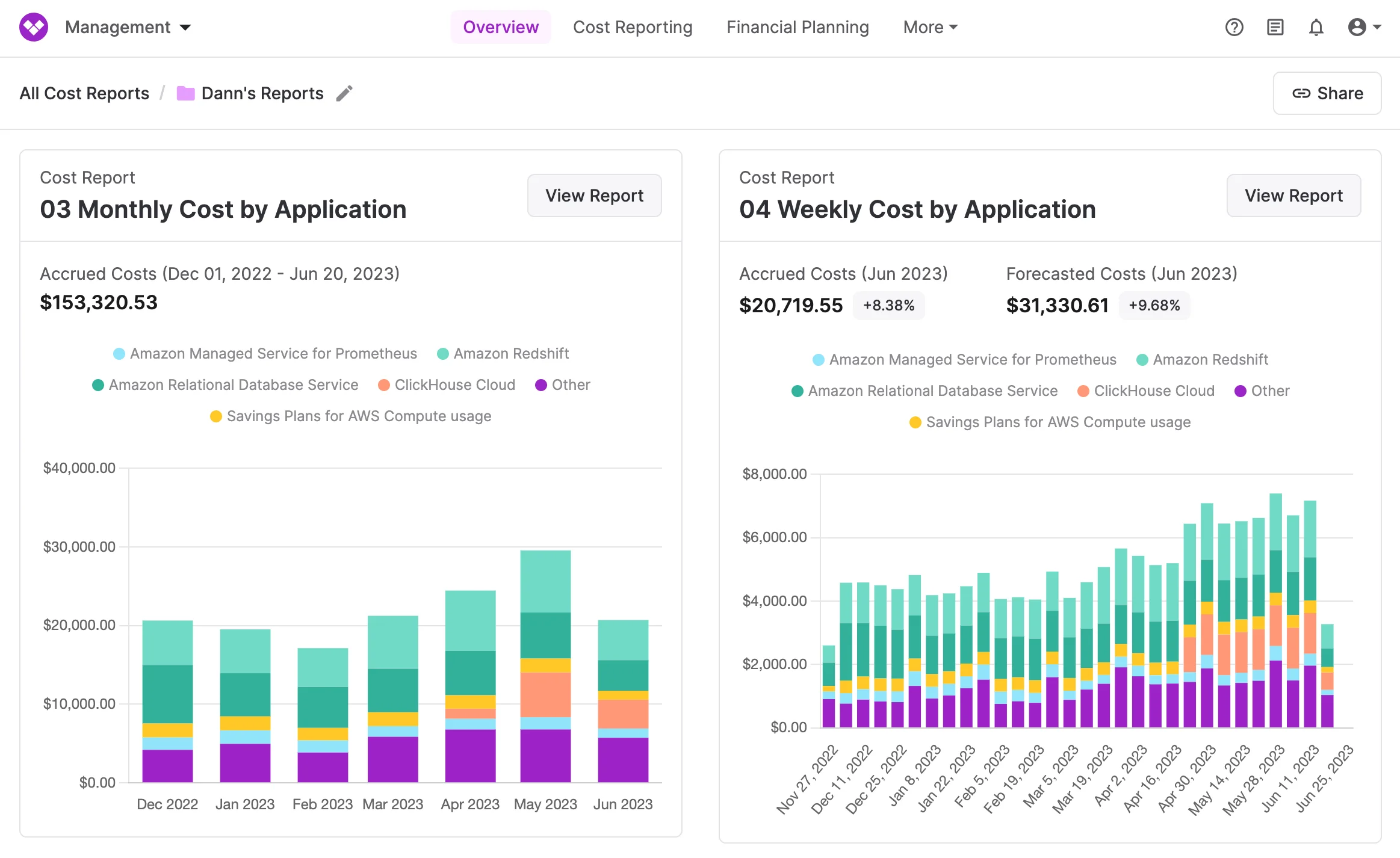
It also offers AWS Savings Plans Autopilot as a separate optimization capability.
Key features
Cost reporting: Organizes spending across accounts and services.
Virtual tagging: Groups expenses without changing resource tags.
Budgets: Tracks spending against targets.
Savings Plans Autopilot: Automates supported AWS purchases.
- ✅ Free entry tier.
- ✅ Public starting prices.
- ✅ Easy-to-use cost reporting.
- ❌ Advanced features require paid plans.
- ❌ Autopilot does not cover every AWS commitment type.
Best for: Startups and engineering teams wanting straightforward AWS cost visibility.
7. Harness
Best for Idle Resource and Engineering Cost Optimization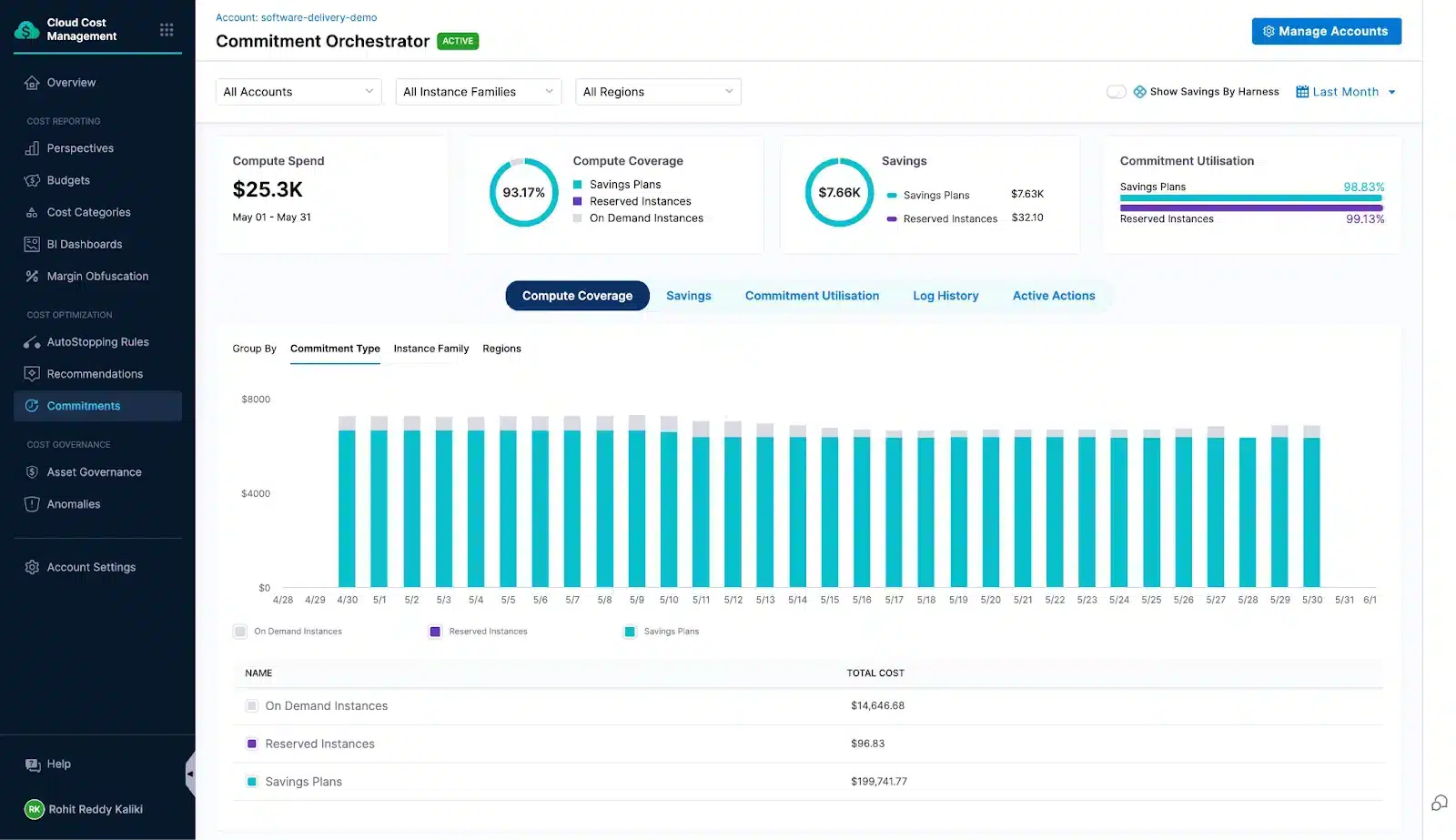
Key features
AutoStopping: Stops and restarts supported idle resources.
Cost Perspectives: Organizes cloud spending by business dimensions.
Commitment Orchestrator: Supports automated commitment optimization.
- ✅ Automates supported idle-resource savings.
- ✅ Connects cost controls with engineering workflows.
- ✅ Supports AWS, Azure, and GCP.
- ❌ Resource changes require appropriate operational controls.
- ❌ Features and pricing depend on the selected package.
Best for: Engineering teams seeking resource automation alongside cost reporting.
Explore our Harness alternatives guide.
8. Zesty
Best for Kubernetes Efficiency and Commitment Optimization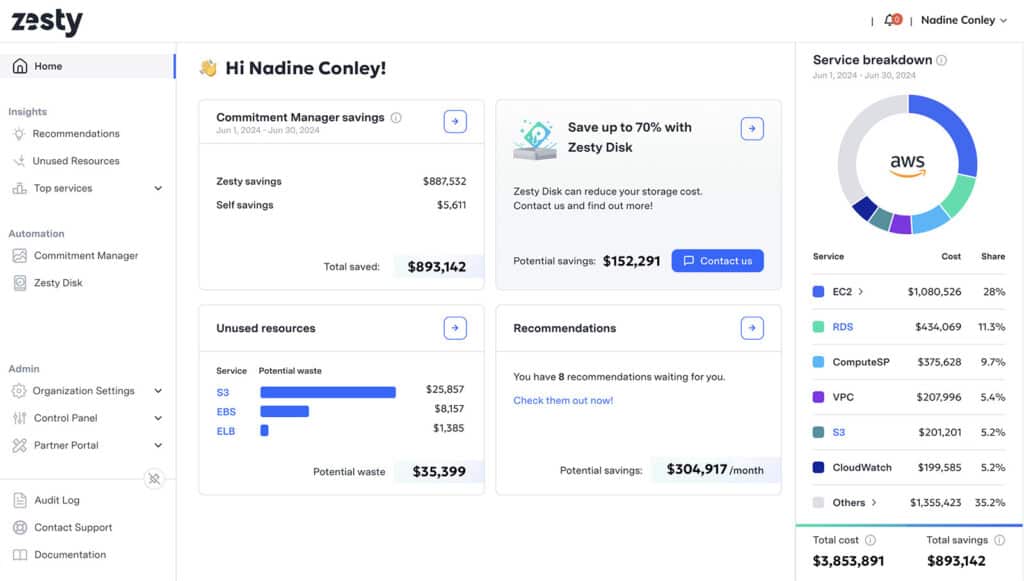
Key features
Kubernetes optimization: Improves supported workload resource efficiency.
Commitment optimization: Manages eligible cloud discount commitments.
Resource efficiency: Helps reduce overprovisioning.
- ✅ Supports resource and pricing optimization.
- ✅ Useful for Kubernetes-heavy environments.
- ✅ Offers automation capabilities.
- ❌ Capabilities differ between products.
- ❌ Cloud and service coverage must be checked separately.
Pricing: Product-dependent commercial pricing. Request a quote for the required capabilities.
Best for: Teams wanting Kubernetes optimization alongside commitment management.
AWS Cost Optimization Hub vs Third-Party Tools
| Capability | AWS Cost Optimization Hub | Third-party alternatives |
|---|---|---|
| AWS savings recommendations | Yes | Varies |
| EC2 rightsizing recommendations | Yes | Supported by selected tools |
| Savings Plans recommendations | Yes | Supported by selected tools |
| Automated commitment management | Not its core function | Usage.ai, nOps, ProsperOps |
| Automated Kubernetes optimization | Not its core function | CAST AI, Zesty |
| Cost per customer reporting | Not its core function | CloudZero |
| Multicloud reporting | AWS only | Available in selected platforms |
| Platform pricing | Free | Free, subscription, or savings-based |
Which AWS Cost Optimization Hub Alternative Should You Choose?
Choose based on the work your team wants to automate:
Commitment purchases: Usage.ai, nOps, or ProsperOps.
Kubernetes infrastructure: CAST AI or Zesty.
Cost allocation: CloudZero or Vantage.
Idle-resource automation: Harness.
Native recommendations only: Keep using AWS Cost Optimization Hub.
If you already receive useful AWS recommendations but struggle to implement them, focus on tools that automate your specific bottleneck rather than replacing the entire reporting workflow.
For a broader shortlist, see our AWS cost optimization tools comparison.
From AWS Recommendations to Automated Savings
AWS Cost Optimization Hub identifies savings opportunities. Implementing them consistently requires ongoing work.
For eligible commitment spending, Usage.ai Autopilot can manage supported purchases within configured controls.
Organizations can begin with a read-only Savings Test and evaluate projected savings before enabling purchasing permissions.
Explore eligible Savings Plans, Reserved Instances, and potential savings before enabling automation.
Final Verdict: Best AWS Cost Optimization Hub Alternative
Usage.ai is a strong choice for businesses prioritizing automated AWS commitment savings. nOps combines financial visibility with rate optimization, while ProsperOps specializes in autonomous discount management.CAST AI and Zesty suit Kubernetes optimization. CloudZero and Vantage focus on spending visibility, and Harness adds engineering automation.
AWS Cost Optimization Hub remains a useful free starting point. Choose a paid alternative when its additional automation or reporting capabilities solve a specific problem.
Frequently asked questions
What are the best AWS Cost Optimization Hub alternatives?
The best alternatives include Usage.ai, nOps, ProsperOps, CAST AI, CloudZero, Vantage, Harness, and Zesty. The right choice depends on whether you need commitment automation, cost allocation, or infrastructure optimization.
Is AWS Cost Optimization Hub free?
Yes. AWS Cost Optimization Hub is available at no additional charge in supported AWS Regions. Other AWS services or optional features may have separate costs.
What is the main limitation of AWS Cost Optimization Hub?
It focuses on consolidating and prioritizing recommendations. Teams still need to implement resource changes and manage commitment purchases through the appropriate AWS workflows.
Can AWS Cost Optimization Hub automatically buy Savings Plans?
Cost Optimization Hub provides Savings Plans purchase recommendations, but it is not a continuous autonomous purchasing service. Tools such as Usage.ai can automate supported commitment management.
Is Usage.ai better than AWS Cost Optimization Hub?
For automated eligible commitment management, Usage.ai offers capabilities beyond the Hub's recommendation workflow. For free AWS-native savings recommendations, Cost Optimization Hub remains useful. They can also work together.