 AWS
 Microsoft Azure
 Google Cloud


This comparison examines Harness Cloud & AI Cost Management workflows: what each option can replace, what you may need to retain, and whether the benefits justify the cost and effort of switching.
Why consider Harness alternatives?
Harness Cloud & AI Cost Management combines several jobs. Perspectives and Cost Categories organize spending; budgets, forecasts, and anomalies support financial control. Cloud Asset Governance adds policy-based controls.AutoStopping reduces idle nonproduction runtime, Commitment Orchestrator manages supported discount instruments, and Cluster Orchestrator addresses Kubernetes capacity.
Pricing uses module-specific tracked spend. Cloud Cost Insights uses total cloud spend; Commitment Orchestrator uses EC2 spend. AutoStopping uses nonproduction spend, and Cluster Orchestrator uses Kubernetes spend. Your order form sets the agreed fees and scope.
A buyer may need a different shared-cost model, closer integration with finance systems, broader execution for particular environments, or different commitment protection and fees.
Harness already supports unit economics, shared allocation, automated commitments, and approval controls.
Start with three boundaries:
Replace: Which existing workflows must the new setup perform?
Retain: Which existing tools, reports, policies, or automation will you keep?
Authorize: Which commitment purchases or infrastructure changes may the platform execute?
Harness alternatives compared
We reviewed first-party product information, technical documentation, and available pricing on October 30, 2026. We compared cost allocation, financial planning, cloud and service coverage, automation, required permissions, implementation effort, and contract terms. We publish this comparison and include our own platform. The order is editorial, not a measured ranking; we have not tested every platform on a common workload.| Platform | Relevant Harness workflow | Buyer priority | Main trade-off | Pricing basis |
|---|---|---|---|---|
| Usage.ai | Commitment management | Purchasing controls and Cashback protection | Retain broader allocation and resource automation | Agreed share of realized savings |
| CloudZero | Cost intelligence and allocation | Customer, product, and feature economics | Execution can require another service | Custom subscription |
| Finout | Allocation and planning | Shared costs across multiple spending sources | Establish the execution included in the offer | Fixed contract fee tied to spend tier and scope |
| IBM Cloudability | Financial management | Chargeback, ownership mapping, and planning | Package and implementation scope matter | Package-specific quote |
| CAST AI | Kubernetes optimization | Workload, node, and Spot efficiency | Cluster access and operational controls | Environment-specific quote |
| ProsperOps | Commitment orchestration | Continuous discount-portfolio management | Savings included in fees and exit charges | Savings Share; AWS Scheduler priced separately |
Six alternatives by buying priority
1. Usage.ai for commitment management
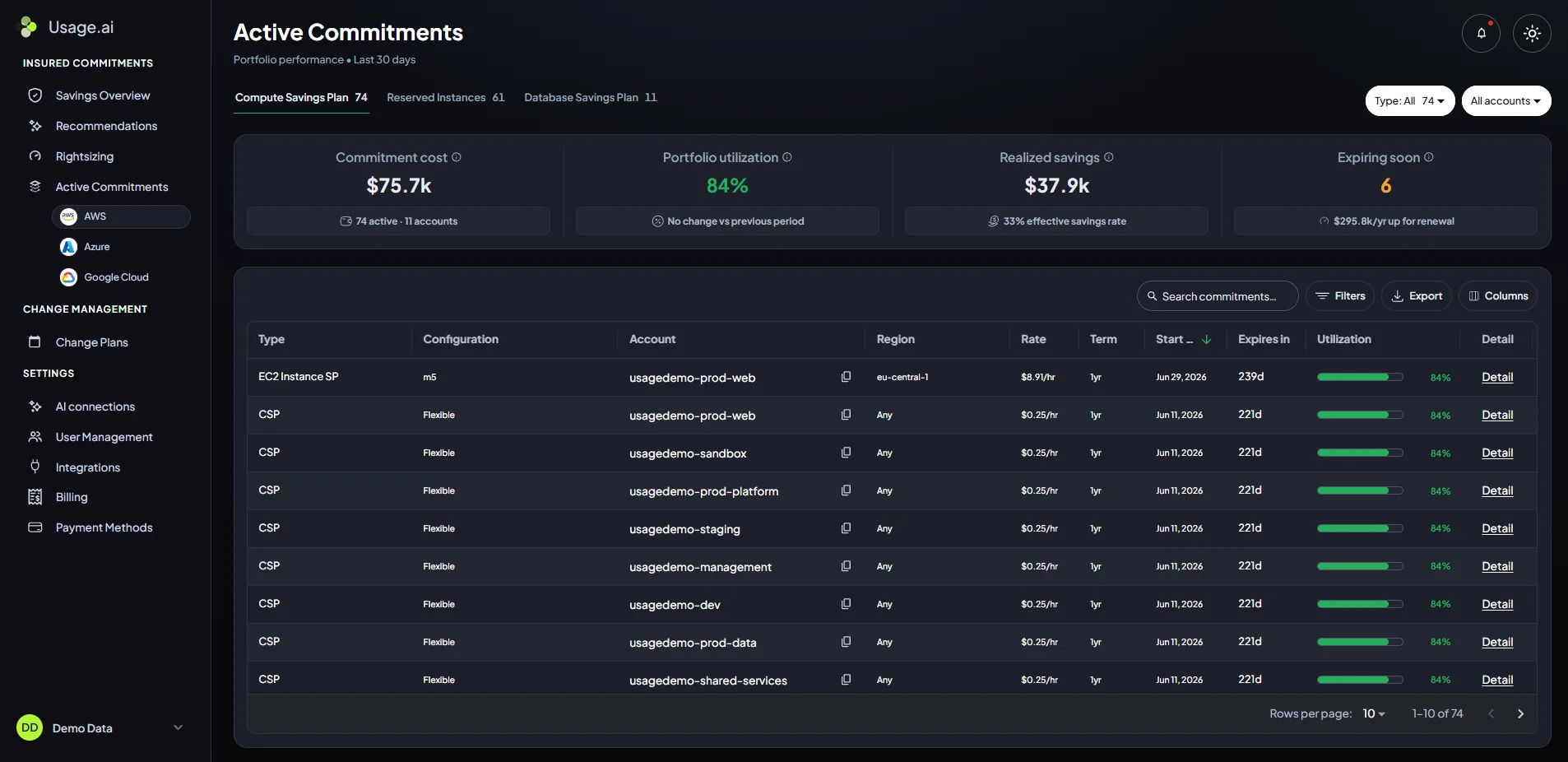
We manage supported AWS Savings Plans and RIs, Azure Savings Plans and Reservations, and Google Cloud CUDs.
How it compares with Harness
Purchasing controls: We start with a read-only Savings Test. You authorize purchasing separately, then choose Autopilot or CoPilot for supported services: automatic execution within agreed controls or approval before purchase. We adjust future purchases as demand changes.
Financial protection: Our Flex Insured Commitments include Cashback when commitment costs exceed the on-demand cost of the same usage, subject to program rules and exclusions. We assess losses monthly and settle qualifying Cashback 90 days after the accrual month through the program's credit-and-refund process.
Harness already offers automated and manual commitment orchestration. The comparison is our supported portfolio, protection terms, and savings-based commercial model not automation alone.
How it compares with Harness
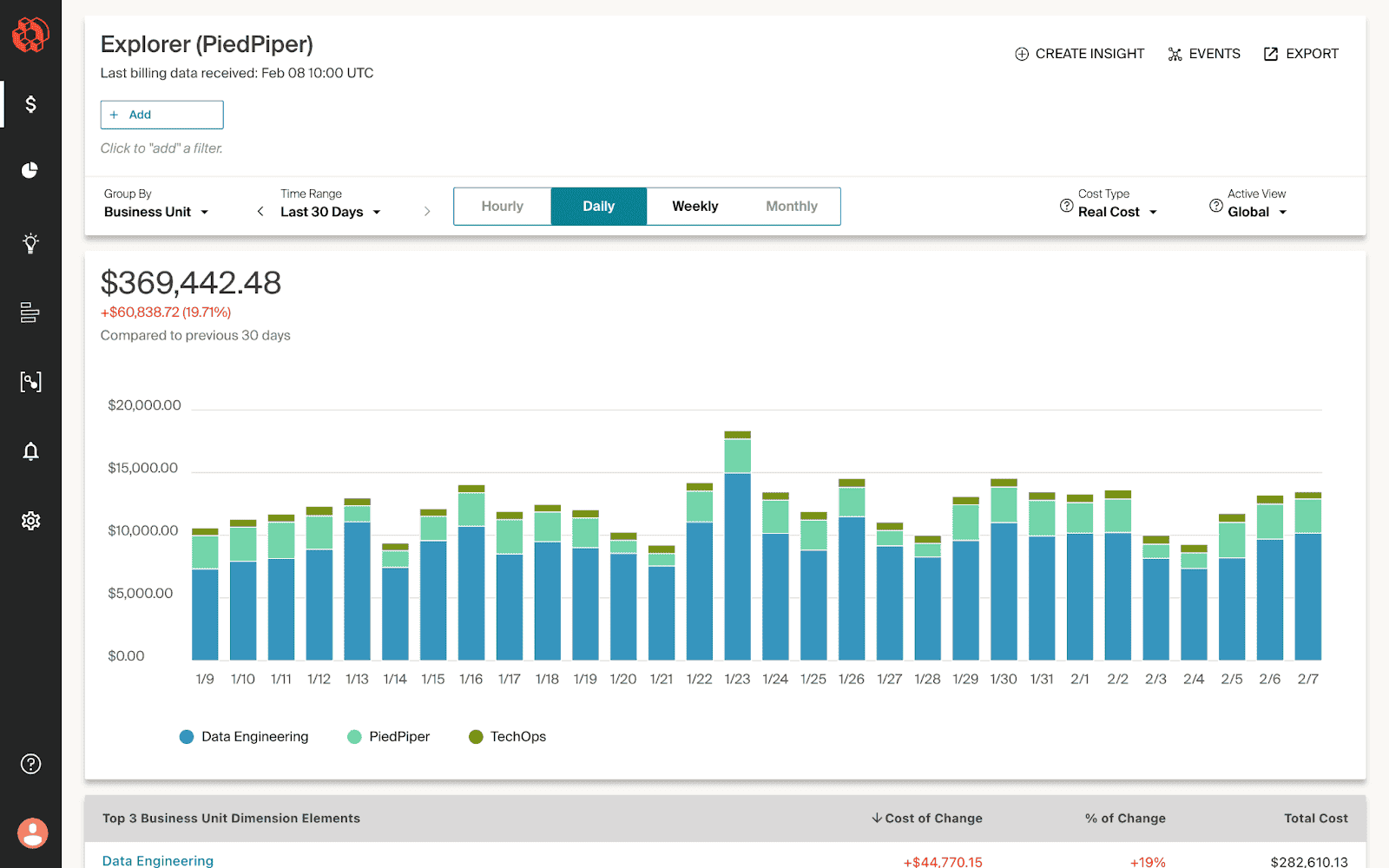
Business-level attribution: Dimensions organize AWS, Azure, Google Cloud, OCI, and other supported costs using business rules. CostFormation and visual authoring support allocation beyond provider accounts and resource tags, including shared costs.
Telemetry-driven unit costs: CloudZero combines scoped spending with supplied business metrics, such as transactions or active users. This lets a team distinguish healthy spend growth from worsening cost per unit.
3. Finout for shared-cost allocation
How it compares with Harness
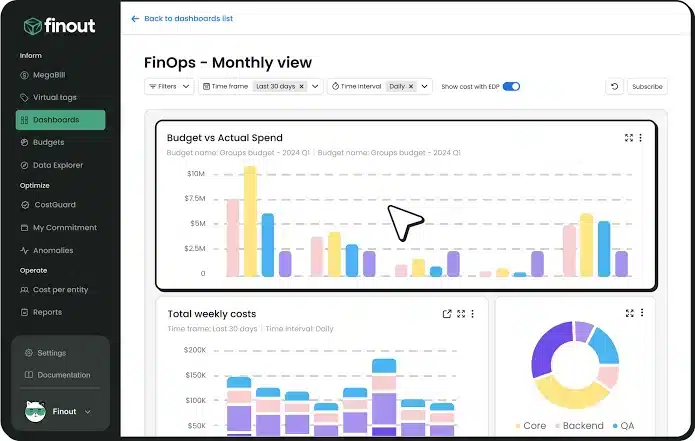
A consolidated allocation model: MegaBill brings AWS, Azure, Google Cloud, OCI, Kubernetes, and supported SaaS, data, and AI costs together. Virtual Tags apply business classifications without changing resource labels; Shared Cost Reallocation supports consumption-based or custom splits.
Planning around ownership: Financial Plans connects organizational hierarchies, shared-cost rules, and team inputs to planning. Its relevance depends on how well those structures match your existing budgeting process.
4. IBM Cloudability for financial management
How it compares with Harness
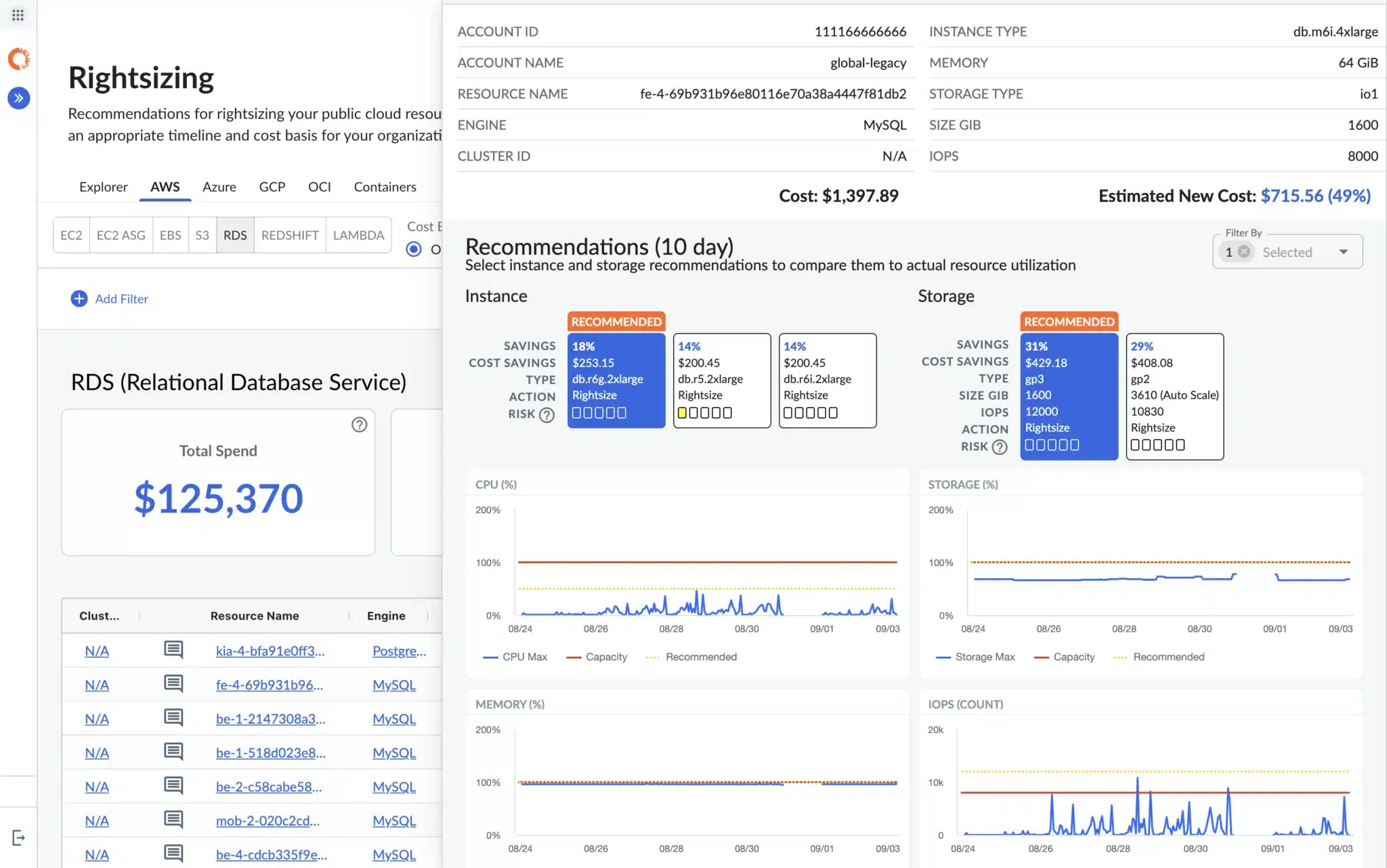
Ownership-system integration: Business Mapping classifies spending through rules and integrates with ServiceNow. This is relevant when the CMDB already maintains application owners and cost-center relationships.
Financial planning: Hierarchical budgets, collaborative planning, and driver-based forecasts connect cloud plans to changing business activity. Integration with IBM Apptio Planning can matter where cloud budgets must sit within wider technology planning.
5. CAST AI for Kubernetes optimization
How it compares with Harness
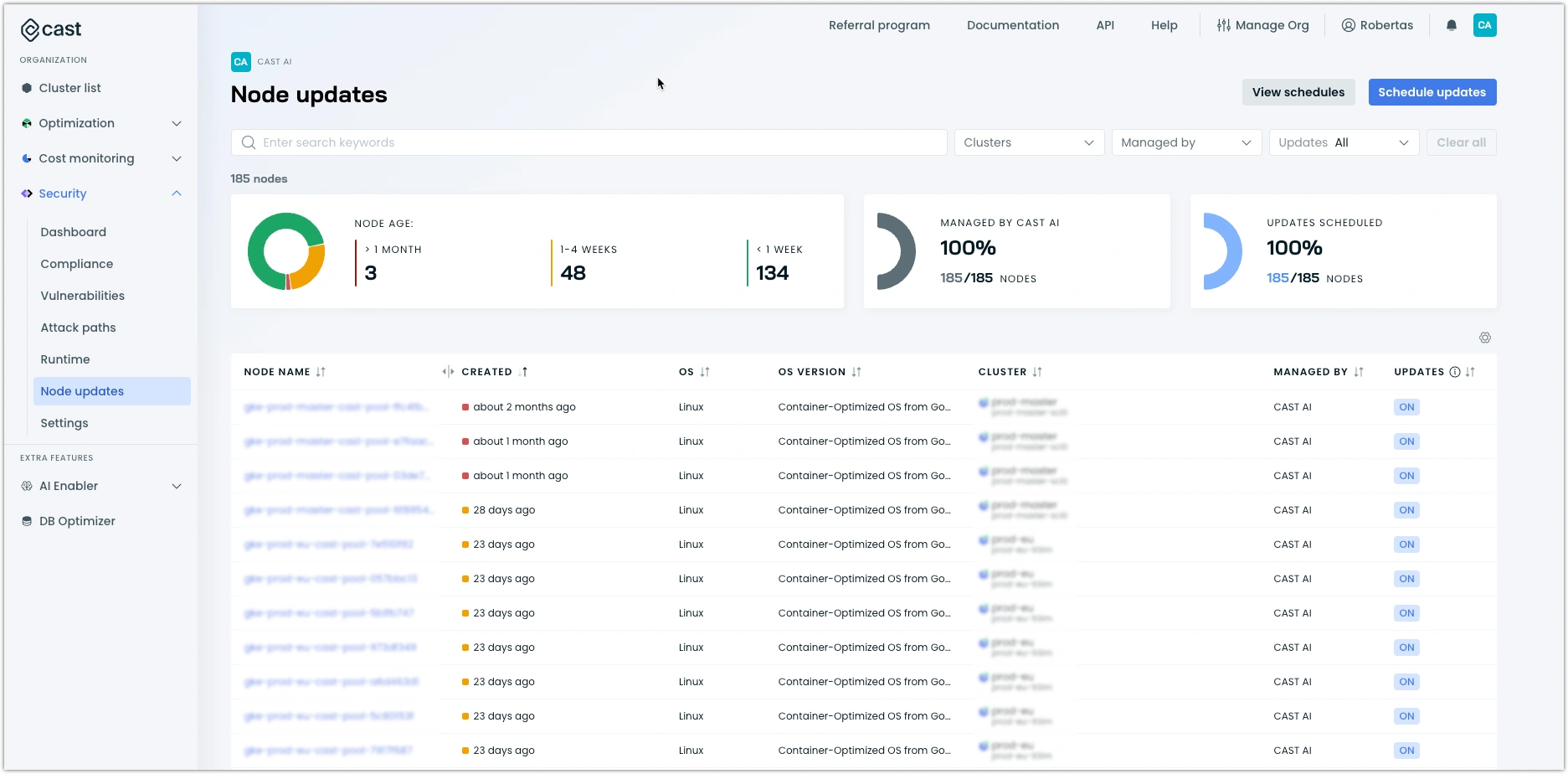
Active resource optimization: CAST AI automates workload sizing, node provisioning, bin packing, and Spot capacity decisions. EKS, GKE, and AKS are supported environments, with feature coverage depending on the deployment.
A specific orchestration comparison: Harness's reviewed Cluster Orchestrator documentation covers Amazon EKS and labels it early access. That creates a reason to evaluate CAST AI for other environments; it does not mean Harness lacks multi-cloud Kubernetes visibility or AutoStopping.
6. ProsperOps for autonomous commitments
How it compares with Harness
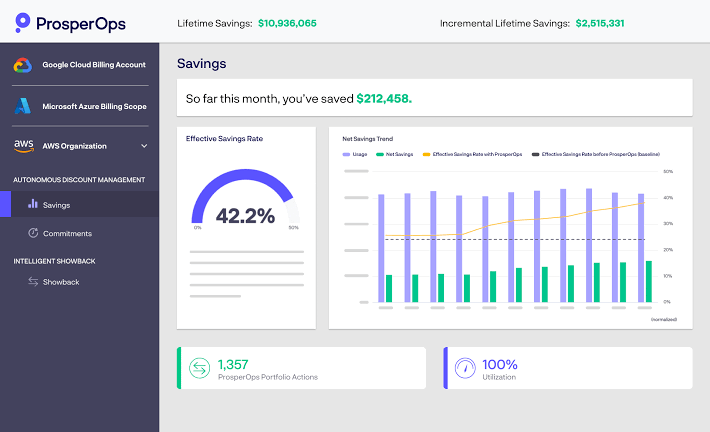
Portfolio operations: Autonomous Discount Management uses Adaptive Laddering and Cyclical Optimization to manage coverage as usage changes. Documented service coverage includes AWS compute and databases, Google Cloud compute and Cloud SQL, and Azure compute services; instruments vary by provider.
Accounting for shared benefits: Intelligent Showback allocates centrally managed commitment costs and benefits across AWS accounts and Azure subscriptions. This deserves attention when the purchasing team and consuming teams have different budgets.
Switching costs and operational impact
A partial replacement worked example
A lower software fee can conceal a more expensive operating setup. This example represents no vendor and uses invented US-dollar figures for one hypothetical month, with unchanged business demand and existing discounts.Assume losing idle-resource stopping adds $6,000 in billed nonproduction runtime beyond retained commitment coverage. Separately, assume a $5,000 cloud-bill reduction on always-on workloads after existing discounts and any new commitment costs, before tool fees.
The workload groups do not overlap. Replace these inputs with reconciled billing, usage, and commitment data.
| Monthly component | Stay | Partial replacement |
|---|---|---|
| Current cloud charges | $94,000 | $94,000 |
| Lost idle-resource stopping | $0 | +$6,000 |
| New approved, non-overlapping savings | $0 | −$5,000 |
| Ongoing tool fees | $3,000 | $1,500 |
| $12,000 transition cost spread over year one | $0 | $1,000 |
| First-year monthly equivalent | $97,000 | $97,500 |
The premium could still be worthwhile if better allocation, planning, or lower operating effort justifies it. Agree how those benefits will be measured. Free engineering time is valuable, but is not automatically a payroll saving.
Only remove cancellable fees. Include retained tools, and calculate resource savings after accounting for existing commitments so the same benefit is not counted twice.
Before the handover
Prove the required workflow. Use the same representative billing period, services, existing commitments, and business assumptions for every finalist. Request approval and execution records where actions are included.
Preserve operating knowledge. Export available history and record allocation definitions, budgets, policies, integrations, and automation that need rebuilding. Before the trial, set targets for matching reports to cloud bills and assigning spending to owners.
Price continuity. Include contract overlap, ongoing provider payments, implementation, retained tools, support, and internal maintenance. Record which existing outcomes could disappear during the move.
Agree the handover. Assign action ownership, scope permissions, test operational safeguards, and reconcile the resulting charges. A reporting transition and a cluster-controller migration need different acceptance criteria.
Final verdict
If one Harness workflow falls short, a focused replacement may be enough. A broader switch should offer benefits that justify the transition and ongoing costs. Either approach must cover essential workflows and fit your team’s approved permissions. If the gains do not justify switching, keeping Harness remains a sound choice.If commitment management is the Harness workflow you want to replace, start by assessing your existing coverage and potential additional savings.
Assess billing, usage, and commitments with a read-only Savings Test. Purchases require separate approval.
Frequently asked questions
Can I replace cost management and keep other Harness products?
Harness supports modular purchasing, so assess cost-management changes separately from delivery tooling. Review your order form for shared discounts, access, integrations, and renewal dependencies. Replacing cost management does not inherently require replacing CI/CD.
What happens to existing Savings Plans, RIs, or CUDs?
Changing software does not itself cancel provider commitments. Their payment terms continue. The replacement must recognize the existing portfolio, and protection does not automatically transfer. AWS Savings Plans, for example, involve a one- or three-year hourly spending commitment.
Can I evaluate without purchasing or infrastructure access?
Yes, where the assessment supports billing-data access or exports. Our Savings Test uses read-only access. Execution needs separate authority: commitment buying creates financial obligations, while rightsizing and stopping resources require different permissions. An assessment does not prove execution readiness.
How do I prevent overlapping commitment purchases?
Assign one purchasing owner across overlapping commitment coverage, including RIs/Savings Plans and accounts sharing discounts. Disable superseded buying automation before activating its replacement. Analysis can overlap where supported, but coordinate purchase timing and refresh the inventory after the final old-platform transaction.
How do enterprise discounts affect potential savings?
Use your contracted rates and existing commitments as the starting point. Request the treatment of private discounts, credits, unused commitments, and vendor fees separately. Provider and instrument rules determine how discounts interact; an on-demand headline percentage is not your incremental saving.