 AWS
 Microsoft Azure
 Google Cloud


How cloud governance keeps cloud operations under control
Cloud governance establishes the policies, responsibilities, and controls organizations use to manage cloud resources securely and efficiently. It helps maintain compliance, control access, standardize resource configurations, and improve financial accountability.Cloud governance tools put these rules into practice through policy enforcement, compliance monitoring, approval workflows, and automated remediation. However, they do not necessarily replace dedicated cloud security, identity management, or FinOps platforms.
Compare 7 cloud governance tools by features and pricing
| Tool | Best for | Key capabilities | Pricing |
|---|---|---|---|
| AWS Control Tower | AWS account governance | Account guardrails, compliance | No service fee; supporting AWS services billed separately |
| Azure Policy | Azure compliance | Audit, deny, remediation | Free for Azure resources; Arc machine configuration charged separately |
| Google Cloud Organization Policy | GCP restrictions | Organizational constraints | Free API; other GCP services billed separately |
| Turbo Guardrails | Multi-cloud enforcement | Continuous controls, remediation | From $0.05/control/month; packs from $25,000 |
| CloudBolt | Governed provisioning | Approvals, automation | Free up to 100 resources; paid plans for larger environments |
| Kion | Financial governance | Budgets, access, policies | From $40,000/year; based on cloud footprint |
| Cloud Custodian | Open-source automation | Policy as code | Free software; hosting and maintenance costs apply |
How we compared: We evaluated official vendor documentation for policy enforcement, cloud coverage, automated remediation, permissions, implementation requirements, and pricing. The seven tools represent different governance use cases, not a universal performance ranking.
1. AWS Control Tower
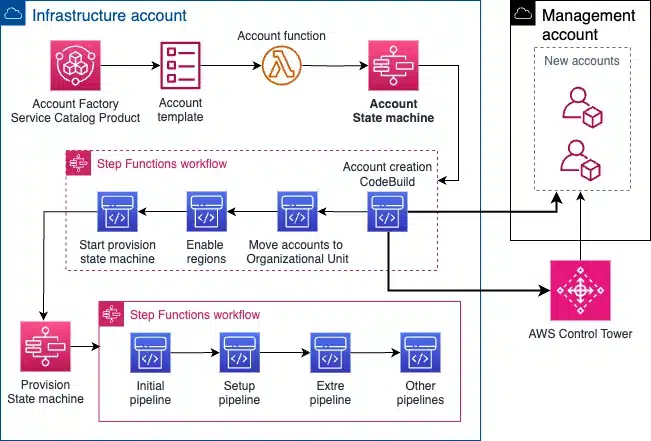
AWS Control Tower helps organizations establish governed multi-account AWS environments. It combines account provisioning, organizational guardrails, and compliance monitoring.
Key features
- Account governance: Standardizes AWS account structures.
- Policy controls: Supports preventive, detective, and proactive controls.
- Compliance monitoring: Tracks control violations across accounts.
- ✅ Native AWS Organizations integration.
- ✅ Centralized account governance.
- ✅ Preventive and detective controls.
- ❌ Limited to AWS environments.
- ❌ Some controls have regional restrictions.
2. Azure Policy
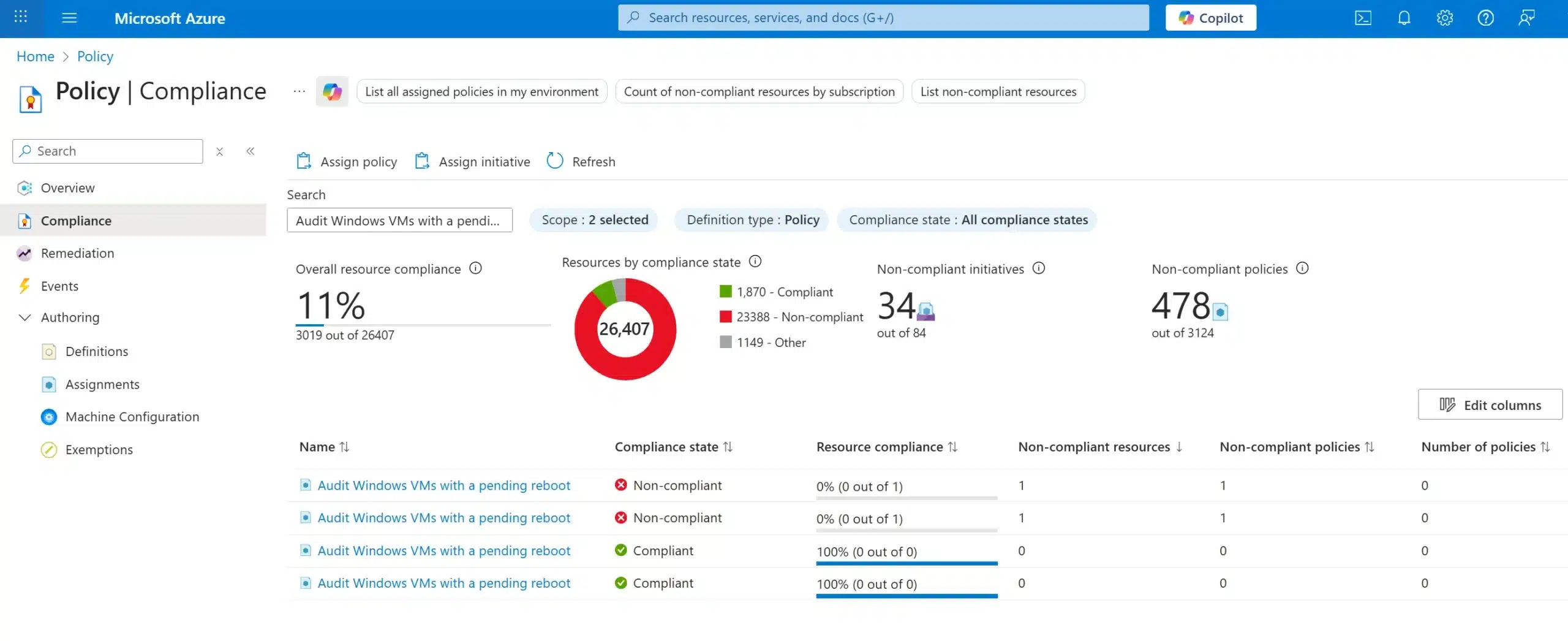
Azure Policy helps organizations evaluate Azure resources against assigned policies. It supports compliance monitoring, deployment restrictions, and configured remediation.
Key features
- Policy enforcement: Audits or denies noncompliant deployments.
- Compliance reporting: Evaluates assigned policies.
- Remediation: Corrects supported configurations.
- ✅ Built-in and custom policies.
- ✅ Subscription and management-group scopes.
- ✅ Supports configured remediation.
- ❌ Primarily Azure-focused.
- ❌ Remediation requires proper permissions.
3. Google Cloud Organization Policy
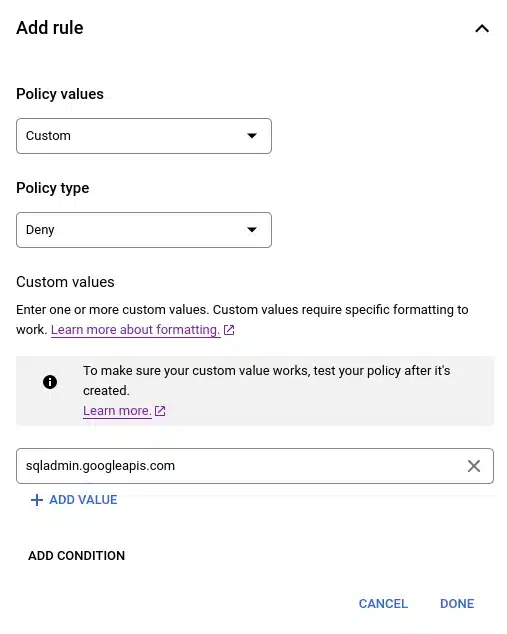
Google Cloud Organization Policy helps administrators apply restrictions across Google Cloud organizations, folders, and projects.
It provides centralized constraints for supported resource configurations and operations.
Key features
- Constraints: Restricts supported configurations.
- Policy inheritance: Applies rules across resource hierarchies.
- Customization: Supports custom constraints.
- ✅ Native Google Cloud integration.
- ✅ Centralized organization-level policies.
- ✅ Predefined and custom restrictions.
- ❌ Limited to GCP.
- ❌ Existing violations may require separate remediation.
4. Turbot Guardrails
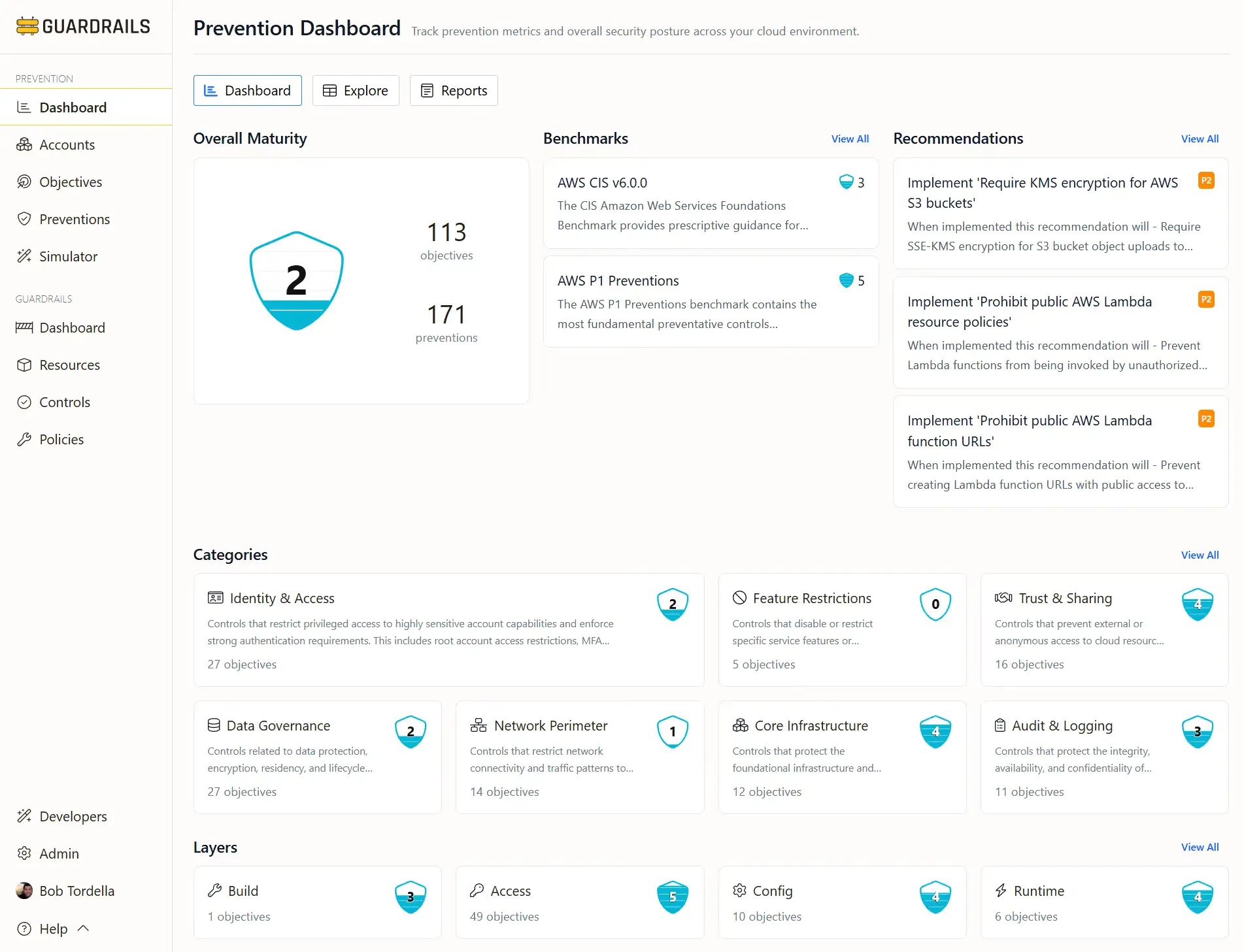
Turbot Guardrails provides continuous policy evaluation, compliance monitoring, and automated remediation across supported cloud environments.
It helps organizations identify configuration drift and enforce authorized corrective actions.
Key features
- Policy management: Configurable governance controls.
- Continuous monitoring: Detects violations and changes.
- Automated remediation: Executes supported corrective actions.
- ✅ Broad multi-cloud governance.
- ✅ Continuous compliance monitoring.
- ✅ Configurable remediation workflows.
- ❌ Requires careful policy configuration.
- ❌ Costs increase with controls and resources.
5. CloudBolt
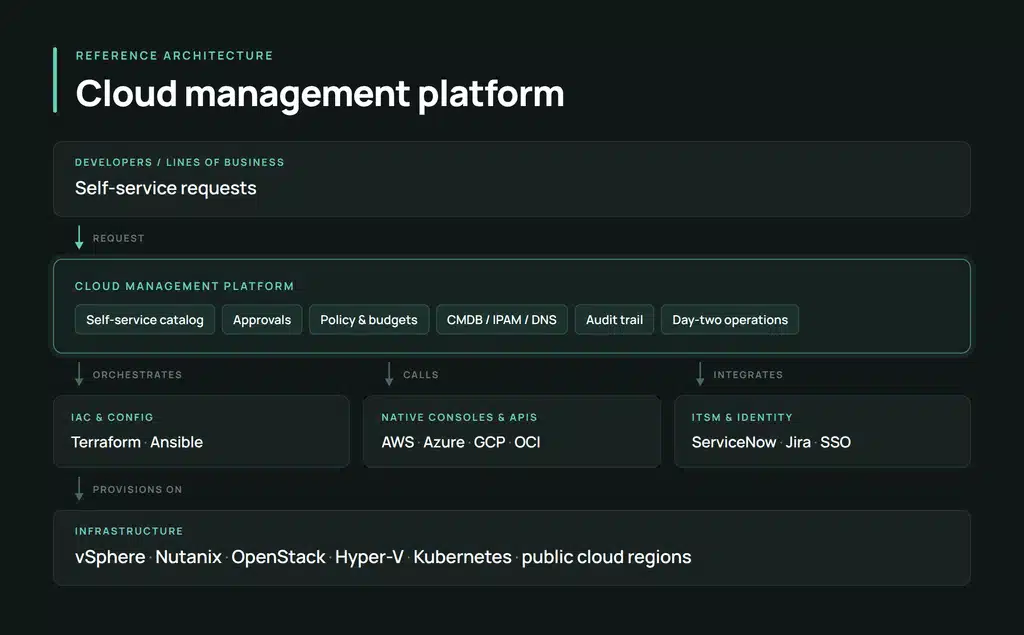
CloudBolt CMP provides self-service provisioning with governance controls across public, private, and hybrid-cloud environments.
It helps organizations standardize deployments through approval workflows, permissions, and infrastructure policies.
Key features
- Governed provisioning: Uses approved blueprints.
- Approval workflows: Controls infrastructure requests.
- Access management: Applies roles and permissions.
- ✅ Supports hybrid-cloud environments.
- ✅ Combines provisioning and governance.
- ✅ Customizable approval workflows.
- ❌ Requires infrastructure integration.
- ❌ Changes outside managed workflows need separate controls.
6. Kion
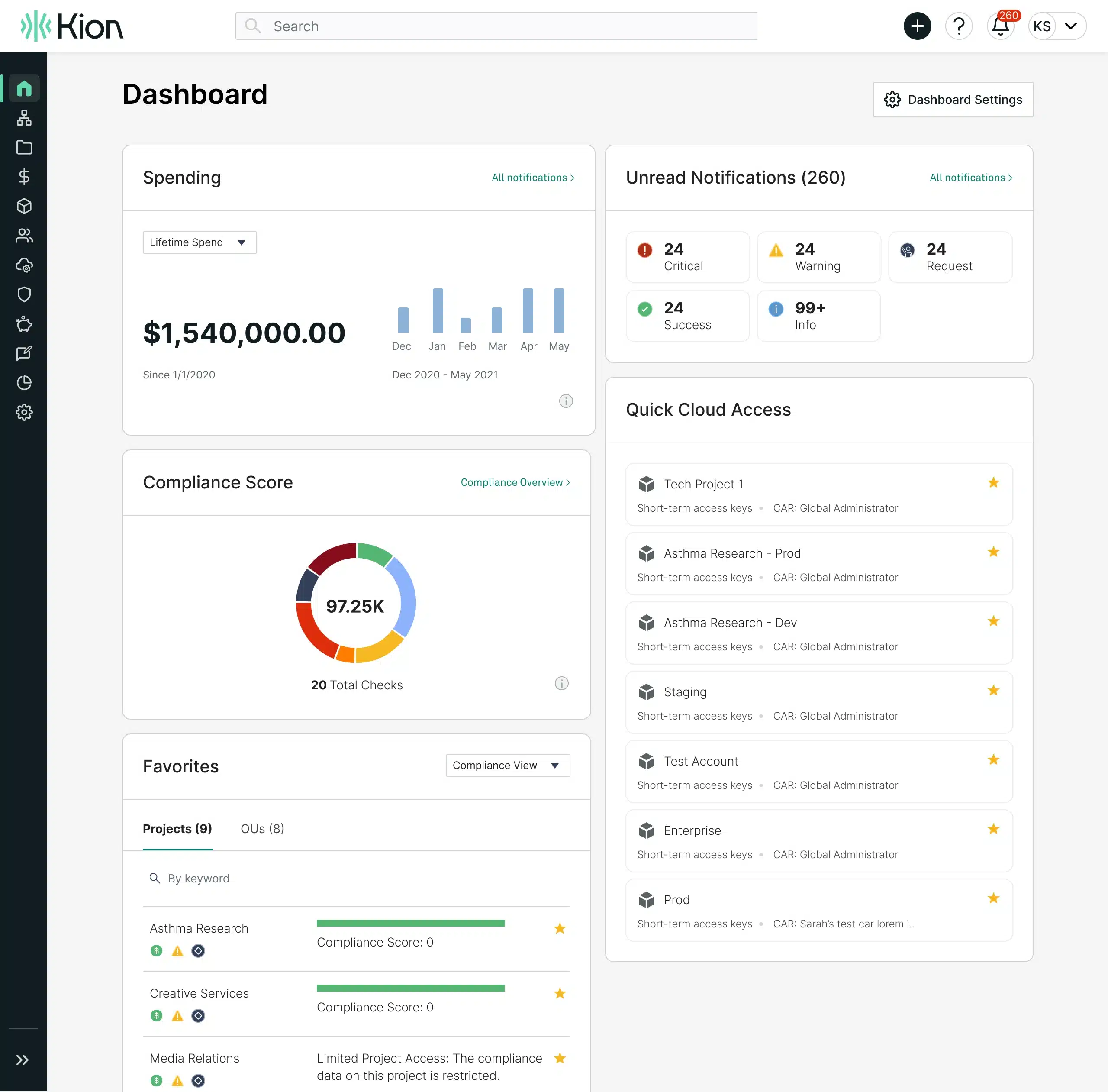
Kion combines cloud financial management, access controls, account provisioning, and compliance workflows.
It helps organizations manage spending guardrails and governance policies across multiple clouds.
Key features
- Financial controls: Budgets and spending policies.
- Automated governance: Tagging and policy workflows.
- Access management: Cloud roles and provisioning.
- ✅ Combines FinOps and governance.
- ✅ Supports multiple cloud providers.
- ✅ Centralized financial controls.
- ❌ Requires initial configuration.
- ❌ Enterprise pricing may not suit small teams.
7. Cloud Custodian
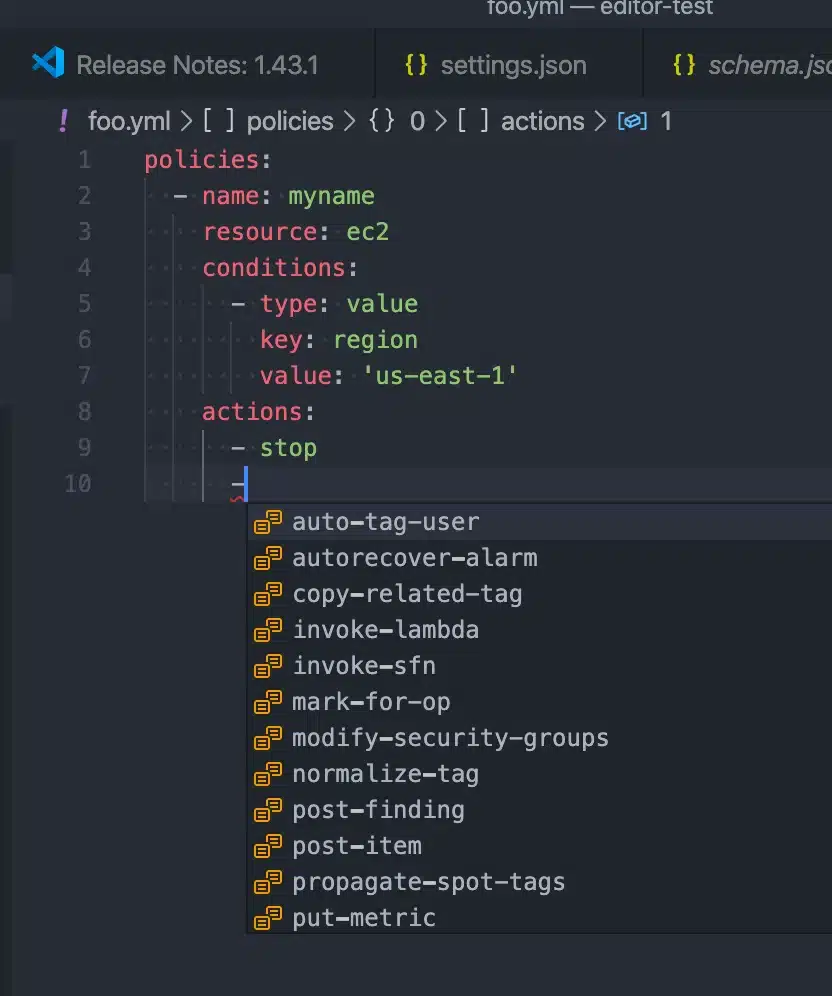
Cloud Custodian is an open-source policy engine supporting AWS, Azure, and GCP.
It lets engineers define YAML policies to identify resources and perform authorized actions.
Key features
- Policy as code: YAML-based governance rules.
- Resource management: Filters and manages resources.
- Automation: Scheduled and event-driven execution.
- ✅ Free open-source software.
- ✅ Supports major public clouds.
- ✅ Customizable automation.
- ❌ Requires engineering maintenance.
- ❌ Incorrect actions may disrupt workloads.
How cloud governance tools enforce policies
Cloud governance tools enforce policies through prevention, detection, and remediation.- Prevention: Blocks prohibited actions before deployment.
- Detection: Identifies resources violating policies.
- Remediation: Corrects supported violations through authorized actions.
How to choose the right cloud governance tool
Choose a platform based on your cloud environment, policy requirements, and available resources.| Factor | What to consider |
|---|---|
| Cloud coverage | AWS, Azure, GCP, or hybrid environments |
| Policy enforcement | Prevention, detection, and remediation |
| Automation | Supported actions and approval controls |
| Implementation | Permissions, setup, and maintenance |
| Pricing | Licensing and total operational costs |
When native cloud governance tools may be sufficient
Organizations using primarily AWS, Azure, or GCP should evaluate native governance tools first.AWS Control Tower, Azure Policy, and Google Cloud Organization Policy offer provider-specific controls.
Third-party platforms become useful when organizations require centralized governance or consistent workflows across multiple environments.
For additional financial governance guidance, explore our cloud cost governance framework.
How cloud governance and cloud commitment optimization work together
Cloud governance tools help organizations enforce resource policies, maintain compliance, and manage cloud infrastructure. Cloud commitment optimization focuses on reducing the cost of eligible cloud usage through better purchasing and commitment management.For example, a governance tool may prevent deployments in unauthorized regions. But enforcing those policies doesn’t necessarily mean you’re getting the best available rates for eligible cloud usage.
That’s where Usage.ai comes in. We complement cloud governance tools by automating eligible cloud commitment management across AWS, Azure, and Google Cloud.
With our Autopilot, teams can automate eligible commitment purchases within configured controls, while CoPilot lets them review and approve recommendations. Eligible Flex Insured Commitments also provide conditional Cashback protection if usage drops, subject to program terms.
The goal is to maintain strong cloud governance while improving commitment coverage and managing eligible cloud costs.
For more ways to reduce cloud spending, explore our best cloud cost optimization tools guide.
Final verdict
AWS Control Tower, Azure Policy, and Google Cloud Organization Policy are strong choices for native governance. Turbot Guardrails focuses on continuous multi-cloud enforcement, CloudBolt on governed provisioning, and Kion on financial and access controls. Cloud Custodian offers customizable open-source automation.The right platform depends on your environment, enforcement requirements, and available engineering resources.
Keep your governance tools while Usage.ai manages eligible commitments with purchasing controls and conditional cashback protection.
Frequently asked questions
What are the best cloud governance tools?
AWS Control Tower, Azure Policy, Google Cloud Organization Policy, Turbot Guardrails, CloudBolt, Kion, and Cloud Custodian support different governance needs. The best choice depends on cloud coverage, enforcement capabilities, engineering requirements, and cost.
Are there free cloud governance tools?
Yes. Cloud Custodian is open source, Azure Policy and Google Cloud Organization Policy offer free core capabilities, and CloudBolt has a free resource-limited edition. Supporting services and operational costs may still apply.
Which cloud governance tools support multiple clouds?
Turbot Guardrails, CloudBolt, Kion, and Cloud Custodian support multi-cloud governance use cases. Their capabilities differ across policy enforcement, provisioning, financial controls, and automation.
Can cloud governance tools automatically fix policy violations?
Some tools can execute authorized remediation actions. Others primarily prevent deployments or report violations. Capabilities depend on the supported resource type, configured policies, and permissions.
Is AWS Control Tower a multi-cloud governance tool?
No. AWS Control Tower governs AWS environments. Organizations using Azure or GCP need separate native governance controls or a supported multi-cloud platform.
If you notice any material information that is incorrect, outdated, or no longer applicable, please contact us at [email protected]. We’ll review it and update the article where appropriate.