 AWS
AWS Microsoft Azure
 Google Cloud


For managed purchasing, the shortlist includes our platform, Archera, CloudKeeper Commit, nOps, and ProsperOps. North Autobot merits evaluation for customer-owned Azure commitment purchasing, including compute and database Savings Plans, while Zesty emphasizes a Savings Plan-led strategy. Cloudability, Ternary, and Turbo360 provide commitment planning or monitoring for teams that retain purchasing responsibility.
This comparison distinguishes each platform’s role and documented capabilities. The order does not indicate a performance ranking.
Azure Commitment Management Platforms Compared
Capability review: October 6, 2026. Compare each platform’s primary role, instrument-specific capabilities, and purchasing controls. Buying and managing commitments involves different responsibilities than providing recommendations or monitoring.| Platform | Primary role | Azure Reservations | Compute Savings Plans | Purchasing and controls |
|---|---|---|---|---|
| Usage.ai | We manage commitment purchases | We buy and manage Reservations | We buy and manage Savings Plans | Our Autopilot automates buying; our CoPilot requires purchase approval. |
| Archera | Purchasing and management with guarantee options | Buy and manage; VM, App Service, databases, storage | Buy and manage | Customer approval and recurring purchase rules; approval routing and spending limits not specified. |
| CloudKeeper Commit | Managed commitment purchasing | Buy and manage; compute, databases, storage, analytics | Buy and manage | Automated purchases; full Savings Plan permissions not specified. |
| IBM Cloudability | Commitment analysis and recommendations | Portfolio analysis; VM, databases, Blob Storage, Redis, App Service | Portfolio analysis and recommendations | Azure purchasing execution not specified. |
| nOps | Autonomous commitment purchasing | Buy and manage; eligible compute/data Reservations | Buy and manage | Incremental buying; approval granularity not specified. |
| North Autobot | Customer-owned commitment purchasing | Buy and manage Azure Reservations | Buy and manage | Policy authorization, monthly reassessment, and controls to stop new purchases. |
| ProsperOps | Autonomous commitment purchasing | Buy and manage; compute Reservations and database Reservations, confirm database availability and eligibility. | Buy and manage | MCA purchasing and administration roles. |
| Ternary | Commitment analysis and recommendations | Tracking; VM, App Service, Blob, Redis, MySQL, PostgreSQL | Tracking and recommendations | Purchasing execution not specified. |
| Turbo360 | Commitment recommendations and monitoring | Recommendations and monitoring; VM, App Service, SQL Database/MI | Recommendations and monitoring | Reservation purchases occur in the Azure portal. |
| Zesty | Compute Savings Plan purchasing | Not specified | Buy and manage | Adjustable coverage and risk settings. |
The profiles below explain workflow, billing-agreement requirements, and commercial qualifications. An Azure integration or AWS automation feature alone does not establish Azure purchasing support.
Microsoft’s native Savings Plan management remains the baseline for supported actions. Assess whether another platform improves planning, execution, or accountability enough to justify its cost.
Which Platform Fits Your Azure Commitment Strategy?
The comparison above establishes scope. These profiles explain what that means in practice: who purchases commitments, how the portfolio is managed after purchase, and where the commercial model affects your decision. Start with the operating model your team needs, then compare platforms against your actual Azure service mix.Usage.ai
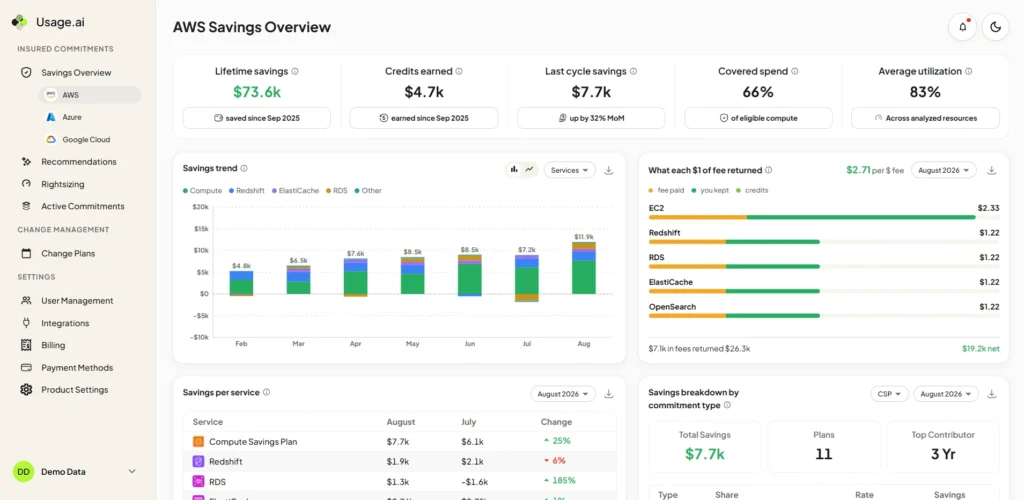
Azure coverage: We buy and manage Azure Reservations and Savings Plans within your account, optimizing eligible commitment spend across services including Azure VMs, SQL Database, Cosmos DB, and App Service.
We operate at the billing and commitment layer without starting, stopping, resizing, or otherwise changing workloads. Our read-only Savings Test lets you assess the opportunity before granting purchasing authority. See what our Savings Test evaluates.
How management works: We offer Autopilot for automated buying and CoPilot where you prefer approval. We reassess demand daily and stagger purchases, using future expirations to adjust coverage as usage changes. We show purchase decisions, service-level coverage, and monthly savings, fees, and Cashback accrued, giving engineering and finance a shared view of the result.
Pricing and commercial fit: We charge a percentage of realized Flex Commitment savings, billed monthly in arrears after cloud billing data is finalized. Our dashboard distinguishes our Flex Commitments from commitments you purchased independently.
Main trade-off: Our Cashback protection applies to eligible commitments under program terms. It helps address qualifying underutilization; it does not cancel Microsoft’s underlying obligations or automatically extend protection to existing purchases.
Archera
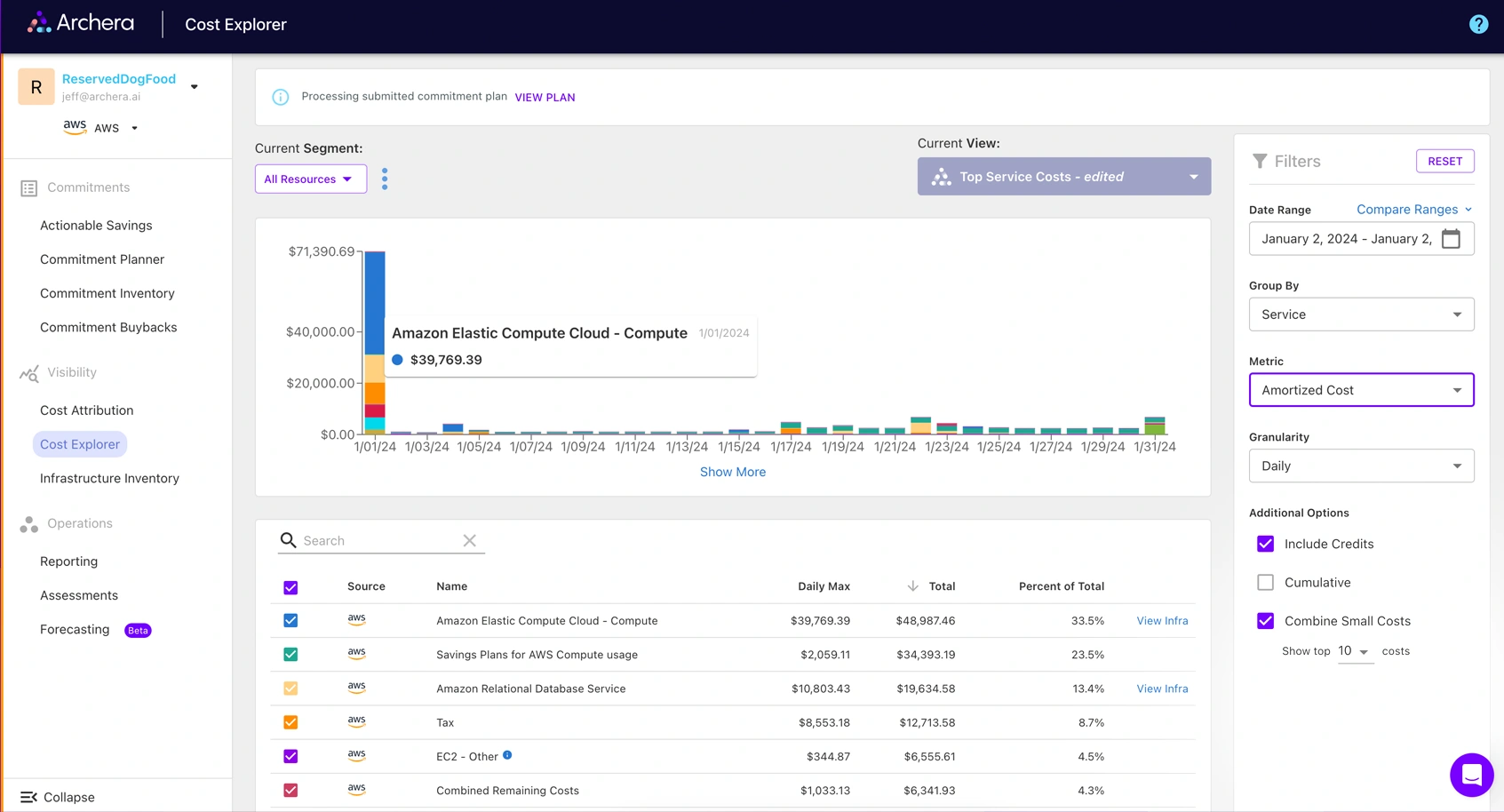
Azure coverage: Archera’s supported Azure instruments include Reservations, compute Savings Plans, and database Savings Plans. Its Reservation catalog extends beyond VMs to database, storage, and other eligible services, making it relevant when procurement needs a strategy across several service portfolios.
How management works: Customers approve the commitment plan, and Archera purchases in their accounts. Recurring purchase rules can automate subsequent buying. Its dashboard supports utilization monitoring, underutilization notifications, and segmentation of commitment strategy. That gives teams a way to organize coverage rather than treating the estate as one purchasing pool.
Pricing and commercial fit: Native commitment planning, purchasing, and management are free. Optional Guaranteed Commitments carry a premium calculated as a share of savings, varying by service and guarantee term. Evaluate projected savings after the premium; our Archera pricing breakdown explains the commercial considerations.
Main trade-off: Archera’s Rebate and Release Guarantees offer different remedies. A shorter guarantee term is a vendor contractual arrangement, not a shorter Microsoft commitment. The offered contract needs to establish which remedy applies to your Azure purchases and when it can be exercised.
CloudKeeper Commit
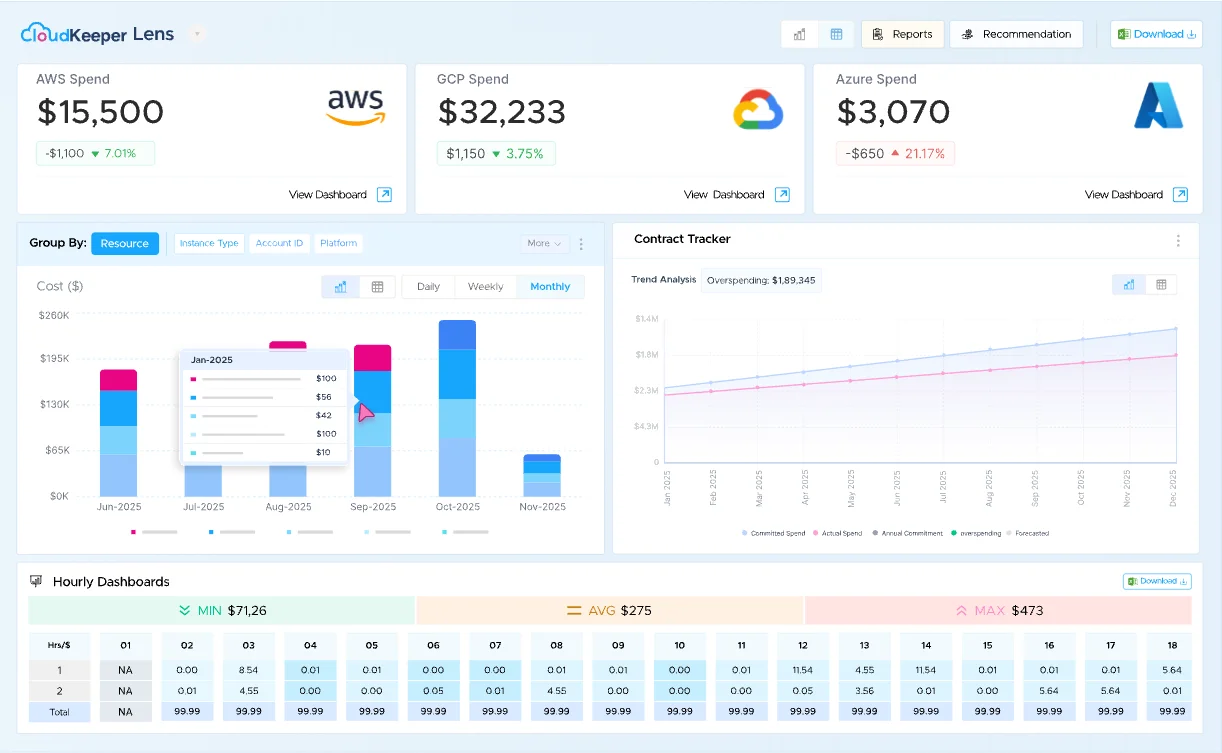
Azure coverage: CloudKeeper’s Azure commitment offering includes reservations across compute, databases, storage, and analytics, alongside Savings Plans. It also describes commitment-tier optimization for products such as Log Analytics and Microsoft Sentinel. These are distinct billing constructs, so the proposal should separate Reservation and Savings Plan savings from other commitment-tier opportunities.
How management works: CloudKeeper describes incremental automated purchases and continuous recalculation of coverage. When usage changes, it uses scope adjustments, eligible Reservation-to-Savings-Plan trade-ins, and exchanges or refunds where Microsoft policy permits.
Analysis starts with read-only billing access; purchasing is enabled separately. The service operates without changing workloads and provides visibility into the actions taken.
Pricing and commercial fit: CloudKeeper states that it charges a share of realized savings, with no subscription fee or fixed volume commitment. For a mixed-service estate, the useful commercial question is how much eligible spend each optimization method actually covers.
Main trade-off: Its access FAQ specifies Reservation Purchaser authority but does not spell out the complete Savings Plan permission set. Include both workflows in the implementation scope. A headline savings guarantee also needs a defined contractual remedy before it can be treated as reimbursement for unused commitments.
IBM Cloudability
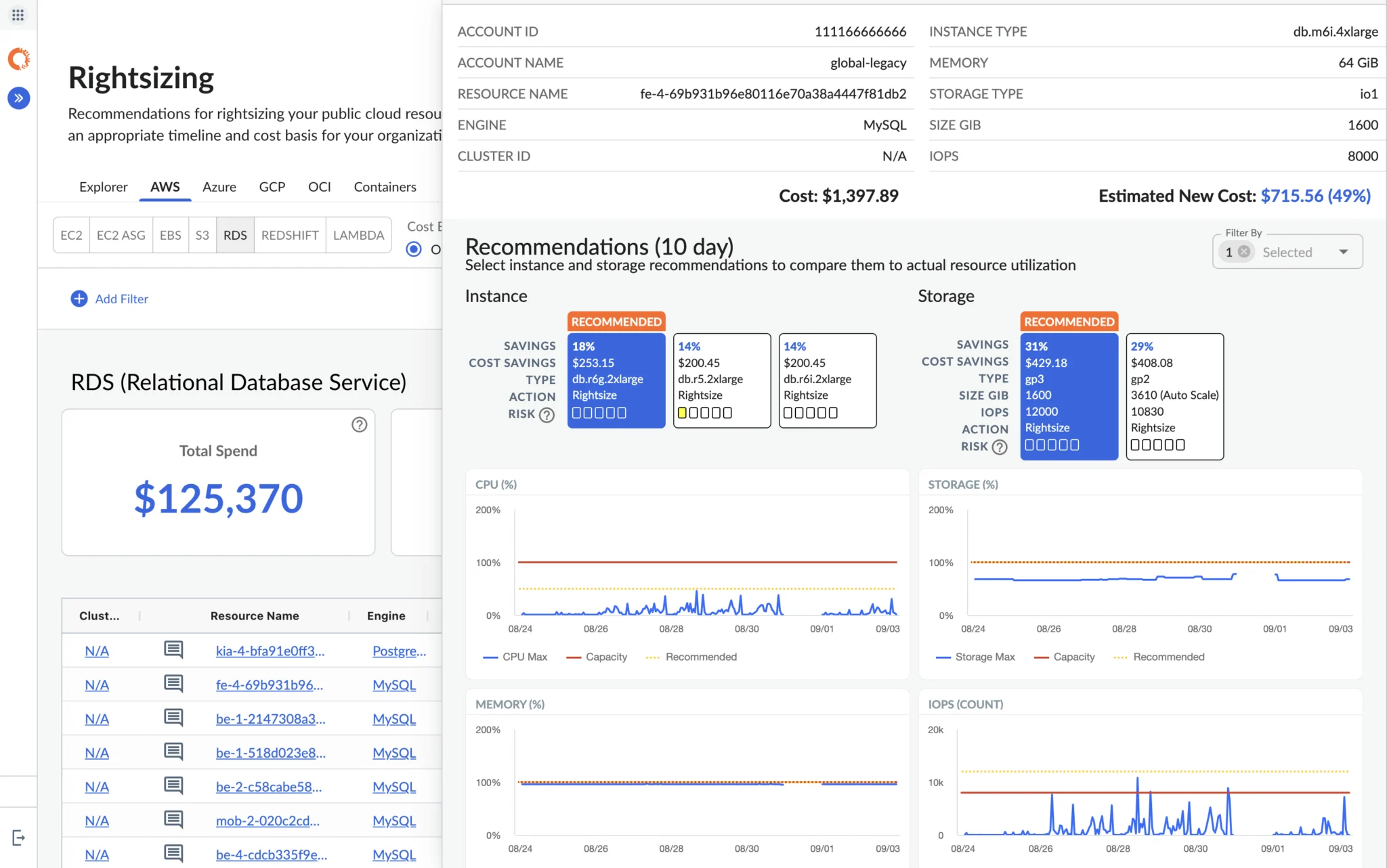
Azure coverage: Cloudability supports multiple Azure Reservation types and compute Savings Plans. Its commitment portfolio lets teams assess existing coverage, utilization, and savings at both aggregate and individual commitment levels. This is useful when procurement needs to understand the current portfolio before approving additional exposure.
How management works: Its Azure Savings Plan recommendations allow users to choose term, scope, and lookback period. Teams can compare purchase options and review portfolio health. Cloudability also provides commitment-expiration alerts and financial KPIs, including Net Savings, which subtracts waste from savings.
Pricing and commercial fit: If you already license Cloudability, establish which commitment features your edition includes and any incremental module cost. Evaluate the value of better planning alongside the internal effort required to execute and maintain purchases.
Main trade-off: Recommendation and portfolio capabilities do not, by themselves, establish delegated Azure purchasing. If execution is a shortlist requirement, the proposed product and module must demonstrate that Azure workflow; the Savings Automation name alone is insufficient.For a broader assessment of platform scope and operational ownership, compare Cloudability with our commitment-focused approach.
nOps
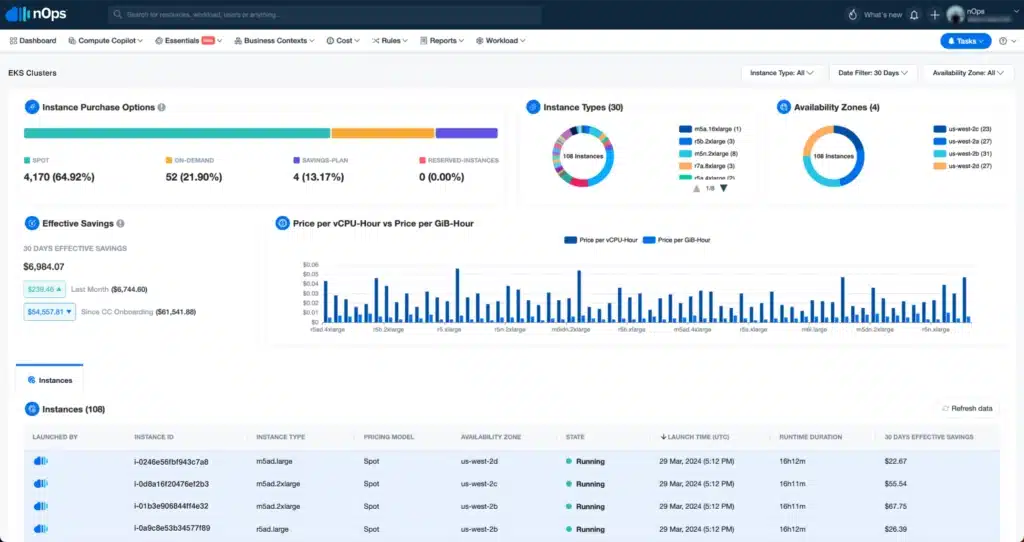
Azure coverage: nOps manages compute Savings Plans and Reservations for eligible compute and reservation-based data services. Its Azure service scope includes SQL Database, SQL Managed Instance, MySQL, and PostgreSQL alongside compute services, making the service mix relevant beyond a VM-only comparison.
How management works: Its Azure purchasing model uses continual, smaller purchases and hourly coverage calculations based on historical usage and forecast demand. Dashboards show coverage, utilization, savings trends, and at-risk commitments. Its purchasing setup adds authority after Savings Analysis, requires a dedicated commitment-management subscription, and checks billing policies as well as assigned purchasing roles.
Pricing and commercial fit: nOps states that its Azure fee is a percentage of savings. Compare reported savings with the agreed fee calculation and the cost of operating the integration, rather than assuming that incremental buying itself guarantees a particular return.
Our nOps pricing guide explains the savings-share and implementation-cost questions to bring into that evaluation.
Main trade-off: The prerequisite Savings Analysis integration requires your own EA or MCA billing account; CSP-only tenants are unsupported. Mixed CSP and MCA billing profiles under your own account do not change the onboarding steps. Establish the applicable billing path before investing in a purchasing pilot.
North Autobot
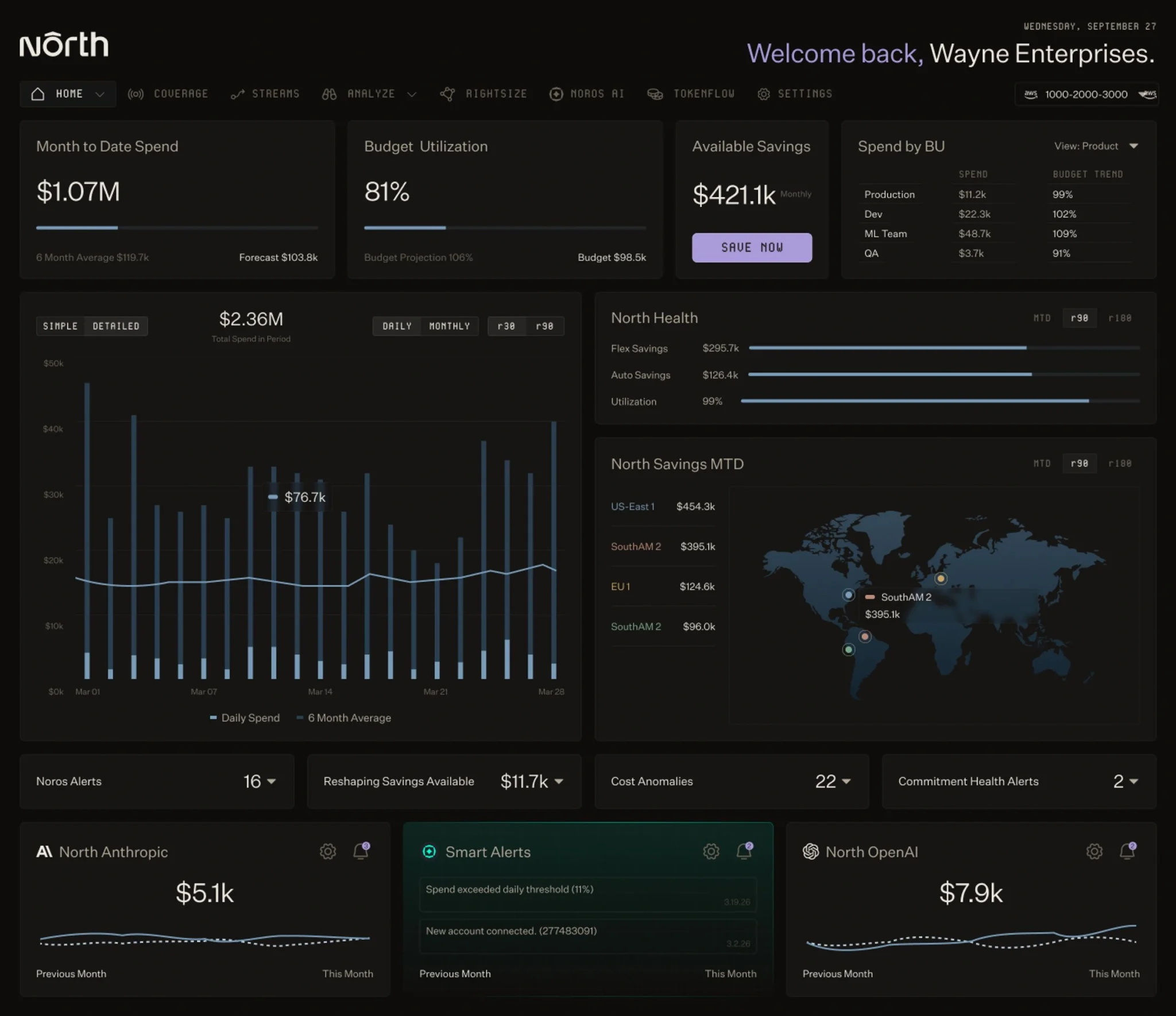
Azure coverage: North’s supported Azure coverage plans include compute and database Savings Plans through Autobot. These cover eligible usage across services such as VMs and App Service for compute, and SQL Database, SQL Managed Instance, Cosmos DB, MySQL, and PostgreSQL for databases. Its Azure permissions guide also documents Reservation purchasing authority; include any required Reservation services in the agreed scope.
How management works: Buyers choose a coverage target and a profile that determines how quickly Autobot builds coverage. Before buying, North asks customers to authorize a configuration showing commitment terms, monthly costs, and expected savings.
It reassesses the policy monthly against actual usage, so later purchases can change. Match the purchasing pace to your expected demand and planned migrations.
Pricing and commercial fit: North’s pricing model combines a monthly platform fee with an Autobot fee calculated as a percentage of commitments automated. That differs from a percentage of savings. Ask for the annual dollar cost against the same projected portfolio used to evaluate other vendors, including the platform fee and applicable enterprise tier.
Main trade-off: Turning Autobot off stops new purchases; commitments already bought continue to the end of their terms. North’s vendor-held Flexbot model is distinct from customer-owned Autobot. Flexbot’s AWS ownership and protection arrangements should not be assumed to apply to Azure commitments purchased through Autobot.
ProsperOps
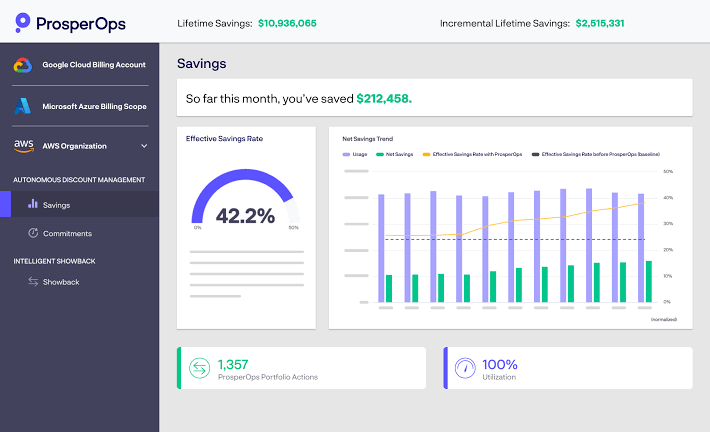
Azure coverage: ProsperOps manages Azure Reservations and compute Savings Plans, discovers existing commitments, and assumes their management when enabled. It takes negotiated EA/MACC rates into account. Relational database optimization for SQL, MySQL, and PostgreSQL was introduced in Early Access; include current availability and eligible database services in the agreed scope.
How management works: Its Azure-specific Adaptive Laddering strategy automates portfolio decisions within Microsoft’s rules. Reporting includes coverage, utilization, Effective Savings Rate, and Commitment Lock-In Risk. Active management needs purchasing and administration permissions beyond a savings assessment, so security and billing owners need to review the production scope.
Pricing and commercial fit: Its Savings Share model includes distinct Azure categories for inherited commitments, compute Savings Plans, and Reservations purchased or optimized by ProsperOps. Fees can therefore include savings from commitments bought before onboarding. Our ProsperOps pricing analysis explains how to assess those fee categories.
Main trade-off: Cancellation can trigger a final Savings Share charge for future savings from managed commitments. Compare the takeover benefit with both ongoing fees and the agreement’s exit calculation; monthly subscription language does not establish a cost-free departure.
Ternary
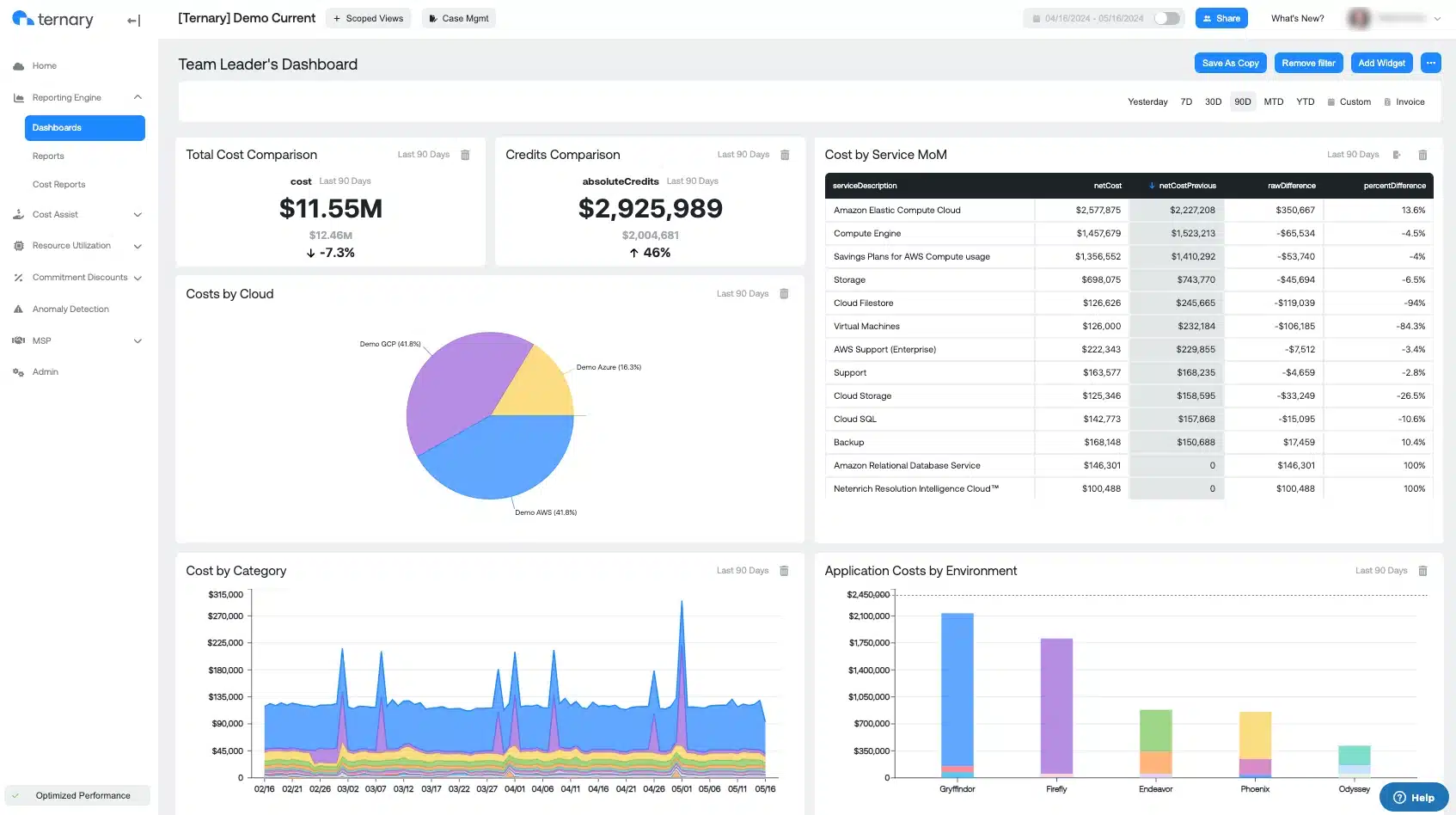
Azure coverage: Ternary’s Azure commitment inventory lists VM, App Service, Block Blob, Redis, MySQL, and PostgreSQL Reservations, plus compute Savings Plans. Inventory details include purchase and expiration dates, upfront cost, amortized recurring cost, and average utilization.
How management works: The commitment views show unused RI/Savings Plan cost alongside on-demand spending. Recommendations include estimated monthly and term savings, the proposed commitment amount, utilization, and overage cost.
This helps buyers distinguish an uncovered-demand opportunity from a portfolio already carrying waste. Its Azure recommendation API provides programmatic access to recommendations for integration into internal workflows.
Pricing and commercial fit: Assess the platform quote alongside the value of consolidated analysis and your team’s continuing purchasing effort. Ternary expresses estimated savings percentages against on-demand pricing and assumes full utilization for that metric; use your expected utilization when evaluating the actual business case.
Main trade-off: This is a planning-led shortlist option. Inventory and recommendation API access do not themselves execute purchases. Retain a named owner for turning recommendations into orders, reviewing unused commitments, and deciding what to renew.
Turbo360
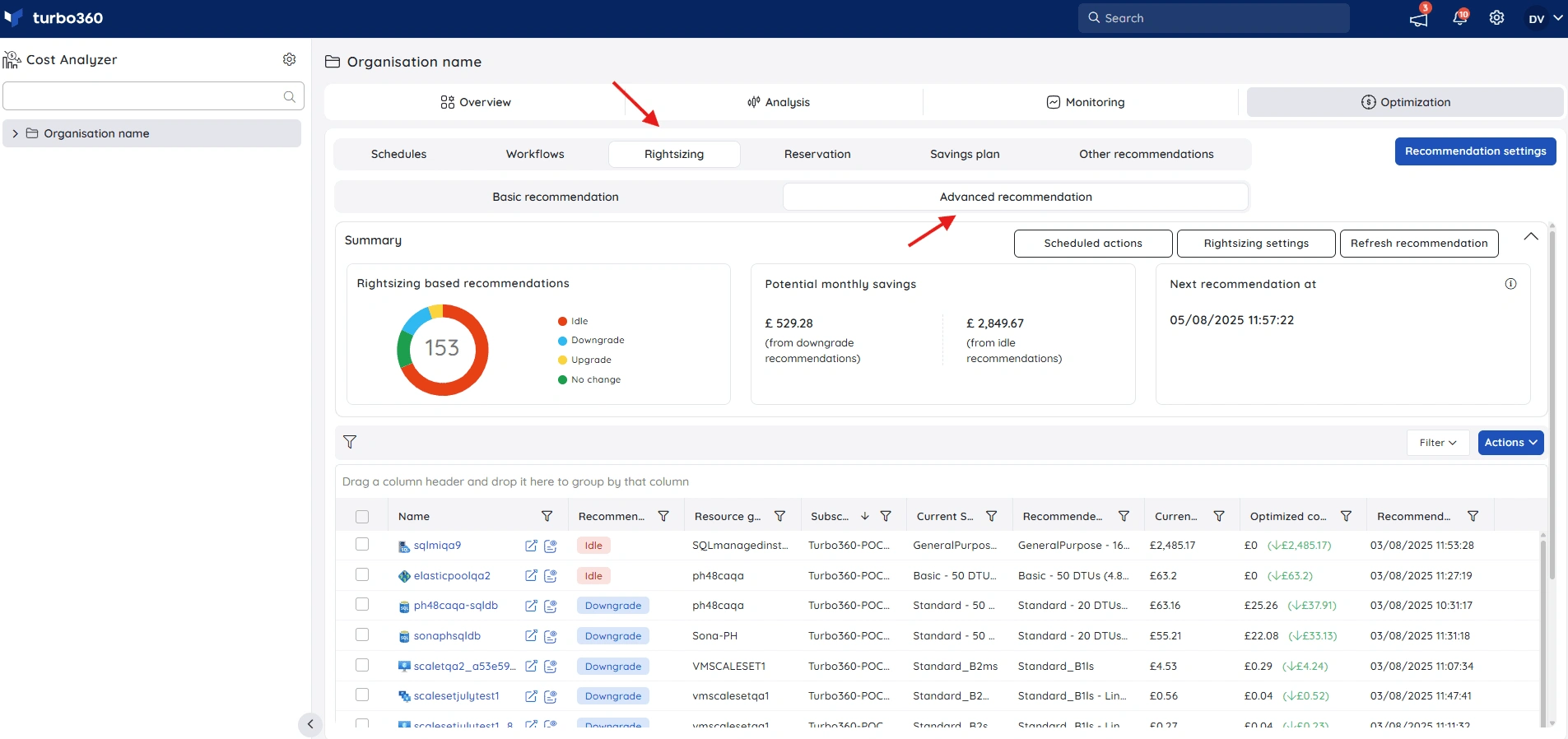
Azure coverage: Its advanced Reservation recommendations cover VMs, App Service plans, SQL Database, and SQL Managed Instance. Compute Savings Plan capabilities add Azure Advisor recommendations and monitoring of purchased plans.
How management works: Turbo360 distinguishes new purchase opportunities from compatible SKU changes that could use existing reservations, already-covered resources, and partial coverage. VM-family views show reserved and unreserved cores, with drill-down to individual resources.
Savings Plan monitoring tracks utilization over one, seven, and 30 days and provides configurable underutilization and expiry alerts. Together, these capabilities help an internal buyer see whether the next action is a purchase, a resource change, or attention to existing coverage.
Pricing and commercial fit: Its pricing depends on the modules enabled and the number of Azure subscriptions managed. Cost Analyzer can be purchased separately, so size the quote to the subscriptions and functions required for this use case.
Main trade-off: The documented Reservation workflow sends your team to Azure to make purchases. Advanced recommendations refresh every 48 hours, with manual refresh available. SKU-change recommendations also need engineering review; commitment monitoring should not be mistaken for autonomous purchasing.
Zesty
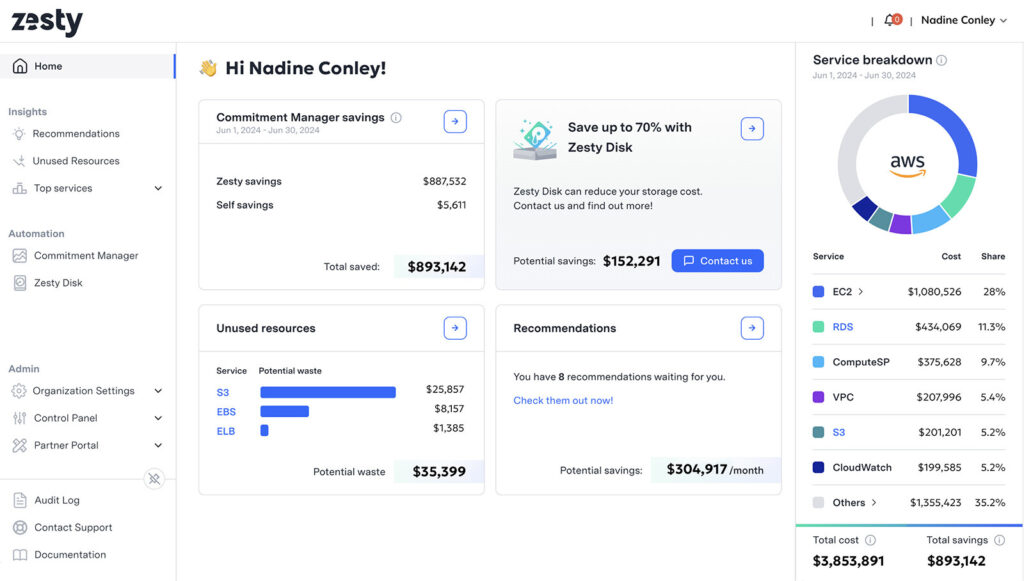
Azure coverage: Zesty’s Azure commitment strategy emphasizes Savings Plans. Its Azure onboarding also documents purchasing and management permissions for Reservations. Include the specific Reservation services and Savings Plan instruments your estate needs in the agreed purchasing scope.
How management works: Buyers set expected usage growth, target coverage, and one-year/three-year risk preferences. Zesty uses Azure Cost Management Exports to forecast coverage gaps, purchasing additional plans as demand grows and allowing expiring plans to go unrenewed when demand falls.
Its Azure setup distinguishes read-only visibility from active Commitment Manager permissions; purchasing is not enabled merely by completing visibility onboarding.
Pricing and commercial fit: Zesty states that it charges a percentage of savings, with lower percentages available for longer vendor contracts. Compare the fee reduction with the duration of the software agreement and the portfolio’s remaining Azure obligations.For a broader commercial evaluation, read our breakdown of Zesty’s fees and contract considerations.
Main trade-off: Staggering creates future adjustment opportunities; it does not shorten or cancel plans already purchased. The useful downside test is how much coverage can expire over your expected contraction period, particularly while a newly built portfolio has few commitments approaching maturity.
Compare Commitment Exposure, Fees, and Exit Terms
Ask what happens after a sustained demand decline. Smaller purchases may reduce future exposure, while contractual reimbursement addresses losses under specified conditions. These are different protections.Microsoft’s Savings Plan restrictions prohibit cancellation, exchange, or refund and prevent changes to an existing plan’s hourly commitment or term. Changing scope does not shorten its duration.
Also account for the February 1, 2027 Reservation exchange-policy change: new Reservations for Savings Plan-supported services lose exchange eligibility, while earlier affected purchases retain one final exchange after that date.
Reservation cancellations for refunds are capped at $50,000 of remaining commitment per billing profile or single enrollment within a rolling 12-month window; for CSP, the limit is per customer. Refunds resulting from eligible exchanges do not count against that limit. Trade-in rules and exceptions still matter.
Compare costs using the same negotiated rates, existing portfolio, usage window, and planned migrations. Include consumed usage, unused commitment obligations, platform fees, savings-share charges, premiums, and applicable exit costs. Deduct eligible reimbursements once.
Assess hourly utilization after existing Reservation benefits. Monthly spend totals can conceal unused hours, and unused Savings Plan benefits do not roll forward.
Incremental net benefit = cost of continuing your current strategy − total cost of the proposed strategy.
Model a demand decline and vendor termination, then reconcile actual outcomes against finalized billing. A percentage of savings, a percentage of automated commitments, and a subscription fee use different denominators and are not directly comparable prices.
For a deeper existing-portfolio evaluation, read our Azure VM commitment software buyer guide.
What Should Procurement Verify Before Signing?
Give finalists the same portfolio and evaluation brief. Request six pieces of evidence:Scope: A supported-action list by instrument, service, region, tenant, and billing agreement that distinguishes recommendations from purchases.
Access: Separate assessment and production role policies, assignment scopes, and access-revocation procedures.
Governance: A demonstration of approvals or purchasing policies, spend limits, pause controls, and action logs. For planning tools, show the internal purchasing handoff.
Economics: A reconciled existing-portfolio baseline and complete fee calculation, including treatment of inherited savings and forecasts versus realized results.
Protection and exit: Signed eligibility, exclusions, caps, payout timing, termination charges, and continuing Azure obligations.
Implementation: A rollout and acceptance plan covering billing scopes, integrations, security review, support ownership, and escalation.
If an action cannot be demonstrated, keep it unresolved in the shortlist. A cost dashboard is not evidence of purchase execution, and a purchase role is not evidence of approval enforcement.
Final Verdict: Build a Shortlist You Can Validate
Select for the operating model you intend to run. Delegated purchasing requires demonstrated execution plus clear purchasing permissions and controls. Internal purchasing requires useful recommendations, monitoring, and a clear handoff. Both require agreement compatibility and acceptable net economics.Evaluate Azure commitments and potential savings with our read-only Savings Test before authorizing purchases.
Frequently asked questions
Which Azure commitment platforms support CSP billing?
Archera’s onboarding guidance explicitly mentions Azure CSP, making it a candidate for CSP assessment. That does not confirm purchasing support for every instrument or partner arrangement. nOps requires an organization’s own EA/MCA account and excludes CSP-only tenants. Obtain written confirmation of the purchasing actions supported under your billing setup.
Can we compare platforms through a read-only assessment?
Yes, where offered. We use read-only access for our Savings Test. Separate evaluation access from later purchasing permissions. Estimated opportunity remains modeled until validated against actual billing.
Can two vendors optimize the same Azure commitment portfolio?
Avoid overlapping autonomous purchasing without coordinated responsibilities, limits, and a shared baseline. Otherwise, both may buy against the same uncovered usage. A reporting platform can coexist with a purchasing manager when ownership and data responsibilities are clear.
Does a vendor guarantee to cover commitments we bought ourselves?
Not automatically. Obtain explicit coverage in the agreement. We distinguish existing customer purchases from our Flex Insured Commitments; existing purchases should not be assumed to receive our program’s protection.