

Japan is one of the most strategically important cloud markets in Asia Pacific. AWS has committed ¥2.26 trillion (approximately $15 billion) to Japanese infrastructure through 2027, and the ap-northeast-1 (Tokyo) region serves enterprise customers across manufacturing, financial services, automotive, retail, and government. The Digital Agency, established in September 2021, selected AWS Tokyo as the primary cloud for government digital services, and Japan’s cloud-by-default policy is accelerating enterprise cloud adoption across the public sector.
For Japanese enterprises, cloud cost optimization operates in a specific financial and regulatory context that distinguishes it from every other major cloud market. Cloud bills arrive in US dollars against JPY-denominated operating budgets, creating a foreign exchange exposure that amplifies the regional pricing premium. When the yen weakens against the dollar, as it did significantly across 2022-2024, the effective JPY cost of cloud spend rises without any change in actual resource consumption or USD pricing. Commitment purchasing in USD can function as a partial hedge against further yen depreciation, locking in discounted USD rates before they are converted at a weaker exchange rate.
This guide ranks the ten most effective cloud cost optimization tools for Japan in 2026, with specific analysis of APPI and FISC compliance architecture, FSA cybersecurity guideline third-party risk implications, ap-northeast-1 and Osaka (ap-northeast-3) regional coverage for Japan disaster recovery requirements, and the automation depth that determines whether a tool produces a cost report or actual savings.
What is Cloud Cost Optimization?
Cloud cost optimization is the process of systematically reducing cloud infrastructure spend across Amazon Web Services (AWS), Microsoft Azure, and Google Cloud Platform (GCP) while maintaining or improving application performance.
For Japanese businesses, this process must operate within constraints set by the Act on the Protection of Personal Information (APPI), FISC Security Guidelines for financial institutions, and FSA Cybersecurity Guidelines for financial sector firms (October 2024). The highest-impact savings lever available within these constraints is commitment purchasing: shifting stable baseline workloads from on-demand pricing onto Reserved Instances, Savings Plans, and Committed Use Discounts, which can reduce compute spend by 30-50% without any infrastructure changes, data residency trade-offs, or APPI compliance implications.
Why Japanese Enterprises Face Unique Cloud Cost Challenges
Japan’s cloud market combines large-scale enterprise spending with regulatory constraints and a currency exposure that creates cost dynamics distinct from US, European, and other APAC markets.
- ap-northeast-1 regional pricing premium: AWS on-demand pricing in ap-northeast-1 (Tokyo) runs approximately 20-30% above equivalent us-east-1 rates. An m7i.2xlarge EC2 instance costs approximately $0.4320/hour on-demand in Tokyo versus $0.3648/hour in us-east-1, an 18% premium. For RDS, a db.r8g.xlarge MySQL Multi-AZ runs approximately $0.656/hour in ap-northeast-1 versus $0.480/hour in us-east-1. This premium reflects Tokyo’s high land costs, energy prices, and infrastructure overhead. Commitment purchasing in ap-northeast-1 delivers higher absolute dollar savings per instance than equivalent commitments in lower-cost regions, making it the highest-leverage optimization action for Japanese teams.
- JPY-USD currency exposure: All AWS, Azure, and GCP cloud bills for Japanese region workloads are denominated in US dollars. Japanese enterprises budget in JPY, creating a structural currency mismatch that amplifies every pricing decision. JPY weakness relative to USD increases the effective JPY cost of cloud spend without any change in actual resource consumption. Between 2022 and 2024, USD-JPY moved from approximately ¥115 to ¥155, effectively increasing the JPY cost of cloud services by over 35% for Japanese enterprises without any change in AWS pricing. Savings Plans and Reserved Instances purchased in USD partially hedge against further JPY depreciation by locking in discounted USD rates on the largest share of cloud spend.
- APPI data handling obligations: Japan’s Act on the Protection of Personal Information (APPI) governs how personal information of Japanese individuals may be handled, including when it is transferred to third-party service providers such as cloud cost optimization tools. Under APPI Article 27, providing personal data to a third party requires the data subject’s consent unless an exemption applies. The Personal Information Protection Commission (PPC) guidance clarifies that if a cloud service provider agrees contractually not to handle personal data stored on its servers and proper access control is implemented, the use of those cloud services does not constitute a “transfer” under APPI. Billing-layer-only access to cost and usage metadata (not personal data) falls outside the scope of APPI’s transfer restrictions entirely.
- FISC Security Guidelines for financial institutions: The Center for Financial Industry Information Systems (FISC) Security Guidelines, 13th Edition published in March 2025, set detailed security requirements for cloud services used by Japanese financial institutions. Financial institutions including Mizuho Bank, MUFG, SMBC, and regional banks are required to assess third-party cloud tools against FISC standards. Billing-layer-only tools present a substantially smaller FISC assessment surface than tools requiring production infrastructure access.
- FSA Cybersecurity Guidelines and third-party risk: The Financial Services Agency of Japan (FSA) published comprehensive Cybersecurity Guidelines for the Financial Sector in October 2024, including explicit requirements for third-party risk management as one of six core areas. FSA-regulated financial institutions must document and manage the cybersecurity risk of third-party service providers with access to their technology systems, with rigor proportional to the level of access granted.
- Tokyo-Osaka dual-region DR requirement: Japan’s geographic exposure to earthquakes creates a strong operational requirement for dual-region deployment across ap-northeast-1 (Tokyo) and ap-northeast-3 (Osaka). Many Japanese enterprises and the FSA guidance encourage geographic separation between primary and DR environments. This creates an additional cloud cost layer: running even lightweight standby infrastructure in Osaka doubles the regional instance footprint and increases Reserved Instance planning complexity. Reserved Instances are region-specific, so RI strategies for Japan must account for both ap-northeast-1 and ap-northeast-3 independently.
- Yen-denominated budgets, USD-billed cloud: Japanese enterprise FinOps programs face a reporting challenge that European and US counterparts do not: cloud spend is incurred in USD, budgets are set in JPY, and variance reporting requires ongoing USD-JPY conversion that creates noise in month-over-month budget comparisons. When JPY strengthens, cloud spend appears to decrease in JPY terms without any optimization. When JPY weakens, cloud spend appears to increase in JPY terms despite stable consumption. Tools that report savings in USD are more reliable for Japanese FinOps programs than JPY-converted figures.

What to Look for in a Cloud Cost Tool for Japanese Businesses
Five criteria separate platforms built for Japan’s regulatory and market environment from those that create compliance exposure or leave savings uncaptured.
- Billing-layer-only access (APPI and FISC requirement): Any cloud cost tool accessing running EC2 instances, Azure VMs, application databases, or workload configuration in a Japanese enterprise environment may create APPI personal information handling obligations if those workloads process personal information of Japanese individuals. For FISC-covered financial institutions, infrastructure-accessing tools require assessment under the FISC Security Guidelines 13th Edition. Billing-layer-only access (AWS Cost and Usage Report, Azure Cost Management APIs, GCP Billing Export) does not involve personal information under APPI, produces a smaller FISC assessment surface, and simplifies FSA third-party risk documentation significantly.
- Tri-cloud coverage (AWS, Azure, GCP): Japanese enterprises at ¥60M+/year cloud spend typically operate across AWS ap-northeast-1 and at least one other cloud. Azure Japan East is prominent in Japanese enterprise IT through existing Microsoft licensing relationships and strong presence in financial services, manufacturing (Toyota, Honda, Sony), and public sector. GCP asia-northeast1 (Tokyo) and asia-northeast2 (Osaka) are significant in media, gaming (Nintendo, Sega, Capcom), and AI/ML workloads. A tool covering AWS alone leaves Azure Japan East Reservations and GCP Committed Use Discounts unmanaged.
- Dual-region coverage (Tokyo and Osaka): Japan’s seismic risk drives dual-region deployment as an operational standard for regulated industries. Cloud cost tools that cover only ap-northeast-1 miss the Reserved Instance and Savings Plan optimization opportunity in ap-northeast-3 (Osaka). Usage.ai covers both Japanese AWS regions, allowing commitment strategies to account for the full Japan footprint including DR standby instances in Osaka.
- Autonomous commitment purchasing with 24-hour refresh: AWS Cost Explorer refreshes Savings Plan recommendations on a 72-hour cycle. At the equivalent of ¥1.2M-¥1.8M/day in uncovered compute spend on a ¥450M/year cloud bill (at USD/JPY 150), a 72-hour lag versus a 24-hour refresh cycle represents ¥3.6M-¥5.4M in preventable on-demand charges per cycle. The difference between a recommendation-only tool and an autonomous purchasing platform for a ¥300M/year cloud bill is typically ¥30M-¥60M in additional annual savings.
- Cashback and credits guarantee on underutilized commitments: Japanese enterprise procurement teams, particularly those in financial institutions under FSA and FISC oversight, require financial guarantees with clear contractual terms. Verify that any underutilization protection is in real money (USD-transferable cash) rather than vendor credits locked to AWS spending or the tool vendor’s ecosystem. Credits are not equivalent to cash for Japanese enterprise budget reconciliation and cannot be used to offset JPY-denominated operating costs.
Also read: AWS Savings Plans vs Reserved Instances: A Practical Guide to Buying Commitments
Best Cloud Cost Optimization Tools in Japan (2026)
The ten tools below are ranked by actual savings delivered for Japanese enterprises operating across AWS ap-northeast-1 (Tokyo) and ap-northeast-3 (Osaka), Azure Japan East, and GCP asia-northeast1, within the constraints of APPI, FISC Security Guidelines, and FSA Cybersecurity Guidelines. Ranking weights: automation depth (40%), APPI/FISC compliance architecture (25%), savings guarantee quality (20%), and multi-cloud coverage (15%).
#1 Usage.ai
Tri-cloud autonomous commitment purchasing with insured commitments, a cashback and credits guarantee, and billing-layer-only access that satisfies APPI and simplifies FISC third-party assessment

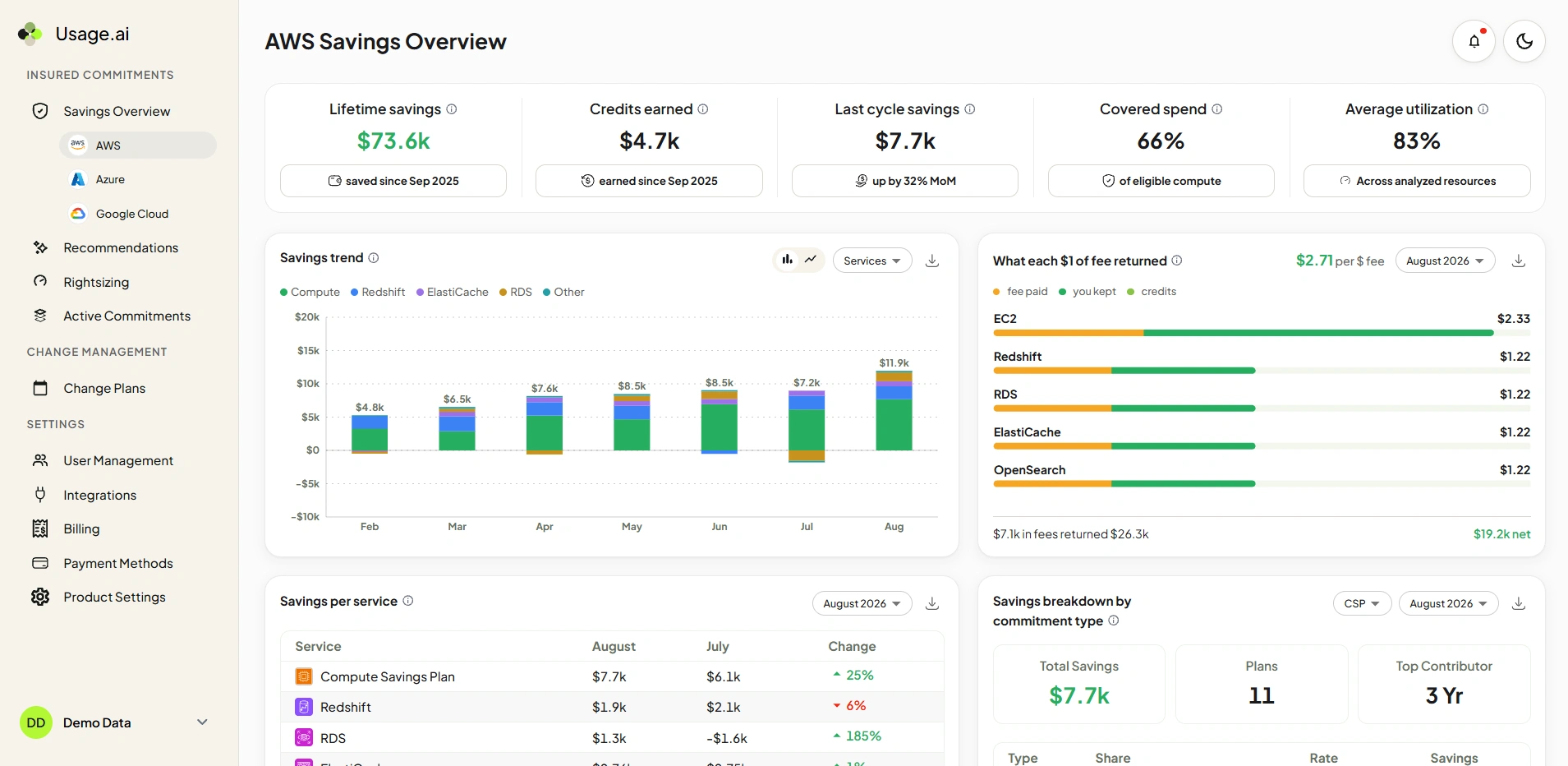
Usage.ai is the strongest cloud cost optimization platform available to Japanese enterprises in 2026. It autonomously purchases AWS Savings Plans, Flex DB Savings Plans for RDS and ElastiCache, Azure Savings Plans and Reservations, and GCP Committed Use Discounts across both Japanese AWS regions (ap-northeast-1 and ap-northeast-3), Azure Japan East, and GCP asia-northeast1 on a 24-hour refresh cycle, with a cashback and credits guarantee on any underutilized commitment. Billing-layer-only access via AWS Cost and Usage Report APIs, Azure Cost Management APIs, and GCP Billing Export means no personal information is processed under APPI, no FISC infrastructure assessment is triggered, and FSA third-party risk documentation covers a minimal supplier footprint. Usage.ai has recovered over $91M in cloud savings for customers including Motive, EVgo (NASDAQ: EVGO), Blank Street Coffee, Secureframe, CoinDesk, and Zumba. Setup takes 30 minutes.
For Japanese FinOps teams managing JPY budgets against USD cloud bills, Usage.ai’s commitment purchasing provides a partial FX hedge: locking in discounted USD rates on 30-50% of cloud spend before they are converted at the prevailing exchange rate reduces the JPY-denominated variability of the cloud bill. The 24-hour autonomous refresh cycle catches coverage gaps three days faster per cycle than AWS Cost Explorer’s 72-hour baseline, and the cashback and credits guarantee allows purchasing at 75-85% coverage rather than the conservative 50-60% that manual programs default to out of overcommitment fear. You pay nothing until savings appear.
Best for: Japanese enterprises spending ¥60M+/year on AWS, GCP, or Azure across Tokyo and Osaka regions who need APPI-compliant, FISC-compatible autonomous optimization with a financial guarantee on every commitment purchased
Calculate your ap-northeast-1 and ap-northeast-3 savings with Usage.ai
#2 ProsperOps (now part of Flexera)
Established autonomous AWS commitment engine, AWS-only and credit-based following January 2026 Flexera acquisition
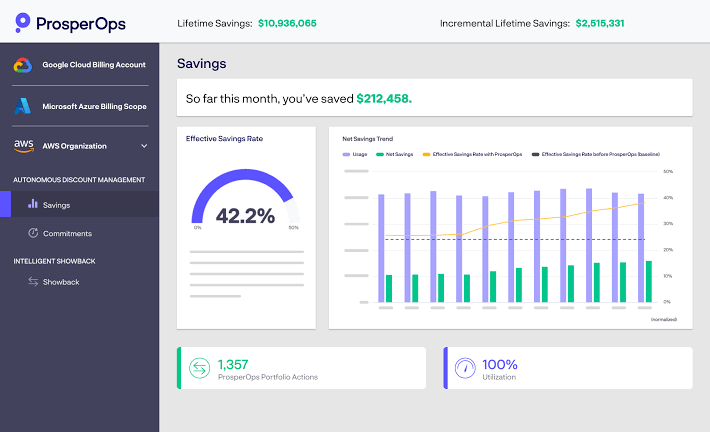
ProsperOps built one of the stronger autonomous AWS Savings Plan purchasing engines in the market before its acquisition by Flexera in January 2026. The platform purchases commitments in small incremental tranches matched to usage patterns, limiting overcommitment risk without requiring a separate guarantee. For Japanese enterprises with AWS-only workloads concentrated in ap-northeast-1, it provides credible autonomous Savings Plan coverage with a track record of driving high commitment percentages on stable EC2 workloads.
The limitations for Japan’s multi-cloud market are significant. ProsperOps covers AWS only, leaving Azure Japan East and GCP asia-northeast1 commitment spend entirely unoptimized. Its underutilization protection is AWS credits rather than transferable USD cash, which for Japanese enterprises managing JPY budgets means any refund is locked to future USD-denominated AWS spending. Since the Flexera acquisition, integration is ongoing and enterprise buyers should verify the current product roadmap and pricing directly with the vendor.
Best for: AWS-only Japanese enterprises spending ¥60M+/year on EC2, Fargate, and Lambda in ap-northeast-1 who want autonomous commitment purchasing and are comfortable with credit-based underutilization protection
#3 Zesty
Dynamic real-time AWS commitment adjustment for variable workloads, AWS-only without Japanese compliance documentation advantage
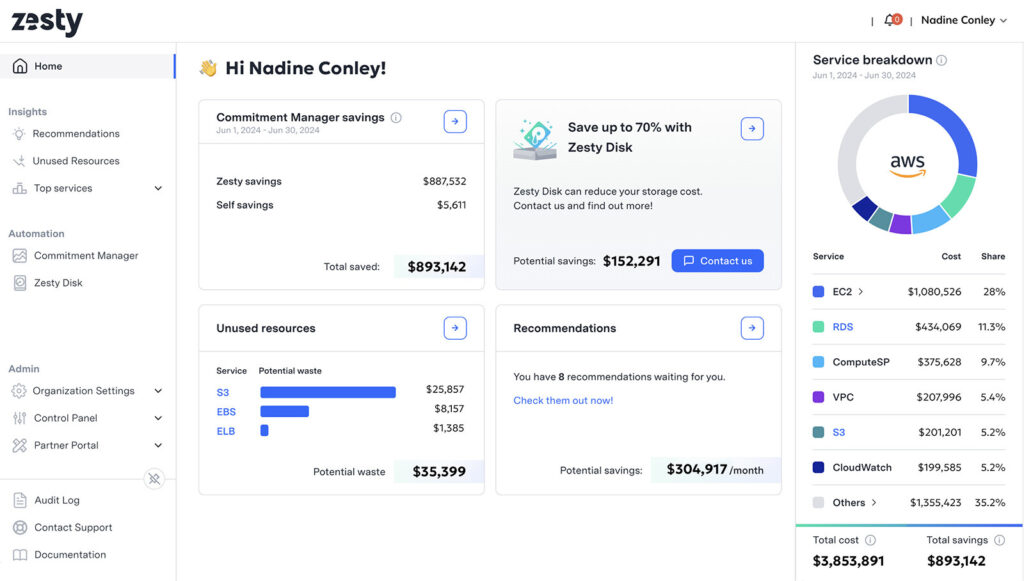
Zesty’s real-time commitment adjustment model, which dynamically trades Reserved Instance positions on the AWS Marketplace as workload demand changes, suits Japanese enterprises with highly variable compute demand. Japan’s gaming sector (Nintendo, Sony Interactive Entertainment, Capcom, Konami, Sega) and e-commerce platforms experience significant demand fluctuations tied to game launches, campaign events, and seasonal retail peaks that make static Savings Plan forecasting less effective than dynamic adjustment.
Zesty covers EC2 and RDS commitment management, EBS right-sizing, and Kubernetes optimization on AWS. Coverage is AWS-only, leaving Azure Japan East and GCP asia-northeast1 workloads unoptimized. Japanese legal teams should verify Zesty’s data access model against APPI obligations and FISC Security Guidelines for financial institution deployments, particularly for any features accessing infrastructure-level metrics beyond billing data.
Best for: AWS-heavy Japanese enterprises in gaming, e-commerce, and media with highly variable compute demand where real-time commitment adjustment outperforms static Savings Plan forecasting
#4 Harness Cloud Cost Management
Engineering-workflow cost attribution across AWS, Azure, and GCP, recommendation-only on commitments
Harness Cloud Cost Management connects cloud spend attribution to CI/CD deployment activity across AWS ap-northeast-1, Azure Japan East, and GCP asia-northeast1. For Japanese engineering organizations where cost accountability at the service and team level is a management priority, Harness surfaces cost impacts in the same workflows where architecture decisions are made. Japanese technology companies including SoftBank subsidiaries, LINE, and PayPay use multi-cloud architectures where deployment-level cost visibility across all three clouds is operationally valuable.
The limitation for Japanese FinOps teams focused on bill reduction is that Harness does not autonomously purchase commitments. Every Savings Plan, Reserved Instance, and Azure Reservation recommendation requires manual execution, maintaining the 30-90 day review cycle that autonomous platforms eliminate. For a Japanese enterprise with ¥450M/year in cloud spend, that cycle costs ¥3.6M-¥10.8M per cycle in preventable on-demand charges. Harness pairs well with Usage.ai for organizations that need both deployment-level attribution and autonomous commitment purchasing.
Best for: Japanese technology companies building cost accountability into CI/CD workflows, particularly multi-cloud platforms where cost-per-deployment visibility across AWS, Azure, and GCP is an engineering team priority
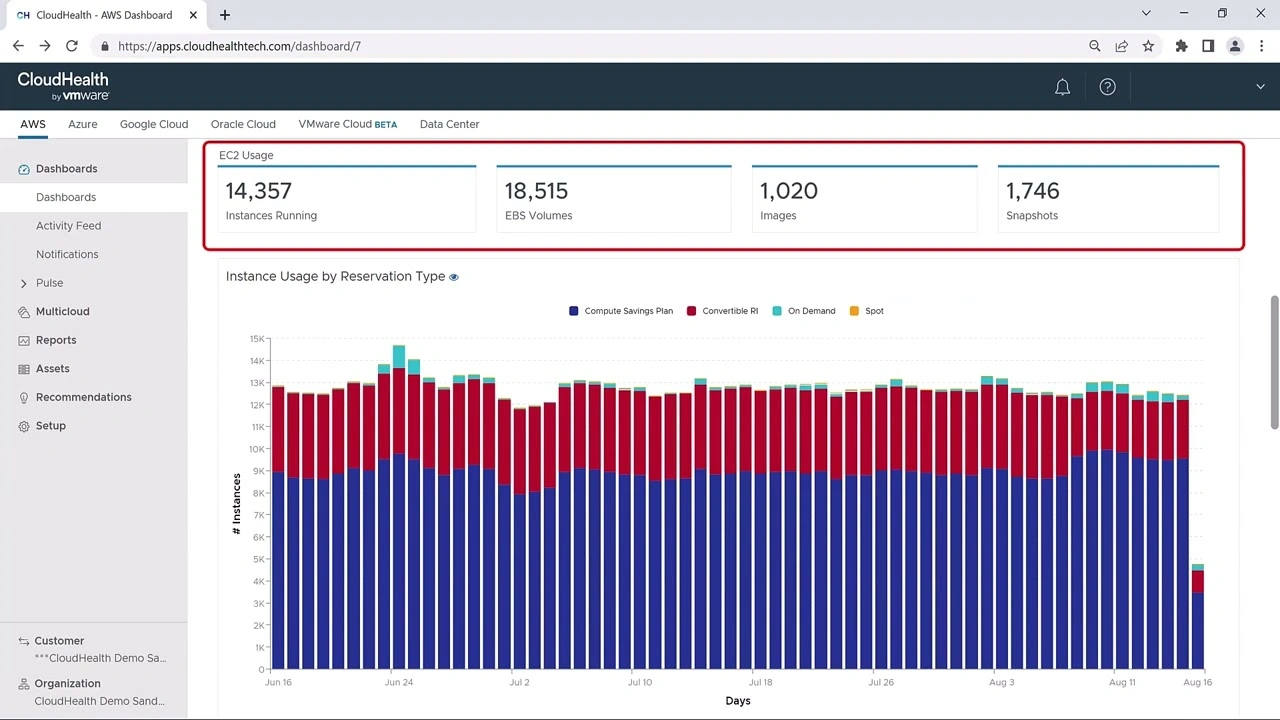
#5 CloudHealth by Broadcom
Multi-cloud governance and policy enforcement for large Japanese enterprises, manual commitment execution throughout
CloudHealth has an established presence among large Japanese enterprises in financial services, manufacturing, and telecommunications that use it for multi-cloud governance, showback and chargeback reporting, and compliance tagging across AWS, Azure, and GCP. For Japanese holding company structures with multiple subsidiaries requiring separate cost allocation, and for enterprises with entrenched CloudHealth governance workflows, the platform provides recognized multi-cloud governance capabilities.
Following the Broadcom acquisition, some customers have reported slower product development and higher licensing costs. CloudHealth’s commitment optimization capabilities produce recommendations but require manual execution throughout. For FISC-covered Japanese financial institutions, the manual execution model adds approval cycle overhead that increases the on-demand period between optimization reviews. Japanese enterprises evaluating CloudHealth in 2026 should compare governance capabilities against the commitment automation gap and verify current pricing and roadmap directly with the vendor.
Best for: Large Japanese enterprises (¥1B+/year cloud spend) already using CloudHealth for multi-cloud governance and policy management with separate commitment purchasing workflows
#6 AWS Cost Explorer
Free native AWS visibility for ap-northeast-1 and ap-northeast-3 workloads, 72-hour recommendation lag and manual execution only
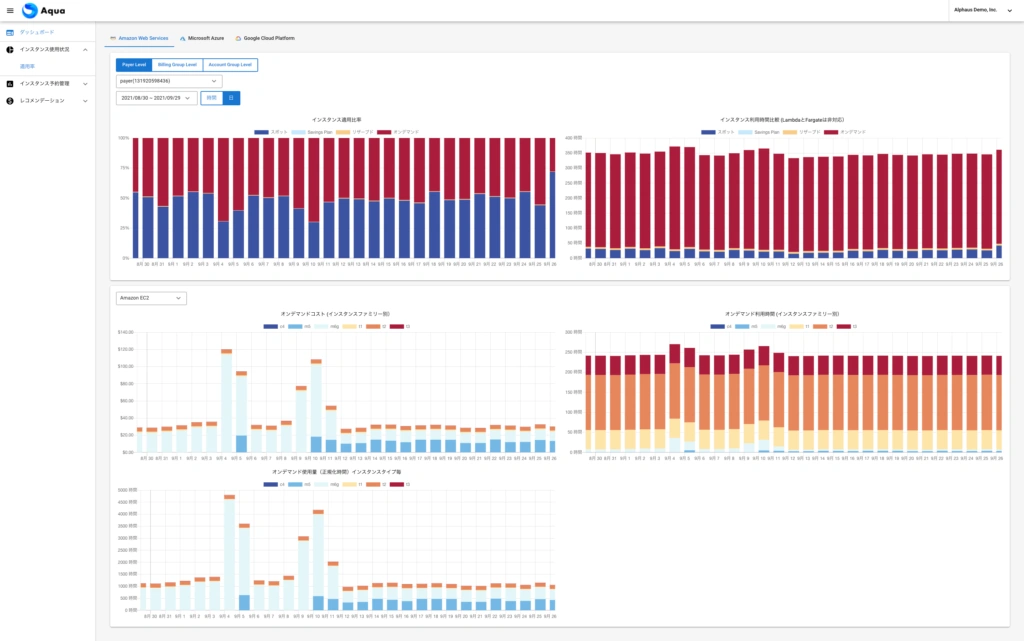
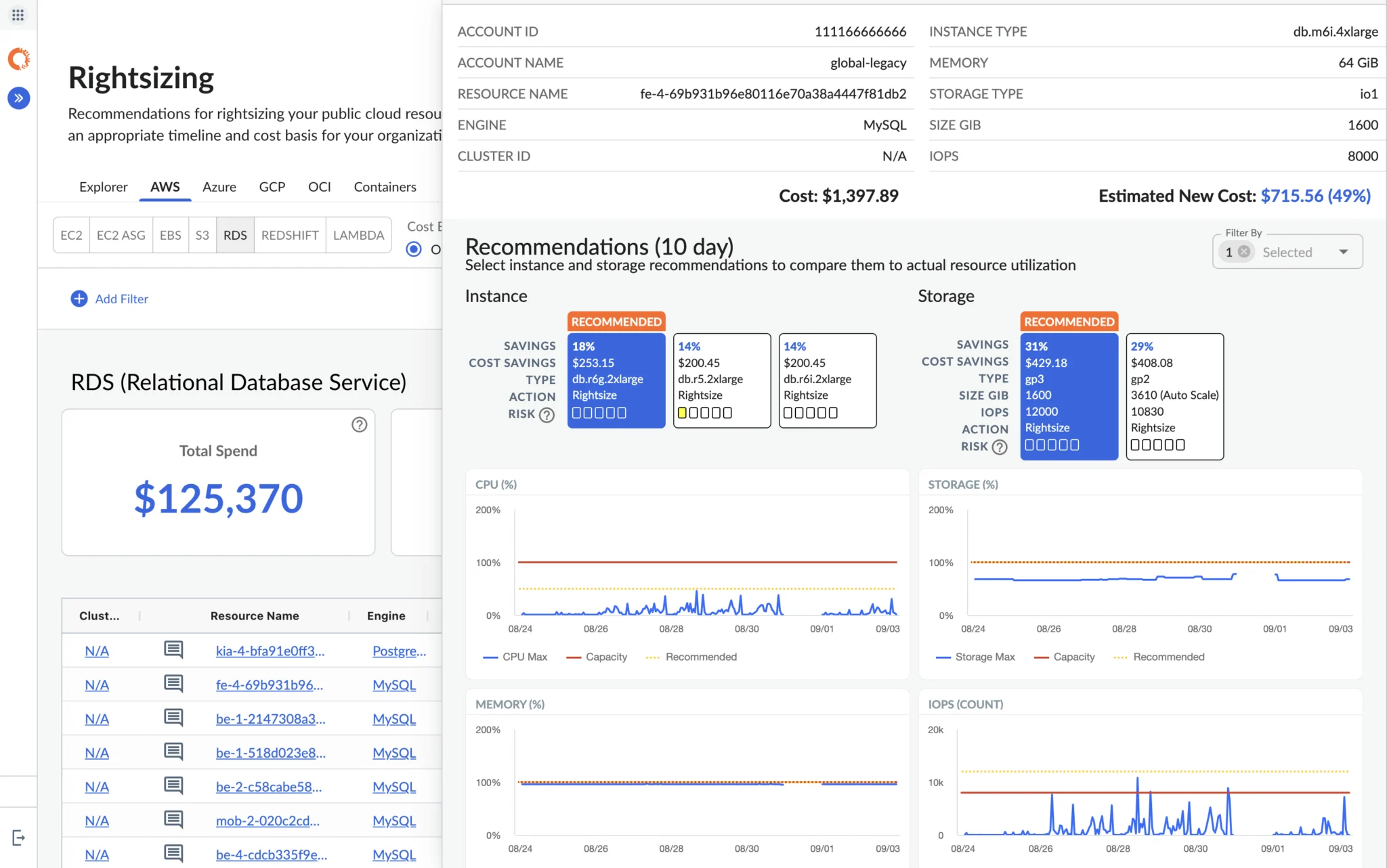
AWS Cost Explorer is the baseline for any Japanese enterprise running workloads in ap-northeast-1 or ap-northeast-3. It provides Cost and Usage Reports, Savings Plan and Reserved Instance recommendations, rightsizing suggestions from AWS Compute Optimizer, and anomaly detection. For organizations managing dual-region Tokyo-Osaka footprints, Cost Explorer’s multi-account and multi-region views provide consolidated visibility across both Japanese regions at no additional cost. AWS Compute Optimizer identifies R8g and M8g Graviton4 migration opportunities in ap-northeast-1, where Graviton4 instances offer up to 40% better price-performance than equivalent Intel instances at comparable on-demand rates.
The structural limitations are consistent regardless of region. Cost Explorer refreshes Savings Plan recommendations every 72+ hours. All commitment purchases require manual execution. Coverage is AWS-only, with no visibility into Azure Japan East or GCP asia-northeast1. Reserved Instances for ap-northeast-3 (Osaka) must be purchased separately from ap-northeast-1 and are not interchangeable. There is no financial guarantee on commitment purchases, and overcommitment risk across both Japanese regions falls entirely on the customer.
Best for: Japanese enterprises spending under ¥60M/year on AWS ap-northeast-1 or ap-northeast-3 who need free baseline cost visibility before evaluating third-party automation platforms
#7 Azure Cost Management + Billing
Free native Azure visibility for Japan East workloads, no cross-cloud support and no automated purchasing
Azure holds a strong position in Japanese enterprise IT, driven by existing Microsoft licensing relationships and deep adoption in Japanese manufacturing, financial services, and the public sector under Japan’s GovCloud framework. Azure Japan East (located in Saitama) is the primary Azure region for Japanese workloads. Azure Cost Management provides cost allocation by subscription, resource group, and tag, along with Azure Savings Plan and Reservation recommendations and budget alerts. Azure’s FISC Security Guidelines compliance documentation for Japanese financial institutions is established through Microsoft’s Azure Japan compliance materials.
The limitations are structural. All Savings Plan and Reservation purchases require manual execution. Coverage is Azure-only with no AWS or GCP visibility. There is no financial guarantee on overcommitment. For Japanese enterprises running Azure Japan East alongside AWS ap-northeast-1, the two native tools together still produce two separately manually-optimized clouds with no unified commitment strategy. A tri-cloud autonomous platform with dual-region Japan coverage optimizes the full Japanese cloud footprint from a single 30-minute onboarding.
Best for: Azure-primary Japanese organizations spending under ¥60M/year on Azure Japan East who need free native visibility and have established Microsoft FISC compliance documentation
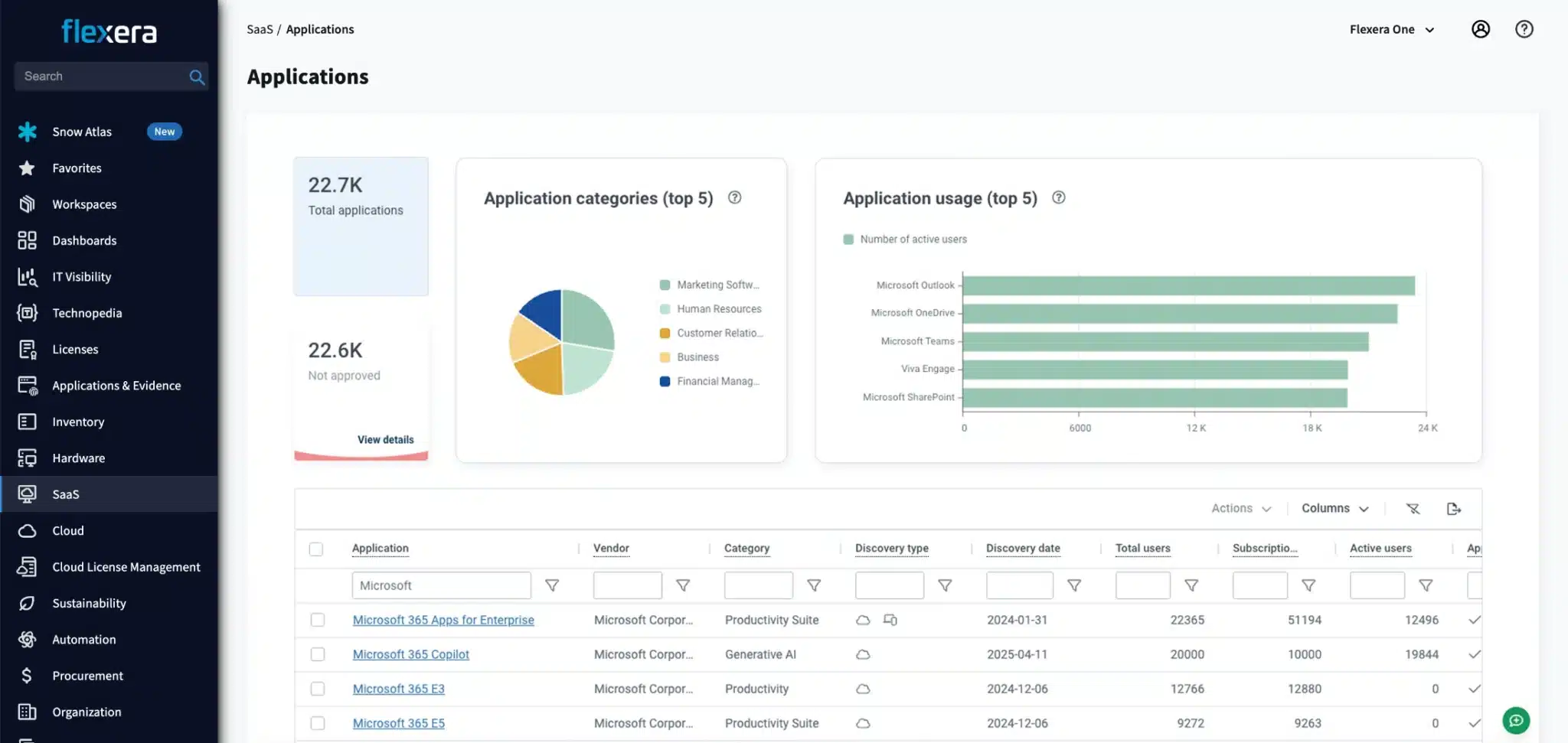
#8 Flexera One
Enterprise technology spend management combining SAM, ITAM, and cloud governance, expensive and complex for pure cloud cost optimization
Flexera One addresses the specific requirement of large Japanese enterprises managing Microsoft EA and Oracle licensing alongside AWS and Azure cloud spend. Japan’s manufacturing sector, including Toyota, Honda, Panasonic, and Hitachi, operates complex on-premises software estates with Oracle and SAP licensing obligations that benefit from combined SAM, ITAM, and cloud cost management. Flexera One provides this breadth of coverage alongside cloud cost visibility in a single platform.
As a cloud cost optimization tool specifically, Flexera One carries enterprise-level pricing and typically requires 3-6 month implementation timelines. Commitment purchasing across ap-northeast-1, ap-northeast-3, and Azure Japan East requires manual execution throughout. The 2026 integration of ProsperOps adds autonomous AWS commitment management, but Azure Japan East and GCP asia-northeast1 commitment automation remain less mature. Japanese enterprises evaluating Flexera One purely for cloud cost optimization without ITAM requirements will find Usage.ai delivers substantially better savings outcomes faster.
Best for: Large Japanese enterprises (¥1B+ technology spend) with Oracle, SAP, or Microsoft EA licensing alongside cloud spend where integrated SAM, ITAM, and cloud governance justifies the contract investment
#9 CloudZero
Best-in-class unit economics and cost attribution per customer or feature, no autonomous commitment purchasing
CloudZero’s unit economics depth, the ability to attribute cloud spend to specific product features, customer cohorts, or engineering teams, is particularly relevant for Japan’s growing SaaS and platform economy. Japanese B2B SaaS companies, digital payment platforms, and enterprise software companies serving domestic markets increasingly need cost-per-customer as a metric for investor reporting and pricing decisions. CloudZero covers AWS, Azure, and GCP with cost attribution granularity that generic dashboards cannot match.
The consistent limitation is autonomous commitment execution. CloudZero surfaces Savings Plan and Reserved Instance recommendations but does not purchase them. All commitment optimization across ap-northeast-1, ap-northeast-3, Azure Japan East, and GCP asia-northeast1 remains manual. For Japanese organizations where reducing the total cloud bill is the primary objective, CloudZero is a complement to Usage.ai rather than a replacement.
Best for: Japanese SaaS companies, fintech platforms, and B2B software businesses that need cost-per-customer or cost-per-feature visibility to inform product pricing, engineering investment decisions, and investor reporting
#10 Apptio Cloudability (IBM)
Deep FinOps analytics and executive reporting for large enterprises, manual execution and enterprise-level pricing
Apptio Cloudability is the incumbent FinOps analytics platform at several large Japanese enterprises in financial services and technology that are already using Apptio’s IT financial management suite or IBM’s broader software portfolio. Its strengths are executive reporting depth, chargeback and showback modeling for Japanese holding company structures with multiple subsidiaries, and finance governance reporting that satisfies the audit and board reporting requirements of TSE Prime-listed Japanese companies.
The limitation for Japanese FinOps teams focused on savings is that Cloudability does not autonomously purchase commitments across ap-northeast-1, ap-northeast-3, Azure Japan East, or GCP asia-northeast1. Every savings opportunity requires human review and execution, with enterprise-level pricing that is difficult to justify when the platform does not autonomously reduce the bill. Japanese organizations comparing Cloudability and Usage.ai on savings delivered per yen of platform spend will consistently find the autonomous platform delivers superior results.
Best for: Finance-led FinOps programs at large Japanese enterprises where executive reporting, TSE audit documentation, and chargeback to subsidiary companies are the primary requirements rather than autonomous commitment purchasing
Also read: 10 Best Cloud Cost Tools 2026: Ranked by Real Savings
APPI, FISC, and Cloud Cost Tools: What Japanese Teams Must Know
Three regulatory frameworks shape cloud cost tool selection in Japan in 2026: APPI enforced by the Personal Information Protection Commission (PPC), FISC Security Guidelines for financial institutions, and FSA Cybersecurity Guidelines published in October 2024.
APPI and the billing-layer-only access requirement
Japan’s Act on the Protection of Personal Information (APPI) Article 27 requires consent for providing personal data to third parties, with exceptions for entrustment arrangements where the entrustor supervises the entrustee’s security measures. PPC guidance clarifies that a cloud service arrangement does not constitute “transfer” of personal data if the cloud service provider agrees contractually not to handle the personal data and proper access controls are implemented.
For cloud cost optimization tools, the APPI obligation arises when the tool accesses workloads or systems that process personal information. Usage.ai’s billing-layer-only model accesses only AWS Cost and Usage Report APIs, Azure Cost Management APIs, and GCP Billing Export: cost and usage metadata that contains instance types, hours, and charges, but no personal information of Japanese individuals. No APPI data transfer obligation arises. No PPC entrustment supervision requirement applies. Japanese legal teams consistently approve billing-layer-only tool deployments faster than infrastructure-accessing tools, which may require formal APPI entrustment agreements with supervision obligations.
FISC Security Guidelines and FSA third-party risk
The FISC Security Guidelines, 13th Edition (March 2025), set security standards for cloud services and third-party tools used by Japanese financial institutions. Mizuho Bank, MUFG, SMBC, and Japanese regional banks subject to FISC assess third-party cloud tool vendors against these standards. The scope of a FISC assessment scales with the level of access: a billing-layer-only tool with no production system access presents a substantially smaller FISC footprint than a tool with infrastructure credentials.
The FSA Cybersecurity Guidelines (October 2024) establish third-party risk management as one of six core areas for financial institutions, requiring both “basic requirements” and “recommended practices” for managing vendor cybersecurity risk. For FSA-regulated financial institutions, Usage.ai’s billing-layer-only architecture significantly reduces the scope of FSA third-party risk assessment compared to tools requiring production infrastructure access.
Actionable tip: Before deploying any cloud cost tool in Japan, require the vendor to confirm: (1) access model is billing-layer-only, (2) no personal information under APPI is processed, (3) no APPI entrustment agreement covering personal data is required, and (4) for FISC-covered institutions, that a FISC Security Guidelines compliance summary is available. Any tool requiring infrastructure-level IAM credentials, agent installation, or production system access should be assessed through your FISC and FSA third-party risk framework before deployment.
Also read: Cloud Cost Optimization Best Practices: 18 Proven Ways to Cut 30-50% of Your Cloud Bill in 2026
How to Reduce Your Cloud Bill in Japan: Quick Wins
The following five steps are sequenced by time-to-impact for Japanese enterprises running workloads in ap-northeast-1, ap-northeast-3, Azure Japan East, and GCP asia-northeast1. Each can be implemented without changing application code or causing infrastructure downtime.
- Enable AWS Compute Optimizer for all ap-northeast-1 and ap-northeast-3 accounts (Day 1, 15 minutes): Enable Compute Optimizer organization-wide via the AWS console for both Tokyo and Osaka regions. Select Enhanced Infrastructure Metrics for 14-day lookback. Review EC2 and RDS rightsizing recommendations within 24 hours. For Japanese enterprises running Graviton4-eligible workloads, Compute Optimizer identifies migration opportunities to M8g and R8g instances that offer up to 40% better price-performance at the same on-demand price point in ap-northeast-1.
- Deploy VPC Endpoints for S3 and DynamoDB in both Japanese regions (Day 1-2, 30 minutes): Create Gateway Endpoints for S3 and DynamoDB in both ap-northeast-1 and ap-northeast-3 via CloudFormation or the VPC console. Eliminate NAT Gateway processing charges ($0.045/USD per GB) on all AWS service traffic in both Japanese regions. For a Japanese enterprise processing 10TB/month of S3 traffic through NAT Gateways in ap-northeast-1, this saves approximately $4,500/month (approximately ¥675,000/month at USD/JPY 150) from a single configuration change with zero application impact.
- Audit orphaned Elastic IPs and unattached EBS volumes in ap-northeast-1 and ap-northeast-3 (Day 1-3, 30 minutes): Run aws ec2 describe-addresses for both ap-northeast-1 and ap-northeast-3 to identify idle Elastic IPs. AWS charges $0.005/hour for all public IPv4 addresses since February 2024, including idle ones. Run aws ec2 describe-volumes –filters Name=status,Values=available for both regions to identify unattached EBS volumes. Japanese enterprise accounts operating dual-region architectures commonly accumulate orphaned resources in both regions as environments are created for DR testing and never fully decommissioned.
- Schedule non-production environments for off-hours shutdown with Japanese holiday coverage (Day 3-7, 3-4 hours): Tag all development and staging instances with Environment=dev or Environment=staging. Deploy AWS Instance Scheduler with JST (UTC+9) timezone configuration. Japan observes 16 public holidays per year (shukujitsu), including Golden Week (late April through early May), Obon (mid-August, not a national holiday but widely observed as a business holiday), and year-end (December 28 through January 3). Configure holiday calendars appropriately. Scheduling weekday shutdown from 20:00 to 09:00 JST and full weekend shutdown reduces non-production instance hours from 720/month to approximately 220/month, a 70% reduction.
- Connect Usage.ai for autonomous tri-cloud commitment purchasing across both Japanese regions (Day 1, 30 minutes): Connect AWS CUR for both ap-northeast-1 and ap-northeast-3, Azure Cost Management API for Japan East subscriptions, and GCP Billing Export for asia-northeast1 and asia-northeast2 to Usage.ai via read-only billing credentials. Review the initial savings analysis covering both Tokyo and Osaka AWS regions. Approve first Flex Savings Plan, Flex DB Savings Plan, and Azure Savings Plan purchases. The cashback and credits guarantee activates on every position purchased. Full 30-50% optimization across all Japanese-region clouds achieved within 60 days.
Also read: How to Save on RDS Reserved Instances in Singapore (ap-southeast-1)
Frequently Asked Questions
1. What is the best cloud cost optimization tool for Japanese businesses?
Usage.ai leads the ranking for Japanese enterprises because it is the only platform that autonomously purchases commitments across both AWS Japanese regions (ap-northeast-1 and ap-northeast-3), Azure Japan East, and GCP asia-northeast1 on a 24-hour refresh cycle, with a cashback and credits guarantee and billing-layer-only access that satisfies APPI and produces the smallest FISC and FSA third-party risk footprint. For AWS-only Japanese organizations spending below ¥60M/year, AWS Cost Explorer provides a free baseline. ProsperOps is the strongest AWS-only autonomous alternative, but its AWS-only scope, credit-based guarantee, and lack of Japan-specific compliance documentation limit its fit for FISC-covered financial institutions running material Azure workloads.
2. How does JPY-USD currency exposure affect cloud cost optimization in Japan?
All major cloud providers price Japanese-region workloads in US dollars. Japanese enterprises budget in JPY, creating a structural currency mismatch. When the yen weakens against the dollar, as it did significantly from 2022 to 2024 (moving from approximately ¥115 to ¥155/USD), the effective JPY cost of cloud services rises by the same percentage without any change in consumption or USD pricing. Savings Plans and Reserved Instances purchased in USD can function as a partial hedge: locking in discounted USD rates on the largest portion of cloud spend before further JPY depreciation means the JPY-equivalent savings grow if the yen weakens further. For a Japanese enterprise achieving 40% savings on ¥450M/year in cloud spend, the ¥180M annual saving in JPY terms grows to ¥210M if USD/JPY moves from 150 to 175 without any change in the underlying dollar savings.
3. Does deploying a cloud cost tool in Japan require an APPI compliance assessment?
It depends on the tool’s data access model. Any cloud cost tool accessing running infrastructure or systems that process personal information of Japanese individuals creates an APPI entrustment obligation under Article 27, requiring the entrustor (the Japanese enterprise) to supervise the entrustee’s security measures. PPC guidance clarifies that cloud service arrangements do not constitute “transfer” of personal data if the service provider agrees not to handle personal data and access controls are implemented. Usage.ai’s billing-layer-only model accesses only cost and usage metadata with no personal information, eliminating the APPI entrustment obligation entirely. Japanese legal teams consistently approve billing-layer-only tool deployments faster than infrastructure-accessing tools.
4. How quickly does Usage.ai deliver savings on Japanese cloud accounts?
First savings appear on the first billing cycle after onboarding, typically within 30 days, across AWS ap-northeast-1, ap-northeast-3, Azure Japan East, and GCP asia-northeast1. Full optimization, meaning 30-50% savings across all eligible workloads on all clouds and both Japanese regions, is achieved within 60 days. This is significantly faster than the 6-9 month timeline typical of manual FinOps programs at Japanese enterprises, which must cycle through commitment analysis, APPI and FISC legal review, procurement approval, and manual execution for each commitment cohort. Usage.ai’s billing-layer-only architecture reduces the legal review phase substantially, accelerating the path from onboarding to first savings.
Disclaimer: Competitor and third-party information in this article reflects publicly available data and Usage.ai’s analysis as of the date of publication. Product capabilities, pricing, and company ownership in the cloud cost optimization market change frequently. Readers should verify current competitor details directly with each vendor before making purchasing decisions. Usage.ai makes no warranties regarding the accuracy or completeness of third-party information contained herein.
Ready to reduce your Japan cloud bill by 30-50%?
Usage.ai’s autonomous optimization handles AWS Savings Plans across ap-northeast-1 and ap-northeast-3, Azure Savings Plans and Reservations in Japan East, and GCP Committed Use Discounts in asia-northeast1 automatically, with zero lock-in, a full cashback and credits guarantee, and billing-layer-only access that keeps your Japanese enterprise APPI-compliant and FISC-compatible from day one. No agents. No infrastructure access. Setup takes 30 minutes. You pay nothing until Usage.ai saves you money.
Book a free 15-minute savings assessment for your Japan cloud environment at usage.ai