.png)



The question is whether your current stack can support accurate allocation, reliable forecasting, effective governance, and increasingly, better commitment outcomes without adding unnecessary tooling or manual work.
That creates very different buying paths. Some platforms are built for enterprise financial management. Others go deeper into unit economics, workload optimization, or commitment automation.
This guide compares the platforms most relevant to larger AWS environments across governance, reporting, optimization, procurement, and commitment management, with AWS-native tooling as the baseline.
Quick answer: Which FinOps platforms should large AWS environments evaluate?
For larger AWS environments, the shortlist usually spans several different categories of FinOps tooling. IBM Cloudability, Flexera One FinOps, CloudHealth, CloudZero, Finout, Vantage, nOps, Usage.ai, and AWS-native tooling all solve different parts of the operating model.The important point is that they should not be evaluated against the same job.
| Platform | Strongest fit | Commitment scope | What to keep in mind |
|---|---|---|---|
| IBM Cloudability | Enterprise financial management, planning, and governance | Commitment portfolio visibility, recommendations, modeling, and workflow-based automation | Broad FinOps platform. Commitment recommendations are based on observed usage and should still be reviewed against future plans |
| Flexera One FinOps | Broad enterprise FinOps and optimization | Autonomous commitment optimization through ProsperOps capabilities | Strong breadth, but evaluate which Flexera products and modules you actually need |
| CloudHealth | Enterprise governance, reporting, and policy management | Commitment discount analysis, recommendations, reporting, and optimization workflows | Stronger as a broad governance platform than as a pure autonomous commitment specialist |
| CloudZero | Unit economics and engineering cost intelligence | Commitment visibility is secondary to cost intelligence | Stronger for business context and allocation than commitment execution |
| Finout | Complex allocation and shared-cost management | Commitment management is not a primary specialization | Most compelling when allocation and shared-cost attribution are the difficult problems |
| Vantage | Modern FinOps reporting plus automation | Automated AWS Compute Savings Plans purchases, plus Database Savings Plans recommendations and purchasing workflows | AWS-only Autopilot today, so evaluate separately if multi-cloud commitment automation matters |
| nOps | AWS optimization and automation | Autonomous commitment and rate optimization is a core capability | Compare automation scope, risk model, supported clouds, and savings-based economics |
| Usage.ai | Cloud commitment management | Automated commitment management is a core capability | Designed to complement, not replace, broader allocation and financial-planning platforms |
| AWS native | Native AWS visibility and recommendations | Native RI and Savings Plans recommendations and purchasing tools | Strong baseline, but primarily recommendation-led rather than an autonomous third-party portfolio-management layer |
If cost allocation, ownership, or unit economics are still difficult to trust, start with platforms built for financial management and cost intelligence. If those foundations are already in place but Savings Plans and RIs still require frequent manual review, commitment management becomes a separate optimization decision.
Why use $1 million per month as the buying scenario?
$1 million in monthly AWS spend is not a Usage.ai qualification threshold. However, it is a useful because relatively small differences become financially material.A company spending $1 million per month is operating a roughly $12 million annual AWS estate.
| Difference | Annual value on $12M of spend |
|---|---|
| 0.5% | $60,000 |
| 1% | $120,000 |
| 2% | $240,000 |
| 3% | $360,000 |
| 5% | $600,000 |
A six-figure FinOps contract can be completely reasonable if it creates more value than it costs.
It can also become another expensive layer in the stack if most of its functionality duplicates what your team already has.
Why commitment management deserves separate attention
AWS already provides Savings Plans recommendations, which are useful.But there is an important limitation to understand.
AWS states in its Savings Plans recommendation methodology that recommendations are based on usage during a selected historical lookback period and do not forecast future usage.
That matters.
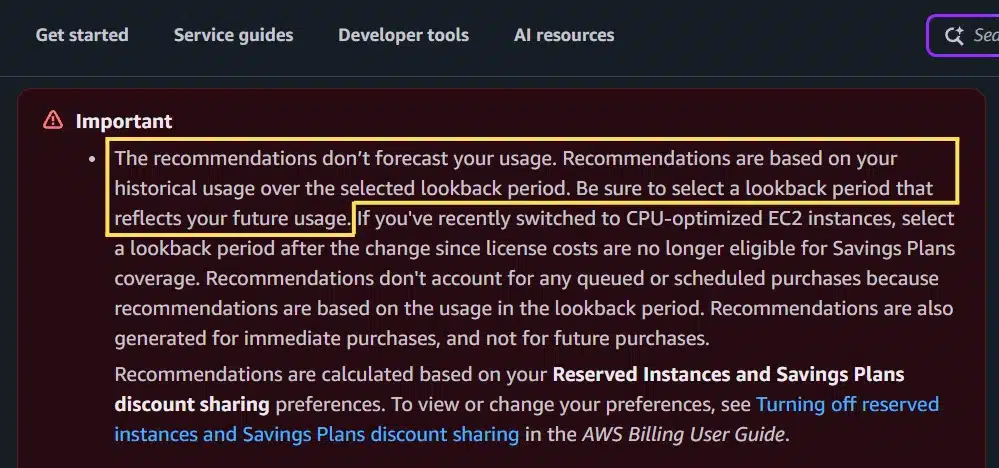
At enterprise scale, commitment management therefore involves more than answering: how much could we have saved historically?
Teams also need to consider:
what future demand is likely to look like;
what commitments already exist;
how much coverage is appropriate;
how frequently the portfolio should be reviewed;
what happens if usage falls;
who executes the purchase;
how realized savings will be measured.
1. IBM Cloudability: for mature enterprise FinOps operations
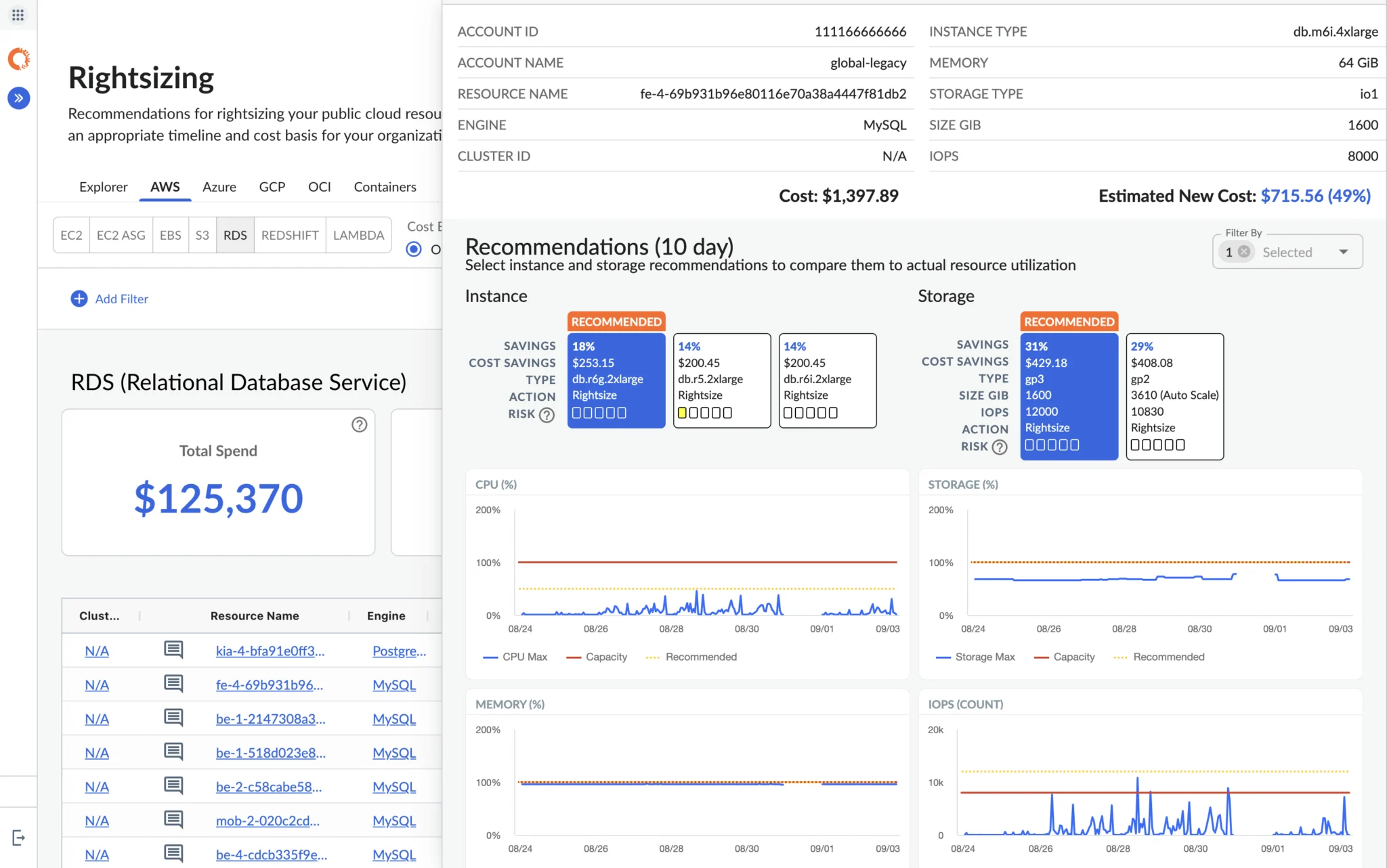
Cloudability is one of the broader platforms in this comparison. IBM positions it around cloud financial management, including allocation, budgeting, forecasting, unit economics, commitment visibility, and optimization.
Key strengths:
Strong allocation, chargeback, forecasting, and financial-planning capabilities for large organizations.
Supports multi-cloud cost management and different cost treatments needed for enterprise reporting.
Available through AWS Marketplace, which can simplify procurement for organizations already purchasing software there.
Pricing: Pricing scales with cloud spend under management. It includes annual spend tiers and additional usage charges, with private offers available for larger requirements. Learn more about IBM Cloudability pricing.
Free trial / demo: IBM offers a Cloudability free trial as well as sales-led evaluation options.
2. Flexera One FinOps: for organizations looking to consolidate FinOps capabilities
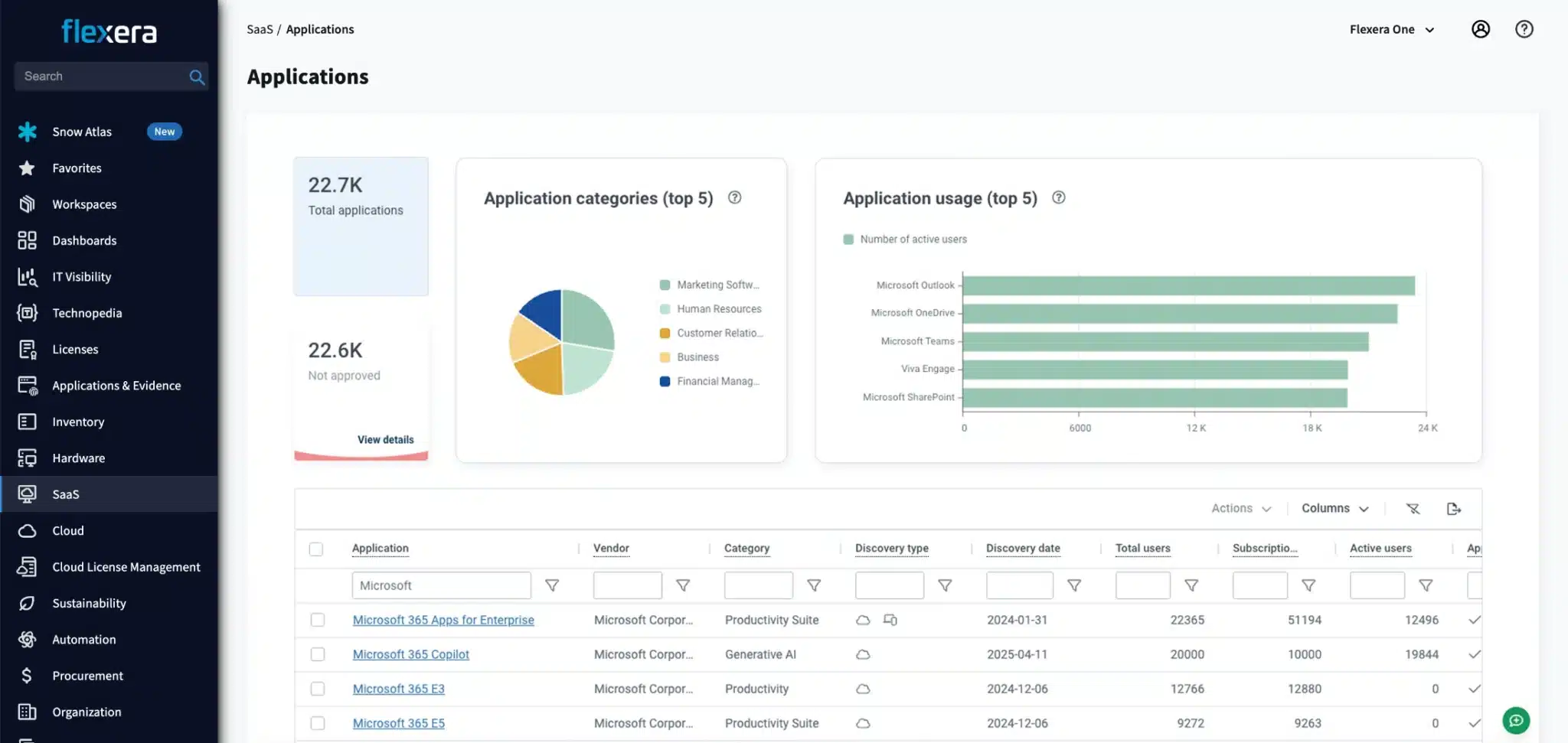
Flexera has become more relevant to commitment-heavy evaluations following its acquisition of ProsperOps in 2026. The current Flexera One FinOps platform combines cost visibility and allocation with workload and commitment optimization.
Key strengths:
Broad coverage across FinOps, cloud optimization, and wider technology-spend management.
The ProsperOps acquisition added autonomous commitment optimization capabilities.
Attractive for enterprises trying to reduce the number of separate optimization products in their stack.
Pricing: Flexera has introduced outcome-based pricing for parts of its autonomous optimization portfolio, while broader Flexera One commercial terms depend on scope. See Flexera’s fees, metrics, and contract costs for current positioning.
Free trial / demo: Flexera offers a Flexera One product demo.
3. CloudHealth: for governance across a large organization
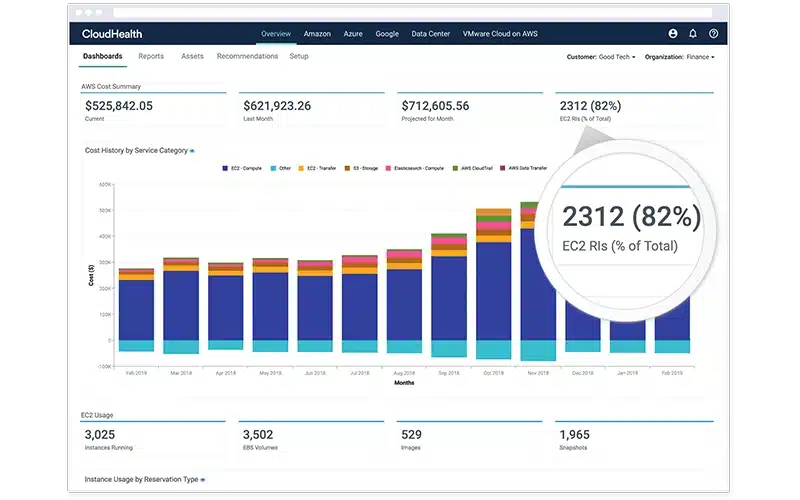
CloudHealth by Broadcom is designed for broad cloud financial management rather than a single optimization workflow. The CloudHealth FinOps platform combines cost visibility, governance, optimization, and enterprise controls.
Key strengths:
Strong enterprise governance and cloud financial-management capabilities.
Useful for organizations managing costs across many accounts, teams, and business units.
Established AWS Marketplace procurement path with enterprise contract options.
Pricing: The CloudHealth AWS Marketplace listing currently shows $150,000 per year for up to $500,000 in monthly AWS spend, with additional charges above the contractual amount. A company spending $1M+ per month should evaluate the resulting enterprise economics rather than extrapolating from a smaller tier alone.
Free trial / demo: Enterprise evaluation is sales-led. Confirm current demo or evaluation options directly with Broadcom.
4. CloudZero: for unit economics and engineering accountability
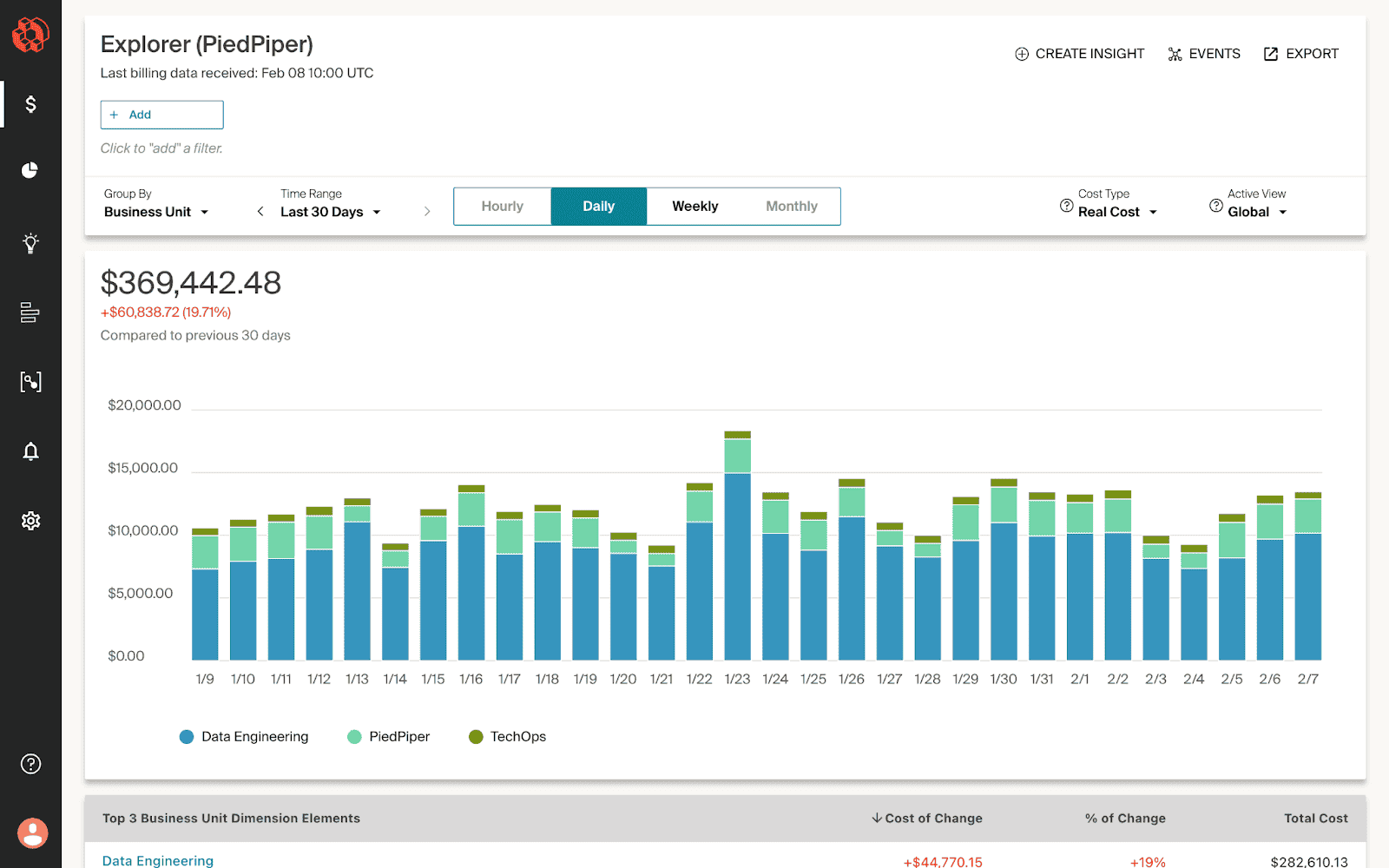
CloudZero stands out less for commitment execution and more for connecting infrastructure spend to business context. Its CloudZero pricing and platform overview includes cost intelligence, dashboards, anomaly detection, budgets, forecasting, and optimization capabilities.
Key strengths:
Strong unit economics and business-context reporting.
Flexible allocation can help when native cloud tags do not fully describe ownership.
Brings Finance and engineering closer to the same view of cloud economics.
Pricing: CloudZero uses custom subscription pricing based on the scale and complexity of the cloud or AI environment. Learn more about CloudZero pricing.
Free trial / demo: CloudZero offers a product demo.
5. Finout: for complex allocation and shared costs
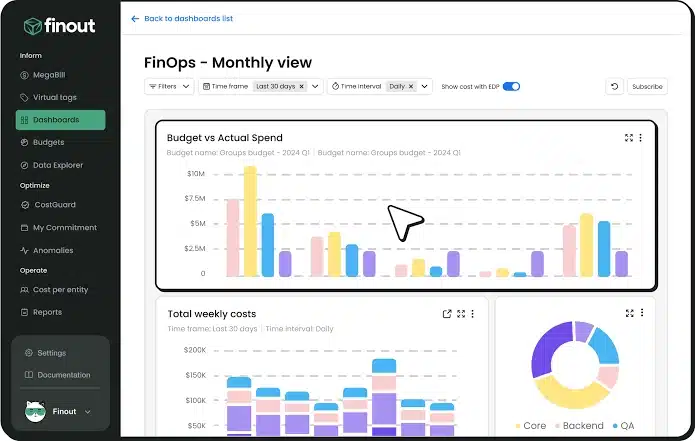
Finout is particularly relevant when the problem is not finding the AWS bill, but turning that bill into cost ownership the business can actually use. Its shared-cost reallocation capabilities can distribute common costs using telemetry and business metrics rather than relying only on fixed percentages.
Key strengths:
Flexible cost allocation across cloud, Kubernetes, SaaS, and other infrastructure sources.
Strong support for shared-cost allocation and unit economics.
Predictable pricing structure compared with models that fluctuate directly with monthly cloud usage.
Pricing: Finout uses a fixed-fee structure tied to committed cloud and AI spend, environment scale, data sources, and integrations.
Free trial / demo: Finout offers both a free trial and product demo.
6. Vantage: for modern FinOps reporting plus AWS commitment automation
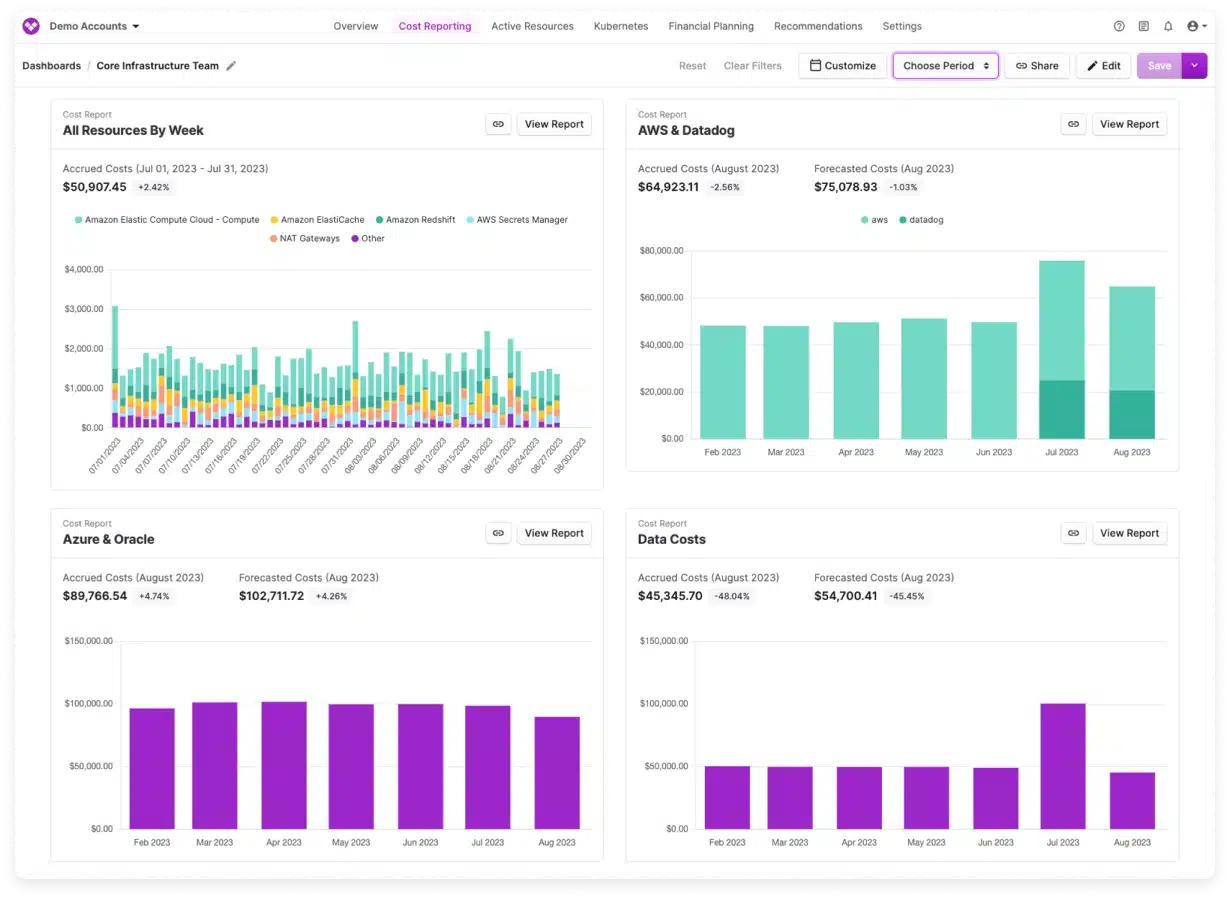
Vantage combines cost reporting, forecasting, virtual tagging, financial commitment reporting, and automation. Its Autopilot for AWS Savings Plans can automate Savings Plans purchasing, while the broader platform covers cloud cost management across many providers.
Key strengths:
Combines broad cloud cost visibility with Savings Plans automation.
Provides commitment reporting alongside forecasting and cost-management workflows.
Supports many cost providers, which can help organizations looking beyond AWS alone.
Pricing: Public plans cover lower spend levels, while organizations at the scale discussed here would typically move into the Vantage Enterprise pricing model with custom terms.
Free trial / demo: Vantage offers a hands-on Enterprise trial, along with trials on lower-tier plans.
7. nOps: for AWS optimization and commitment automation
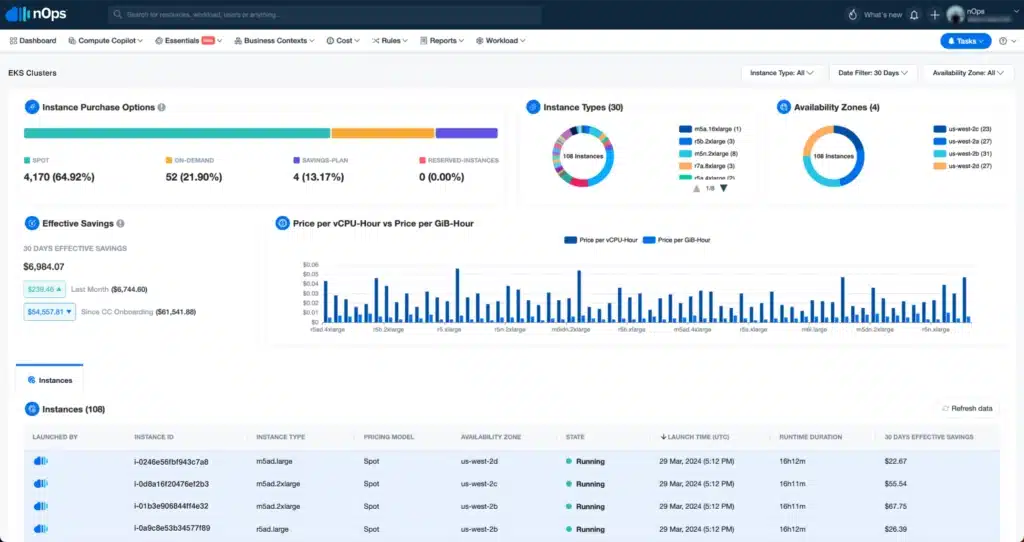
nOps combines cost visibility and allocation with autonomous rate optimization. Its current nOps pricing structure separates cost visibility from autonomous rate optimization, which can make it easier to evaluate the part of the platform you actually need.
Key strengths:
Autonomous rate optimization across AWS and other supported clouds.
Cost visibility, allocation, anomaly detection, and optimization capabilities within the same platform.
Savings-based pricing for rate optimization aligns fees with optimization outcomes.
Pricing: Autonomous Rate Optimization uses a share-of-savings model, while Cost Visibility and Allocation uses a fixed fee based on cloud spend. Learn more about nOps pricing & hidden costs.
Free trial / demo: nOps offers a 14-day trial and free savings analysis.
8. Usage.ai: for teams that want to improve commitment economics
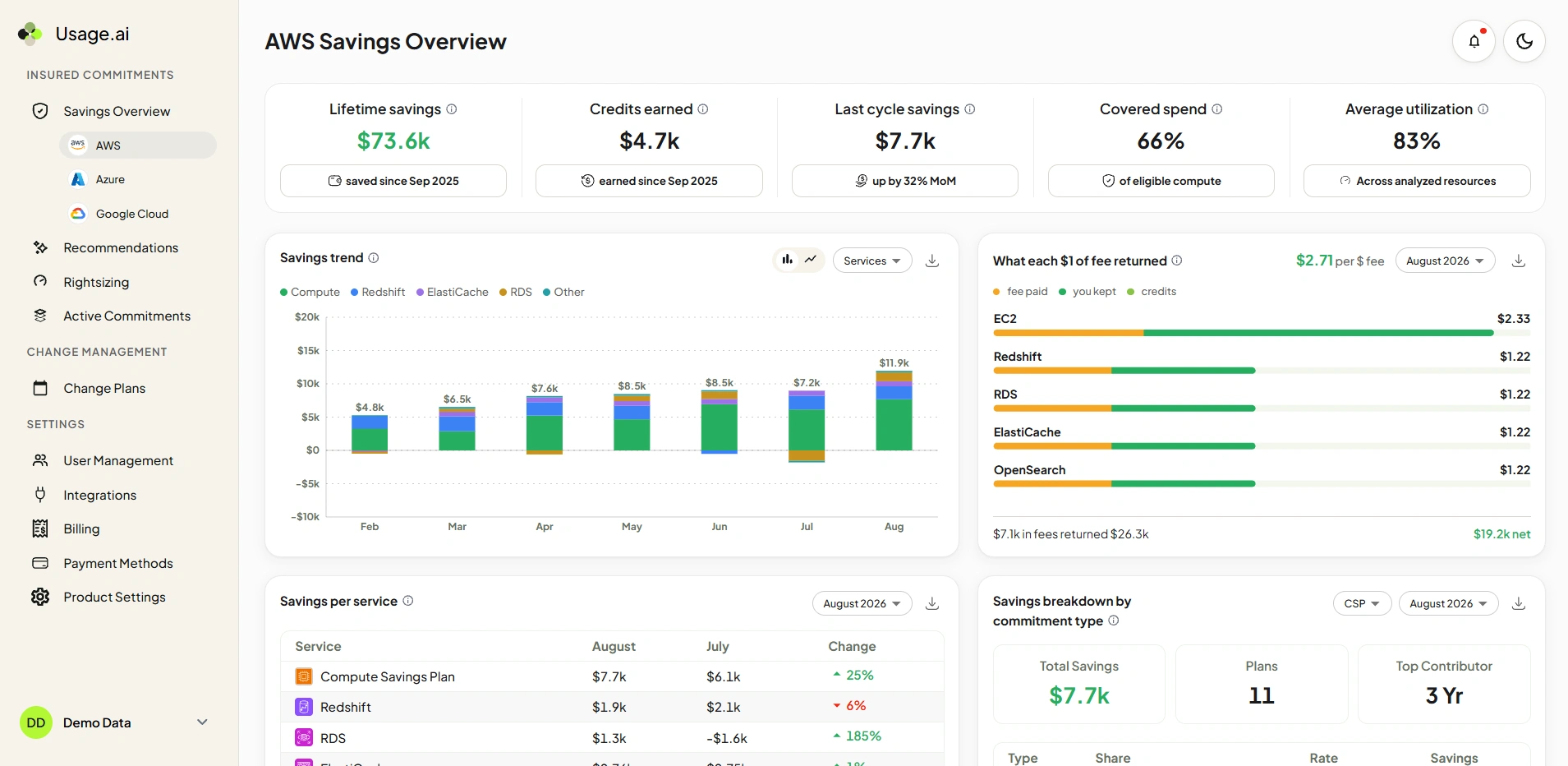
Usage.ai focuses on commitment optimization across AWS, Azure, and GCP. We work with your existing portfolio, identify additional eligible opportunities, and manage new commitments through the cloud provider’s API.
Key strengths:
Designed to sit alongside your existing FinOps tooling. Usage.ai complements reporting, allocation, and forecasting platforms rather than replacing them. See how Flex Insured Commitments are identified and managed.
Provides a read-only path to validate the economics first. The Usage.ai Savings Test evaluates current commitments, eligible uncovered usage, and potential savings before purchasing is enabled.
Combines realized-savings pricing with downside protection. Fees are tied to realized savings, while eligible commitments can qualify for cashback under our cashback methodology.
Pricing: Performance-based. See our pricing methodology.
Free trial / demo: Start with a read-only savings assessment or book a Usage.ai demo.
Before buying anything, check what AWS already gives you
AWS should be part of the shortlist, even though it is not a third-party FinOps platform.AWS Cost Optimization Hub already consolidates and prioritizes recommendations for rightsizing, idle resources, Savings Plans, and Reserved Instances. It also incorporates existing AWS pricing and discounts and deduplicates overlapping savings opportunities.
AWS has continued expanding this layer.
On June 9, 2026, it launched AWS FinOps Agent in public preview. The agent can answer cost questions, investigate anomalies, surface optimization recommendations, run recurring workflows, and open Jira tickets.
That raises an important buying question: what exactly are we paying a third-party platform to improve?
Good answers might include:
more sophisticated cost allocation;
unit economics;
cross-cloud or broader technology-spend reporting;
organizational governance;
automated commitment execution;
workload optimization;
commitment downside management;
managed FinOps expertise;
less manual operating work.
Example: a company spending $1.2 million per month on AWS
Consider a SaaS company spending $1.2 million per month on AWS.It already has:
- a mature tagging strategy;
- business-unit reporting;
- AWS Cost Explorer and Cost Optimization Hub;
- an established FinOps team;
- significant EC2 and database usage;
- existing RIs and Savings Plans.
In this environment, purchasing another platform primarily for better dashboards may produce limited incremental value.
The bigger opportunity may be:
- reducing the work required to manage commitments;
- increasing appropriate commitment coverage;
- responding more quickly as usage changes;
- improving realized commitment economics;
- managing downside exposure.
Now change one fact.
The same company cannot reliably determine how much of its $1.2 million AWS bill belongs to Product A, Product B, shared services, or individual customers.
Commitment automation is no longer the first problem to solve.
Cloudability, CloudZero, Finout, CloudHealth, or another strong allocation platform may deserve priority.
That is why monthly cloud spend alone should never determine platform fit.
Compare the commercial model before you compare the quote
At enterprise scale, the pricing model can materially change the economics of the decision. A spend-based fee, fixed enterprise contract, or savings-based model can look similar at first and behave very differently as AWS spend, commitment coverage, and optimization scope change.Before procurement signs off, compare each proposal on the same basis: realized savings, platform fees, underutilization exposure, implementation effort, and contract terms.
For a deeper framework, see our guide to cloud cost optimization software pricing and total cost.
10 questions to ask before signing a FinOps platform contract
For a large AWS environment, these questions are usually more useful than comparing another long feature checklist.They reveal how the platform fits into your existing operating model, where the financial risk sits, and whether the economics still hold at scale.
Which portion of our AWS spend can the platform actually influence?
What does it add beyond AWS Cost Explorer, Cost Optimization Hub, and the tools we already use?
Does the platform only surface recommendations, or can it execute approved actions as well?
How are our existing RIs and Savings Plans incorporated into recommendations and optimization decisions?
Who bears the economic impact if committed usage falls below plan?
How does the vendor define and verify realized savings?
How does pricing change as our AWS spend or optimization scope grows?
What permissions are required for reporting, commitment purchases, and infrastructure actions?
Which existing tools, workflows, or manual processes can we realistically retire?
What happens to commitments, historical data, and commercial obligations if we terminate the agreement?
When reporting, allocation, and governance are already established, commitment performance can be evaluated as a distinct layer, with attention to coverage, utilization, operating effort, and downside exposure.
Book an enterprise cloud-cost review
Review requirements, vendor fit, commitment economics, and risk before choosing a platform.
Frequently asked questions
What is the best FinOps platform for a large AWS environment?
There is no single best platform for every requirement. Cloudability, CloudHealth, and Flexera are stronger for broad enterprise FinOps and governance. CloudZero and Finout stand out for allocation and unit economics, while Vantage, nOps, and Usage.ai are more relevant when commitment automation matters.
Does a company spending $1M per month on AWS need a third-party FinOps platform?
Not necessarily. AWS already provides Cost Explorer, Cost Optimization Hub, Savings Plans recommendations, anomaly detection, and other native capabilities. A third-party platform should add clear incremental value through better allocation, governance, automation, commitment execution, or reduced operating effort.
How is commitment-management software different from a broader FinOps platform?
Broad FinOps platforms cover workflows such as reporting, allocation, forecasting, budgeting, and governance. Commitment-management software goes deeper into Savings Plans, RIs, CUDs, and the economics of running those portfolios.
What should enterprise teams compare beyond platform features?
Compare governance, permissions, pricing, service scope, automation, savings methodology, contract terms, and exit economics. Also check which existing tools or manual workflows the platform can realistically replace.
Can Usage.ai work alongside Cloudability, CloudZero, or another FinOps platform?
Yes. Usage.ai focuses on commitment management rather than replacing broader reporting, allocation, planning, or unit-economics platforms. It can sit alongside an existing FinOps stack and address the commitment layer specifically.
If you notice any material information that is incorrect, outdated, or no longer applicable, please contact us at [email protected]. We’ll review the information and update the article where appropriate.