.png)



Procurement teams therefore need consistent criteria for evaluating fit, evidence, total cost, and operational responsibility.
We are Usage.ai, this article’s publisher and one of the platforms evaluated. We apply the same criteria to our offering and identify where a different operating model may be more appropriate.
The Short Answer
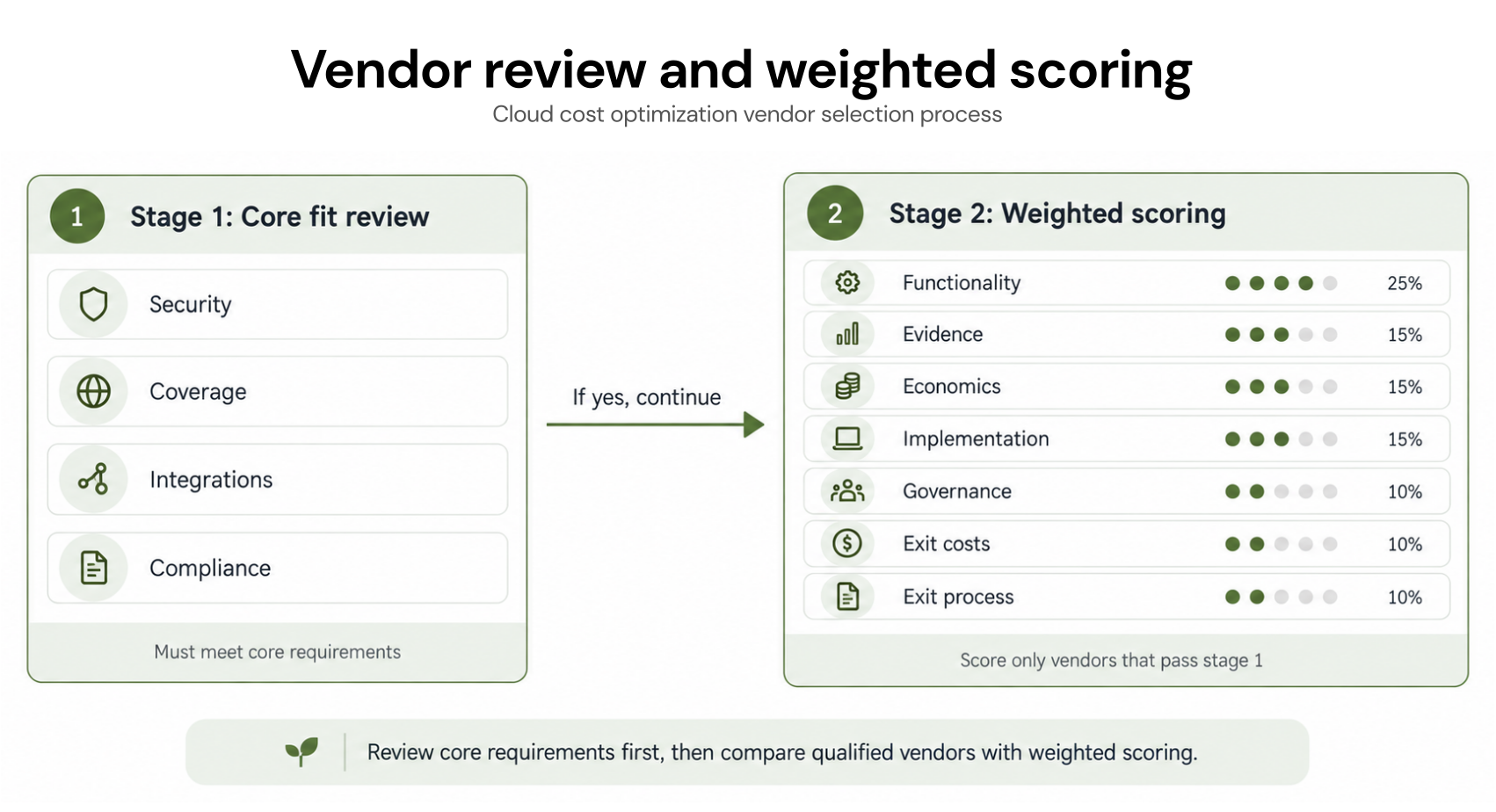
There is no universally best cloud cost optimization tool. The right choice depends on whether you need enterprise governance, cost allocation, resource optimization, Kubernetes automation, or commitment management.First identify the vendors that meet your core requirements. Then compare the remaining options on evidence, total cost, implementation effort, controls, exit costs, and the exit process; some organizations may need a broad FinOps platform and a specialist tool.
How Should Procurement Evaluate Cloud Cost Optimization Tools?
Start with the essentials: required clouds and services, security, identity, data handling, integrations, deployment, audit, and compliance needs. If a vendor does not meet an essential need, document the gap and have the responsible owner decide whether it can proceed to scoring.For vendors that meet these essentials, a 100-point scorecard supports consistent comparison:
| Evaluation area | Suggested weight |
|---|---|
| Optimization fit and capability depth | 25 |
| Evidence and outcome validation | 20 |
| Commercial model and net value | 20 |
| Implementation and operating effort | 15 |
| Governance, security, and control | 10 |
| Support, data portability, exit costs, and exit process | 10 |
Score evidence by strength: a public claim, documentation, a representative demo, a result validated in your environment, or a contractual commitment. Give roadmap promises less credit than features available today.
For a deeper approach to testing projected outcomes, see how to verify cloud savings claims before signing a contract.
Cloud Cost Optimization Tools at a Glance
| Tool | Best procurement fit | Primary scope | Key procurement considerations |
|---|---|---|---|
| Usage.ai | Commitment downside protection | Rate and commitment optimization | Our fee is an agreed percentage of realized savings |
| IBM Apptio Cloudability | Enterprise FinOps governance | Allocation, reporting, planning, and optimization | Required modules, services, and total packaged cost |
| CloudHealth by Broadcom | Multi-cloud policy and governance | Cost management and optimization | Current offering, support, and implementation scope |
| Flexera One FinOps | Broader technology-spend management | FinOps, automation, and ITAM alignment | Included portfolio products and quoted fees |
| CloudZero | Unit economics | Allocation and cost intelligence | Environment scale, complexity, and quoted subscription scope |
| Finout | Multi-source allocation | Cloud, Kubernetes, SaaS, and AI costs | Spend under management and included cost sources |
| Harness | Engineering-led optimization | Visibility, governance, and automation | Included modules and required cloud access |
| CAST AI | Kubernetes optimization | Workload and cluster automation | AWS Marketplace EKS offer; contract tiers plus per-managed-CPU usage charges, or quoted private-offer terms |
| nOps | Commitment automation and visibility | Rate optimization and cost management | Fixed fee for cost visibility; share of savings for rate optimization |
| ProsperOps | Autonomous commitment optimization | Autonomous rate and workload optimization | Savings Share for discount management, per-resource pricing for resource management, and included products |
Best Cloud Cost Optimization Tools for Procurement Evaluations
The numbering organizes the comparison; it is not an overall performance ranking. Each tool fits a different procurement scenario.1. Usage.ai: Best for Commitment Downside Protection
Commitment discounts can materially reduce rates, but they introduce financial exposure when usage changes. We are most relevant when the buyer wants to increase commitment coverage with cashback protection for losses calculated under the program.Evaluation focus: We analyze usage at the billing layer, generate recommendations, and support either customer approval or automated execution. Our Flex Insured Commitment Program provides cashback protection when a Flex Commitment costs more than equivalent On-Demand usage. In that situation, we cover the calculated loss through cashback.
We charge an agreed percentage of realized savings, as explained in our pricing documentation.
Consider: Our cashback protection applies to Flex Commitments managed through the program, not commitments you buy and manage directly. Our dashboard distinguishes between the two, so you can see which commitments are managed through the program.
2. IBM Apptio Cloudability: Best for Enterprise FinOps Governance
IBM Apptio Cloudability documentation covers cloud financial management capabilities across allocation, reporting, planning, governance, and optimization. Business mappings and allocation rules turn provider billing data into accountable cost views that support budgeting, forecasting, and optimization decisions.It is most relevant to enterprises that need structured FinOps processes across many teams and accounts.
Evaluation focus: Review the modules, implementation services, automation depth, data exports, and full cost of the proposed package.
Consider: See our review of IBM Cloudability pricing and TCO for more commercial detail.
3. CloudHealth by Broadcom: Best for Multi-Cloud Governance
CloudHealth by Broadcom is positioned as a multi-cloud cost-management platform for visibility, optimization, reporting, and policy-based governance. It uses business-aligned asset groupings and policies to organize spending, surface exceptions, and support governance across cloud environments.Evaluation focus: Review current editions, cloud-specific feature depth, support, who handles implementation, roadmap commitments, and the work required to migrate data.
Consider: Compare its broad governance orientation separately with specialist execution platforms.
4. Flexera One FinOps: Best for Technology-Spend Management
Flexera One FinOps combines cost visibility, allocation, governance, and optimization with Flexera’s wider ITAM and technology-spend portfolio. It normalizes cost and usage information from multiple sources on a shared foundation, while portfolio engines add commitment, workload, and data-cloud optimization.Evaluation focus: Identify which products and autonomous optimization engines are included in the proposal.
Consider: See our Flexera pricing and commercial review for packaging, metrics, and contract costs.
5. CloudZero: Best for Unit Economics
CloudZero organizes cloud and other consumption data around business dimensions such as products, features, teams, and customers. Its CostFormation allocation model can organize spending with or without complete tagging, turning infrastructure charges into business-relevant unit-cost views. It is a strong candidate when unit economics and shared-cost allocation drive the business case.Evaluation focus: Test allocation rules with your own data and review optimization workflows, implementation support, included sources, and the quoted subscription price.
Consider: See our analysis of CloudZero pricing and contract costs for more detail.
6. Finout: Best for Multi-Source Cost Allocation
Finout consolidates costs from public clouds, Kubernetes, SaaS, data platforms, and AI services. Its MegaBill and virtual-tagging model bring billing data into a common structure and apply allocation logic to shared spending across teams, products, and features. Its scope makes it relevant where fragmented cost sources and shared-cost allocation are the primary problems.Evaluation focus: Review connector coverage, allocation accuracy, onboarding effort, approval workflows, and export capabilities.
Consider: Determine whether its optimization actions match the organization’s execution requirements.
7. Harness: Best for Engineering-Led Optimization
Harness Cloud & AI Cost Management combines cost attribution and governance with engineering-focused capabilities such as idle-resource controls, rightsizing, commitment coverage, and Kubernetes optimization.Teams can move from attribution and recommendations to controlled execution through AutoStopping, commitment orchestration, and Kubernetes cluster optimization.
Evaluation focus: Review the access needed, automated-action boundaries, approval and rollback controls, and product dependencies.
Consider: Confirm whether the proposed price includes each required optimization module.
8. CAST AI: Best for Kubernetes Optimization
CAST AI specializes in Kubernetes rightsizing, node selection, autoscaling, bin packing, Spot orchestration, and automated optimization. Teams can begin with a read-only agent that analyzes the cluster, then set policies before allowing automated cluster optimization.Evaluation focus: Review production access, reliability safeguards, fallback costs, savings attribution, exit work, and how fees are calculated.
Consider: See our CAST AI pricing analysis for fee and contract details.
9. nOps: Best for Commitment Automation With Cost Visibility
nOps currently presents commitment management across AWS, Azure, and Google Cloud alongside cost allocation, cloud management, and AI cost visibility.It maps usage patterns to commitment levels and can purchase and manage combinations of Reserved Instances, Savings Plans, and committed use discounts while reporting coverage and realized savings.
Evaluation focus: Review service-level coverage, rebalancing mechanics, existing-commitment treatment, access, savings measurement, and pricing structure.
Consider: See our review of nOps pricing and commitment risk for more evaluation questions.
10. ProsperOps: Best for Autonomous Commitment Optimization
ProsperOps focuses on automated commitment and rate optimization across AWS, Azure, and Google Cloud, with savings and optimization reporting. For rate optimization, it ingests billing data, calculates commitment coverage using workload patterns and customer risk tolerance, and automatically adjusts the discount portfolio.Evaluation focus: Because Flexera presents ProsperOps within its FinOps portfolio, check whether it is bought separately or within a broader package.
Consider: See our analysis of ProsperOps pricing and savings-share economics for commercial modeling.
What Evidence Should Vendors Provide Before Selection?
A polished dashboard is only a starting point. Ask shortlisted vendors for:Architecture and data-flow documentation
Access levels and any actions the vendor can take
And if your environment scores highly on both sides, a hybrid model may be the better operating model.
A demonstration using representative customer data
The savings baseline, what is not included, the attribution method, and the validation window
Itemized fees and estimated customer operating effort
An implementation plan with owners, dependencies, and agreed success criteria
Support, escalation, data portability, renewal terms, exit costs, and the exit process
References from customers with reasonably comparable environments
Watch for savings claims without a reproducible baseline, “multi-cloud” claims that do not name covered services, roadmap features presented as available, hidden implementation work, or unavailable data exports.
Model proposals for expected spend growth and realistic savings. Our guide to cloud cost optimization software costs explains how fixed subscriptions, spend-based tiers, and savings-share models affect net value.
Final Verdict: Select for Proven Net Value
Choose the tool that solves the right layer of the problem and proves net value after fees, implementation work, internal labor, and remaining risk. Base the decision on evidence from your environment, not the largest projected savings number.Review your commitment savings opportunities, expected savings after our fees, and how Cashback would apply.
Frequently asked questions
What should a cloud cost optimization RFP include?
Define the use cases, essential requirements, cloud scope, security, integrations, pricing template, implementation ownership, proof-of-value plan, support, exit costs, exit process, and data-export options.
How should procurement verify cloud savings claims?
Ask each vendor to explain the baseline, existing discounts, what is not included, the attribution method, validation period, and whether savings are projected, avoided, or realized. Then subtract platform fees and customer operating costs.
Should buyers select one platform or combine tools?
A combination can make sense when a governance platform lacks the required execution depth. Compare overlapping fees, duplicated data, integration work, and ownership boundaries against the added value.
How should different pricing models be compared?
Model subscriptions, spend-based tiers, savings-share fees, minimums, implementation services, and internal labor across several spend scenarios. Compare net value and test renewal and growth pricing.
If you notice any material information that is incorrect, outdated, or no longer applicable, please contact us at [email protected]. We’ll review the information and update the article where appropriate.