
 AWS
 Microsoft Azure
 Google Cloud


CloudHealth Alternatives at a Glance
| Platform | Main buying fit | Important boundary |
|---|---|---|
| Usage.ai | Commitment automation with conditional Cashback | Broader allocation remains a separate requirement |
| IBM Cloudability | Enterprise allocation and financial planning | Package and implementation scope matter |
| Flexera One FinOps | Wider technology spend management | Portfolio capabilities have different scopes |
| CloudZero | Business allocation and unit economics | Business measurements require ongoing ownership |
| Finout | Consolidated billing and shared-cost allocation | Separate native and partner execution |
| Vantage | Accessible reporting with AWS purchasing automation | Reporting coverage exceeds Autopilot scope |
| Harness | Engineering workflows and operational optimization | Actions and permissions vary by module |
How We Compared the Platforms
We compared first-party product information, documentation and pricing for allocation, financial management, execution, coverage and operating effort. Sources were reviewed October 29, 2026; we did not benchmark vendors on a common workload. We publish this comparison, which includes our own platform. The order is editorial, not a measured ranking.CloudHealth as the Baseline
Replacing CloudHealth means more than connecting the same billing accounts. Its documented management capabilities include Perspectives, reporting, policies, forecasting, anomaly detection and Savings Automator. It also supports optimization recommendations and automated governance actions.The reason to move should therefore be concrete: a different allocation model, more useful financial planning, stronger execution for your resources, or pricing or contract terms that better fit your organization. Distinguish a missing capability from a workflow that needs configuration or ownership.
Keep CloudHealth if it meets those requirements at an acceptable total cost. Adding a specialist can make more sense than rebuilding reports, business mappings and governance merely to improve one optimization workflow.
7 CloudHealth Alternatives Compared
1. Usage.ai for Commitment Automation
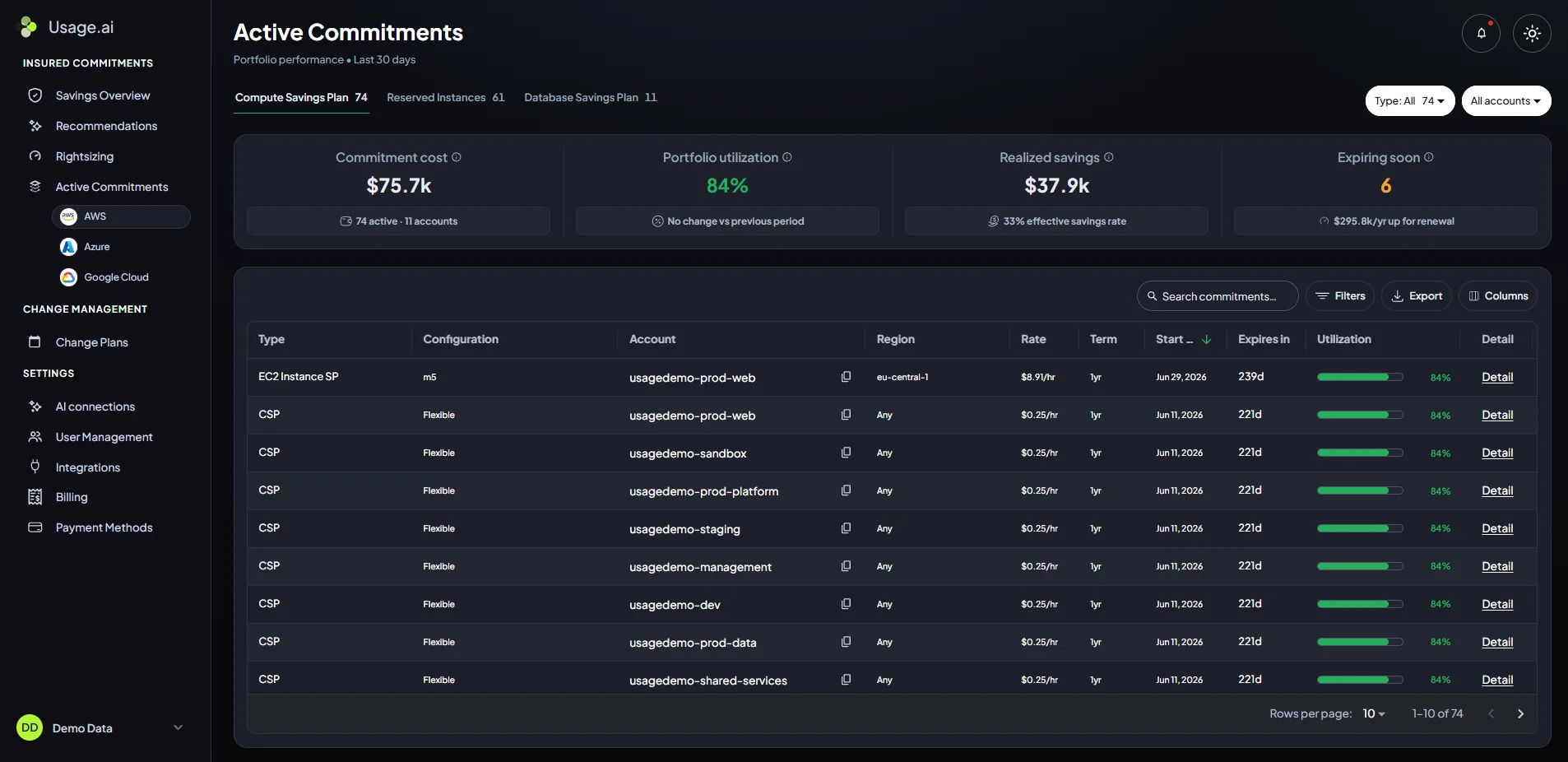
We analyze usage and existing coverage across supported AWS, Azure and Google Cloud services. Copilot keeps individual purchase approvals with your team; our Autopilot controls allow eligible purchases within the scope you authorize. Commitments are purchased directly in your cloud environment.
Why we make the shortlist: Our Flex Insured Commitments combine ongoing purchasing decisions with Cashback protection under program terms. Cashback helps offset eligible unused commitment costs.
We adjust future purchases as demand changes. That does not cancel existing commitments, and our commitment automation does not resize, stop or reconfigure production workloads.
What to look at closely: Our coverage depends on the service and commitment type. Commitments you already own do not automatically receive Cashback protection. Our reporting centers on commitments and savings rather than replacing every allocation, budgeting or governance workflow.
Pricing: We charge a percentage of realized savings and exclude savings from commitments you already held.
Our take: Begin with our read-only Savings Test to assess additional commitment opportunities. We fit when ongoing commitment purchasing is the main gap, whether you replace that function or retain CloudHealth for wider FinOps.
2. IBM Cloudability for Financial Management
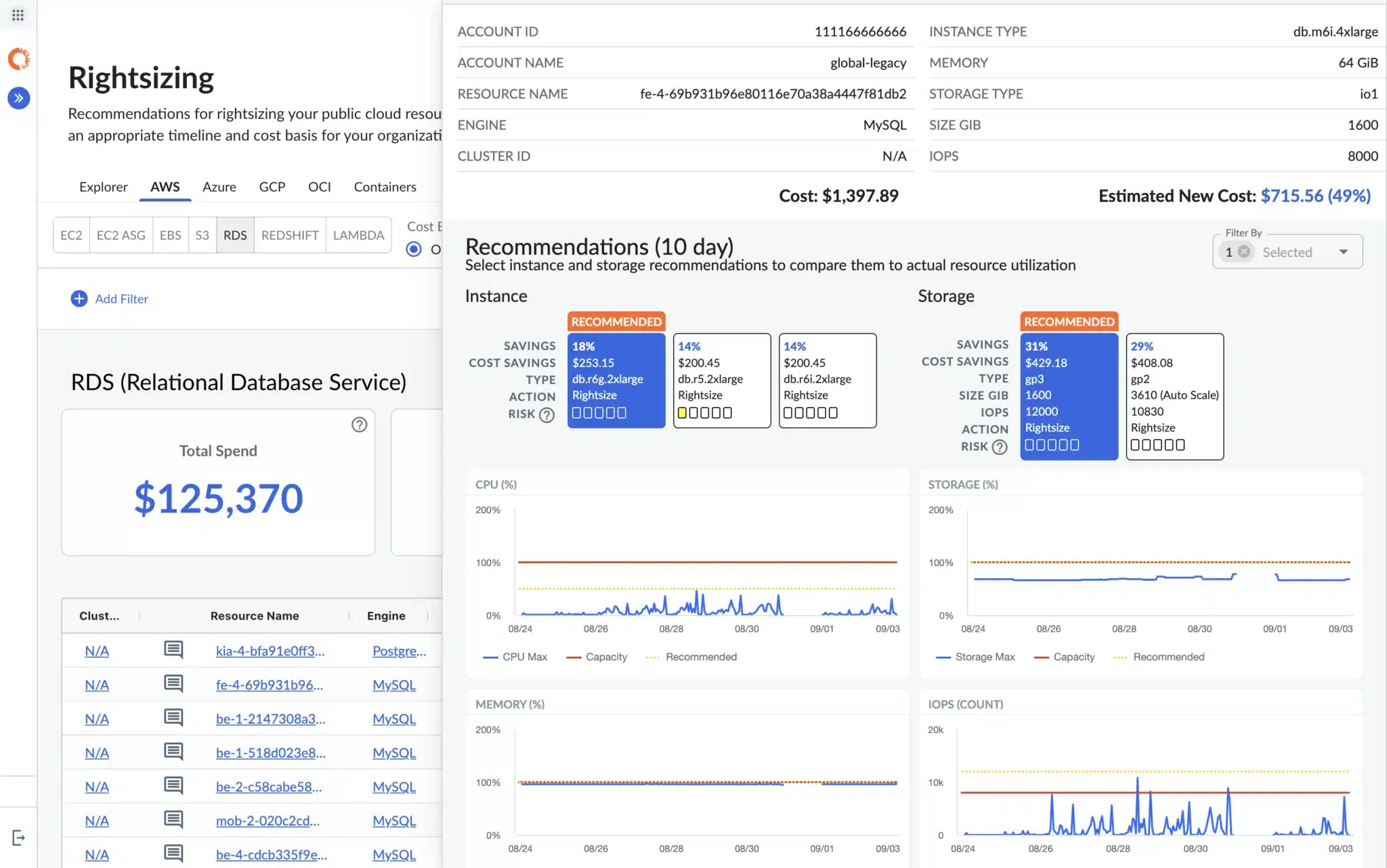
IBM Cloudability combines business mappings, cost sharing, reporting, forecasting and optimization capabilities. Its value becomes clearer when several departments dispute the same shared bill: the financial model needs consistent ownership and allocation before anyone can defend a budget or chargeback.
Why it makes the shortlist: Cloudability is relevant when the replacement must preserve enterprise financial workflows. Container allocation and unit economics can connect technical spending to the services or products Finance manages. Alongside AWS, Azure and Google Cloud, Cloudability ingests OCI cost and usage data.
What to look at closely: Package scope affects both cost and deployment. Recommendations and executed changes also require different permissions and ownership.
Implementation includes mapping costs, reconciling billing and teaching teams to use the resulting views. Our Cloudability review examines that operational work alongside capabilities and buyer fit.
Pricing: Advanced Containers is an optional paid add-on. Savings Automation is also presented as a distinct offering, though IBM makes the automated AWS compute commitment-management functionality behind it available to Cloudability Premium customers.
Our take: Include administration and adoption effort in the business case.
3. Flexera for Technology Spend Management
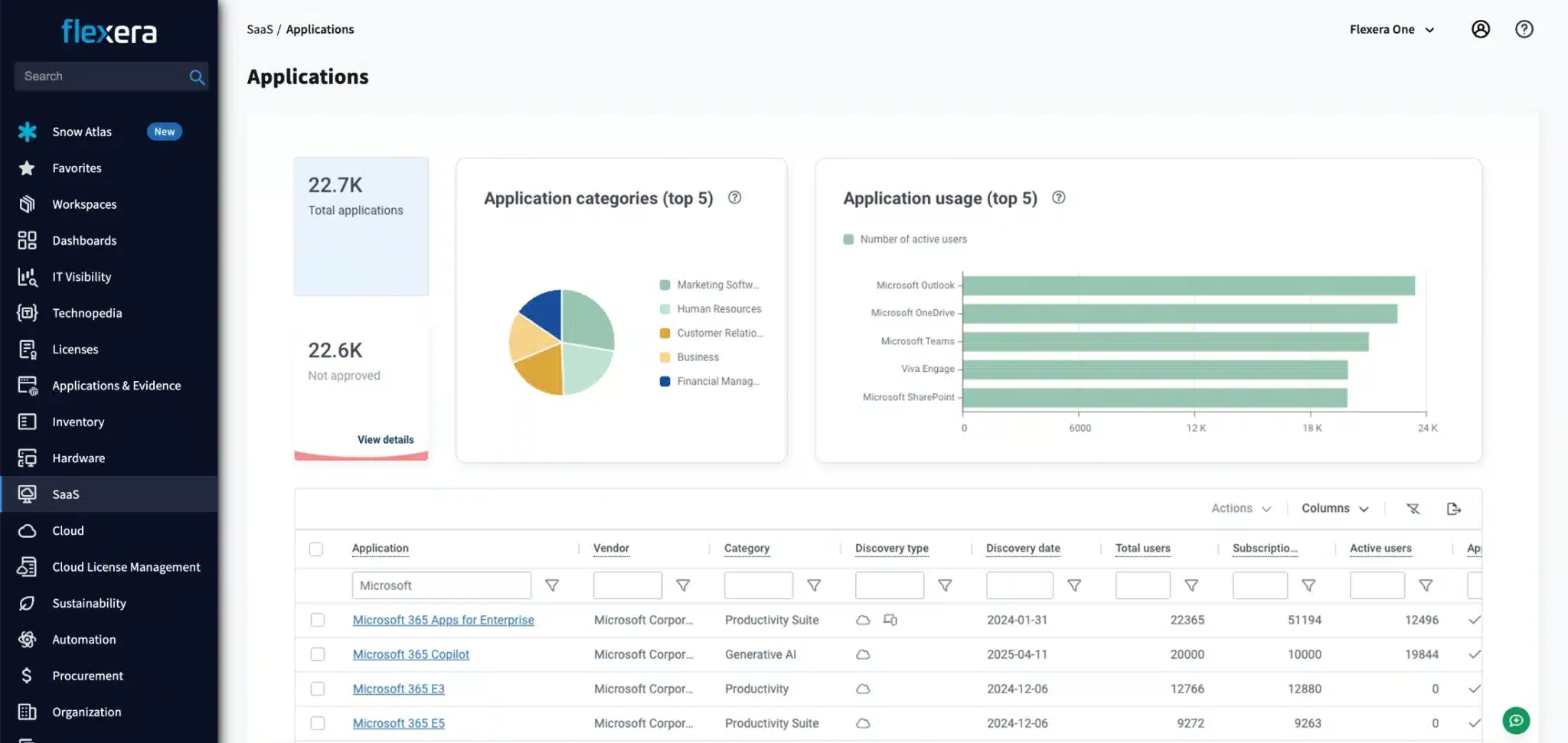
Flexera One FinOps is a portfolio rather than one uniform optimization product.
Cloud Cost Optimization addresses allocation, reporting, planning and governance.
ProsperOps supplies commitment optimization.
Ocean and Elastigroup address container and virtual machine infrastructure.
Data Cloud Optimization extends the portfolio into Snowflake and Databricks.
What to look at closely: Portfolio membership does not establish that every engine shares one entitlement, permission model or onboarding process. Ocean supports AWS, Azure and Google Cloud container services and deploys a controller pod inside the cluster to collect metrics and execute operations. This adds deployment work beyond billing-data ingestion.
Pricing: Our Flexera pricing and contract guide explains why billable measures, modules and contract scope affect total cost.
Our take: Consider Flexera when cloud costs and software spending need to be managed together. If your requirement is narrow, compare that value with the cost and effort of operating the selected portfolio.
4. CloudZero for Unit Economics
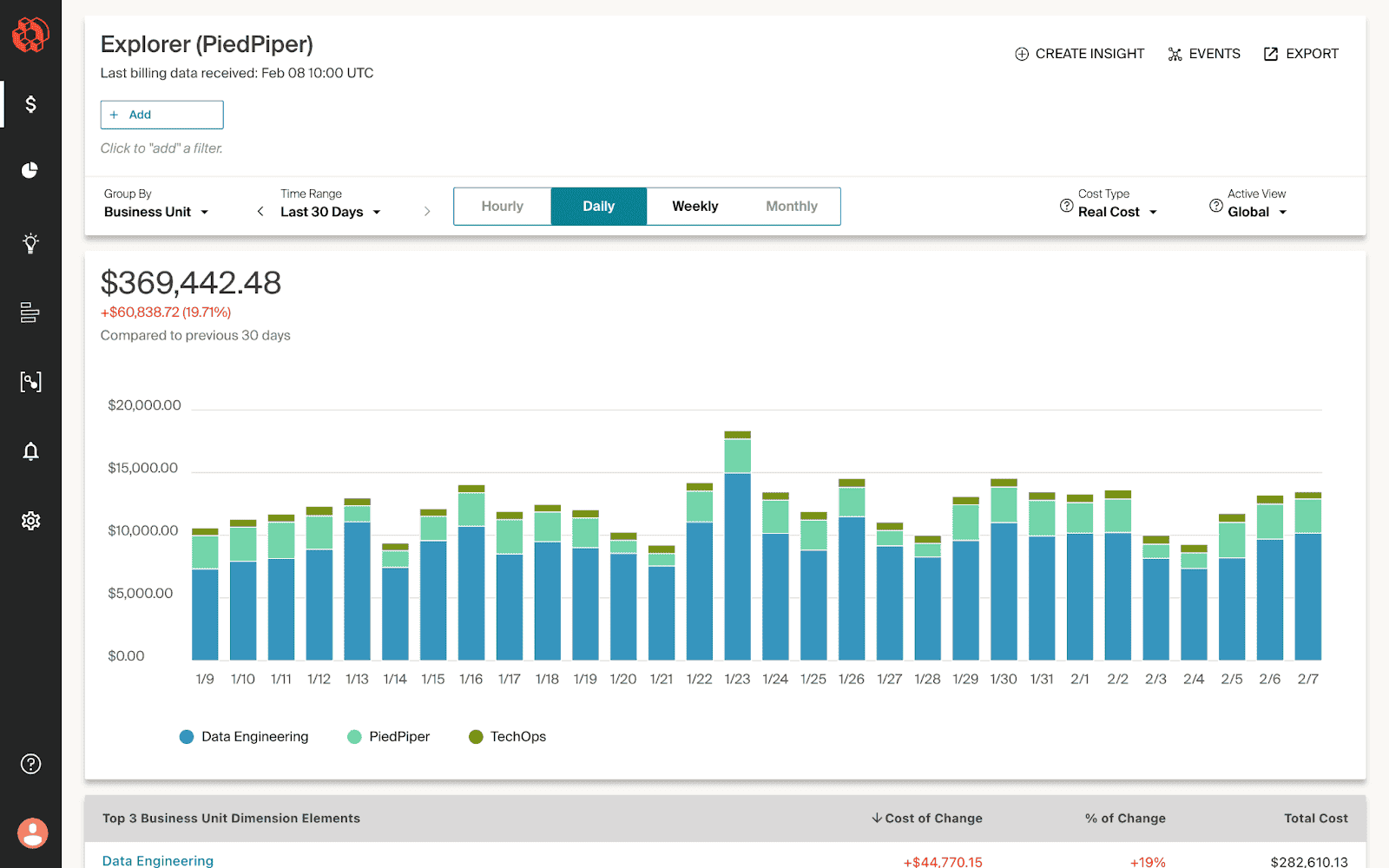
CloudZero organizes spending through Dimensions and connects cloud and other supported cost sources to business context. It calculates unit costs by dividing selected spending by a business measurement supplied through an API or CSV telemetry stream.
Why it makes the shortlist: A growing bill can accompany improving efficiency. Connecting costs with orders processed or customers served helps distinguish healthy growth from deteriorating margins. That gives engineering and Finance a more useful conversation than debating whether total spend rose.
Coverage spans AWS, Azure, Google Cloud, OCI and supported Kubernetes, SaaS, data and AI sources. Optimize surfaces savings recommendations and routes work into engineering workflows. Its ProsperOps integration provides partner-supported commitment automation; assess the partner’s execution scope, fees and contract terms separately.
What to look at closely: Business measurements do not maintain themselves. Someone must own allocation rules, shared-cost treatment and the accuracy of the denominator. Our CloudZero review explores those implementation requirements and the resulting buyer fit.
Pricing: Quoted by environment scale and complexity, with all platform capabilities in one subscription.
Our take: Prioritize CloudZero when better business-cost explanations will influence architecture, pricing or investment decisions. Give each material cost, change an owner and track the result.
5. Finout for Consolidated Cost Allocation
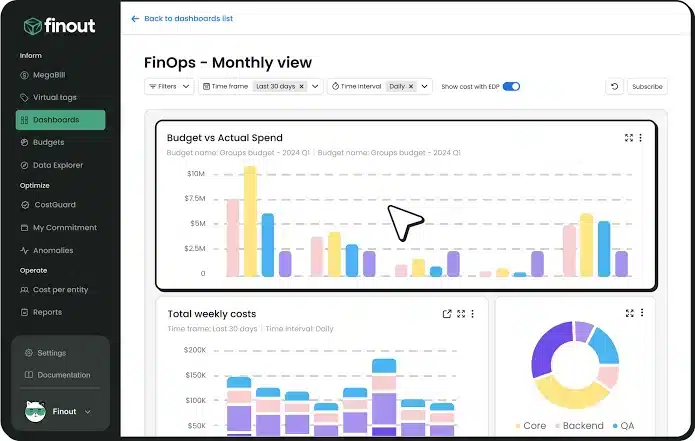
Finout’s MegaBill consolidates AWS, Azure, Google Cloud, OCI and supported Kubernetes, data and SaaS sources. Virtual Tags group costs using business rules without requiring the underlying resources to be relabeled. Shared-cost allocation can then distribute common services to the teams, products or customers responsible for them.
Why it makes the shortlist: The difficult allocation is often the one spanning several bills. A product might use AWS infrastructure, Snowflake and a shared cluster. The evaluation should show whether those costs can become one explainable product view, including costs that native tags miss.
Finout also provides CostGuard recommendations, commitment views and CostOptimizer for Reserved Instance management. Its documented partnership with nOps adds a route to automated commitment optimization across AWS, Azure and Google Cloud.
What to look at closely: Separate native features, partner execution and the commercial scope offered.
Pricing: A quoted flat contract fee tied to a committed spend tier and environment scope. Our comparison with Finout examines allocation and execution boundaries in more detail.
Our take: Bring a difficult shared-cost example to the evaluation. Judge the explanation, allocation rules and maintenance work together, rather than treating a fully allocated bill as proof that every assignment is meaningful.
6. Vantage for Accessible Cost Management
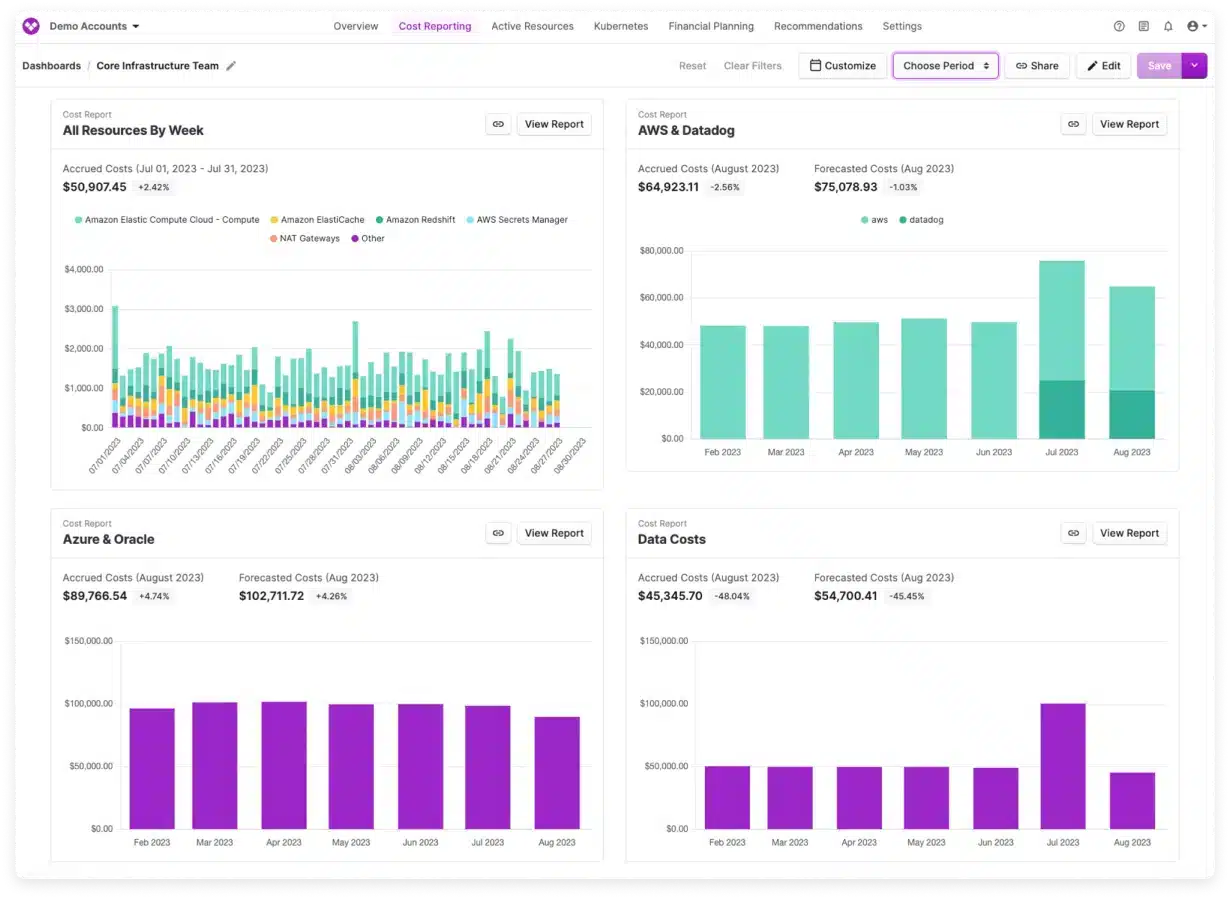
Vantage connects AWS, Azure, Google Cloud, Oracle Cloud and supports SaaS, data and AI sources. Cost reports, virtual tagging, budgets, unit costs and Kubernetes reporting help distribute relevant spending information without requiring every stakeholder to navigate provider billing consoles.
Why it makes the shortlist: Autopilot profiles eligible AWS spending and purchases Savings Plans, accounting for existing coverage.
What to look at closely: Multicloud reporting does not make Autopilot a multicloud purchasing service. Include platform and automation charges together, then assess whether the managed work improves on your current process. Our guide to AWS-native versus managed commitment optimization explains that buying distinction.
Pricing: Pro is $30 monthly for up to $7,500 in tracked cloud spend and Business is $200 for up to $20,000. Enterprise pricing is custom. Autopilot’s separate published fee is 5% of realized savings.
Our take: Pro includes six months of data retention and five users; Business includes twelve months and ten users. History and user limits can make a higher tier necessary even when spending fits a lower-priced plan.
7. Harness for Engineering Cost Optimization
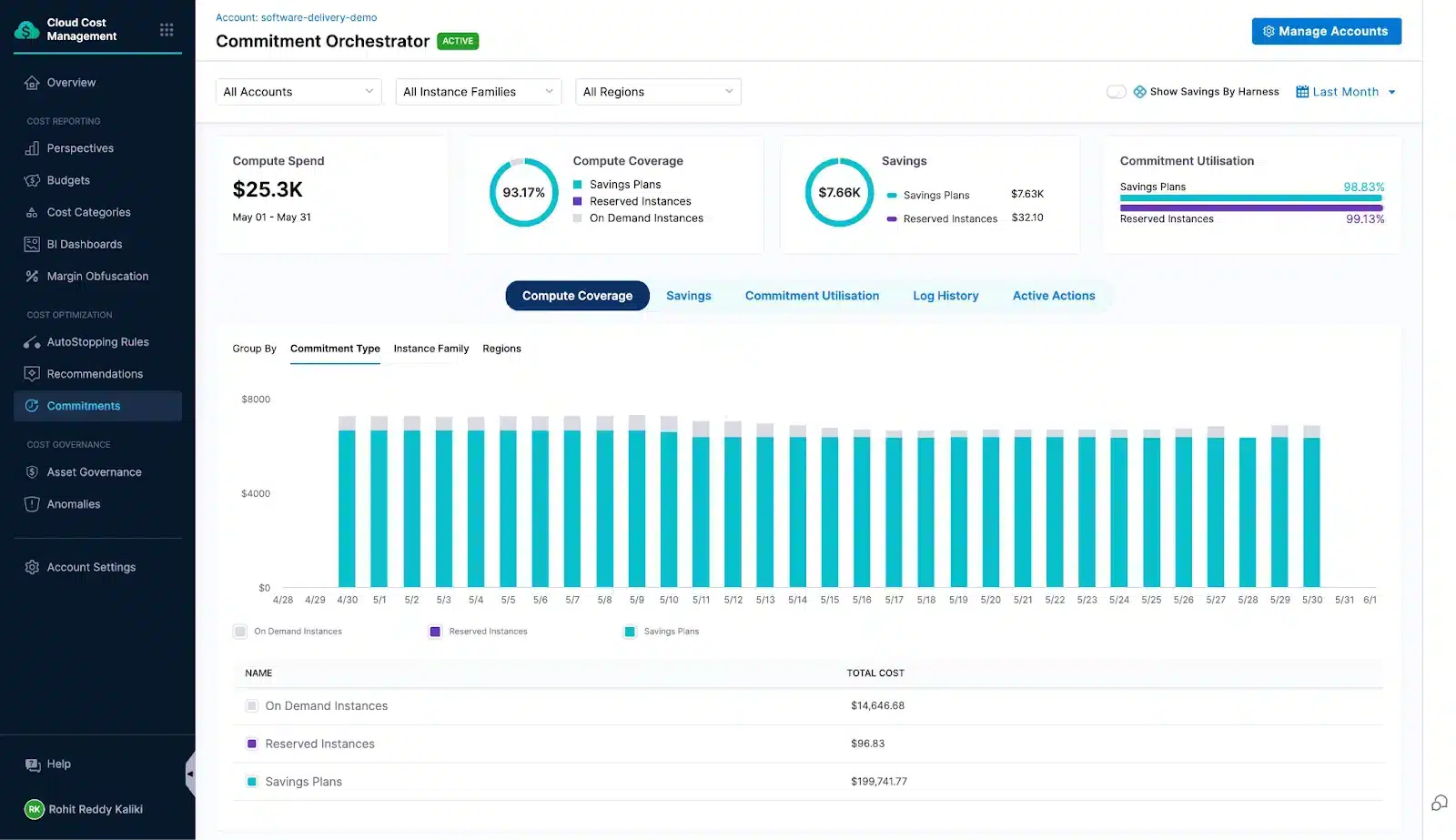
Harness combines cloud cost management across AWS, Azure and Google Cloud with optimization capabilities. Its optimization offering includes AutoStopping, commitment workflows and cluster optimization. These address different cost levers: less idle runtime, better commitment coverage, and more efficient infrastructure.
Why it makes the shortlist: A recommendation can be financially attractive yet remain unimplemented. Harness is relevant when the obstacle is carrying that recommendation into an engineering workflow with ownership and controls.
What to look at closely: Identify which actions run for your exact resources and clouds. Reporting, commitment analysis and purchasing are separate capabilities; broad platform coverage does not establish identical execution everywhere.
Operational changes also require a different access review from billing analysis. For example, GCP AutoStopping documentation describes proxy components in the customer environment.
Our comparison with Harness examines that GCP deployment and commitment distinction.
Pricing: Commercial terms depend on modules and their tracked-spend measures.
Our take: Demonstrate an action, its approval path and its recovery behavior before attributing projected savings to automated execution.
Which CloudHealth Alternative Should You Choose?
Match the combination of requirements, not the longest feature list.| Your requirement | Shortlist direction |
|---|---|
| Replace enterprise allocation and financial planning | Cloudability; Flexera where wider technology context matters |
| Explain product economics across shared services | CloudZero and Finout; compare modeling and maintenance |
| Improve reporting access with AWS purchasing | Vantage; assess both subscription and automation fees |
| Turn infrastructure findings into controlled actions | Harness; demonstrate resource-specific execution |
| Keep broad FinOps but delegate commitments | Our platform alongside the retained financial system |
Questions to Ask Before Replacing CloudHealth
Can we reproduce our hardest allocation? Use a shared cluster or platform service. Reconcile totals on the same cost basis, including credits and commitment charges.
Can Finance produce the required outputs? Test forecasts, budget variance, showback and reporting permissions with the people who will use them.
What actually executes? Follow one recommendation through approval, permissions, action records and measured results. Separate generally available actions from roadmap promises.
What is the complete cost? Include modules, implementation, internal administration, fees and unused commitments over the same period.
What transfers during the switch? Inventory mappings, reports, alerts, exports and history. Reconcile a complete billing period before retiring the old workflow.
Who owns ongoing obligations? Assign one purchasing owner per scope. Ending a software agreement does not automatically end provider commitments or continuing contractual fees.
Final Verdict
The strongest CloudHealth alternatives solve a defined gap without losing functions your organization still needs. Cloudability suits enterprise financial planning; Flexera adds wider technology-spend context.CloudZero and Finout address business allocation, Vantage combines accessible reporting with AWS purchasing, and Harness emphasizes engineering execution. We fit when commitment management and qualifying financial protection are the priority, including alongside an existing FinOps platform.
To assess that commitment opportunity, start with a read-only analysis of your existing coverage and potential additional savings.
Assess existing coverage and potential additional savings with our read-only Savings Test before deciding whether to automate purchases.
Frequently asked questions
Is CloudHealth part of Broadcom?
Yes. CloudHealth is part of Broadcom following its acquisition of VMware, completed in November 2023. Broadcom continues to present CloudHealth as part of its FinOps offering.
How much does CloudHealth cost?
CloudHealth’s AWS Marketplace listing includes a $45,000 annual contract covering up to $150,000 in monthly AWS spend, with additional fees above that threshold. This is a specific Marketplace offer rather than a universal price. Contract duration, spend coverage and negotiated terms can change the amount a customer pays.
How does CloudHealth compare with Cloudability?
Both provide broad FinOps capabilities, including allocation, reporting and optimization. CloudHealth uses Perspectives for business groupings and policy-based governance. IBM Cloudability uses Business Mapping and offers collaborative financial planning. The useful comparison is how their allocation rules, planning workflows, automation and package scope fit your organization, not whether either platform simply lists those features.
Can commitment tools replace CloudHealth?
They can replace supported commitment purchasing and management workflows, but do not automatically replace allocation, budgeting, forecasting or governance. We can complement CloudHealth when those broader functions remain useful. A complete replacement must cover the workflows your team relies on, with clear ownership of purchasing decisions and permissions.
Are there free CloudHealth alternatives?
Yes, for narrower requirements. AWS Cost Explorer provides free console access for analyzing AWS costs, while Vantage’s free Starter plan covers up to $2,500 in monthly tracked cloud spend. Free access still comes with feature limits and operating work; Cost Explorer API requests are charged separately.